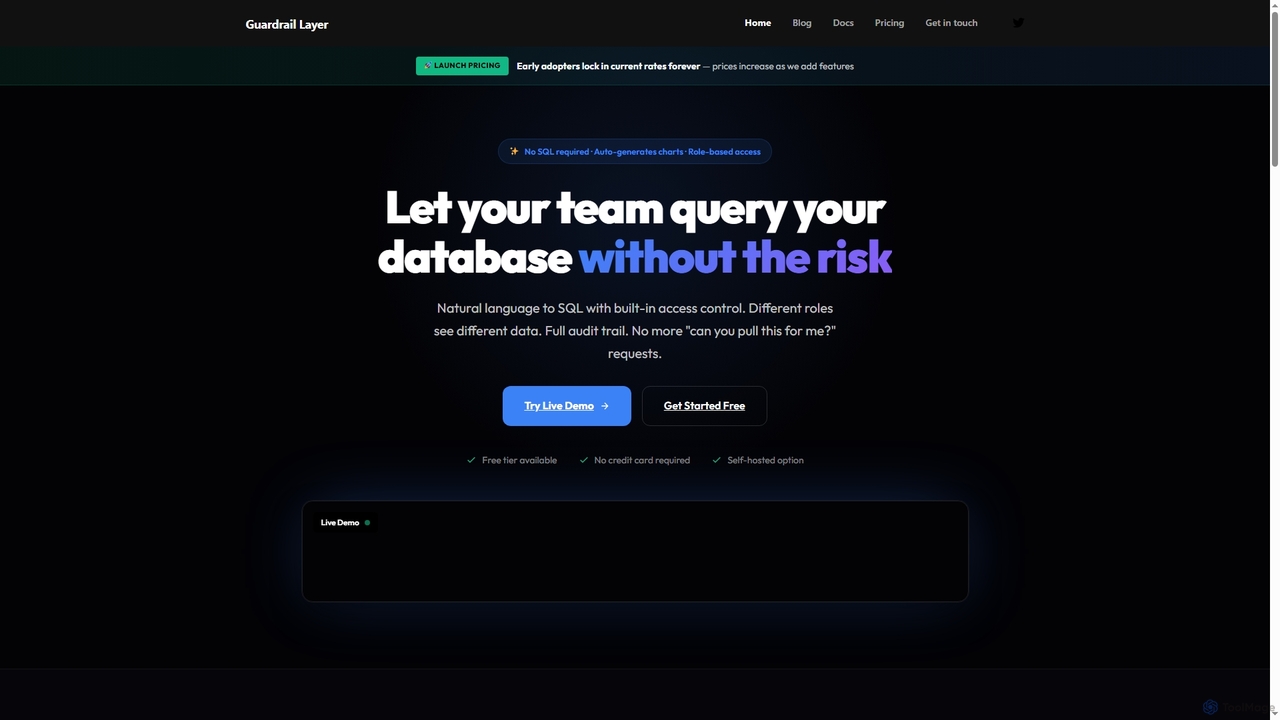
Guardrail Layer
Guardrail Layer enables safe, natural language interaction with your databases, providing robust role-based access control, automatic PII redaction, …
Guardrail Layer enables safe, natural language interaction with your databases, providing robust role-based access control, automatic PII redaction, and comprehensive audit trails. It empowers teams to query data in plain English without SQL, preventing unauthorized access and ensuring data security in production environments while leveraging AI capabilities.
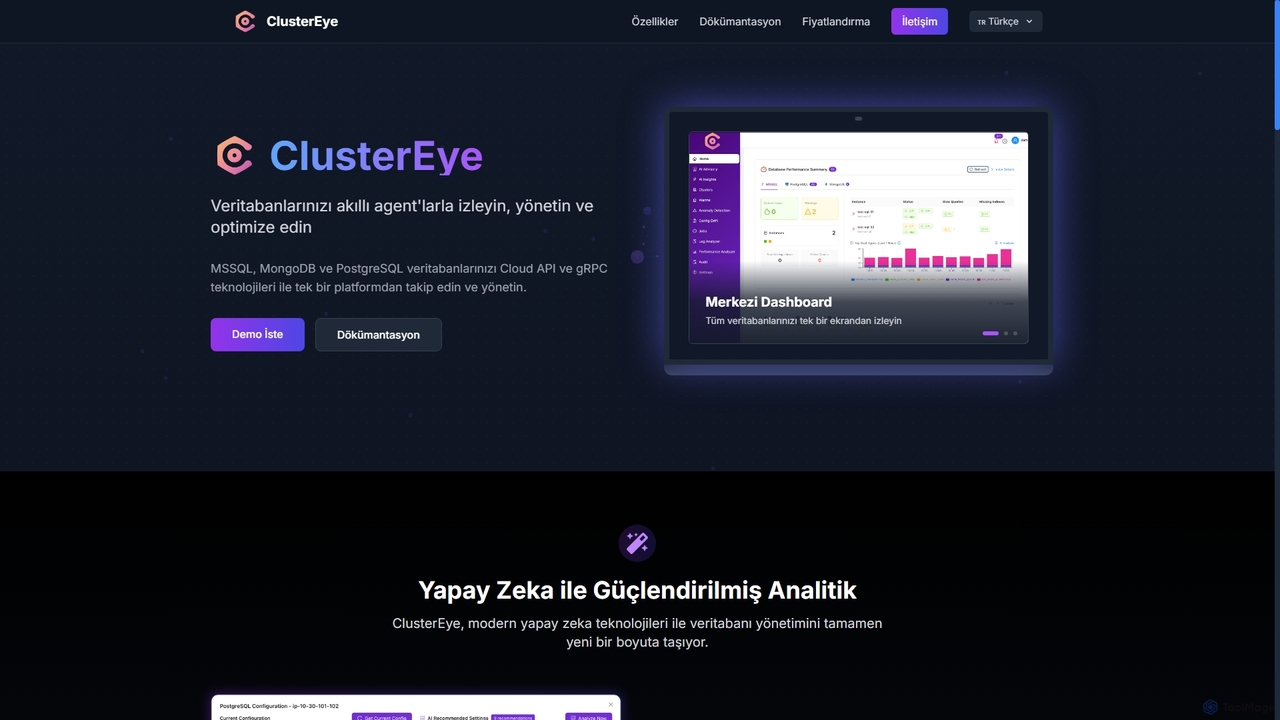
ClusterEye
ClusterEye is an AI-powered database monitoring and management platform designed to optimize the performance and stability of MSSQL, …
ClusterEye is an AI-powered database monitoring and management platform designed to optimize the performance and stability of MSSQL, MongoDB, and PostgreSQL databases. It uses intelligent agents and advanced AI analytics to provide real-time insights, proactive problem detection, and automated optimization recommendations, simplifying complex database operations.
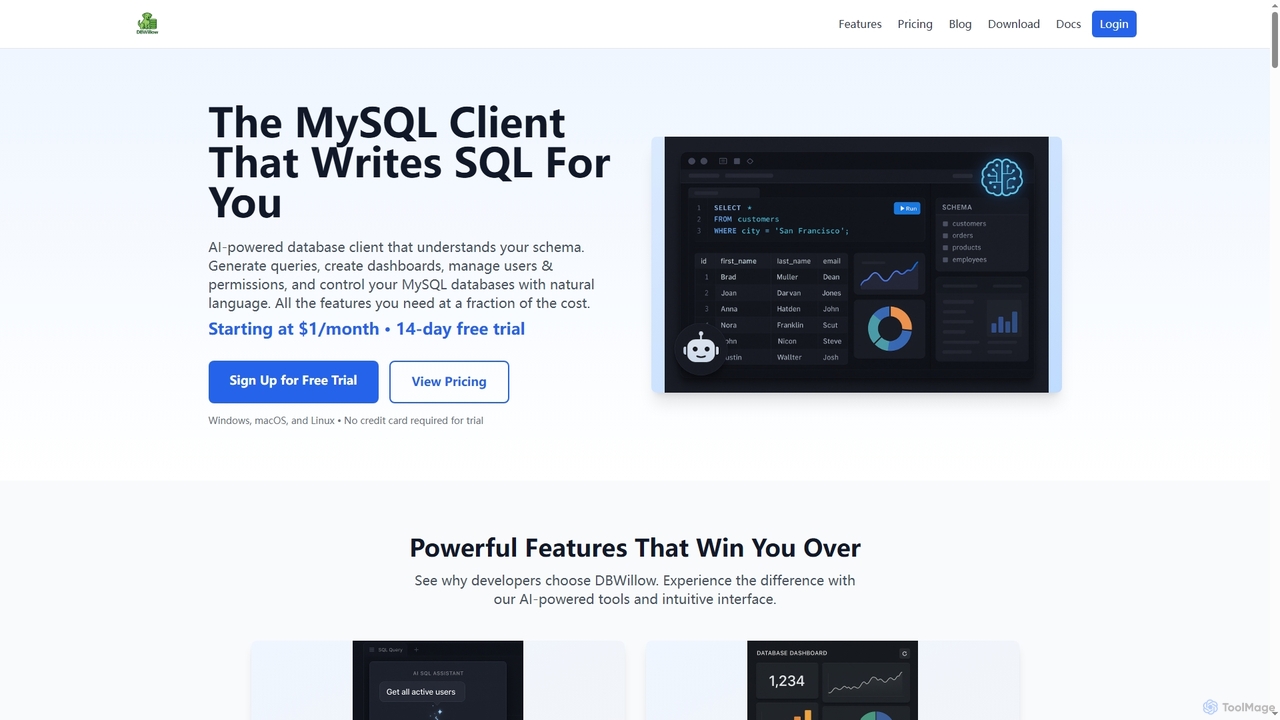
DBWillow
DBWillow is an AI-powered MySQL and MariaDB client that simplifies database management. It allows users to generate SQL …
DBWillow is an AI-powered MySQL and MariaDB client that simplifies database management. It allows users to generate SQL queries, create advanced dashboards, and manage users and permissions using natural language, significantly boosting productivity for developers and data professionals.
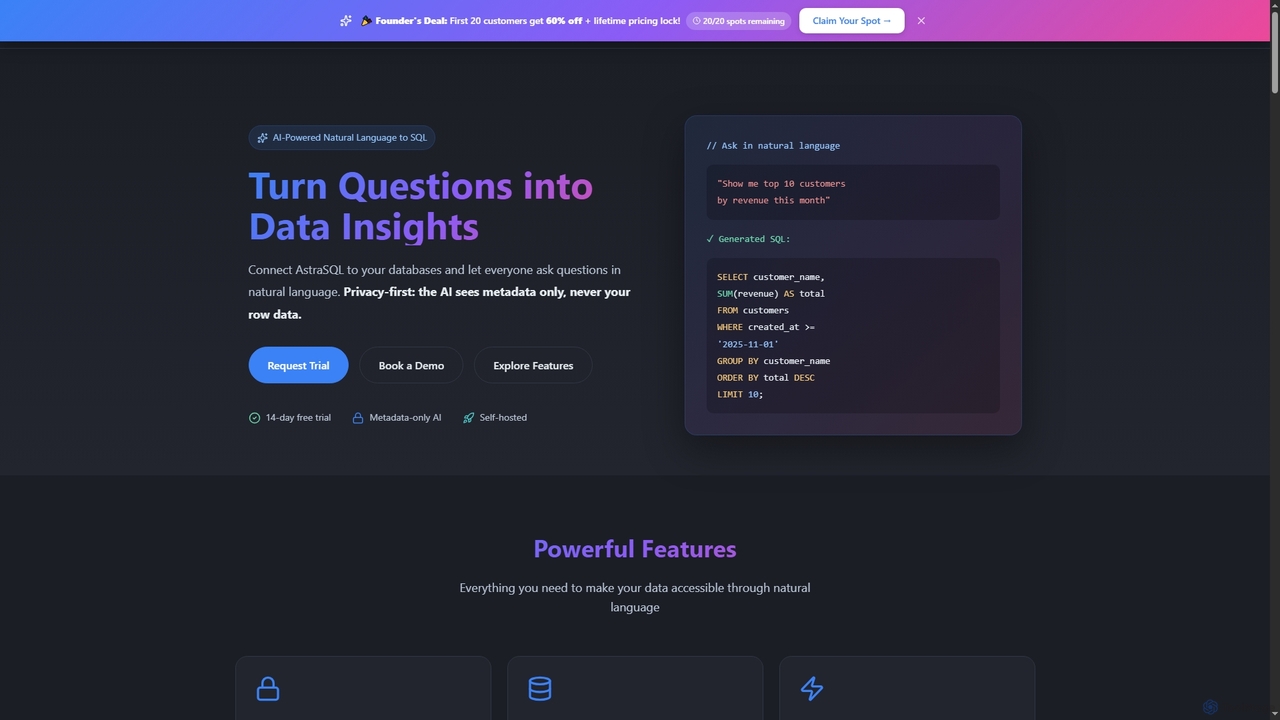
AstraSQL
AstraSQL is an AI-powered agent that transforms natural language queries into complex, correct SQL, enabling privacy-first database analytics. …
AstraSQL is an AI-powered agent that transforms natural language queries into complex, correct SQL, enabling privacy-first database analytics. It supports multiple databases, offers interactive dashboards, and ensures enterprise-grade security, making data accessible to non-technical users.
About Database Management
Database Management tools are AI-powered solutions designed to automate, optimize, and secure the administration of databases. Leveraging machine learning and advanced analytics, these tools enhance performance, streamline operations, and ensure data integrity across various database systems. They provide intelligent insights and proactive management capabilities, significantly reducing manual effort and improving overall data infrastructure efficiency.
Core Features
- Automated Performance Tuning: Proactively identifies and resolves performance bottlenecks, suggesting optimal indexing and query rewrites.
- Intelligent Schema Optimization: Analyzes data usage patterns to recommend and refine database schemas for efficiency and scalability.
- Predictive Anomaly Detection: Monitors database activity for unusual patterns, alerting administrators to potential security threats or operational issues.
- Automated Data Governance: Enforces data policies, classifies sensitive information, and ensures compliance with regulatory requirements.
- Smart Query Generation: Assists in writing complex SQL queries or generates them from natural language, improving data access speed.
Use Cases
Organizations across finance, e-commerce, and healthcare utilize these tools to manage vast datasets. Database administrators employ them for proactive system maintenance, while developers use them to optimize application data layers. Data compliance officers leverage AI for automated auditing and policy enforcement, ensuring data integrity and regulatory adherence.
How to Choose
Evaluate tools based on their compatibility with existing database systems (SQL, NoSQL), the breadth of AI-driven features (e.g., performance, security, governance), integration capabilities with other IT infrastructure, and scalability to handle future data growth. Consider vendor support and the clarity of their AI models.
Database ManagementUse Cases
Automated Database Performance Optimization
Database administrators (DBAs) leverage AI-powered tools to continuously monitor database performance metrics, identify bottlenecks, and automatically suggest or implement optimizations. This includes recommending optimal indexes, rewriting inefficient queries, and adjusting configuration parameters in real-time. The result is a significant reduction in manual tuning efforts and consistent, high-speed database operations, ensuring applications run smoothly without downtime.
AI-Driven Schema Design and Evolution
Data architects and developers utilize AI tools to analyze application data access patterns, query loads, and future growth projections. The AI can then propose optimized database schemas, including table structures, relationships, and data types, or suggest refinements to existing schemas. This proactive approach ensures the database design is scalable, efficient, and aligned with application requirements, reducing the need for costly redesigns later.
Real-time Database Security Anomaly Detection
Security teams deploy AI-driven database management tools to monitor all database activities, including user logins, query executions, and data modifications, in real-time. The AI establishes baseline behaviors and flags any deviations as potential security threats, such as unauthorized access attempts, data exfiltration, or insider threats. This enables rapid response to breaches, protecting sensitive data and maintaining compliance.
Automated Data Governance and Regulatory Compliance
Data governance officers and compliance teams use AI to automatically classify sensitive data (e.g., PII, financial records) within the database. The tools then enforce access control policies, apply data masking or encryption where necessary, and generate comprehensive audit trails. This ensures strict adherence to regulations like GDPR, HIPAA, or CCPA, minimizing compliance risks and manual oversight.
Smart Data Lifecycle Management and Storage Optimization
IT operations and data management teams employ AI to analyze data usage frequency, age, and business value. Based on these insights, the AI automatically moves less frequently accessed or older data to more cost-effective storage tiers (e.g., from high-performance SSDs to cheaper object storage) or archives it. This strategy optimizes storage costs, improves the performance of active databases, and simplifies data lifecycle management.
Natural Language Query Generation for Analysts
Data analysts and business users, often without deep SQL knowledge, can use AI-powered tools to generate complex database queries simply by describing their data needs in natural language. The AI interprets the request, translates it into optimized SQL, and executes it, returning the desired results. This democratizes data access, accelerates reporting, and empowers non-technical users to gain insights independently.