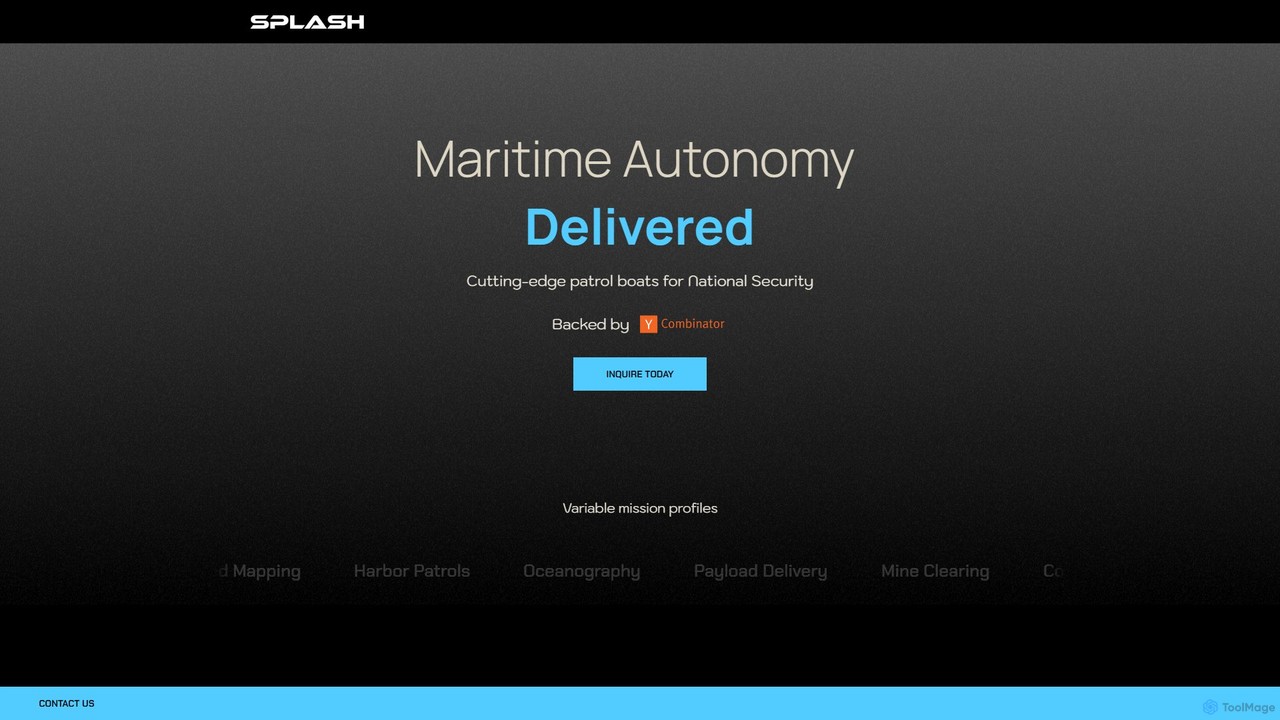
Defense AI tools are a class of specialized systems that leverage artificial intelligence to enhance national security, military operations, and intelligence gathering. These tools process vast amounts of data from diverse sources using machine learning, computer vision, and natural language processing to identify patterns, predict outcomes, and automate complex tasks. Their primary value lies in accelerating decision-making, improving situational awareness, and increasing the efficiency and safety of defense personnel. They enable capabilities ranging from autonomous surveillance to predictive equipment maintenance and advanced cyber threat detection.
Core Features
- Threat Intelligence Analysis: Automatically processes and analyzes multi-source data (e.g., satellite imagery, communications) to detect and assess potential threats.
- Autonomous Systems Operation: Provides the control and navigation logic for unmanned aerial vehicles (UAVs), ground vehicles (UGVs), and naval systems.
- Predictive Maintenance: Analyzes sensor data from military equipment to forecast component failures and optimize maintenance schedules, increasing operational readiness.
- Command and Control (C2) Support: Synthesizes battlefield information into a unified operational picture, suggesting optimal courses of action to commanders.
- Cybersecurity Defense: Employs AI to detect, analyze, and respond to sophisticated cyberattacks on critical defense networks in real-time.
Use Cases
These tools are primarily used by government defense agencies, military branches, and intelligence organizations. For instance, intelligence analysts use AI to sift through massive datasets for actionable intelligence, while logistics commanders use it to optimize supply chains in contested environments. Cybersecurity teams also deploy these systems to protect critical national infrastructure from state-sponsored cyber threats.
How to Choose
Selecting a Defense AI tool requires rigorous evaluation. Key criteria include compliance with stringent security and government standards (e.g., accreditation levels), interoperability with existing legacy systems, the accuracy and reliability of its AI models, and the degree of 'explainability' (XAI) to ensure human oversight. Furthermore, adherence to ethical guidelines and the laws of armed conflict is a critical consideration.