Juice
Juice is a software-only platform that enables GPU-over-IP, allowing you to access, share, and pool GPU resources across …
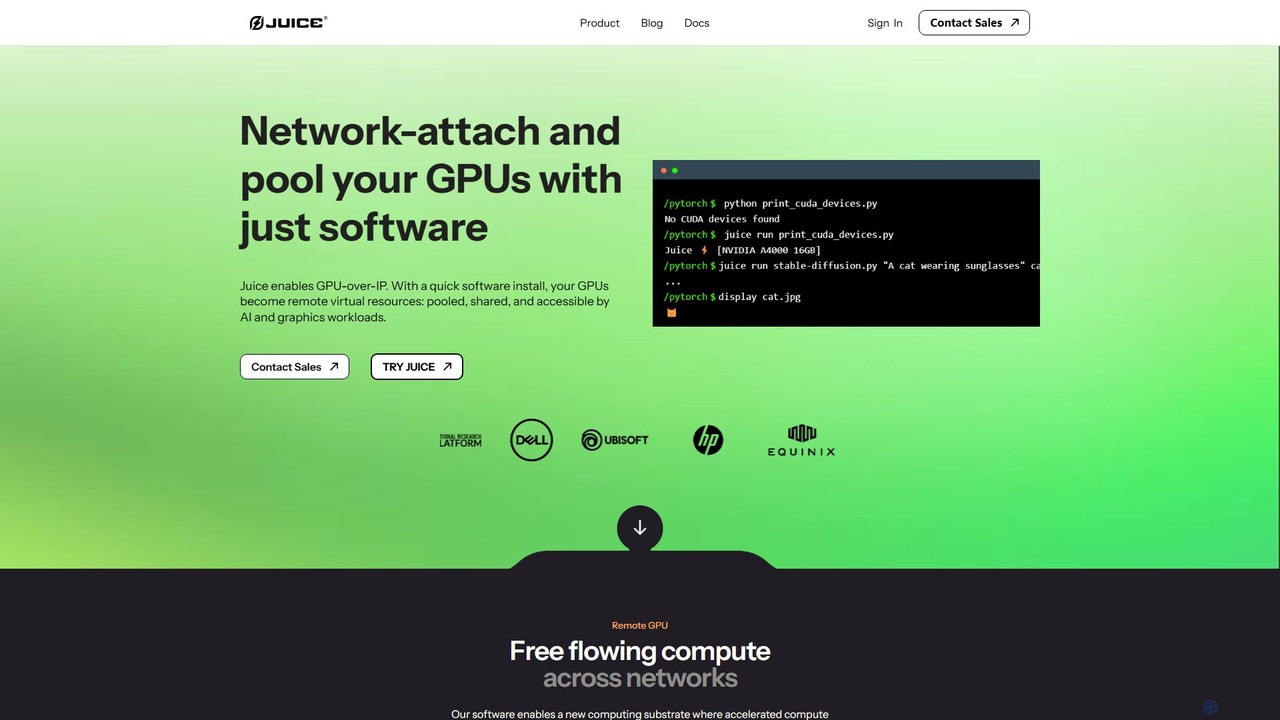
Juice is a software-only platform that enables GPU-over-IP, allowing you to access, share, and pool GPU resources across any standard network. It decouples GPUs from physical machines, turning any CPU node into a GPU-accelerated system on demand, optimizing utilization and significantly reducing costs for AI and graphics workloads without code changes.
About Resource Management
AI Resource Management tools are a class of developer utilities that use artificial intelligence to automate and optimize the allocation, monitoring, and scaling of computational resources. These tools leverage machine learning models to analyze usage patterns, predict future demand, and identify cost-saving opportunities in cloud environments. Their primary value lies in enhancing system reliability, reducing operational overhead, and significantly cutting cloud infrastructure costs. Within the developer tool ecosystem, they act as an intelligent layer for managing complex, dynamic infrastructures like Kubernetes and microservices.
Core Features
- Predictive Autoscaling: Analyzes historical data to proactively adjust resources, preventing performance bottlenecks during traffic spikes.
- Cost Optimization & Anomaly Detection: Continuously scans for underutilized assets and flags unusual spending patterns to prevent budget overruns.
- Automated Provisioning: Generates and refines Infrastructure-as-Code (IaC) configurations to ensure optimal and secure deployments.
- Performance Root Cause Analysis: Uses AI to correlate metrics and logs, quickly identifying the source of performance issues or system failures.
Use Cases
These tools are primarily used by DevOps engineers, Site Reliability Engineers (SREs), and cloud architects managing large-scale infrastructure on platforms like AWS, Google Cloud, and Azure. They are particularly effective in environments with fluctuating workloads, such as e-commerce platforms, SaaS applications, and data processing pipelines, where manual resource management is inefficient and error-prone.
How to Choose
When selecting an AI Resource Management tool, consider its integration capabilities with your specific cloud providers and technology stack (e.g., Kubernetes, Terraform). Evaluate the level of automation it offers—whether it provides recommendations or executes changes autonomously. Also, assess its analytical depth for cost and performance optimization, and compare pricing models, such as percentage of savings or per-resource fees.
Resource ManagementUse Cases
Automated Cloud Cost Reduction
A DevOps team at a growing SaaS company uses an AI resource management tool to continuously monitor their AWS environment. The tool analyzes EC2 instance usage, S3 storage patterns, and data transfer costs. It automatically identifies oversized instances and recommends rightsizing actions. By implementing these AI-driven suggestions, the team reduces their monthly cloud bill by over 30% without impacting application performance, freeing up budget for new feature development.
Proactive Kubernetes Pod Scaling
An e-commerce platform's SRE team manages a large Kubernetes cluster. Instead of relying on reactive CPU/memory-based scaling, they deploy an AI tool that analyzes application-level metrics and historical traffic patterns. Before a major holiday sale, the tool predicts a massive traffic surge and proactively scales up the necessary microservice pods hours in advance. This prevents application slowdowns and ensures a smooth shopping experience, maximizing revenue during the critical period.
Detecting Anomalous Resource Consumption
A FinTech company's security team integrates an AI resource management tool to establish a baseline of normal infrastructure behavior. The tool suddenly alerts them to an unusual spike in data egress from a production database that doesn't correlate with user activity. This early warning allows the team to investigate and discover a misconfigured service that was leaking data, preventing a potential security breach and ensuring regulatory compliance.
Optimizing CI/CD Pipeline Resources
A software development team integrates an AI resource management tool with their Jenkins CI/CD pipeline. The tool analyzes the resource requirements of different build and test jobs. It then dynamically allocates the optimal amount of compute resources from a shared pool for each pipeline run, rather than using fixed-size, often idle, build agents. This reduces job queue times by 50% and cuts the costs associated with dedicated build infrastructure by 40%.
Generating Infrastructure-as-Code (IaC)
A startup's small engineering team needs to deploy a new microservice on Google Cloud. Instead of manually writing complex Terraform files, they use an AI tool. They describe their requirements in natural language, such as 'a scalable web service with a PostgreSQL database and a Redis cache'. The AI generates an optimized and secure Terraform configuration, including networking rules and IAM policies. This accelerates their deployment process from days to hours and reduces the risk of misconfiguration.
Capacity Planning for Future Growth
A FinOps manager at a media streaming company uses an AI tool for long-term capacity planning. The tool ingests historical resource usage data, correlates it with user growth metrics, and considers upcoming content launches. It generates a forecast for resource needs over the next 12 months across different regions. This data-driven forecast allows the company to negotiate better pricing for reserved instances and savings plans, ensuring they have the capacity for growth while controlling costs effectively.