Development Best in category 1 results Monitoring AI Tool

Popular AI tools in the Monitoring field of Development include Kubiks, etc., helping you quickly improve efficiency.

Kubiks

Kubiks

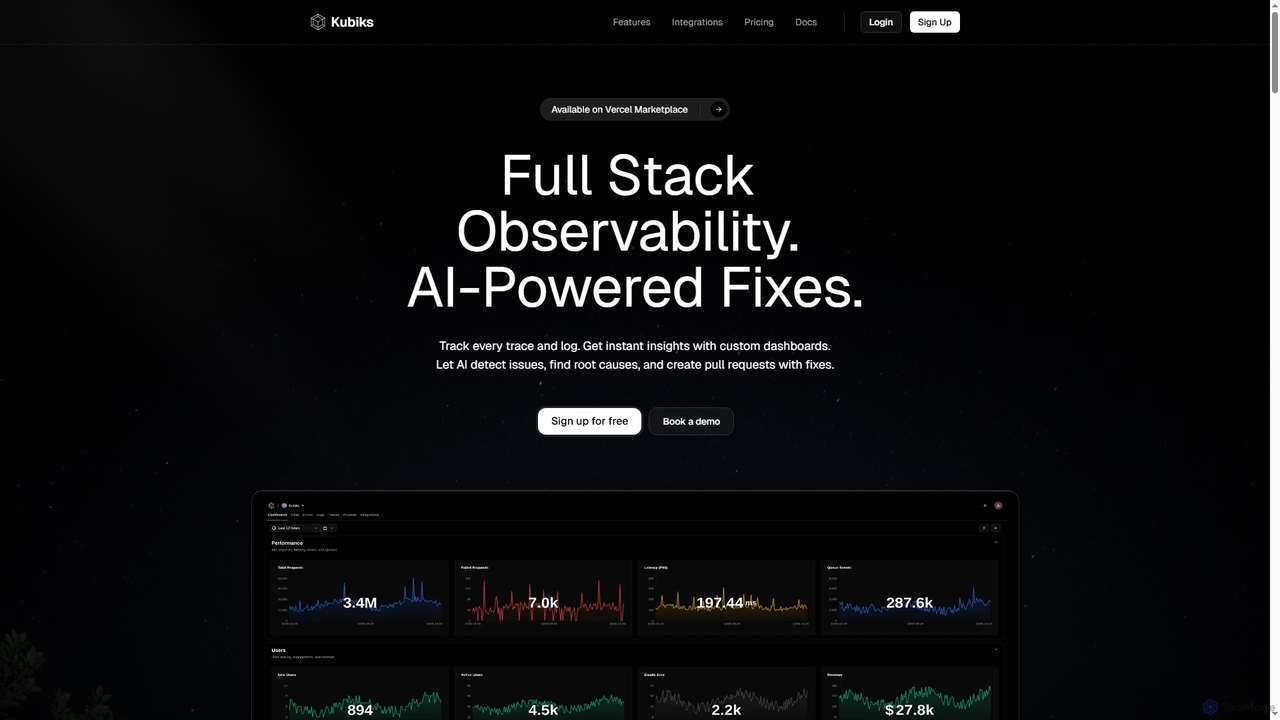
Kubiks is an AI-powered full-stack observability platform providing distributed tracing, logging, and custom dashboards. It automatically detects issues, …

3.2K

About Monitoring

Monitoring tools are AI-powered solutions designed to observe, track, and analyze the performance, health, and behavior of software systems, applications, and infrastructure. These tools leverage machine learning to process vast amounts of data, identify anomalies, and provide real-time insights. They are crucial for ensuring the reliability, efficiency, and security of developed systems, acting as a vital feedback mechanism within the broader development lifecycle.

Core Features

  • Real-time Performance Tracking: Continuously collects and displays key metrics like CPU usage, memory, network traffic, and application response times.
  • Anomaly Detection: Utilizes AI to automatically identify unusual patterns or deviations from normal behavior, signaling potential issues before they escalate.
  • Log Management & Analysis: Aggregates, indexes, and analyzes logs from various sources to pinpoint errors, security threats, and performance bottlenecks.
  • Automated Alerting: Configures intelligent alerts based on predefined thresholds or detected anomalies, notifying relevant teams via multiple channels.
  • Predictive Analytics: Forecasts future system behavior and potential failures by analyzing historical data, enabling proactive maintenance and resource planning.

Use Cases

These tools are indispensable for DevOps teams managing complex microservices architectures, site reliability engineers (SREs) ensuring high availability, and security analysts detecting unusual activity. They provide the visibility needed to maintain system health, optimize resource utilization, and ensure the smooth operation of critical services.

How to Choose

When selecting an AI monitoring tool, consider its integration capabilities with your existing tech stack, the breadth of metrics it collects, its anomaly detection accuracy, and the flexibility of its alerting system. Scalability, data retention policies, and compliance certifications are also critical factors for enterprise-level deployments, ensuring the solution meets long-term operational needs.

MonitoringUse Cases

1

Proactive Issue Resolution in Production

DevOps teams utilize AI monitoring to detect subtle performance degradations or unusual error rates in live applications. By receiving automated alerts based on AI-identified anomalies, they can investigate and resolve potential issues proactively, often before users are significantly impacted, thereby minimizing downtime and maintaining service quality.

2

Optimizing Cloud Resource Utilization

Cloud engineers leverage AI monitoring tools to track resource consumption (CPU, memory, network I/O) across their dynamic cloud infrastructure. AI-driven insights help identify underutilized or over-provisioned resources, enabling precise adjustments to cloud spending and improving operational efficiency by ensuring resources are allocated optimally.

3

Detecting Security Threats and Anomalies

Security operations centers (SOCs) employ AI monitoring to analyze vast amounts of network traffic, user behavior, and system logs for suspicious activities. The AI identifies patterns indicative of cyberattacks, unauthorized access, or data breaches that might go unnoticed by traditional rule-based systems, significantly enhancing threat detection capabilities.

4

Performance Tuning for Web Applications

Web developers and performance engineers use AI monitoring tools to pinpoint bottlenecks in web application response times. Detailed metrics on database queries, API calls, and front-end rendering, analyzed by AI, help them optimize code and infrastructure for a smoother, faster user experience, directly impacting user satisfaction and engagement.

5

Ensuring SLA Compliance for Critical Services

Service providers and IT departments utilize AI monitoring to continuously verify that their critical services meet agreed-upon Service Level Agreements (SLAs). Automated reports and alerts, triggered by AI-detected deviations from performance baselines, highlight any non-compliance, enabling prompt action to maintain service quality and avoid contractual penalties.

6

Capacity Planning for Growing Systems

Infrastructure architects and system administrators use historical performance data and AI-driven predictive analytics from monitoring tools to forecast future resource needs. This allows them to plan for scaling infrastructure proactively, ensuring systems can handle increased load from user growth or new features without performance degradation or service interruptions.

MonitoringFrequently Asked Questions