Ghibli AI
Ghibli AI is an advanced image generator that transforms your text prompts or uploaded photos into stunning Studio …
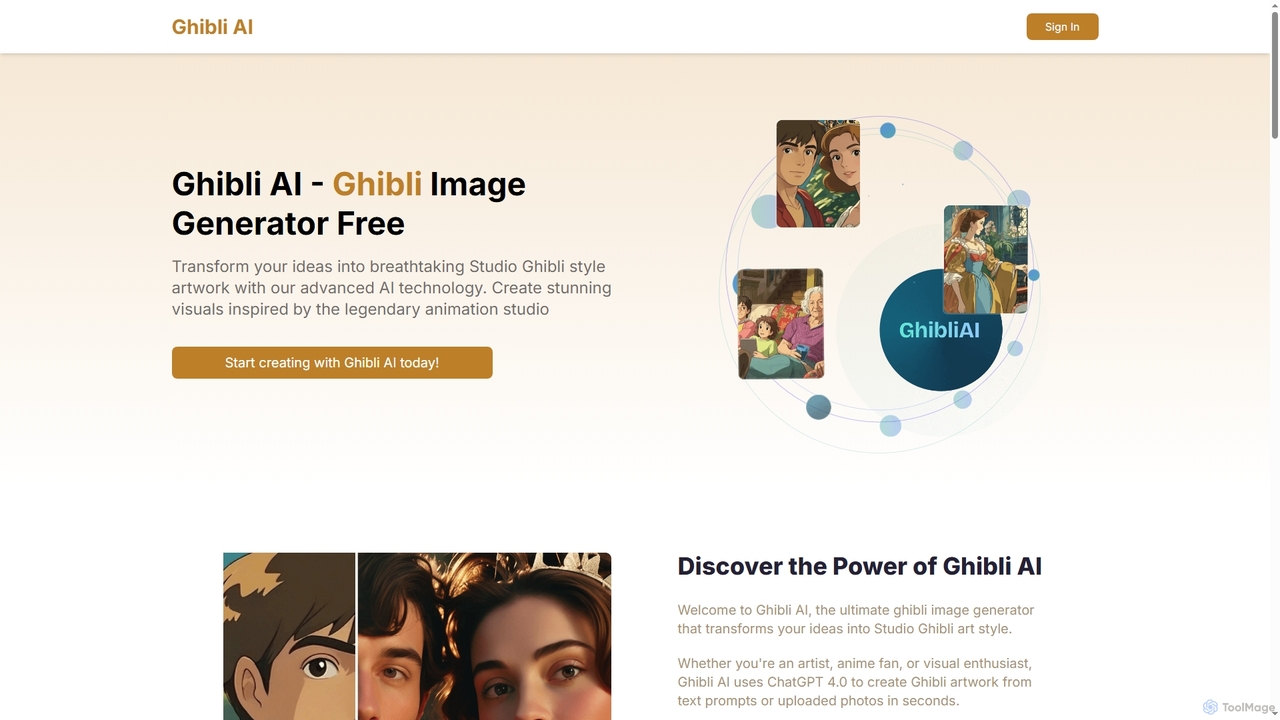
Ghibli AI is an advanced image generator that transforms your text prompts or uploaded photos into stunning Studio Ghibli-style artworks. Leveraging ChatGPT 4.0, it allows artists, fans, and professionals to effortlessly create enchanting visuals inspired by legendary animation, simplifying the process of crafting anime-style masterpieces in seconds.
About Anime Art
AI Anime Art generators are specialized tools designed to create high-quality images in diverse Japanese anime and manga styles from text or image prompts. They utilize advanced generative models, fine-tuned on vast datasets of anime illustrations, to accurately capture the unique aesthetics, character archetypes, and visual language of the genre. This enables creators, writers, and enthusiasts to rapidly visualize characters, design scenes, and produce stylized artwork with remarkable control and stylistic fidelity. These tools often outperform general image generators in rendering specific anime conventions like expressive eyes, dynamic hair, and distinct line art.
Core Features
- Style-Specific Models: Access models trained for particular styles, such as modern webtoon, classic 90s anime, or painterly aesthetics.
- Character Consistency (LoRA): Use Low-Rank Adaptation (LoRA) models to maintain a consistent appearance for a specific character across multiple generations.
- Precise Pose and Composition Control: Employ features like ControlNet or OpenPose to dictate a character's exact pose, gestures, and position within a scene.
- Advanced Prompting: Utilize negative prompts to exclude unwanted elements and tag weighting to emphasize specific details for refined outputs.
- Inpainting and Outpainting: Edit specific parts of a generated image or expand its canvas while maintaining the original anime style.
Use Cases
These tools are widely used by indie game developers for character concept art, webtoon and light novel authors for illustrations, and animators for storyboarding. Hobbyists and fans also use them to create original characters (OCs), fan art, and custom social media avatars.
How to Choose
When selecting a tool, consider the quality and variety of its anime-specific models. Evaluate the level of control offered, such as support for LoRA and ControlNet. Also, assess the user interface's balance between simplicity for beginners and advanced settings for experts, and review the tool's policy on commercial usage of generated images.

Anime ArtUse Cases
Rapid Character Design for Indie Games
An indie game developer needs to create multiple character concepts for a new visual novel. Instead of spending weeks drawing, they use an AI Anime Art generator. By inputting detailed text prompts like "cyberpunk samurai girl with silver hair, red eyes, holding a katana," they generate dozens of high-quality character portraits in a consistent art style within hours. They then use a specific LoRA model to ensure the main character's face and outfit remain consistent across different poses and expressions, significantly accelerating the pre-production phase.
Creating Illustrations for Webtoons and Light Novels
A writer wants to add compelling visuals to their webtoon series but lacks advanced drawing skills. They use an AI Anime Art tool to bring key scenes to life. For a dramatic confrontation, they use ControlNet to set the exact poses of two characters facing off. They then generate the image in a specific webtoon style model, complete with clean line art and cell shading. This allows them to produce chapters more frequently and maintain a professional visual quality that engages readers.
Generating Unique Social Media Avatars
A user wants a personalized anime avatar for their online profiles that reflects their identity. They start with a selfie and use an image-to-image function in an AI tool. They add a text prompt like "transform into a magical girl, Ghibli-inspired art style, pastel colors, sparkling eyes." The AI re-renders their photo into a unique, high-resolution anime character that captures their likeness while fitting the desired aesthetic, giving them a distinct online presence.
Producing High-Quality Fan Art
A fan of a popular anime series wants to create tribute art depicting a scene that never happened in the show. They write a detailed prompt describing the characters, their actions, the background, and the emotional tone. The AI generator produces a detailed illustration in the source material's art style. The fan can then share this work in online communities, connecting with other fans and expressing their passion for the series without needing professional art skills.
Visualizing Original Characters (OCs) for Storytelling
A hobbyist writer has developed an original character (OC) with a rich backstory and detailed appearance. To get a clear visual reference, they use an AI Anime Art generator. They input a comprehensive description, including hairstyle, clothing, accessories, and personality traits ("a shy librarian with glasses and a worn-out cardigan"). The tool generates multiple interpretations, helping the writer solidify the character's design and providing a visual aid for their stories or role-playing sessions.
Storyboarding for Animated Shorts
An independent animator is planning a short animated film and needs to create storyboards quickly. They use an AI tool to generate keyframes for each scene. By providing prompts like "wide shot, character running through a neon-lit city in the rain, 90s anime style," they can rapidly produce dozens of storyboard panels. This process helps them visualize camera angles, character placement, and overall composition, saving significant time compared to manually drawing every single panel from scratch.