Digital Asset Management Best in category 1 results Metadata Generation AI Tool

Popular AI tools in the Metadata Generation field of Digital Asset Management include CyberStock, etc., helping you quickly improve efficiency.

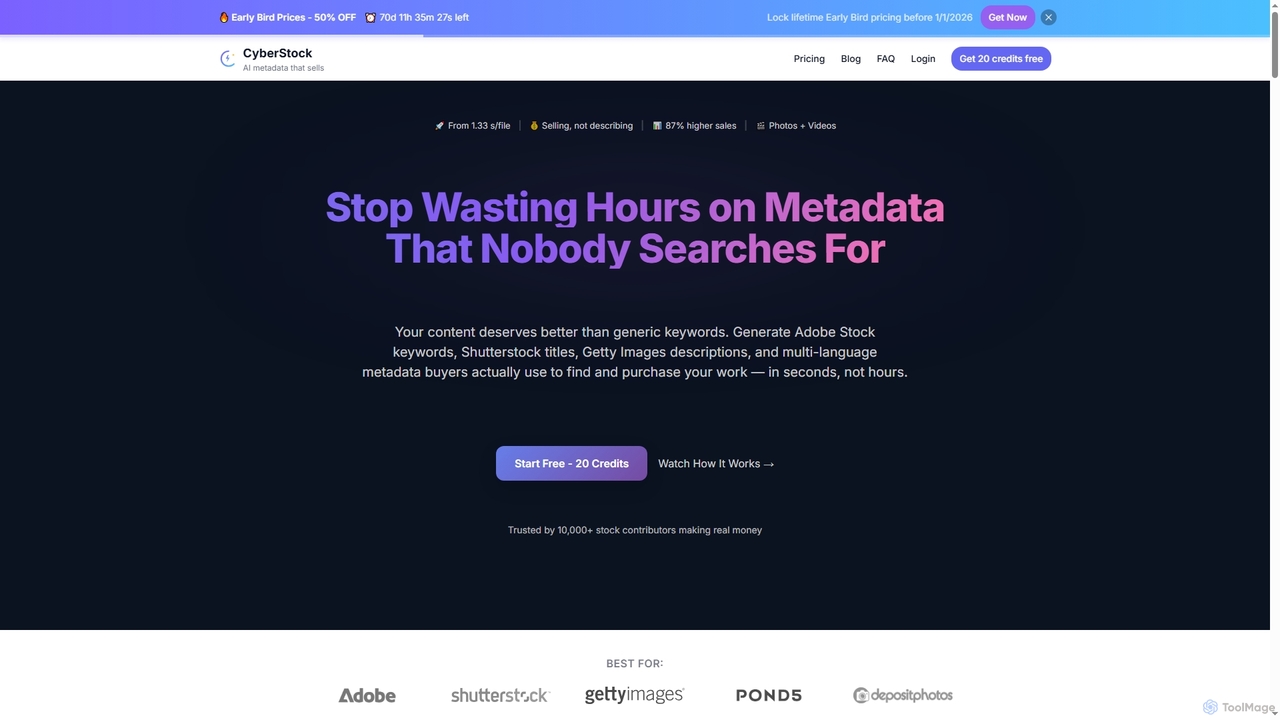
CyberStock

CyberStock

CyberStock is an AI-powered metadata generator designed for stock contributors, automating the creation of SEO-optimized keywords, titles, and …

3.2K

About Metadata Generation

Metadata Generation tools are a class of AI-powered software that automatically create descriptive data for digital files. Leveraging technologies like computer vision and natural language processing (NLP), these tools analyze the content of images, videos, and documents to generate relevant keywords, titles, and summaries. This automation is crucial for efficiently organizing large digital libraries, significantly improving asset searchability and discoverability within Digital Asset Management (DAM) systems. They transform the time-consuming manual task of tagging into a streamlined, intelligent process.

Core Features

  • Automatic Tagging: Analyzes visual or textual content to generate a list of relevant keywords and labels.
  • Descriptive Summary Generation: Creates concise, human-readable descriptions for images, videos, or documents.
  • Object and Entity Recognition: Identifies specific objects, faces, logos, and named entities like people or places within files.
  • Speech-to-Text Transcription: Converts spoken words in audio and video files into searchable text metadata.
  • Custom Taxonomy Support: Allows users to train the AI on specific vocabularies or classification systems relevant to their industry.

Use Cases

These tools are widely used by media companies for archiving news footage, marketing teams for organizing campaign assets, and e-commerce businesses for cataloging product images. Libraries, museums, and research institutions also rely on them to manage vast collections of digital documents and artifacts, making them accessible for study and use.

How to Choose

When selecting a Metadata Generation tool, consider the types of assets you need to process (e.g., image, video, audio). Evaluate the accuracy and granularity of the AI models. Prioritize tools that offer robust API access and seamless integration with your existing DAM or cloud storage. Also, assess the level of customization available for training the AI on your specific business needs and terminology.

Metadata GenerationUse Cases

1

Automate E-commerce Product Tagging

An e-commerce manager overseeing a catalog of thousands of products needs to ensure each item is easily discoverable. By uploading product images in batches to a Metadata Generation tool, the AI automatically analyzes each image. It generates tags for attributes like 'red cotton t-shirt', 'leather ankle boots', or 'V-neck sweater'. This process populates the product database with rich, structured metadata, powering faceted search filters on the website and improving the customer's ability to find specific items, ultimately boosting sales.

2

Organize and Index Media Archives

A news organization has decades of video footage stored in a digital archive, much of it poorly labeled. An archivist uses a metadata tool to process the entire library. The AI transcribes interviews, identifies public figures through facial recognition, and recognizes locations and events from visual cues. The output is a searchable index where journalists can instantly find clips by searching for a speaker's name, a specific quote, or a location like 'White House press briefing', reducing research time from hours to minutes.

3

Streamline Marketing Asset Management

A corporate marketing team manages thousands of assets, including logos, stock photos, campaign videos, and infographics. By integrating a metadata generator into their workflow, every new asset uploaded is automatically tagged with relevant information such as campaign name, year, product line, usage rights, and visual elements (e.g., 'happy people', 'office setting'). This ensures all team members can quickly find brand-compliant assets for new presentations, social media posts, or web pages, maintaining consistency and saving significant time.

4

Enhance Discoverability for Stock Photography

A professional photographer contributes to multiple stock photo platforms. Manually writing unique titles, descriptions, and dozens of keywords for each image is a major bottleneck. Using a metadata generation tool, they can process a folder of 100 photos in minutes. The AI suggests compelling titles, writes detailed descriptions based on the visual content, and generates a comprehensive list of relevant keywords, from broad concepts ('business teamwork') to specific objects ('laptop on wooden table'). This drastically speeds up their submission process and improves the chances of their photos being discovered by buyers.

5

Analyze Legal and Compliance Documents

A paralegal in a large law firm needs to review hundreds of contracts to identify specific clauses and named entities. Instead of manual reading, they use a metadata generation tool with advanced NLP capabilities. The tool scans the documents and automatically extracts and tags metadata such as 'contract start date', 'governing law', 'liability clause', and all company and individual names mentioned. This creates a structured, searchable database of contract information, enabling rapid risk assessment and due diligence.

6

Catalog Scientific Research Data

A research institution generates terabytes of imaging data from microscopes and medical scanners. Manually cataloging this data is impractical. Researchers implement an AI metadata tool trained with a custom taxonomy for their field. As new images are generated, the AI identifies and tags features like 'cell type', 'presence of anomaly', 'magnification level', and experiment ID. This automated process ensures data consistency and makes it possible for scientists to query the vast dataset to find specific examples for analysis, accelerating research and discovery.

Metadata GenerationFrequently Asked Questions