ToolMage
Sign in

Best 1 Stock Photography AI tools for Content Creation

Popular Stock Photography AI tools in Content Creation include CyberStock, helping you work more efficiently.

CyberStock
Freemium

CyberStock

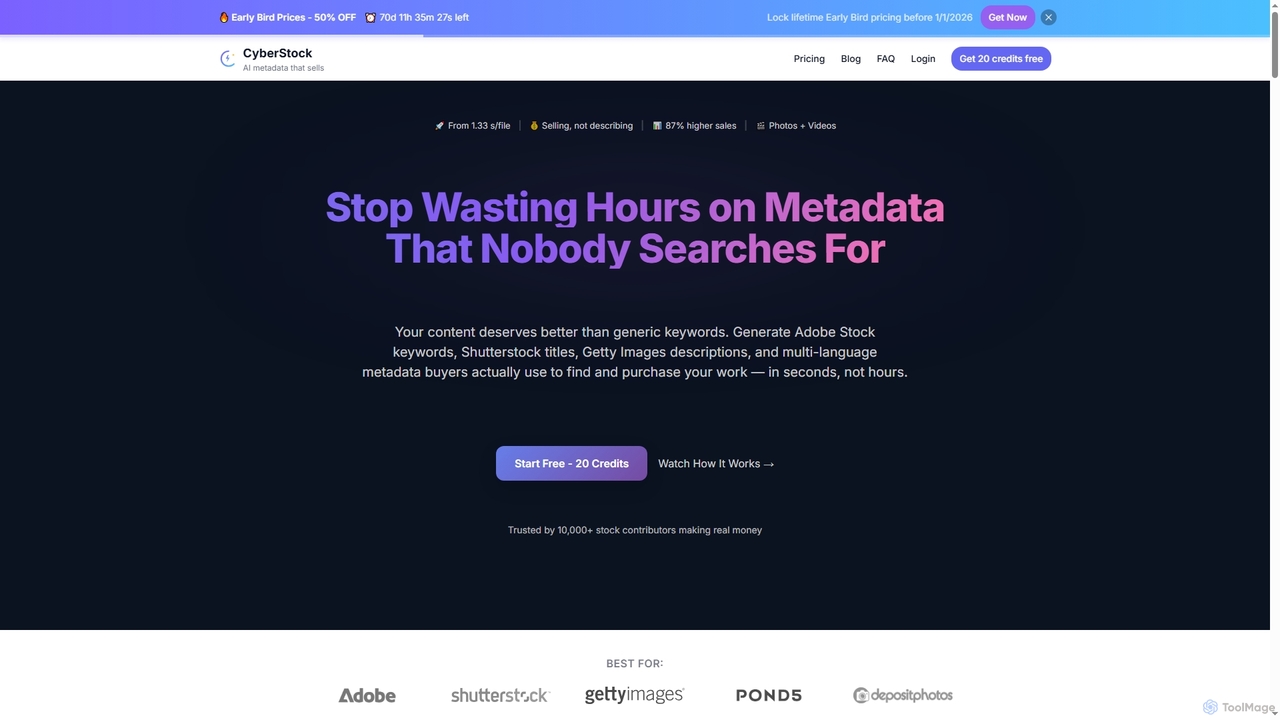
CyberStock is an AI-powered metadata generator designed for stock contributors, automating the creation of SEO-optimized keywords, titles, and descriptions for platforms like Adobe Stock, Shutterstock, and Getty Images. It processes photos and videos rapidly, leveraging market data to enhance content visibility and sales.

Stock Photography
Visits 7.3KFavorites 118Likes 129

About Stock Photography

Stock Photography platforms are services offering vast, searchable libraries of high-quality, royalty-free images for commercial and personal use. As part of the broader Content Creation ecosystem, these tools leverage AI for advanced semantic search, automatic image tagging, and in many cases, the generation of entirely new, unique visuals from text prompts. This allows creators to quickly find or create the perfect image for marketing campaigns, web design, or social media content. The integration of AI significantly enhances discovery and provides creative possibilities beyond traditional stock photo collections.

Core Features

  • AI-Powered Search: Utilize natural language, image uploads, or aesthetic filters to find visually and conceptually similar images.
  • Vast Image Libraries: Access millions of professionally shot photographs, illustrations, and vectors covering diverse topics.
  • Royalty-Free Licensing: Use images across multiple projects without recurring fees, based on clear licensing terms.
  • AI Image Generation: Some platforms allow users to generate unique, custom images from text descriptions.
  • Smart Curation & Collections: Discover curated collections and AI-powered recommendations based on your search history and preferences.

Use Cases

These platforms are essential for marketers creating ad visuals, graphic designers sourcing assets for projects, and social media managers needing a constant supply of fresh content. Bloggers, web developers, and corporate teams also use them for website banners, presentation slides, and internal documents, ensuring professional and legally compliant visual communication.

How to Choose

When selecting a Stock Photography service, evaluate the size and diversity of its library to ensure it meets your subject matter needs. Consider the power and accuracy of its search function, especially AI-driven features. Examine the licensing terms carefully to understand usage rights and restrictions. Finally, compare pricing models, such as subscriptions, credit packs, or pay-per-image, to find the most cost-effective option for your usage volume.

Stock Photography use cases

1

Creating Unique Visuals for Marketing Campaigns

A marketing manager is launching a new product and needs compelling, unique visuals for digital ads and social media that stand out from generic stock photos. Using an AI-powered stock photography platform, they input specific prompts like 'a minimalist photo of a blue sneaker on a geometric pastel background'. The tool generates several high-resolution, original images. This process avoids copyright issues with existing photos and provides perfectly on-brand visuals in minutes, significantly reducing the time and cost associated with a custom photoshoot.

2

Sourcing Imagery for Web Design and Development

A web designer is building a new corporate website and requires a series of high-quality, thematically consistent images for backgrounds, hero banners, and blog posts. Instead of spending hours manually searching through traditional libraries, they use an AI-powered search function. They upload a reference image that matches the desired style and color palette. The system instantly returns hundreds of photos with a similar aesthetic, allowing the designer to quickly select and license a full set of cohesive visuals, ensuring a professional and consistent look across the entire website.

3

Populating Social Media Calendars with Fresh Content

A social media manager for a lifestyle brand needs to post engaging content daily across multiple platforms. To maintain visual appeal and avoid repetition, they use a stock photography service with a vast and frequently updated library. They create curated collections based on upcoming themes like 'summer travel' or 'holiday season'. The AI's recommendation engine suggests new and trending images related to their brand's aesthetic, helping them quickly find diverse photos and illustrations to fill their content calendar, keeping their feed fresh and engaging for their audience.

4

Enhancing Corporate Presentations and Reports

An analyst is preparing a quarterly business review presentation for senior leadership. To make the data-heavy slides more visually appealing and easier to understand, they need professional, high-quality images related to business, technology, and teamwork. Using a stock photography platform, they search for concepts like 'data visualization' or 'global collaboration'. The platform provides a wide range of relevant, modern, and non-cliché photos and icons. This allows the analyst to quickly enhance their presentation, making it more professional and impactful without violating any copyright laws.

5

Creating Mockups and Prototypes for Digital Products

A UI/UX designer is creating a prototype for a new mobile application. To make the prototype feel realistic and compelling for user testing and stakeholder presentations, they need high-quality placeholder images for user profiles, product listings, and background textures. They use a stock photography service to quickly find a diverse set of user avatars and product photos. The ability to filter by orientation, color, and even the presence of people allows them to source appropriate assets in minutes, accelerating the design process and resulting in a more polished and professional-looking prototype.

6

Producing Educational Materials and Online Courses

An instructional designer is developing an online course on project management. To illustrate key concepts and make the learning modules more engaging, they need a variety of images depicting teamwork, planning, and success. Using a stock photography service, they can easily search for specific scenarios like 'a diverse team collaborating around a whiteboard' or 'a person crossing a finish line'. The availability of high-quality, relevant imagery helps them create professional-looking course materials that enhance the learning experience and improve knowledge retention for students.

Stock Photography FAQ

What is AI Stock Photography?

AI Stock Photography refers to platforms that use artificial intelligence to manage, search, and sometimes generate high-quality images. These services go beyond simple keyword searches by using AI to understand the content, context, and aesthetics of an image. This allows for more intuitive discovery, such as searching by concept, color palette, or visual similarity to another image. Many modern platforms also include AI generators that create entirely new, royalty-free images from text prompts, offering limitless creative options.

How does AI Stock Photography differ from traditional stock photo sites?

The primary difference lies in the use of artificial intelligence. While traditional sites rely heavily on manual keyword tagging, AI platforms use computer vision for automatic, detailed tagging and semantic search to understand user intent. This results in more relevant search results. Furthermore, a growing number of AI stock platforms offer generative capabilities, allowing users to create custom images that don't exist in any library. Traditional sites only offer pre-existing photos. This makes AI platforms more flexible for specific creative needs.

How to choose the right Stock Photography service?

Choosing the right service depends on your specific needs. Consider the following factors:

  • Library Content: Do you need real photographs, illustrations, vectors, or AI-generated images? Look for a library that specializes in your required style.
  • Search Functionality: Test the search engine. Does it understand complex queries? Does it offer useful filters like color, orientation, and visual similarity search?
  • Licensing Terms: Carefully read the license agreement. Understand if the images can be used for commercial purposes, if attribution is required, and what restrictions apply.
  • Pricing Model: Compare subscription plans, credit packs, and pay-per-image options. Choose a model that aligns with your budget and how frequently you need new images.
Are images from Stock Photography services legal to use commercially?

Yes, in most cases. The majority of stock photography platforms operate on a royalty-free license model. This means you pay a one-time fee (either through a subscription or a direct purchase) to use the image multiple times for various commercial projects without paying additional royalties. However, it is crucial to always read the specific license terms for each platform and image. Some licenses may have restrictions, such as prohibiting use in logos or for resale on merchandise. For AI-generated images, check if the service provides legal indemnification, which protects you from potential copyright claims.

Who can benefit from using Stock Photography tools?

A wide range of professionals and creators can benefit from these tools. This includes:

  • Marketers and Advertisers: For creating visually appealing ads, social media posts, and campaign materials.
  • Web and Graphic Designers: To source high-quality assets for websites, applications, and print materials.
  • Content Creators and Bloggers: To enhance their articles, videos, and online presence with professional imagery.
  • Small Business Owners: For affordable, professional branding and marketing without hiring a photographer.
  • Corporate Teams: To create consistent and professional presentations, reports, and internal communications.