SocialRails
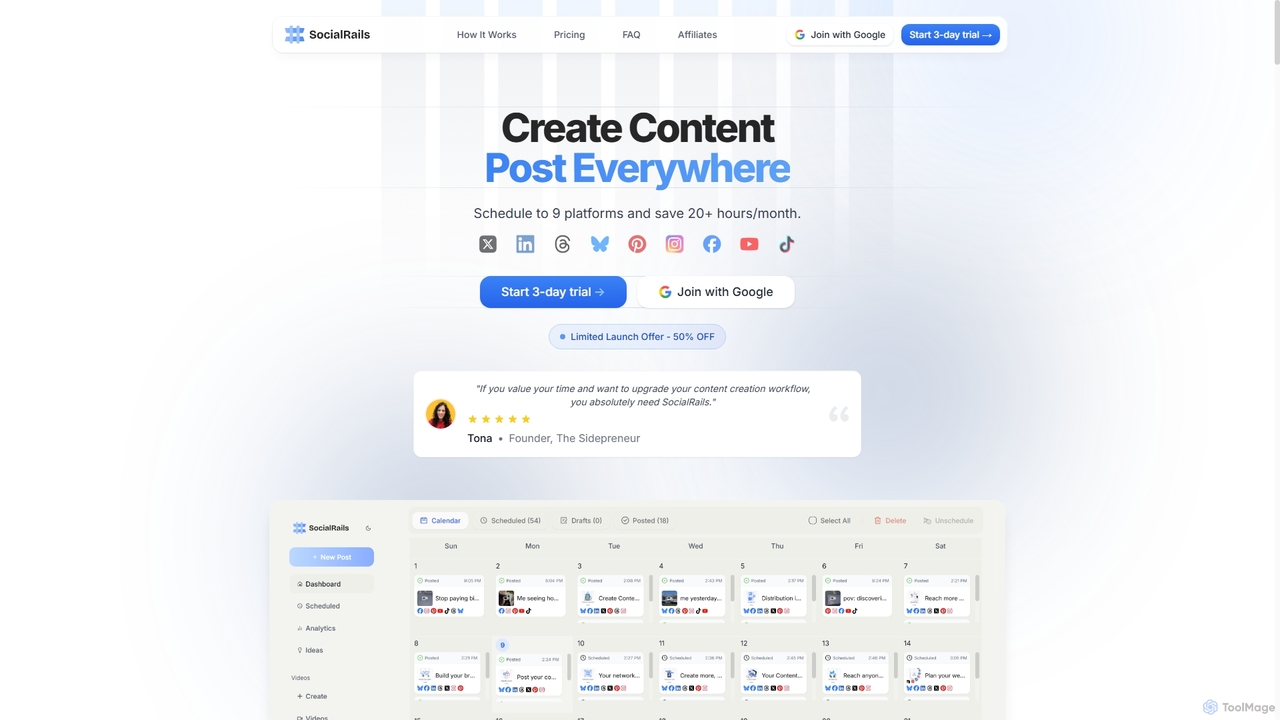
SocialRails is an all-in-one AI-powered social media management platform designed to streamline content creation and scheduling across 9 …
SocialRails is an all-in-one AI-powered social media management platform designed to streamline content creation and scheduling across 9 major social platforms. It helps individuals, teams, and agencies save over 20 hours monthly by offering features like instant post ideas, GPT5 image generation, auto-optimization of captions, and short-form video creation, all from a single dashboard.
SupernovaAI
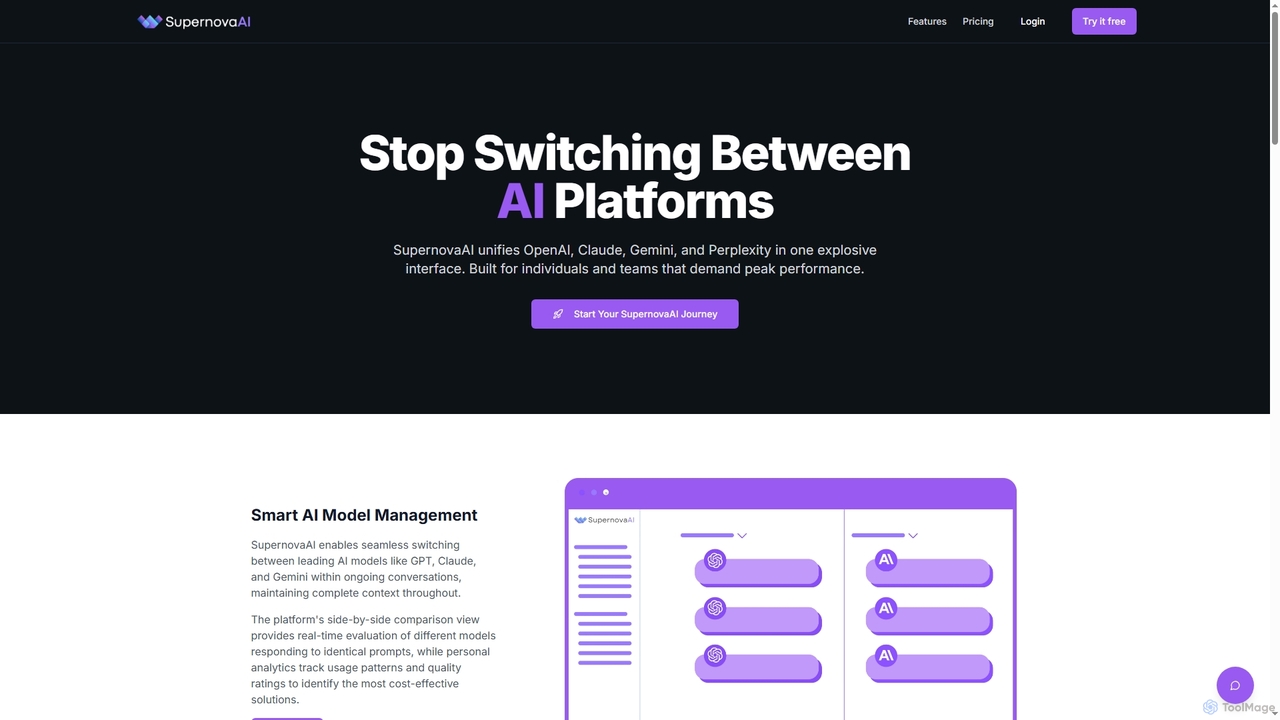
SupernovaAI is a unified platform that integrates leading AI models like OpenAI, Claude, Gemini, and Perplexity into a …
SupernovaAI is a unified platform that integrates leading AI models like OpenAI, Claude, Gemini, and Perplexity into a single, powerful interface. It enables seamless model switching, context retention, side-by-side response comparison, and cost optimization, designed for individuals and teams seeking peak AI performance and streamlined workflows.
About Ai Assistant
AI Assistants are tools designed to act as collaborative partners throughout the content creation process. They integrate into writing workflows to assist with tasks like brainstorming, research, outlining, drafting, and refining text. Unlike tools that only generate content from a prompt, these assistants provide real-time suggestions, data-driven insights, and structural guidance to enhance a writer's creativity and productivity. They often function as plugins or integrated features within popular editors, making them a seamless part of the writing experience.
Core Features
- Real-time Writing Support: Provides instant feedback on grammar, spelling, style, and tone as you write.
- Research and Fact-Checking: Helps find, cite, and integrate relevant information directly within the writing environment.
- Content Structuring and Outlining: Generates logical outlines and helps organize ideas into a coherent structure.
- Idea Generation and Brainstorming: Offers topic suggestions, creative prompts, and different angles to overcome writer's block.
- Text Summarization and Repurposing: Condenses long documents into key points or adapts content for different formats.
Use Cases
AI Assistants are widely used by content marketers for creating SEO-optimized blog posts, copywriters for crafting persuasive ad copy, and academic researchers for structuring papers and checking citations. In a business context, they help professionals draft clear reports, emails, and presentations, ensuring consistent brand voice and clarity.
How to Choose
When selecting an AI Assistant, consider its integration capabilities with your existing tools (e.g., Google Docs, Word). Evaluate the depth of its features—whether you need simple grammar correction or advanced research and structuring tools. Also, assess the quality of its suggestions, its support for different languages, and whether its pricing model aligns with your usage frequency and budget.

Ai AssistantUse Cases
Accelerating Blog Post Creation
A content marketer needs to produce a high-quality, SEO-optimized blog post on a tight deadline. They use an AI Assistant to brainstorm engaging titles and generate a logical outline. During the writing process, the assistant provides real-time suggestions for improving clarity and tone, and helps research and insert relevant statistics with proper citations. Finally, it checks the content for plagiarism and readability, ensuring the final piece is well-structured, data-backed, and ready for publication, reducing the overall creation time by up to 50%.
Enhancing Academic Research and Writing
A university student is writing a complex research paper. An AI Assistant helps streamline the literature review process by summarizing academic articles and identifying key themes. As the student writes, the tool assists in structuring arguments logically, suggests more formal academic phrasing, and ensures all citations are formatted correctly according to a specific style guide (e.g., APA, MLA). This not only improves the quality and clarity of the paper but also helps the student avoid accidental plagiarism and formatting errors.
Crafting High-Converting Marketing Copy
A copywriter for an e-commerce brand needs to write compelling product descriptions and ad copy. Using an AI Assistant, they can generate multiple variations of copy based on proven marketing frameworks like AIDA (Attention, Interest, Desire, Action). The assistant suggests power words, checks the tone to ensure it aligns with the brand's voice, and analyzes the copy for emotional impact. This allows the copywriter to quickly A/B test different versions and select the one that drives the most engagement and conversions.
Streamlining Internal Business Communication
A project manager needs to draft a clear and concise project proposal for stakeholders. They use an AI Assistant to structure the document with sections for objectives, timeline, and budget. The assistant helps rephrase complex technical jargon into plain language, ensuring all stakeholders can understand the proposal. Before sending, it performs a final check for grammar, professionalism, and tone, reducing the risk of miscommunication and helping to secure project approval more efficiently.
Overcoming Writer's Block in Creative Projects
A novelist is stuck on a plot point and struggling to describe a new character's motivations. They use an AI Assistant not to write for them, but as a brainstorming partner. By inputting prompts like "Suggest three reasons why a character would betray their family for power," the assistant provides creative springboards. It can also offer descriptive phrases or dialogue snippets to help the author visualize scenes and characters, breaking through the creative hurdle and maintaining writing momentum without sacrificing their unique voice.
Optimizing Website Content for SEO
An SEO specialist is tasked with improving the on-page SEO of a company's website. They use an AI Assistant integrated into their content editor. As they revise existing articles, the assistant analyzes the text in real-time, suggesting primary and secondary keywords, checking for appropriate keyword density, and improving readability scores. It also recommends structural improvements, such as adding relevant subheadings or bullet points, to make the content more scannable for both users and search engines, thereby improving its ranking potential.