Symphony
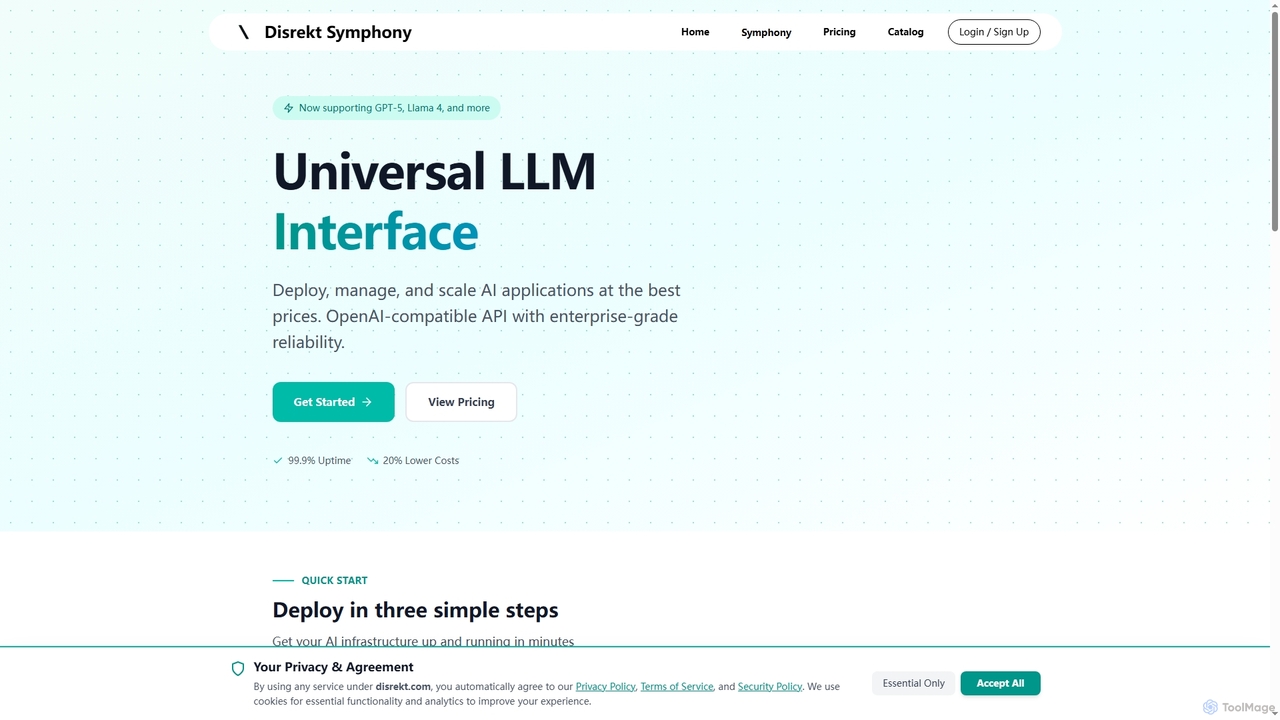
Symphony is a universal LLM interface providing an OpenAI-compatible API for deploying, managing, and scaling AI applications. It …
Symphony is a universal LLM interface providing an OpenAI-compatible API for deploying, managing, and scaling AI applications. It offers enterprise-grade reliability, up to 20% lower costs, and supports over 100 major AI models like GPT-5 and Llama 4, making it an ideal solution for developers and enterprises seeking efficient and robust AI infrastructure.
SupernovaAI
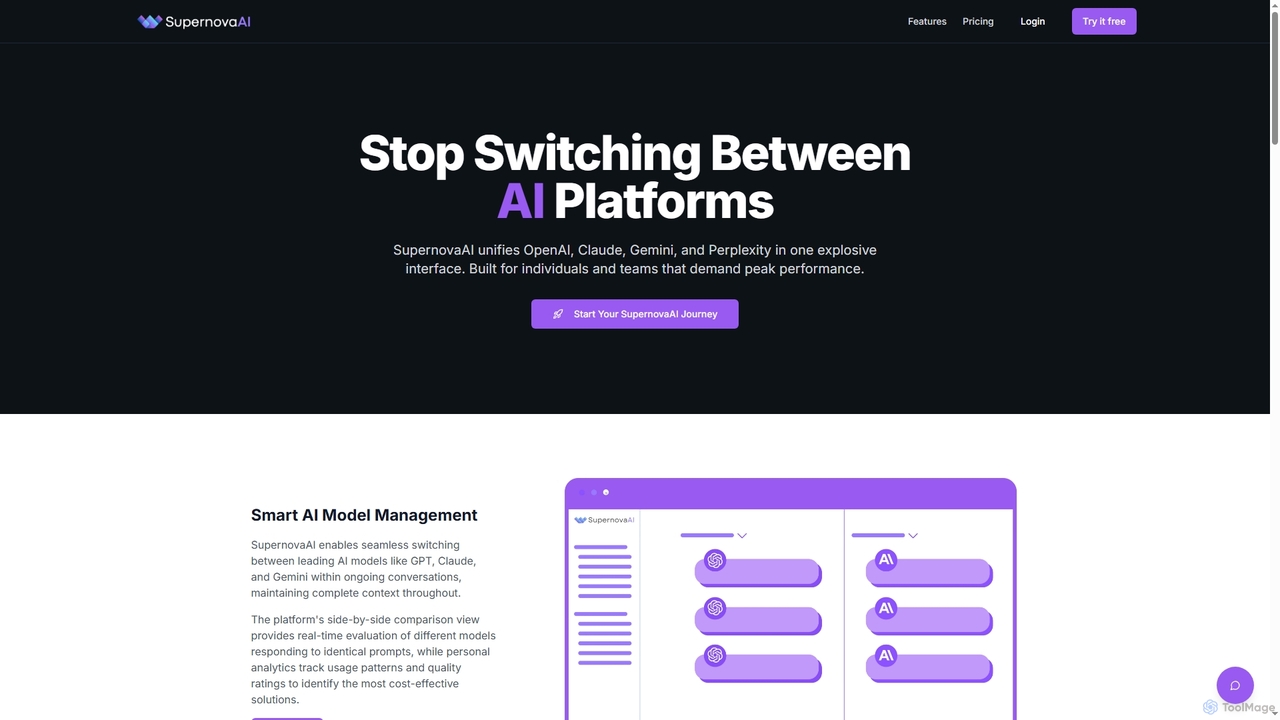
SupernovaAI is a unified platform that integrates leading AI models like OpenAI, Claude, Gemini, and Perplexity into a …
SupernovaAI is a unified platform that integrates leading AI models like OpenAI, Claude, Gemini, and Perplexity into a single, powerful interface. It enables seamless model switching, context retention, side-by-side response comparison, and cost optimization, designed for individuals and teams seeking peak AI performance and streamlined workflows.
About Cost Optimization
Cost Optimization AI tools are designed to help businesses reduce expenditures and improve financial efficiency. These tools leverage advanced AI algorithms to analyze complex financial data, identify spending patterns, and pinpoint areas of potential savings. They provide actionable insights and automate processes to minimize waste and maximize resource utilization, ultimately enhancing profitability.
Core Features
- Expenditure Analysis: Automatically categorize and analyze spending data across departments, projects, and vendors to reveal cost drivers.
- Predictive Cost Modeling: Forecast future expenses based on historical data and market trends, enabling proactive budget adjustments.
- Anomaly Detection: Identify unusual spending spikes or fraudulent activities that deviate from normal patterns.
- Resource Allocation Optimization: Recommend optimal allocation of resources, such as cloud infrastructure or marketing budgets, to achieve goals at lower costs.
- Vendor Negotiation Support: Provide data-driven insights to strengthen negotiation positions with suppliers and service providers.
Use Cases
Businesses across various sectors, from startups managing cloud spend to large enterprises optimizing supply chain costs, utilize these tools. Finance departments can gain granular control over budgets, while operations teams can identify inefficiencies in resource consumption.
How to Choose
When selecting a Cost Optimization AI tool, consider its integration capabilities with existing financial systems, the breadth of its analysis (e.g., cloud, marketing, supply chain), the accuracy of its predictive models, and its reporting and visualization features. Scalability and the level of automation offered are also crucial factors.
Cost OptimizationUse Cases
Optimizing Cloud Infrastructure Spend
Cloud architects and IT managers use AI tools to analyze cloud resource usage, identify idle or underutilized instances, and recommend rightsizing or scheduling adjustments to reduce monthly cloud bills. This proactive management helps avoid unnecessary expenditure on computing, storage, and networking resources, leading to significant savings for businesses relying heavily on cloud services.
Streamlining Marketing Budget Allocation
Marketing teams leverage AI to evaluate the ROI of different campaigns and channels, automatically reallocating budget towards the most effective strategies to maximize customer acquisition at a lower cost per lead. This ensures that marketing spend is always optimized for performance, preventing overspending on underperforming initiatives and improving overall campaign efficiency.
Enhancing Supply Chain Efficiency
Procurement and logistics managers deploy AI to predict demand fluctuations, optimize inventory levels, and identify cost-effective shipping routes or supplier alternatives, minimizing holding costs and transportation expenses. By proactively managing the supply chain, businesses can reduce waste, prevent stockouts, and secure better deals with suppliers, leading to substantial operational savings.
Automating Energy Consumption Reduction
Facility managers in manufacturing or commercial buildings use AI to monitor energy usage patterns, detect inefficiencies in HVAC or lighting systems, and suggest automated adjustments to lower utility bills. This allows for continuous optimization of energy consumption, reducing operational overheads and contributing to environmental sustainability goals without manual intervention.
Detecting Financial Fraud and Waste
Finance departments utilize AI to analyze transaction data for anomalies, flagging suspicious activities or potential waste in expense reports and procurement processes, thereby preventing financial losses. AI's ability to process vast amounts of data and identify subtle deviations makes it highly effective in uncovering fraud that might be missed by traditional auditing methods, safeguarding company assets.
Optimizing Workforce Management Costs
HR and operations leaders employ AI to forecast staffing needs, optimize shift schedules, and identify opportunities for cross-training or automation, ensuring adequate coverage while minimizing overtime and labor costs. This leads to more efficient resource allocation, reduced employee burnout, and significant savings in human capital management, especially in industries with fluctuating demand.