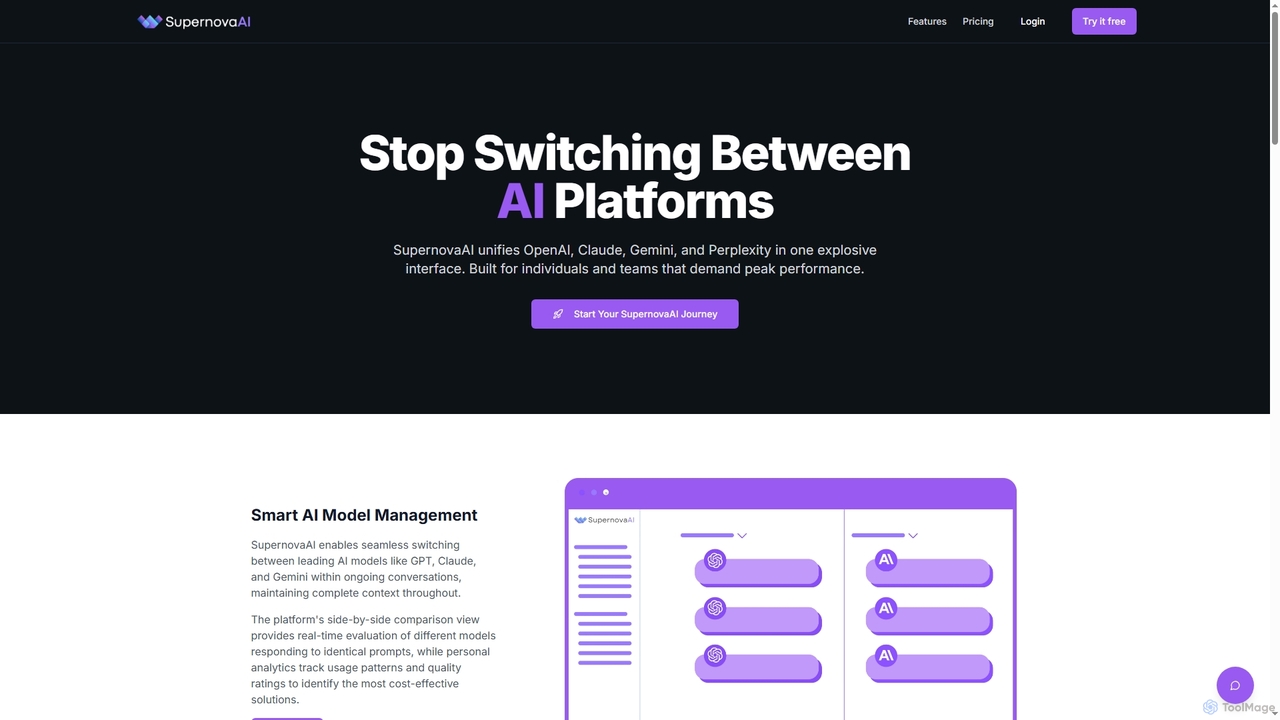
AI Management tools are platforms designed to centralize, monitor, and optimize the use of various AI models and services within an organization. They act as a unified control layer, allowing teams to access different large language models (LLMs) like those from OpenAI, Google, or Anthropic through a single interface. This approach streamlines workflows, controls escalating costs, and ensures consistent and secure application of AI technology. By providing features for prompt management, usage analytics, and collaboration, these tools empower businesses to scale their AI adoption efficiently and responsibly.
Core Features
- Unified Model Access: Connect to and switch between multiple AI models from various providers without changing code or interfaces.
- Prompt Management & Library: Create, save, share, and version-control effective prompts across teams to ensure output quality and consistency.
- Cost & Usage Analytics: Track API calls, token consumption, and spending in real-time, often with project- or user-level breakdowns.
- Team Collaboration: Share resources like prompts, chat histories, and workflows within a secure, centralized environment.
- Security & Governance: Implement access controls, audit logs, and data policies to manage AI usage securely and ensure compliance.
Applicable Scenarios
These tools are particularly valuable for technology companies, marketing agencies, and large enterprises. For instance, a development team can use an AI Management platform to test and deploy applications using different LLMs, while a marketing department can maintain a library of on-brand prompts for content creation. IT departments also use them to enforce security policies and monitor enterprise-wide AI expenditure.
Selection Criteria
When choosing an AI Management tool, consider the range of supported AI models and providers. Evaluate its integration capabilities, including API access and compatibility with existing software. Scrutinize the analytics and cost-control features to ensure they meet your budgeting needs. Finally, assess the platform's security protocols, team management features, and overall ease of use for your specific team structure.