ToolMage
Sign in

Best 2 Academic Assistance AI tools for Productivity

Popular Academic Assistance AI tools in Productivity include CustomWriting and QuizMate, helping you work more efficiently.

QuizMate
Paid

QuizMate

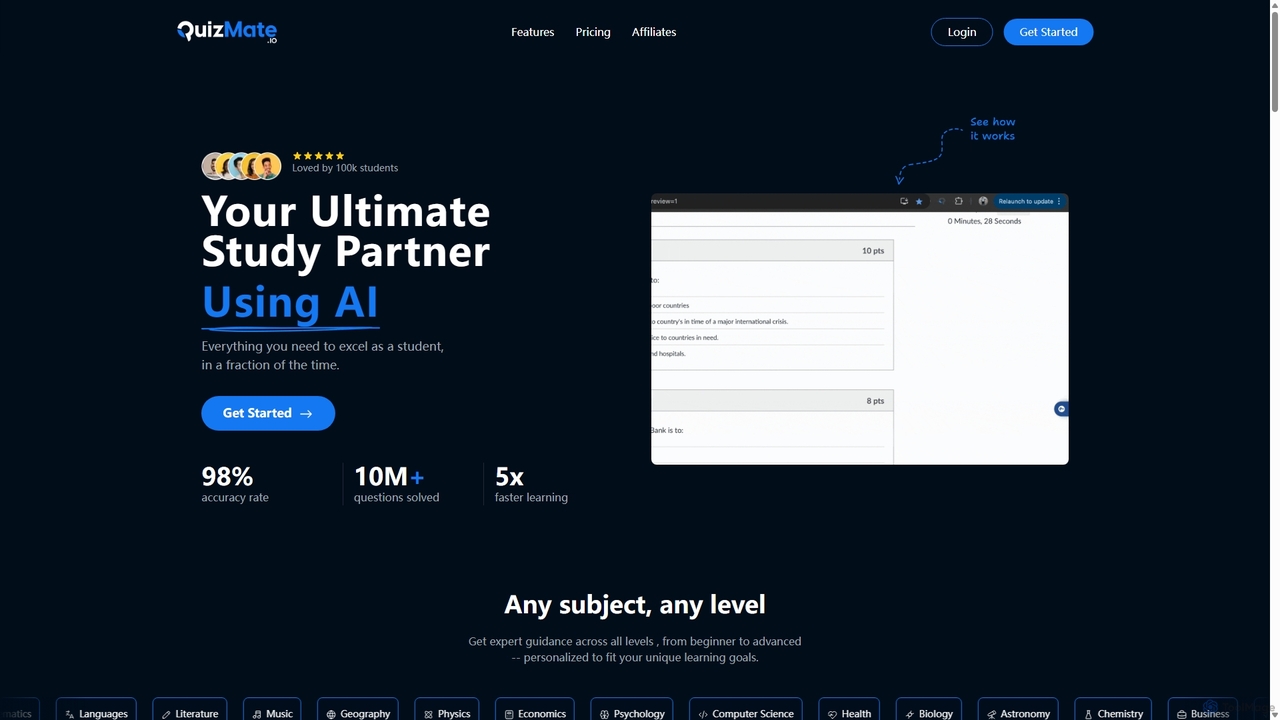
QuizMate is an AI-powered study partner designed for students. It provides instant answers, step-by-step explanations, and comprehensive study tools like lecture summaries, essay writing assistance, and flashcard creation. Available as a Chrome extension and mobile app, it supports all subjects to help students learn faster and improve their grades.

Study Tools
Visits 12.8KFavorites 123Likes 139
CustomWriting
Freemium

CustomWriting

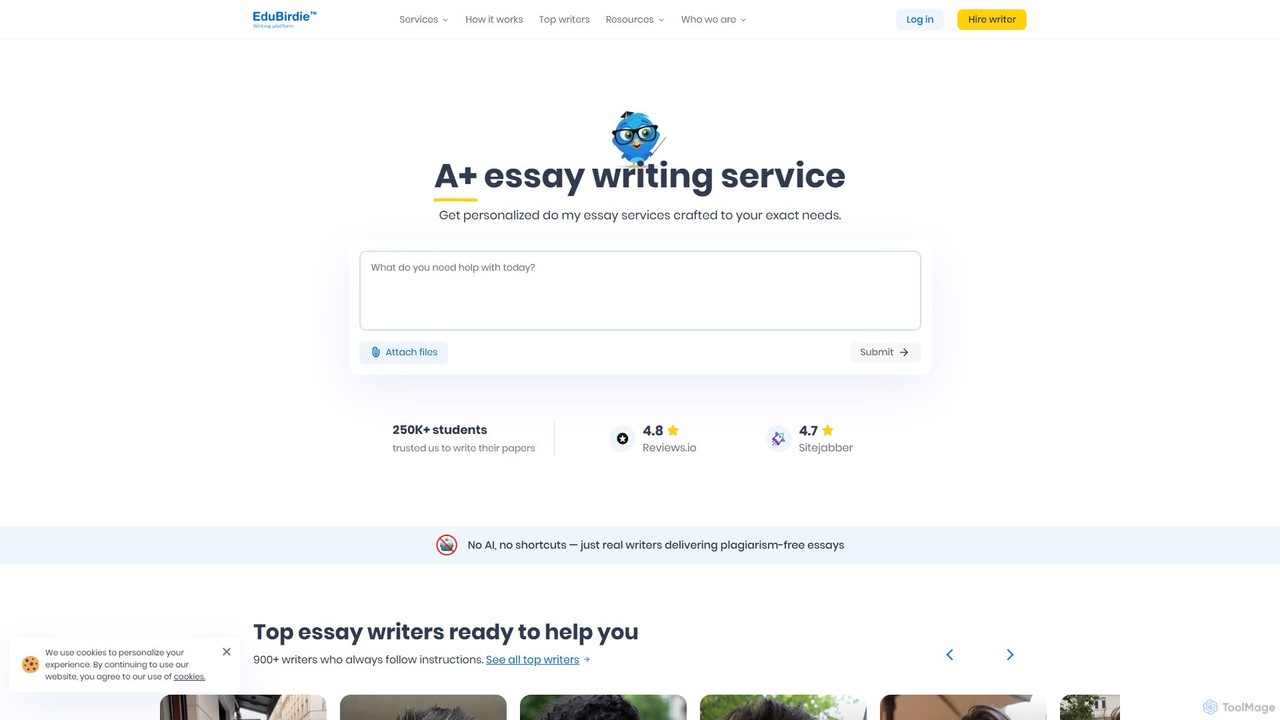
An AI-powered academic writing platform designed to help students with essays, research papers, and assignments. It offers tools for drafting, research, citation, and plagiarism checking to improve writing quality and efficiency.

Writing
Visits 563.4KFavorites 119Likes 126

About Academic Assistance

Academic Assistance tools are a specialized category of AI applications designed to support students, researchers, and educators throughout the academic lifecycle. Leveraging natural language processing (NLP), these tools analyze complex texts, generate summaries, check for plagiarism, and format citations. They streamline time-consuming tasks like literature reviews and essay writing, allowing users to focus on critical thinking and original research. Unlike general productivity tools, they are often trained on academic databases and understand the specific requirements of scholarly work.

Core Features

  • AI-Powered Research: Quickly finds, summarizes, and synthesizes relevant academic papers from vast databases.
  • Writing & Editing Assistance: Improves clarity, grammar, and style with suggestions tailored for academic writing.
  • Citation & Bibliography Management: Automatically generates and formats citations in various styles like APA, MLA, and Chicago.
  • Plagiarism Detection: Compares text against a comprehensive database of academic sources to ensure originality.
  • Data Analysis & Interpretation: Assists in understanding complex datasets and explaining research findings in simple terms.

Applicable Scenarios

These tools are essential for higher education and research environments. University students use them for writing term papers and theses, while PhD candidates and researchers rely on them to accelerate literature reviews and manuscript preparation. Educators and academic institutions also utilize them to check student submissions for originality and maintain academic integrity.

Selection Criteria

When choosing an Academic Assistance tool, consider its subject specificity and whether it covers your field of study. Evaluate the breadth and quality of its integrated academic databases. Assess the accuracy of its citation generation and the thoroughness of its plagiarism checker. Finally, consider its integration with your existing workflow, such as word processors or reference managers.

Academic Assistance use cases

1

Accelerating Literature Reviews for Research Papers

A PhD candidate beginning a new dissertation chapter faces the daunting task of reviewing hundreds of academic papers. By using an AI academic assistant, they can input keywords and research questions to scan multiple databases simultaneously. The tool identifies the most relevant papers, generates concise summaries of each, and highlights key themes, methodologies, and research gaps across the literature. This process reduces the initial information gathering phase from weeks to a matter of days, providing a structured and comprehensive foundation for their original research.

2

Enhancing Essay Writing and Structuring

An undergraduate student writing a term paper can use an AI writing assistant to improve their work. After drafting their initial thoughts, they can use the tool to help structure the arguments into a coherent outline. The AI can suggest stronger topic sentences, identify paragraphs that lack focus, and offer alternative phrasing to improve clarity and avoid repetition. It also acts as an advanced grammar and style checker, ensuring the final submission is polished, professional, and adheres to academic writing standards, ultimately leading to a better grade.

3

Automating Citation and Bibliography Generation

A researcher preparing a manuscript for a scientific journal needs to format dozens of references according to a specific style guide, such as APA 7th edition. Manually formatting each entry is tedious and prone to error. By using an academic assistance tool, they can simply import their sources from a reference manager or paste DOIs. The tool automatically generates perfectly formatted in-text citations and a complete bibliography with a single click. This saves hours of manual work and ensures compliance with publisher requirements, reducing the risk of desk rejection due to formatting errors.

4

Verifying Originality and Avoiding Plagiarism

Before submitting a final thesis, a graduate student needs to ensure their work is free from unintentional plagiarism. They use an AI-powered plagiarism checker which scans their entire document and compares it against billions of online sources and academic publications. The tool highlights passages that are too similar to existing work and provides links to the original sources. This allows the student to review these sections, rephrase them in their own words, and add proper citations where needed, thereby upholding academic integrity and submitting their work with confidence.

5

Simplifying Complex Scientific Papers

A biology student needs to understand a dense research article on genomics, a topic slightly outside their core expertise. They upload the PDF to an AI academic tool. The tool provides a simplified summary of the abstract, methodology, and results. It also creates an interactive glossary, allowing the student to hover over technical jargon like 'CRISPR-Cas9' or 'transcriptome' to get instant, easy-to-understand definitions. This significantly reduces the time required to grasp the paper's core concepts, facilitating more efficient learning and literature comprehension.

6

Assisting with Quantitative Data Analysis

A social sciences researcher has collected survey data but lacks advanced statistical programming skills. They use an AI tool that allows for natural language queries. Instead of writing code, they can ask, 'Show me the correlation between income level and education.' The AI performs the statistical test, generates a corresponding visualization like a scatter plot, and provides a plain-language interpretation of the results, including the p-value and correlation coefficient. This empowers researchers to conduct data analysis more independently and quickly, accelerating the journey from data collection to insight.

Academic Assistance FAQ

What are AI Academic Assistance tools?

AI Academic Assistance tools are specialized software applications that use artificial intelligence to help students, researchers, and educators with academic tasks. Unlike general AI writers, they are specifically designed for the research and writing lifecycle. Key features often include AI-powered search of academic databases, text summarization, grammar and style checking for scholarly articles, automated citation generation in formats like APA and MLA, and robust plagiarism detection. They act as intelligent assistants to streamline research, improve writing quality, and uphold academic integrity.

How do I choose the right AI tool for my academic needs?

Choosing the right tool depends on your primary goal. Consider the following factors:

  • Primary Function: Do you need help with literature discovery, writing and editing, citation management, or plagiarism checking? Some tools specialize in one area, while others offer an all-in-one suite.
  • Discipline Focus: Check if the tool is optimized for your field. A tool for STEM might have better data analysis features, while one for humanities may excel at textual analysis.
  • Database Integration: For research, ensure the tool connects to major academic databases like PubMed, Scopus, or JSTOR.
  • Ethical Use and Originality: Select tools that assist and enhance your own work, rather than generating content for you. A good tool should promote critical thinking and proper citation.
What is the difference between an AI Academic Assistant and a general AI writer?

The key difference is specialization and data sources. General AI writers (like ChatGPT) are trained on a broad swath of the internet and are designed for versatile, creative, and general-purpose text generation. In contrast, AI Academic Assistants are specifically trained on scholarly articles, textbooks, and academic databases. This specialization allows them to understand academic conventions, generate accurate citations from real sources, perform literature searches in a structured way, and provide feedback tailored to academic writing standards. They often have built-in workflows for research tasks that general writers lack.

Can using AI for academic work be considered cheating?

The ethics of using AI in academia depends heavily on institutional policy and how the tool is used. Using AI as a productivity tool—for checking grammar, formatting citations, or summarizing papers to aid understanding—is generally acceptable. However, submitting text generated by an AI as your own original work constitutes plagiarism and is a serious academic offense. It is crucial to use these tools as assistants to enhance your own thinking and writing, not as replacements for them. Always check your university's specific academic integrity guidelines before using any AI tool for coursework.

What are the key features of a good AI research assistant?

A high-quality AI research assistant should possess several key features to be truly effective. Firstly, it must have access to a vast and reputable database of peer-reviewed journals, conference papers, and academic books. Secondly, it should offer semantic search capabilities, understanding the intent behind a query rather than just matching keywords. Thirdly, it needs to provide accurate, traceable summaries and insights, always linking back to the original source document. Finally, a superior tool will offer features for synthesis, helping to identify themes, contradictions, and research gaps across multiple papers, not just analyzing them in isolation.