EasyEssay
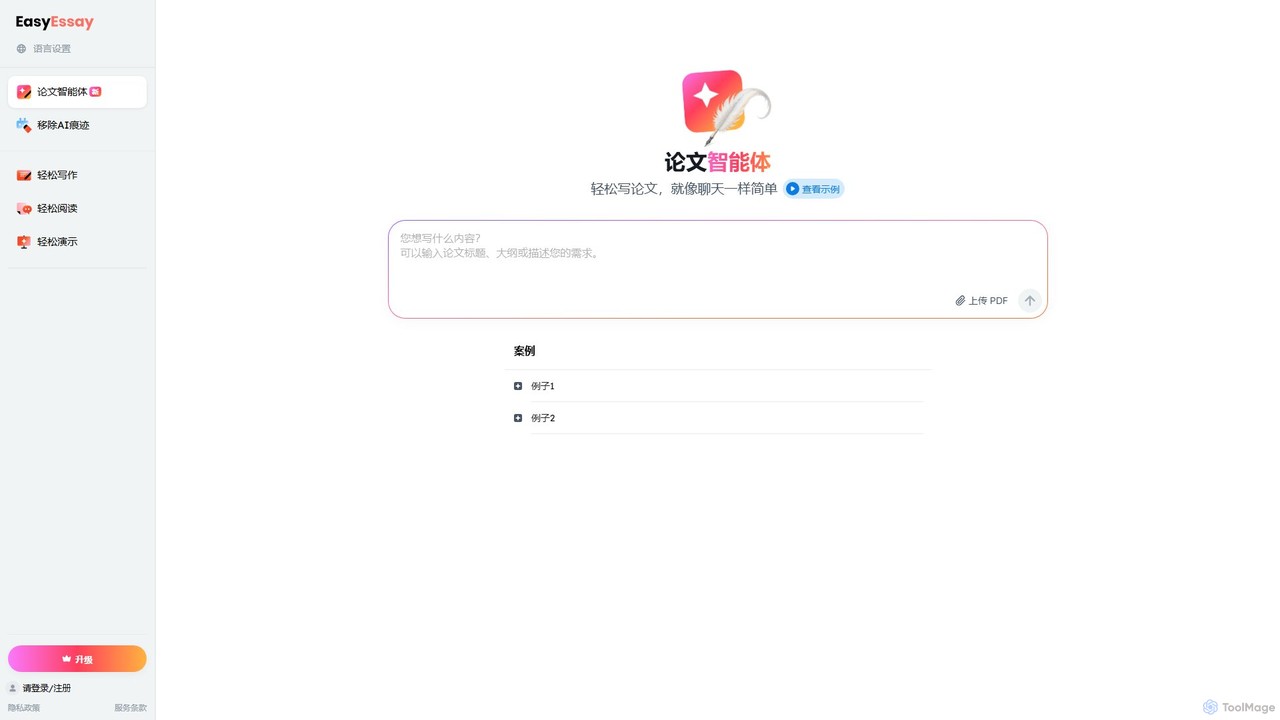
EasyEssay is a comprehensive AI writing assistant designed for students and professionals. It simplifies essay writing, presentation creation, …
EasyEssay is a comprehensive AI writing assistant designed for students and professionals. It simplifies essay writing, presentation creation, and text refinement through a suite of powerful tools, including a conversational Essay Agent, an AI trace remover, and a presentation generator.
CustomWriting
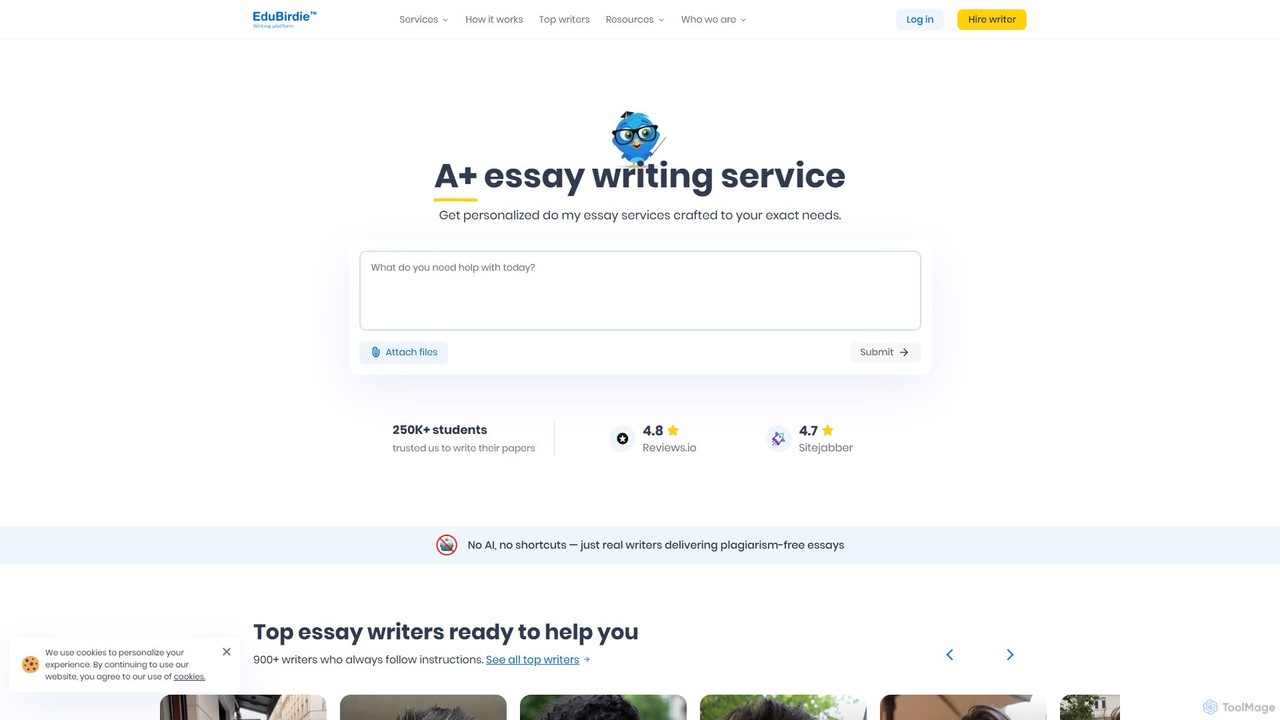
An AI-powered academic writing platform designed to help students with essays, research papers, and assignments. It offers tools …
An AI-powered academic writing platform designed to help students with essays, research papers, and assignments. It offers tools for drafting, research, citation, and plagiarism checking to improve writing quality and efficiency.
PaperTyper
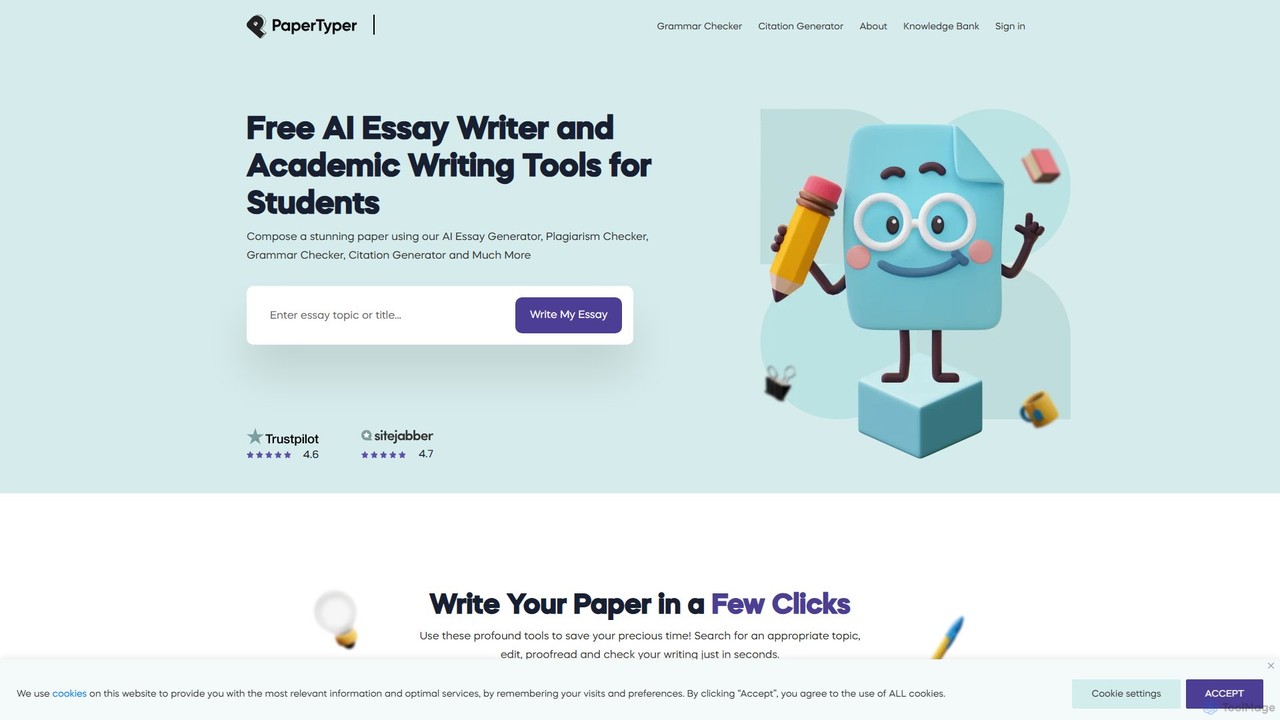
PaperTyper is a free, all-in-one AI writing assistant for students. It offers an essay generator, plagiarism checker, multi-language …
PaperTyper is a free, all-in-one AI writing assistant for students. It offers an essay generator, plagiarism checker, multi-language grammar checker, and citation generator to help overcome writer's block and streamline the academic writing process from start to finish.
aiupdatesnow
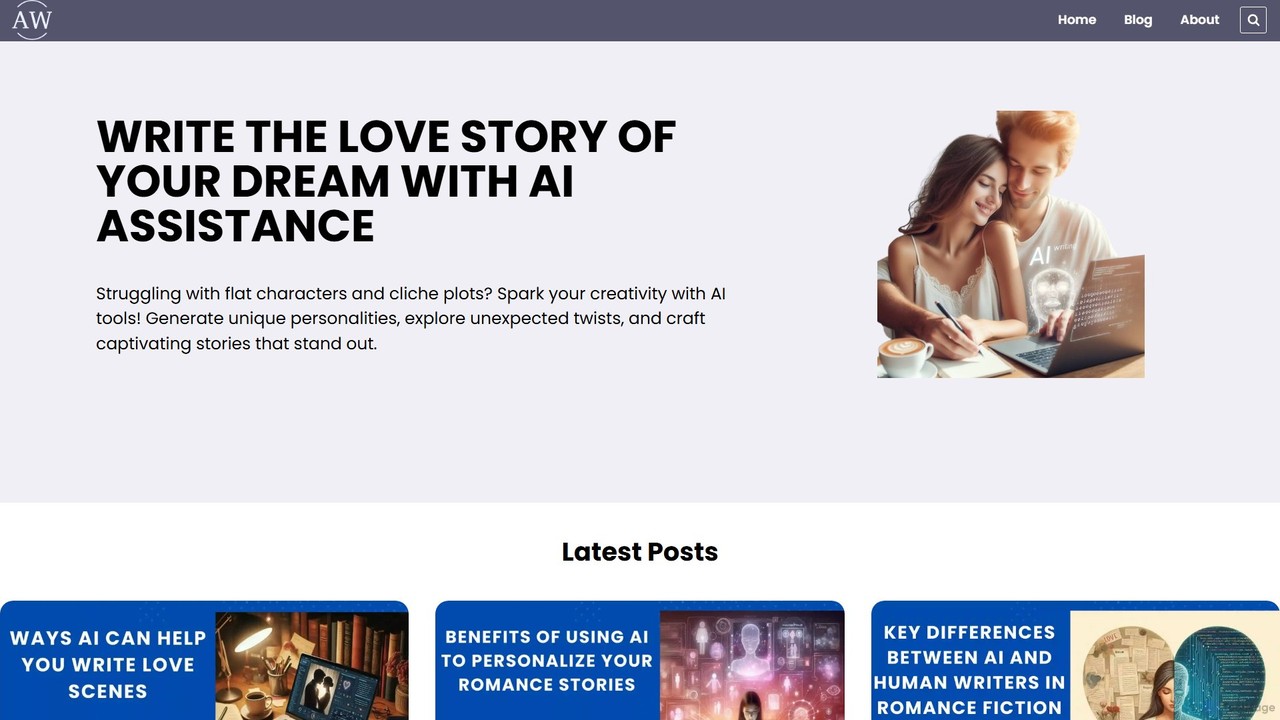
A dedicated resource platform for romance writers, offering expert guides, tips, and curated AI tool recommendations. It helps …
A dedicated resource platform for romance writers, offering expert guides, tips, and curated AI tool recommendations. It helps authors leverage AI to overcome writer's block, develop compelling characters, and craft captivating love stories.
About Writing
AI Writing tools are specialized applications designed to enhance writing skills and streamline the academic and educational writing process. They leverage natural language processing (NLP) to provide real-time feedback on grammar, style, clarity, and structure. These tools are valuable for students, educators, and researchers, helping to improve the coherence and overall quality of written work, from essays to research papers. They act as an intelligent assistant, identifying potential issues and suggesting improvements to foster better writing habits.
Core Features
- Grammar and Style Enhancement: Corrects grammatical errors, punctuation, and spelling, while also suggesting improvements for tone, clarity, and conciseness.
- Plagiarism Detection: Scans documents against a vast database of online sources and academic papers to identify unoriginal content.
- Citation and Bibliography Generation: Automatically formats citations and creates bibliographies in various academic styles like APA, MLA, and Chicago.
- Content Structuring and Summarization: Helps generate outlines, summarize long texts, and paraphrase complex sentences to improve readability and avoid plagiarism.
Applicable Scenarios
These tools are widely used in academic institutions, from high schools to universities. Students use them to proofread essays and reports, researchers to draft and polish papers for publication, and educators to provide scalable feedback on student assignments. They are particularly beneficial for non-native English speakers aiming to meet academic writing standards.
Selection Criteria
When choosing an AI Writing tool for educational purposes, consider the accuracy of its suggestions and the depth of its feedback. Evaluate its integration capabilities with word processors like Google Docs or Microsoft Word. Also, check the range of supported citation styles and the platform's data privacy policy, especially when handling sensitive research.
WritingUse Cases
Enhancing Academic Essay Drafts
A university student writing a history essay uses an AI writing tool to refine their first draft. After completing the initial writing, they upload the document to the tool. The AI immediately highlights grammatical errors, awkward phrasing, and sentences that are too complex. It suggests alternative wording to improve clarity and maintain an academic tone. The student accepts relevant suggestions, uses the paraphrasing feature to rephrase a paragraph to avoid unintentional plagiarism, and finally uses the citation generator to correctly format their bibliography in APA style. This process helps them submit a polished, well-structured, and credible essay.
Structuring a Research Paper
A postgraduate researcher preparing a scientific paper uses an AI writing tool to structure their work effectively. They start by inputting their core research question and key findings into the tool's outliner feature. The AI generates a logical structure, suggesting sections for Introduction, Methodology, Results, and Discussion. As the researcher writes, the tool helps summarize dense academic sources, making it easier to synthesize information for the literature review. It also maintains consistency in terminology throughout the lengthy document and flags sentences that are unclear or overly technical for a broader audience, ensuring the final paper is both rigorous and accessible.
Language Support for Non-Native Speakers
An international student whose first language is not English uses an AI writing assistant to prepare their assignments. The tool is invaluable for catching subtle grammatical errors and suggesting more natural, idiomatic phrasing common in academic English. It helps them understand the nuances of sentence structure and vocabulary choices. By reviewing the AI's suggestions, the student not only improves the quality of their current assignment but also actively learns and reinforces English writing conventions, building their confidence and helping them integrate more effectively into the academic environment.
Providing Scalable Writing Feedback
An educator teaching a large undergraduate course uses an AI writing tool integrated into their learning management system (LMS). When students submit their essays, the tool automatically provides initial feedback on grammar, spelling, and citation formatting. It also runs a plagiarism check, flagging passages that require review. This automated first pass allows the educator to save significant time on correcting mechanical errors and instead focus their valuable feedback on the students' arguments, critical thinking, and content comprehension. This approach enables personalized, high-level feedback at scale.
Drafting a Thesis or Dissertation
A PhD candidate working on their dissertation uses an advanced AI writing platform to manage the large-scale project. The tool helps maintain a consistent tone and style across hundreds of pages. Its summarization feature is crucial for condensing extensive literature into concise review sections. The platform's plagiarism checker provides peace of mind by continuously scanning new text against existing literature. Furthermore, the bibliography manager automatically updates and formats thousands of citations, saving countless hours of manual work and reducing the risk of errors in the final submission.
Collaborative Writing for Group Projects
A team of students working on a joint research report uses a collaborative AI writing tool. The platform allows all members to work on the document simultaneously. The AI assistant helps maintain a uniform writing style and tone across sections written by different authors, suggesting edits to align phrasing and terminology. It also tracks sources and helps build a shared bibliography, ensuring all contributions are properly cited. This streamlines the collaborative process, reduces inconsistencies, and helps the team produce a cohesive and professional final document.