AILYZE
AILYZE is an AI-powered qualitative data analysis (QDA) software designed for researchers, academics, and businesses. It automates thematic …
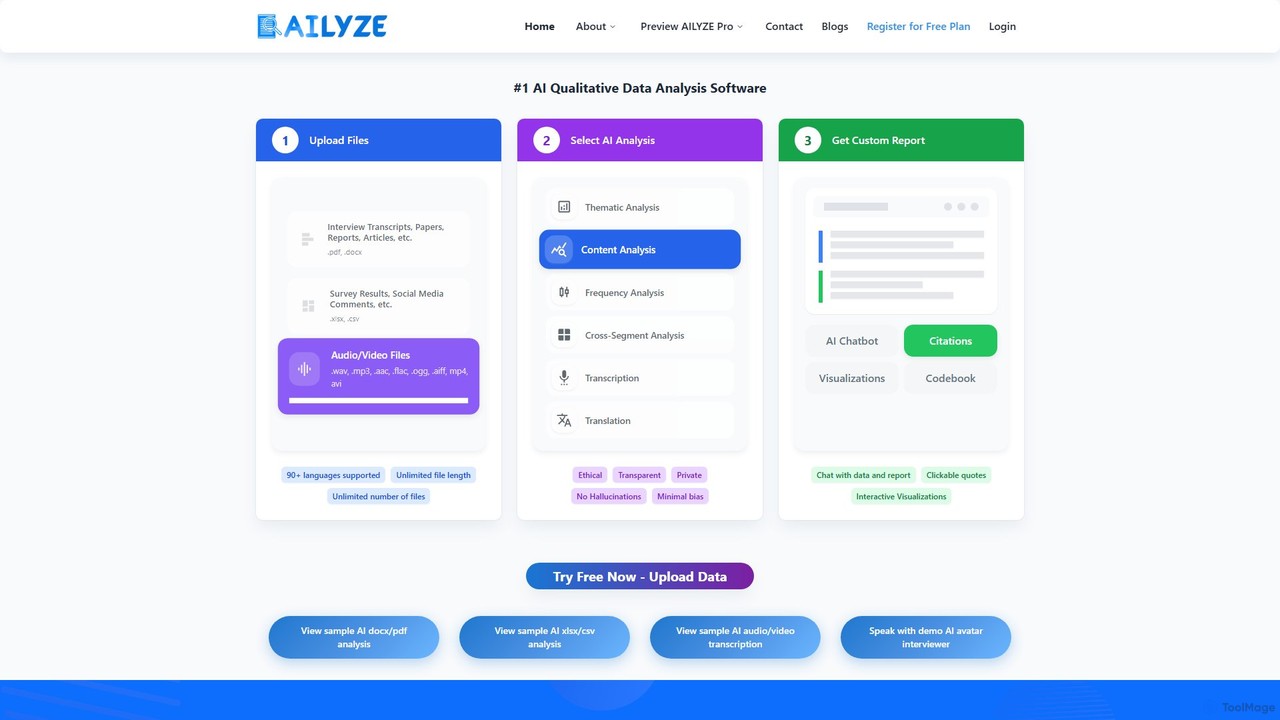
AILYZE is an AI-powered qualitative data analysis (QDA) software designed for researchers, academics, and businesses. It automates thematic analysis, content analysis, and transcription from documents, spreadsheets, and audio/video files. Key features include an AI interviewer, data visualization, and a secure, ethical AI framework that ensures data privacy and minimizes bias.
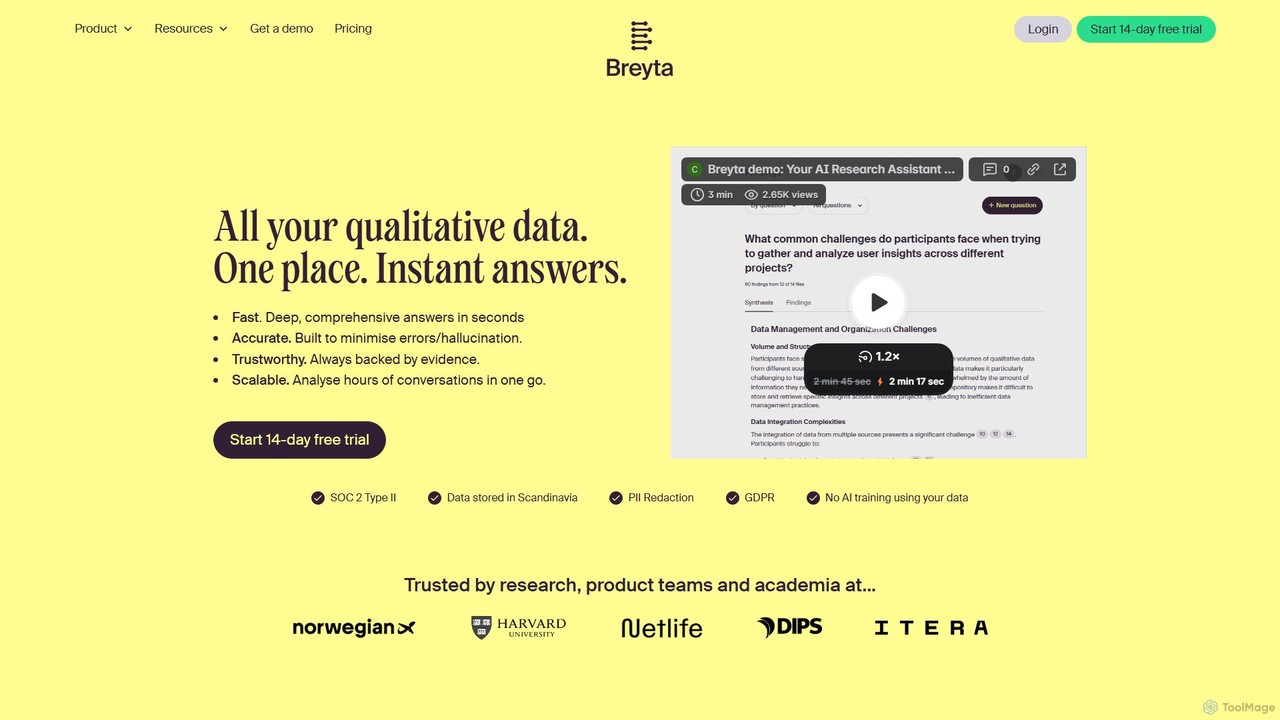
Breyta
Breyta is an AI-powered research platform designed to analyze vast amounts of qualitative data instantly. It helps research, …
Breyta is an AI-powered research platform designed to analyze vast amounts of qualitative data instantly. It helps research, product, and academic teams search across unlimited files, synthesize insights from hours of interviews, and get evidence-backed answers. With features like automatic transcription, PII redaction, and direct quote referencing, Breyta streamlines the qualitative analysis process, ensuring accuracy and saving significant time.
Lateral
Lateral is an AI-powered research assistant designed for academics, students, and professionals. It helps you rapidly search, organize, …
Lateral is an AI-powered research assistant designed for academics, students, and professionals. It helps you rapidly search, organize, and synthesize information from multiple documents, transforming the literature review and document analysis process into a fast and structured workflow.
Elicit
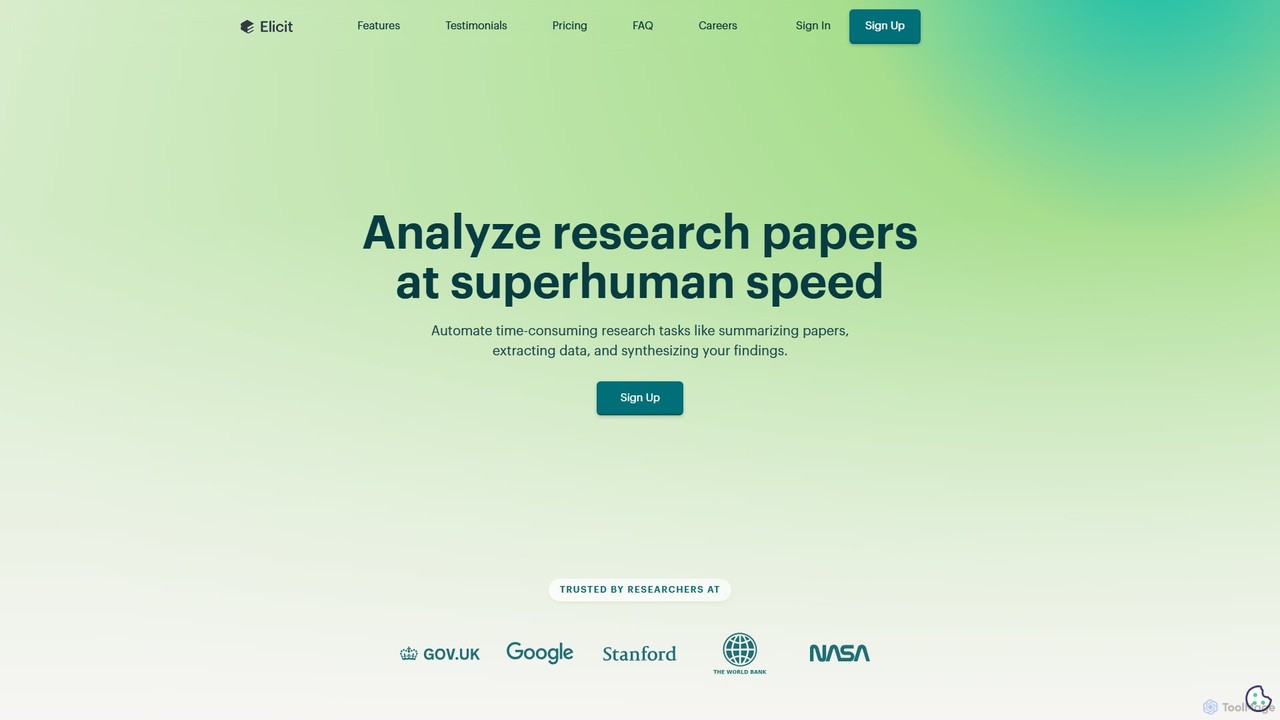
Elicit is an AI research assistant designed to automate and accelerate the literature review process. It helps researchers …
Elicit is an AI research assistant designed to automate and accelerate the literature review process. It helps researchers find relevant papers, summarize key findings, extract data, and synthesize information from a vast database of over 125 million academic articles. Elicit streamlines time-consuming tasks, enabling users to analyze more evidence with greater accuracy and speed.
About Academia
AI Academia tools are specialized applications designed to support researchers, students, and educators throughout the academic lifecycle. They leverage machine learning and natural language processing to streamline complex tasks such as literature discovery, data analysis, academic writing, and citation management. These tools help accelerate research, improve the quality of scholarly papers, and foster deeper insights from complex information. Their primary advantage lies in their ability to process vast amounts of scholarly data while adhering to the rigorous standards of academic integrity.
Core Features
- Literature Review Automation: Efficiently searches, filters, and summarizes relevant academic papers from vast databases.
- Academic Writing Assistant: Offers advanced grammar checking, style suggestions, and paraphrasing tools tailored for scholarly writing.
- Data Analysis & Interpretation: Helps analyze quantitative or qualitative data, identify patterns, and generate visualizations for publications.
- Citation & Bibliography Management: Automatically generates accurate citations and bibliographies in various academic styles (e.g., APA, MLA, Chicago).
- Originality Checking: Scans documents against academic databases to detect potential plagiarism and ensure originality.
Applicable Scenarios
These tools are essential for higher education students, PhD candidates, postdoctoral researchers, and faculty members across all disciplines. They are frequently used for writing dissertations, preparing grant proposals, conducting systematic reviews, and drafting articles for peer-reviewed journals. Research institutions also use them to maintain academic integrity standards.
Selection Criteria
When choosing an AI Academia tool, consider its discipline-specific accuracy, the quality and breadth of its source database, and its integration capabilities with reference managers like Zotero or EndNote. Also, evaluate its policies on data privacy and intellectual property to ensure your research remains secure and confidential.
AcademiaUse Cases
Accelerating Literature Reviews for Theses
A PhD candidate beginning their dissertation is often faced with hundreds or even thousands of potentially relevant research papers. Manually sifting through this volume is a monumental task. By using an AI Academia tool, the candidate can input keywords and research questions to automatically scan multiple databases. The tool then filters, ranks, and provides concise summaries of the most relevant articles, identifying key themes, methodologies, and research gaps. This process reduces weeks of manual labor to a few days, providing a solid foundation for the literature review chapter and ensuring no critical studies are overlooked.
Drafting and Polishing Academic Papers
A university professor writing a research article for a peer-reviewed journal needs the manuscript to be clear, concise, and grammatically perfect. An AI academic writing assistant can be invaluable. As the professor writes, the tool suggests improvements for sentence structure, flags jargon, and ensures a consistent academic tone. It can also paraphrase complex sentences to improve readability without changing the original meaning. Before submission, the tool performs a final check for grammar, punctuation, and adherence to a specific style guide, significantly increasing the manuscript's quality and its chances of acceptance.
Analyzing Qualitative Research Data
A social scientist has conducted dozens of in-depth interviews, resulting in hundreds of pages of transcripts. Manually coding this data for thematic analysis is laborious and prone to bias. By uploading the transcripts to an AI analysis tool, the researcher can automate the initial coding process. The AI identifies recurring themes, concepts, and sentiments, grouping relevant quotes together. This provides the researcher with a structured overview of the data, allowing them to focus on higher-level interpretation and theory-building rather than getting bogged down in the mechanics of coding.
Generating Accurate Citations and Bibliographies
An undergraduate student is writing a term paper with over 50 sources. Manually formatting each in-text citation and the final bibliography in a complex style like APA 7th edition is tedious and error-prone. Using an AI-powered citation manager, the student can simply input the DOI or title of a source. The tool instantly fetches all metadata and formats the citation correctly. As they write, it integrates with their word processor to insert in-text citations and automatically builds a perfectly formatted bibliography at the end. This saves hours of work and prevents loss of marks due to citation errors.
Preparing Engaging Lecture Materials
A lecturer needs to create a presentation on a complex new scientific discovery for an undergraduate class. Instead of spending hours reading and simplifying dense research papers, they use an AI tool. They input the key papers, and the AI generates a summary of the main findings, explains complex terminology in simple terms, and even suggests an outline for the lecture slides. The tool can also generate quiz questions based on the material to test student comprehension. This streamlines course preparation, ensuring the content is accurate, up-to-date, and presented in a way that is accessible to students.
Checking Manuscripts for Originality
A journal editor receives dozens of manuscript submissions daily and must uphold academic integrity. Before sending a paper for peer review, they use a specialized AI plagiarism checker. This tool compares the submitted text against a vast, continuously updated database of academic journals, books, and web content. It generates a detailed originality report that highlights matching text and provides links to the original sources. This allows the editor to quickly identify potential plagiarism or improper citation, making an informed decision and safeguarding the journal's reputation.