
Education Best in category 1 results Academic Support AI Tool

Popular AI tools in the Academic Support field of Education include Text2Go, etc., helping you quickly improve efficiency.

Text2Go

Text2Go

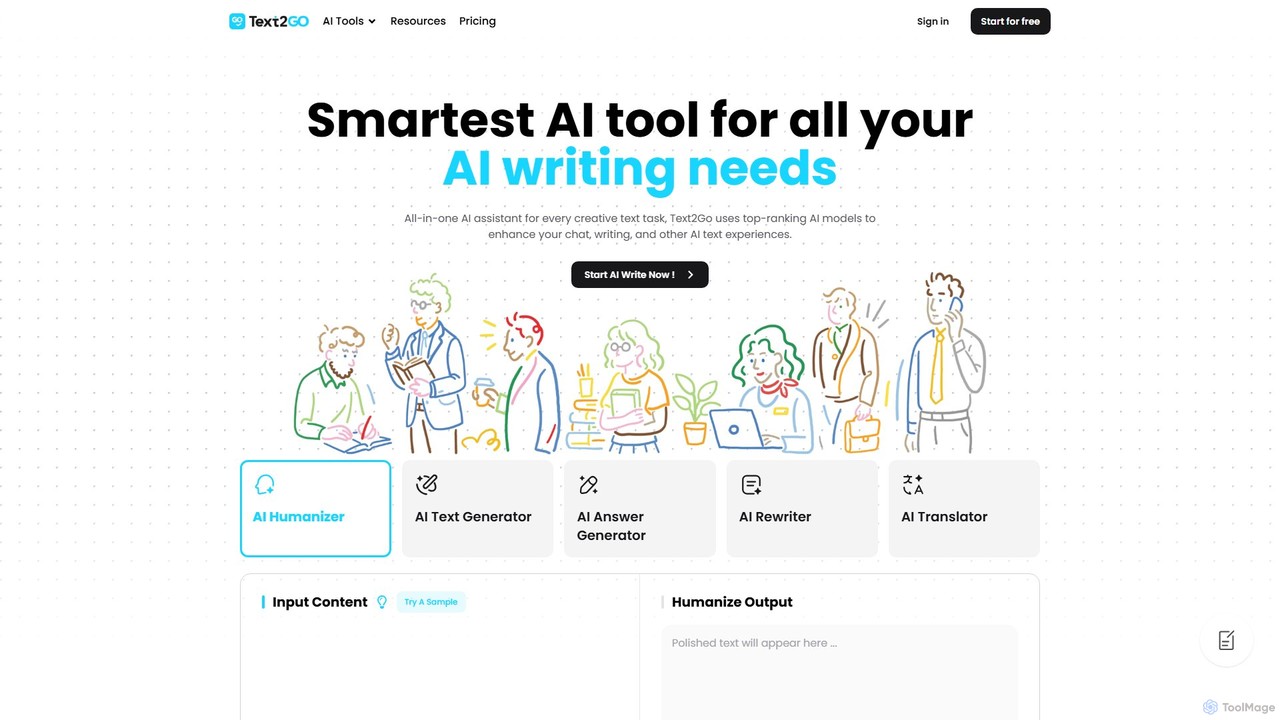
Text2Go is an all-in-one AI writing assistant designed to enhance your creative and professional text tasks. It features …

2.8K

About Academic Support

AI Academic Support tools are specialized applications designed to assist students, researchers, and educators throughout the scholarly process. These tools leverage natural language processing (NLP) and machine learning to streamline complex tasks such as literature discovery, academic writing, and data analysis. Their primary value lies in enhancing research quality, improving writing clarity, and significantly increasing efficiency in academic work. By automating tedious processes, they allow users to focus on critical thinking and analysis.

Core Features

  • AI-Powered Research: Automatically finds relevant papers, summarizes articles, and extracts key information from large volumes of text.
  • Advanced Writing Assistance: Provides grammar and style suggestions tailored for academic tone, along with sophisticated plagiarism detection.
  • Automated Citation Management: Generates accurate citations and bibliographies in various formats like APA, MLA, and Chicago.
  • Data Analysis & Interpretation: Helps analyze qualitative and quantitative data, identify trends, and generate summaries for research findings.
  • Personalized Study Aids: Creates summaries, flashcards, and quizzes from lecture notes or textbook chapters to support learning.

Applicable Scenarios

These tools are widely used in higher education and research institutions. University students utilize them for writing essays and theses, PhD candidates for conducting comprehensive literature reviews, and academic researchers for preparing manuscripts for publication. They are valuable across disciplines, from social sciences for qualitative data analysis to STEM fields for structuring technical papers.

Selection Criteria

When choosing an AI Academic Support tool, consider its specific function—whether it excels in writing, research, or data analysis. Evaluate its integration with academic databases like Google Scholar or PubMed. Check the range of supported citation styles and assess the accuracy of its summarization and paraphrasing features to ensure academic integrity is maintained.

Academic SupportUse Cases

1

Automating Literature Reviews for a Thesis

A PhD candidate in sociology is starting their dissertation and faces the daunting task of reviewing hundreds of academic papers. Using an AI academic support tool, they input their core research questions and keywords. The AI scans databases like JSTOR and Scopus, identifying the most relevant papers, summarizing their abstracts and findings, and grouping them by theme. This process reduces the initial research time from several weeks to a few days, allowing the candidate to quickly identify research gaps and build a strong theoretical framework for their thesis.

2

Enhancing Essay Writing and Proofreading

An undergraduate student is writing a history essay and struggles with academic writing conventions. They use an AI writing assistant to improve their draft. The tool suggests alternative phrasing to make sentences more concise, checks for grammatical errors, and ensures a consistent academic tone. Crucially, it also verifies that all citations are correctly formatted in the Chicago style required by their professor and runs a plagiarism check against online sources and academic databases, helping the student submit a polished, well-cited, and original paper.

3

Generating Study Materials from Lecture Notes

A medical student has accumulated extensive notes from a semester of anatomy lectures. To prepare for final exams, they upload these notes into an AI academic tool. The AI processes the text and automatically generates a set of digital flashcards with key terms and definitions, a concise summary of each lecture, and a series of multiple-choice practice questions. This transforms passive notes into active study materials, enabling the student to test their knowledge, identify weak spots, and study more effectively without spending hours creating these resources manually.

4

Analyzing Qualitative Research Data

A social sciences researcher has conducted 30 in-depth interviews for a study on community engagement. Manually coding these transcripts would take weeks. Instead, they use an AI analysis tool. The tool transcribes the audio, then identifies and categorizes recurring themes, keywords, and sentiment across all interviews. It generates a visual map of thematic connections and provides a summary report with key quotes for each theme. This accelerates the data analysis phase, enabling the researcher to focus on interpreting the findings and writing their paper.

5

Paraphrasing and Avoiding Unintentional Plagiarism

A graduate student is synthesizing information from multiple sources for a literature review. To maintain academic integrity, they need to rephrase concepts in their own words. They use an AI paraphrasing tool specifically designed for academic contexts. The student inputs a complex sentence from a research paper, and the tool provides several alternative versions that retain the original meaning but use different vocabulary and sentence structures. The tool also integrates with a citation generator, ensuring that the original source is always properly credited, thus helping the student avoid accidental plagiarism while building their argument.

6

Preparing a Scientific Manuscript for Publication

A team of scientists has completed their research and needs to write a manuscript for a high-impact journal. They use an AI academic tool to streamline the process. The tool helps structure the paper according to the journal's specific formatting guidelines (e.g., IMRaD structure). It assists in writing a concise abstract by summarizing the key findings. It also checks the entire manuscript for clarity, consistency in terminology, and adherence to the required citation style (e.g., Vancouver). This ensures the manuscript is professional and meets submission standards, increasing its chances of being accepted for peer review.

Academic SupportFrequently Asked Questions