ToolMage
Sign in

Best 5 Administration AI tools for Education

Popular Administration AI tools in Education include Edusign, Nimble, ivy.ai, TrustDoc, and hubbleiq, helping you work more efficiently.

TrustDoc
Freemium

TrustDoc

TrustDoc is an AI-powered document management and evaluation platform designed to automate document validation, analysis, and verification. It helps organizations streamline workflows, ensure accuracy and compliance, and enhance collaboration by using AI to score, summarize, and justify document content against predefined templates and standards.

Compliance
Visits 5.6KFavorites 124Likes 140
Edusign
Paid

Edusign

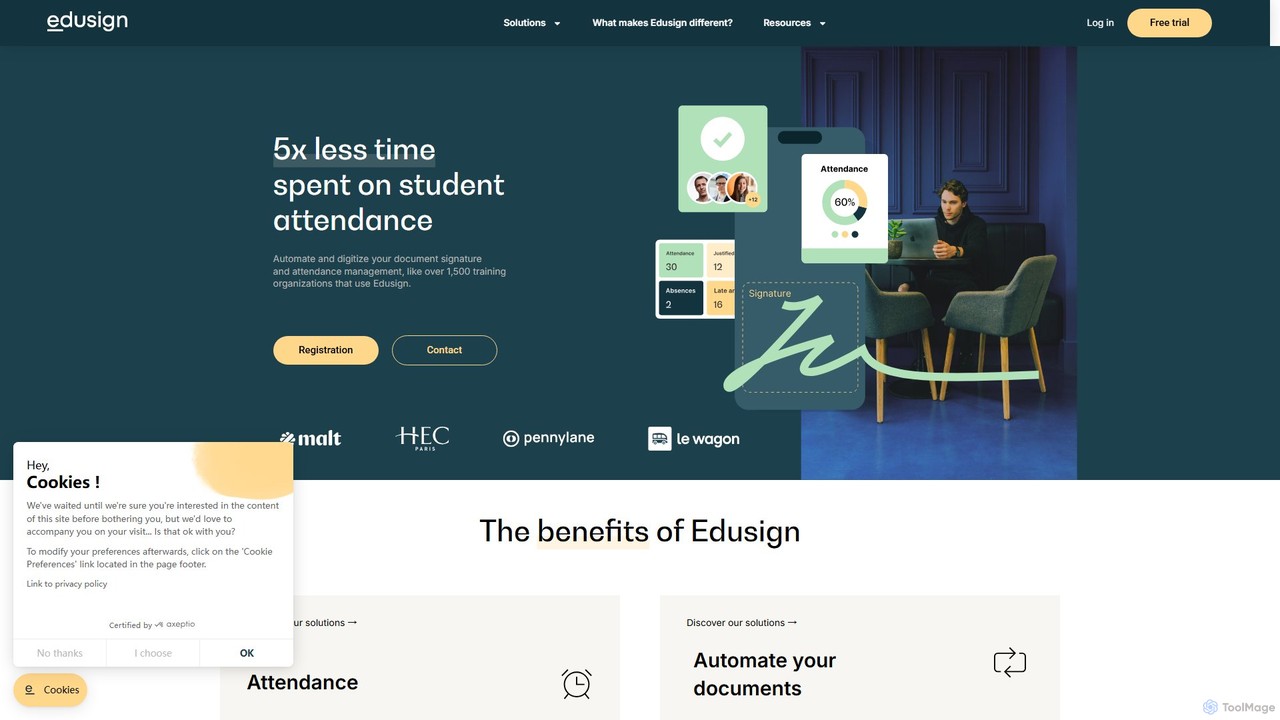
Edusign is a comprehensive digital platform for educational and training institutions to automate attendance tracking, document management, and electronic signatures. It saves significant administrative time, reduces absenteeism, and streamlines workflows through powerful integrations and analytics.

Human Resources
Visits 537.1KFavorites 107Likes 102
hubbleiq
Freemium

hubbleiq

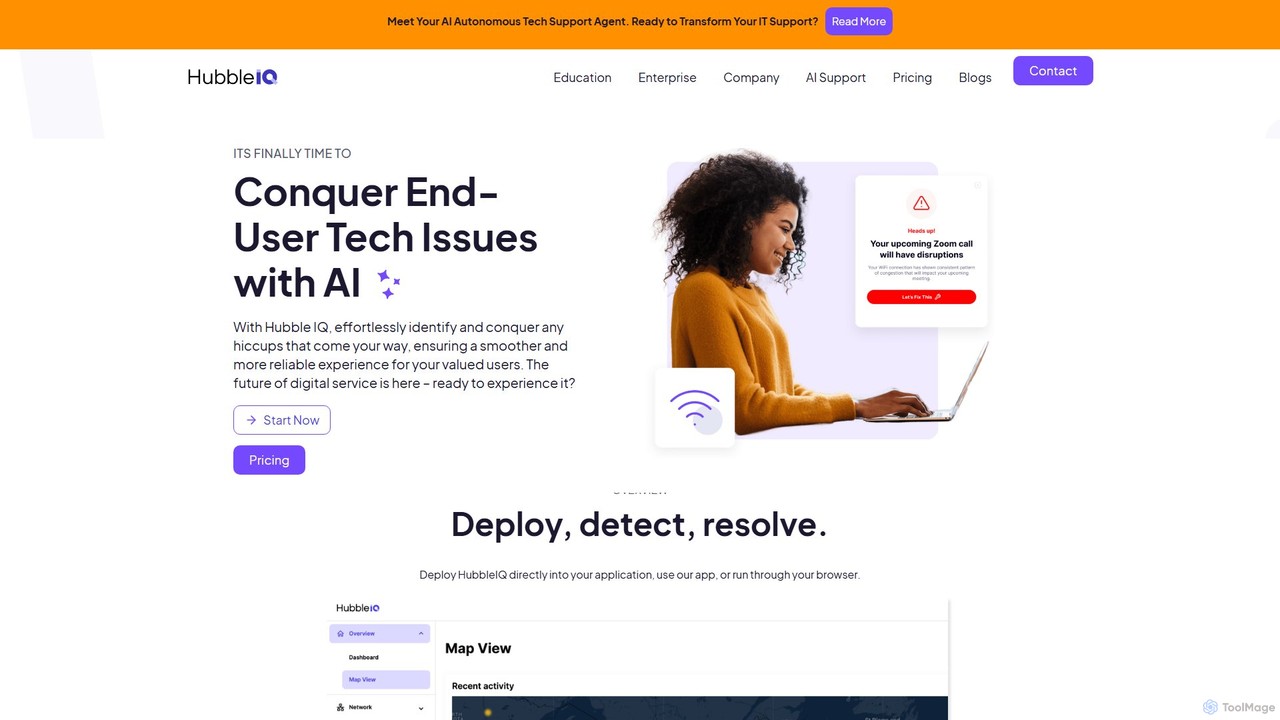
HubbleIQ is an AI-powered IT support platform that proactively detects, diagnoses, and resolves technology issues for end-users. It automates troubleshooting for networks, devices, and applications, significantly reducing helpdesk tickets and resolution times for businesses, educational institutions, and telehealth providers.

Analytics
Visits 4.1KFavorites 135Likes 140
Nimble
Paid

Nimble

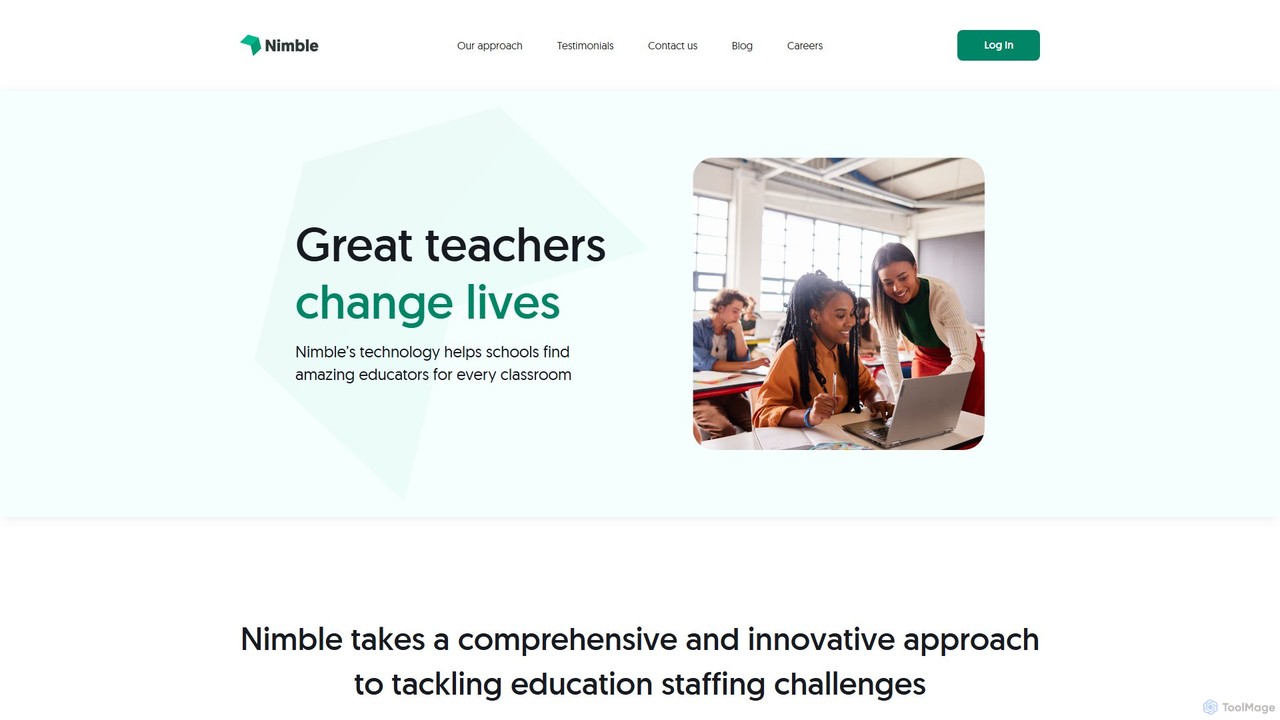
Nimble is an AI-powered recruiting platform designed for the education sector. It helps schools and districts find, hire, and onboard amazing educators by streamlining the entire hiring process, from applicant tracking to data-driven decision-making, ensuring every classroom has a great teacher.

Administration
Visits 241.8KFavorites 112Likes 115
ivy.ai
Paid

ivy.ai

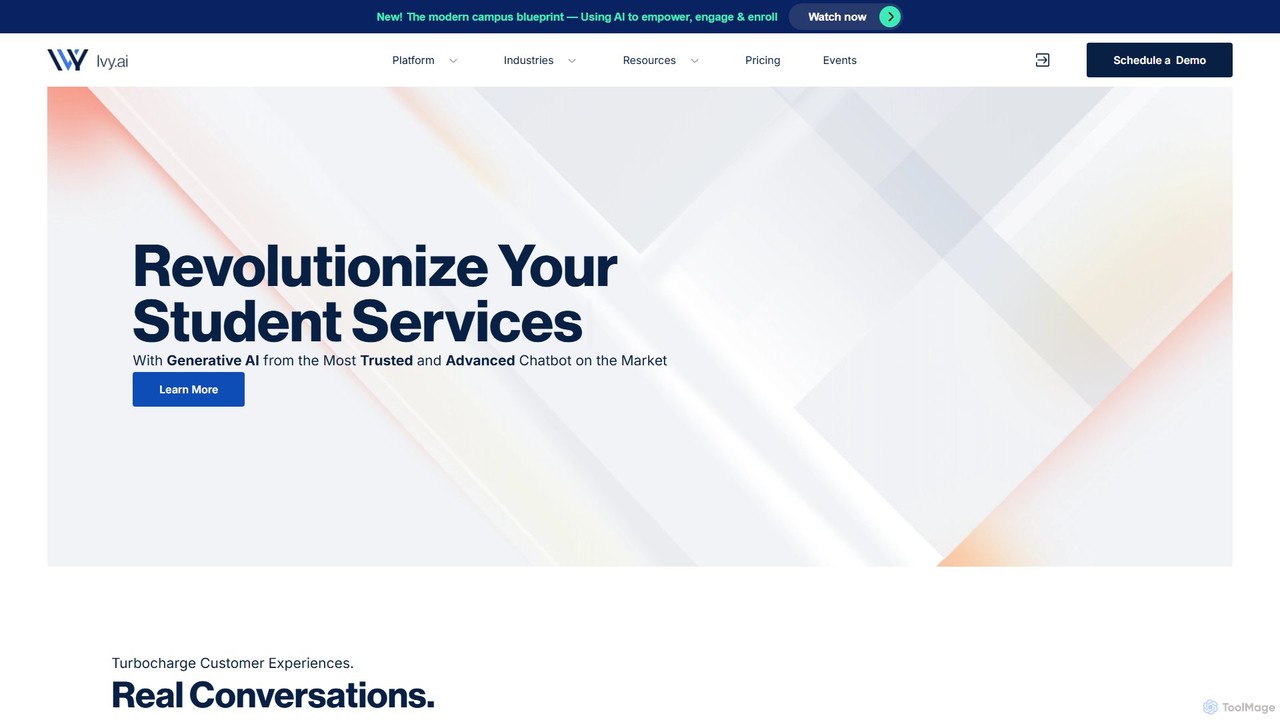
ivy.ai provides a generative AI chatbot platform, IvyQuantum™, specifically designed for higher education, healthcare, and government sectors. It leverages an organization's own content to deliver accurate, real-time, and personalized conversations across multiple channels. The platform aims to enhance user engagement, automate support, and significantly reduce operational costs by freeing up staff from repetitive tasks.

Chatbot
Visits 36KFavorites 115Likes 97

About Administration

AI Administration tools for education are a class of software designed to automate and optimize the management tasks within academic institutions. These tools leverage machine learning and data analytics to streamline complex processes like scheduling, admissions, and resource allocation. By automating routine administrative work, they enable staff to focus on more strategic initiatives, improve operational efficiency, and support data-driven decision-making. They act as an intelligent layer over traditional systems like Student Information Systems (SIS).

Core Features

  • Automated Timetabling: Generates conflict-free class, exam, and faculty schedules by analyzing constraints and preferences.
  • Admissions & Enrollment Analytics: Predicts enrollment trends and automates the initial screening of applicant data based on predefined criteria.
  • Resource Optimization: Intelligently allocates classrooms, labs, and other institutional resources to maximize utilization.
  • Student Data Management Automation: Automates data entry, record updates, and report generation within student information systems.
  • Intelligent Communication: Deploys chatbots to handle common administrative inquiries from students, parents, and staff 24/7.

Use Cases

These tools are primarily used in K-12 schools, colleges, universities, and online learning platforms. Key users include school administrators, university registrars, admissions officers, and department heads who are responsible for institutional operations, planning, and student lifecycle management.

How to Choose

When selecting an AI Administration tool, consider its integration capabilities with your existing SIS and Learning Management System (LMS). Evaluate its data security protocols and compliance with educational privacy regulations (e.g., FERPA, GDPR). Assess the tool's scalability to handle your institution's size and the level of customization available to fit your specific workflows.

Featured tool rankings

Administration use cases

1

Automating University Course Timetabling

A university registrar's office is tasked with creating a master schedule for thousands of courses, hundreds of faculty members, and tens of thousands of students. Manually, this process takes weeks and is prone to errors and conflicts. By using an AI Administration tool, the registrar can input all constraints—such as classroom capacity, faculty availability, and student course requirements. The AI algorithm then generates an optimized, conflict-free timetable in a matter of hours, drastically reducing administrative workload and improving resource utilization across campus.

2

Streamlining the Student Admissions Process

An admissions office receives over 20,000 applications each cycle. Staff spend hundreds of hours on initial screening to check for completeness and basic qualifications. An AI Administration tool can automate this first pass. It scans applications for required documents, checks GPA and test scores against minimum thresholds, and flags incomplete submissions. This allows admissions officers to bypass tedious clerical work and dedicate their time to a more holistic and qualitative review of qualified candidates, improving the fairness and efficiency of the selection process.

3

Optimizing School Bus Route Planning

A large school district needs to plan bus routes for thousands of students across a wide geographic area. Traditional planning is complex and often results in inefficient routes, long ride times, and high fuel costs. An AI administration tool with a logistics module can analyze student addresses, traffic data, and vehicle capacities. It generates the most efficient routes that minimize travel time and distance, ensuring student safety and significantly reducing operational costs for the district's transportation department.

4

Predictive Identification of At-Risk Students

A university's student success center aims to proactively support students before they fall behind. An AI Administration tool can analyze real-time data from the Student Information System (SIS) and Learning Management System (LMS), such as attendance records, grade trends, and assignment submission rates. The system identifies patterns that correlate with a higher risk of withdrawal or failure. It then alerts academic advisors, who can intervene with targeted support, counseling, or resources, improving student retention rates and overall academic outcomes.

5

Managing Faculty Workload and Allocation

A department head needs to assign courses and committee responsibilities equitably among faculty. This is often a subjective and time-consuming task. An AI administration platform can analyze data on each faculty member's past teaching loads, research output, student evaluations, and service commitments. It can then suggest balanced workload distributions that align with institutional policies and individual faculty strengths. This data-driven approach promotes fairness, prevents faculty burnout, and helps in strategic planning for future hiring needs.

6

Automating Financial Aid Application Processing

A university's financial aid office processes thousands of applications, each requiring careful verification against institutional and federal guidelines. This manual process is slow and susceptible to human error. An AI administration tool can automate much of this workflow. It can extract data from application forms, cross-reference it with supporting documents, and check for eligibility against a complex set of rules. This speeds up the award notification process, reduces the error rate, and frees up financial aid counselors to provide personalized advice to students and families.

Administration FAQ

What are AI Administration tools in education?

AI Administration tools for education are specialized software that use artificial intelligence to automate and enhance administrative operations within schools, colleges, and universities. Unlike simple databases, they actively analyze data to optimize processes such as course scheduling, student admissions, resource allocation, and bus routing. Their primary goal is to increase efficiency, reduce manual errors, and provide administrators with data-driven insights for better decision-making.

How do I choose the right AI Administration tool for my institution?

Choosing the right tool involves evaluating several key factors. First, assess its integration capabilities with your existing core systems like the Student Information System (SIS) and Learning Management System (LMS). Second, verify its compliance with data privacy regulations relevant to your region (e.g., FERPA in the U.S., GDPR in Europe). Third, consider scalability—can the tool grow with your institution? Finally, evaluate the user interface and the level of technical support provided, ensuring your administrative staff can use it effectively.

What's the difference between an AI Administration tool and a standard Student Information System (SIS)?

A standard Student Information System (SIS) primarily functions as a database or a system of record. It stores student data like grades, attendance, and contact information. An AI Administration tool is a layer of intelligence that works with the SIS data. It doesn't just store information; it uses it to predict, automate, and optimize. For example, an SIS stores course availability, while an AI tool uses that data to build an optimized master schedule for the entire institution.

What are the key benefits of using AI in educational administration?

The key benefits are significant improvements in efficiency and decision-making. Core advantages include:

  • Increased Efficiency: Automating repetitive tasks like data entry, scheduling, and initial application screening saves hundreds of administrative hours.
  • Data-Driven Decisions: Provides predictive analytics for enrollment forecasting and resource planning, leading to more strategic choices.
  • Reduced Human Error: Minimizes mistakes in complex tasks like creating conflict-free timetables or processing financial aid.
  • Enhanced Resource Utilization: Optimizes the use of classrooms, equipment, and faculty time.

Who typically uses AI Administration tools in an educational setting?

These tools are designed for administrative and leadership roles within an educational institution. The primary users include:

  • Registrars and Schedulers: For creating and managing academic timetables.
  • Admissions Officers: To streamline application processing and forecast enrollment.
  • School Principals and Superintendents: For district-level planning, such as bus routing and resource allocation.
  • Department Heads and Deans: To manage faculty workloads and plan course offerings.
  • IT Administrators: Who manage the integration of these tools with other campus systems.