TTSForge
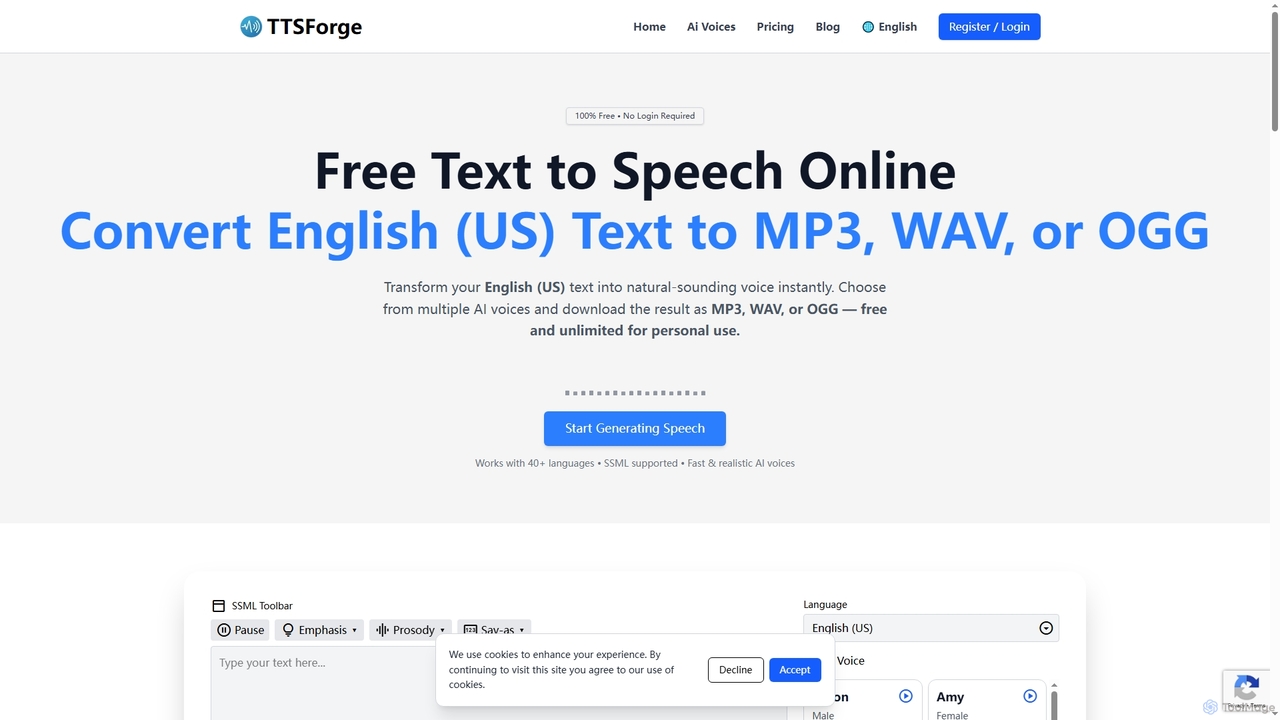
TTSForge is a free online text-to-speech platform that converts written text into natural-sounding audio using advanced AI voices. …
TTSForge is a free online text-to-speech platform that converts written text into natural-sounding audio using advanced AI voices. It supports over 40 languages and allows users to download audio in MP3, WAV, or OGG formats for various personal and commercial projects.
Text to Speech.im
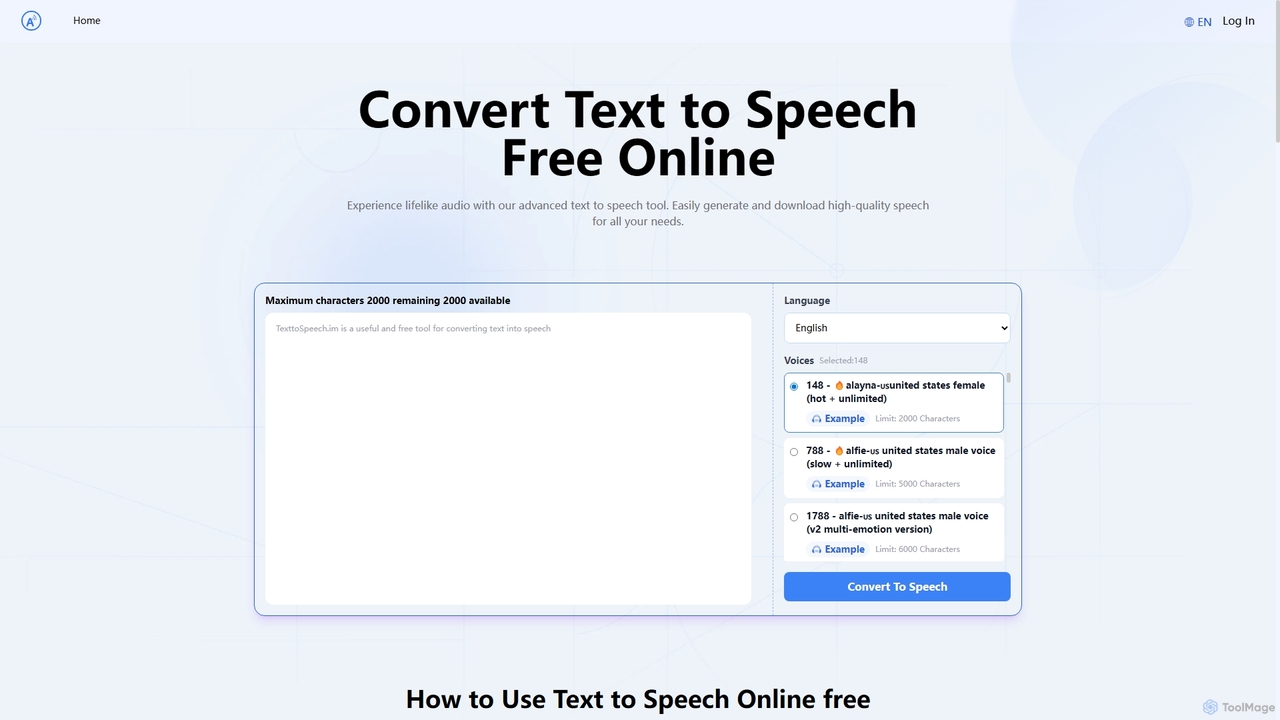
Text to Speech.im is a free online AI tool that converts text into natural-sounding speech. It supports a …
Text to Speech.im is a free online AI tool that converts text into natural-sounding speech. It supports a vast array of languages and voices, allowing users to generate high-quality audio for videos, e-learning, accessibility, and more. Customize voice speed and volume, then easily download the generated audio as an MP3 file.
About Accessibility Tools
AI Accessibility Tools are a class of software that leverages artificial intelligence to make digital content and environments more usable for people with disabilities. These tools utilize technologies like computer vision and natural language processing to automate tasks such as generating image descriptions, providing real-time transcriptions, and auditing websites for compliance issues. Their primary value is in breaking down digital barriers, fostering inclusivity, and helping creators and developers build universally accessible products more efficiently within their productivity workflows.
Core Features
- Automated Alt Text Generation: Uses computer vision to analyze images and create descriptive text for screen reader users.
- Real-time Transcription & Captioning: Converts spoken audio from videos or live meetings into text for individuals who are deaf or hard of hearing.
- Web Accessibility Auditing: Scans websites to automatically identify and suggest fixes for issues related to WCAG standards, such as color contrast or missing ARIA tags.
- Advanced Text-to-Speech (TTS): Provides natural-sounding voice narration for written content, aiding users with visual impairments or reading disabilities.
- Voice Command & Navigation: Enables hands-free control and interaction with software and devices for users with motor impairments.
Applicable Scenarios
These tools are essential for web developers, UX/UI designers, content creators, and corporate compliance teams. For example, a developer can use an AI tool to audit a website for WCAG 2.1 AA compliance before launch, saving hours of manual testing. A marketing team can use another tool to automatically generate captions and alt text for all social media posts, ensuring their content reaches a wider audience.
Selection Criteria
When choosing an AI Accessibility Tool, first identify the specific standards you need to meet (e.g., WCAG, Section 508). Evaluate its integration capabilities with your existing platforms, such as your CMS or design software. Assess the accuracy of its automated features, particularly for nuanced tasks like alt text generation, and verify its support for multiple languages if your audience is global.

Accessibility ToolsUse Cases
Automating WCAG Compliance Audits for Websites
A web development agency is tasked with ensuring a client's new e-commerce site meets WCAG 2.1 AA standards. Instead of spending days on manual checks, the lead developer uses an AI Accessibility Tool. The tool crawls the entire website, automatically flagging issues like insufficient color contrast on buttons, missing form labels, and images without alt text. It provides a detailed report with code-level suggestions for fixes. This process reduces manual testing time by over 70%, allowing the team to identify and resolve hundreds of potential accessibility barriers before launch, ensuring a compliant and user-friendly experience for all visitors.
Generating Alt Text for E-commerce Product Images
An online retailer with thousands of products needs to add descriptive alt text to all their images for SEO and accessibility. Manually writing descriptions is not feasible. The e-commerce manager uses an AI tool that integrates with their platform. The AI analyzes each product image, identifying attributes like 'red short-sleeve cotton t-shirt' or 'stainless steel 12-piece knife set with wooden block'. It then generates accurate alt text and applies it in bulk. This not only makes the site accessible to visually impaired shoppers but also improves image search rankings, leading to increased organic traffic.
Live Captioning for Online Meetings and Webinars
A global corporation conducts weekly all-hands meetings with employees from different regions, including those who are deaf or hard of hearing. To ensure inclusivity, they integrate an AI-powered live captioning tool into their video conferencing platform. As speakers present, the tool generates real-time, accurate captions on the screen. It can even distinguish between different speakers and handle various accents. This allows all employees to follow the conversation effectively, fostering a more equitable and productive meeting environment without the high cost and logistical challenges of hiring human captioners for every event.
Converting Educational Materials into Audio Format
A university's disability resource center needs to provide accessible course materials for students with visual impairments or dyslexia. They use an AI Text-to-Speech (TTS) tool with natural-sounding voices. An administrator uploads PDF textbooks, research papers, and lecture notes into the system. The AI processes the documents, converting them into high-quality audio files. Students can then download these files and listen to them on any device, at their own pace. This service empowers students to access curriculum content independently and effectively, leveling the academic playing field.
Enabling Voice Navigation for Software Applications
A software company is developing a complex data analysis application. To make it accessible to users with motor impairments who cannot use a mouse or keyboard effectively, they integrate an AI voice command API. Users can now navigate menus, open files, apply filters, and generate reports simply by speaking commands like "Open last month's sales data" or "Create a bar chart of revenue by region." The AI accurately interprets these natural language commands and executes the corresponding actions. This feature significantly broadens the user base and demonstrates a commitment to inclusive design.
Creating Accessible Social Media Content at Scale
A marketing agency manages social media for multiple clients, posting dozens of pieces of content daily. To ensure all content is accessible, they use an AI-powered platform. When a social media manager uploads a video, the tool automatically generates accurate, time-synced captions. When they upload an image, it suggests descriptive alt text based on the visual content. This streamlines the workflow, ensuring accessibility is a standard part of the content creation process, not an afterthought. As a result, their clients' content reaches a broader audience, including users with disabilities, and engagement rates improve across all platforms.