Trueface
Trueface by BigBear.ai is an enterprise-grade computer vision platform specializing in fast, accurate, and secure facial recognition. It …
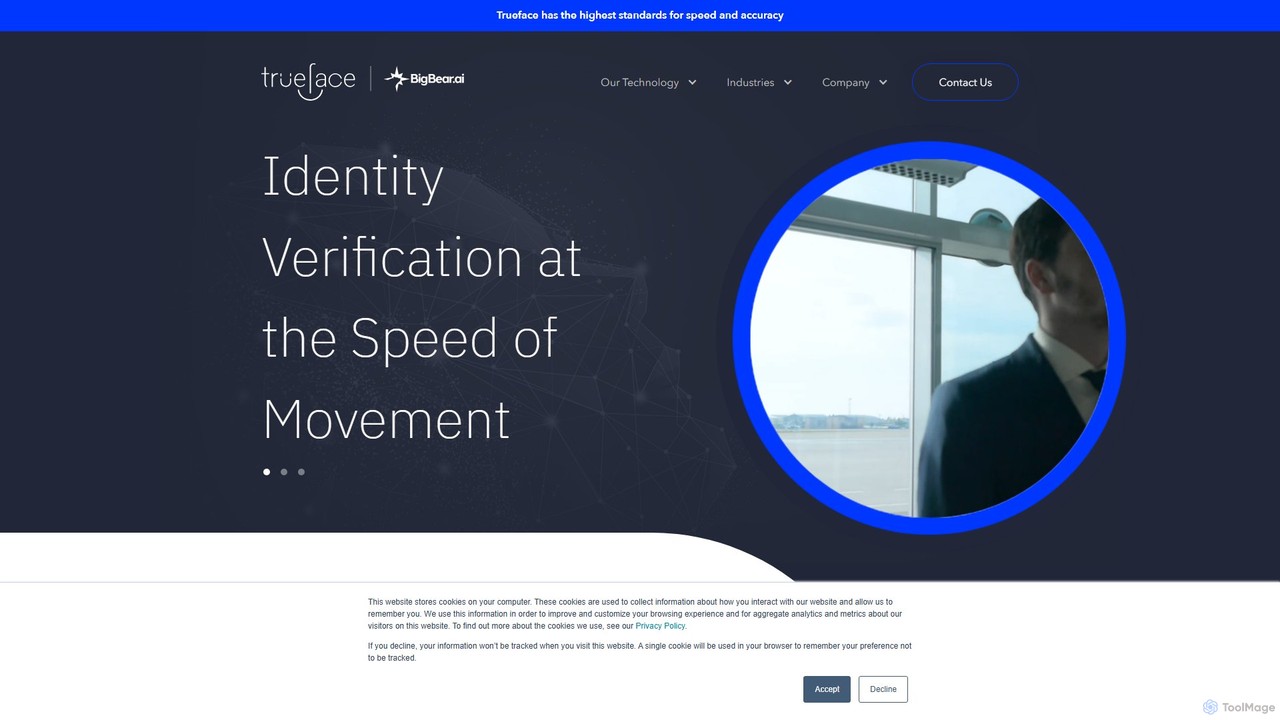
Trueface by BigBear.ai is an enterprise-grade computer vision platform specializing in fast, accurate, and secure facial recognition. It offers on-premise deployment via SDKs and APIs, ensuring data privacy. The technology is designed for ethical use, with advanced bias mitigation and high performance even on masked faces, making it ideal for access control, identity verification, and workforce management.
About Access Control
AI-powered Access Control tools utilize artificial intelligence to enhance, automate, and secure the management of who can access specific resources, data, or systems. These tools move beyond static rules, employing machine learning and behavioral analytics to provide dynamic, context-aware, and intelligent authorization and authentication. They significantly bolster security postures, streamline identity management, and adapt to evolving threat landscapes, making them crucial for modern enterprise security and compliance within the broader productivity ecosystem.
Core Features
- AI-driven Identity Verification: Utilizes advanced biometrics, liveness detection, and behavioral patterns to verify user identities with high accuracy.
- Behavioral Anomaly Detection: Continuously monitors user and system activities to identify unusual or suspicious access patterns in real-time.
- Dynamic Authorization Policies: Grants or revokes access based on real-time context, risk scores, device posture, and environmental factors, not just static roles.
- Automated Provisioning & Deprovisioning: Intelligently manages user access rights across various systems based on role changes, employment status, or project assignments.
- Risk-Based Authentication: Adapts the strength of authentication required (e.g., MFA) based on the assessed risk level of an access attempt.
Applicable Scenarios
AI Access Control tools are vital for organizations needing robust security and efficient identity management. They are used in high-security environments like financial institutions and government agencies, for protecting sensitive data in cloud platforms, and by large enterprises managing complex user roles and compliance requirements. These tools help prevent unauthorized access, detect insider threats, and ensure regulatory adherence across diverse digital and physical assets.
How to Choose
When selecting an AI Access Control solution, prioritize its integration capabilities with your existing IT infrastructure and identity providers. Evaluate the accuracy and adaptability of its AI models for identity verification and anomaly detection. Consider its scalability to accommodate future growth, compliance certifications (e.g., GDPR, HIPAA), and the level of customization offered for policy enforcement. User experience for both administrators and end-users, alongside robust reporting and auditing features, are also critical for effective deployment.

Access ControlUse Cases
Enhanced Biometric Security for Critical Infrastructure
A data center operator implements AI Access Control to secure physical entry points and server racks. The system uses AI-powered facial recognition and gait analysis to verify authorized personnel, detecting spoofing attempts and ensuring only verified individuals gain access. This significantly reduces the risk of unauthorized physical breaches and enhances overall site security.
Real-time Insider Threat Detection in Financial Services
A bank uses AI Access Control to monitor employee access to sensitive customer data. The AI learns normal user behavior patterns and flags any unusual activities, such as an employee accessing client records outside their typical working hours or from an unfamiliar location. This enables security teams to proactively identify and mitigate potential insider threats or compromised accounts before significant damage occurs.
Dynamic Access for Remote Development Teams
A software development company with a globally distributed team utilizes AI Access Control to manage access to source code repositories and development environments. The system dynamically grants or restricts access based on the developer's project assignment, geographical location, device security posture, and time of day, ensuring secure collaboration while maintaining agility and preventing unauthorized data exfiltration.
Automated Role-Based Access Management for Large Enterprises
A multinational corporation with thousands of employees and frequent role changes deploys AI Access Control to automate user provisioning and deprovisioning. When an employee changes departments or leaves the company, the AI system automatically updates or revokes their access rights across all integrated applications and systems, ensuring compliance and reducing manual administrative overhead.
Context-Aware Data Protection in Cloud Environments
A healthcare provider uses AI Access Control to protect patient health information (PHI) stored in cloud storage. The AI system analyzes the context of each access request, including the user's role, location, device, and the sensitivity of the data, to make real-time authorization decisions. This ensures that PHI is only accessible to authorized personnel under appropriate conditions, enhancing data privacy and regulatory compliance.
Fraud Prevention in Online Transaction Verification
An e-commerce platform integrates AI Access Control for enhanced identity verification during high-value transactions or account recovery processes. The AI analyzes multiple data points, including behavioral biometrics (typing patterns, mouse movements), device fingerprints, and historical transaction data, to confirm the user's identity and detect potential fraudulent attempts, thereby protecting both the platform and its customers.