Ai Development Best in category 1 results Api Management AI Tool

Popular AI tools in the Api Management field of Ai Development include Symphony, etc., helping you quickly improve efficiency.

Symphony

Symphony

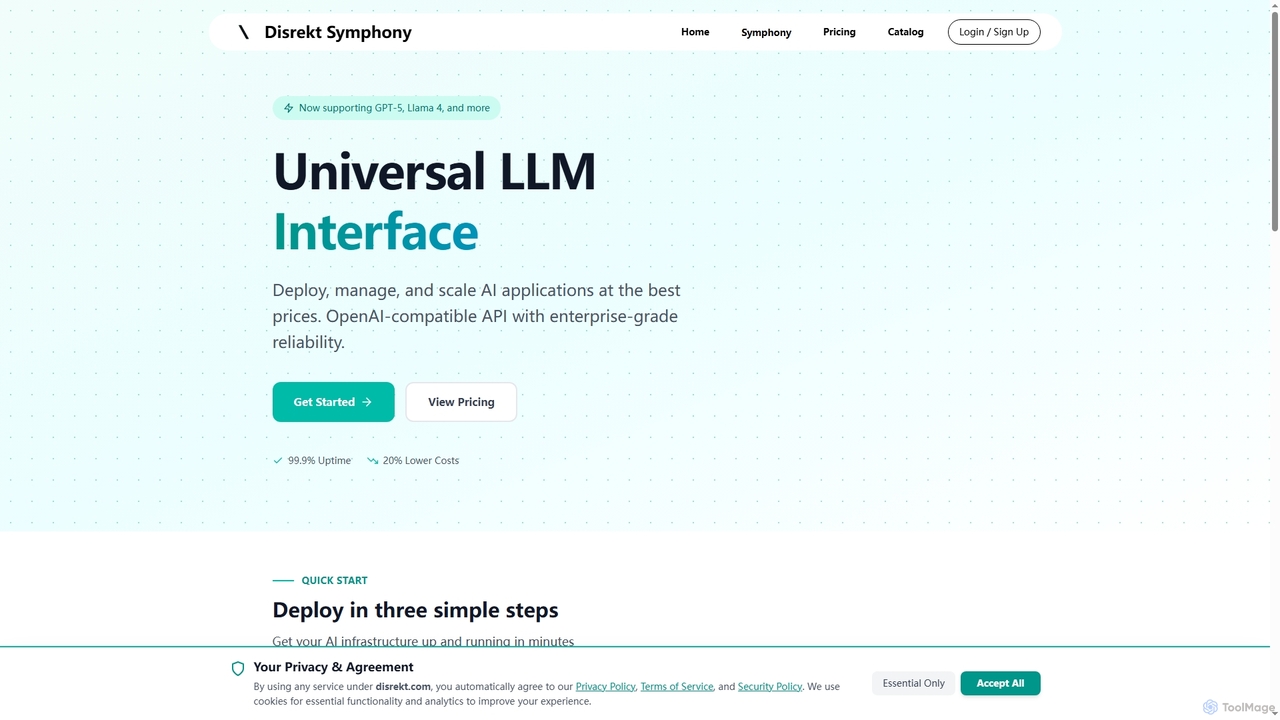
Symphony is a universal LLM interface providing an OpenAI-compatible API for deploying, managing, and scaling AI applications. It …

1.8K

About Api Management

API Management refers to the comprehensive process of overseeing the entire lifecycle of Application Programming Interfaces (APIs), from design and publication to security, monitoring, and analysis. As a critical component of AI Development, these tools enable organizations to expose their AI models and services as consumable APIs, facilitating seamless integration into diverse applications and systems. They ensure that AI capabilities are securely, reliably, and efficiently delivered to developers and end-users, transforming complex AI algorithms into accessible, scalable services.

Core Features

  • API Gateway: Manages all API traffic, routing requests to AI services, enforcing security policies, and handling load balancing.
  • Security & Access Control: Implements robust authentication (e.g., OAuth, API keys) and authorization mechanisms to protect AI models from unauthorized access.
  • Developer Portal: Provides a self-service platform for developers to discover, subscribe to, test, and access documentation for AI APIs.
  • Monitoring & Analytics: Offers real-time insights into AI API usage, performance metrics, latency, and error rates to optimize service delivery.
  • Rate Limiting & Throttling: Controls the frequency and volume of requests to AI services, preventing abuse and ensuring fair resource allocation.

Use Cases

API Management tools are essential for data science teams deploying new AI models, enabling them to expose machine learning inference endpoints as secure and scalable APIs. Software companies integrate various third-party AI services (e.g., NLP, computer vision) into their platforms, centralizing access and applying consistent security. Enterprises leverage these tools to govern hundreds of internal AI microservices, ensuring consistent security, discoverability, and version control across all AI-powered applications.

How to Choose

When selecting an API Management solution for AI, consider its integration capabilities with existing AI/ML platforms and cloud environments. Evaluate the security features, including advanced threat protection and data encryption, crucial for sensitive AI models. Assess the scalability and performance to handle varying loads of AI inference requests. Finally, examine the developer experience offered by the portal and the richness of monitoring and analytics tools for AI service optimization.

Api ManagementUse Cases

1

Exposing AI Model Inference as a Service

A data science team develops a new machine learning model for fraud detection. Using API Management, they expose this model's inference capabilities as a secure, versioned API. This allows various internal applications, such as banking systems or customer service portals, to integrate and consume the fraud detection service without needing to understand the underlying AI complexities, ensuring consistent and scalable access to the model's intelligence.

2

Monetizing AI Capabilities through API Subscriptions

An AI startup has developed a unique image recognition algorithm. They use API Management to package this algorithm as a product, setting up different subscription tiers (e.g., free, premium, enterprise) with varying rate limits and features. The developer portal provides clear documentation and SDKs, allowing external developers to easily discover, subscribe to, and integrate the AI service into their own applications, generating revenue for the startup.

3

Securing and Governing Internal AI Microservices

A large enterprise has numerous internal teams developing and deploying AI microservices for various business functions, such as customer support chatbots, predictive analytics, and content generation. API Management provides a centralized platform to secure these internal AI APIs with consistent authentication and authorization policies, monitor their usage across departments, and enforce version control, ensuring compliance and preventing unauthorized data access or model misuse.

4

Integrating Third-Party AI Services with Centralized Control

A software development company needs to integrate various third-party AI services, such as sentiment analysis, speech-to-text, and translation, into its flagship product. Instead of directly managing each vendor's API, they use API Management to create a unified interface. This allows them to apply consistent security policies, monitor usage and costs across all integrated AI services, and easily swap out providers without impacting the core application logic.

5

Building AI-Powered Chatbots and Virtual Assistants

Developers creating sophisticated AI-powered chatbots or virtual assistants often need to integrate multiple AI services, such as Natural Language Processing (NLP) for understanding user intent, knowledge base lookups, and sentiment analysis for emotional context. API Management facilitates this by providing a robust layer to connect these disparate AI components, ensuring secure, reliable, and high-performance communication between them, which is crucial for a seamless conversational experience.

6

Enabling AI-Driven Personalization and Recommendation Engines

E-commerce platforms and content providers leverage API Management to expose their AI-driven personalization and recommendation engines. These APIs allow various front-end applications (web, mobile, smart TVs) to securely consume personalized product suggestions, content feeds, or advertisements tailored to individual user preferences. API Management ensures that these high-traffic, real-time AI services are delivered with low latency, high availability, and robust security, enhancing user engagement and conversion rates.

Api ManagementFrequently Asked Questions