ToolMage
Sign in

Best 3 Agent Frameworks AI tools for Ai Development

Popular Agent Frameworks AI tools in Ai Development include Skillgraph, Cirtus AI, and MCPCore, helping you work more efficiently.

Freemium

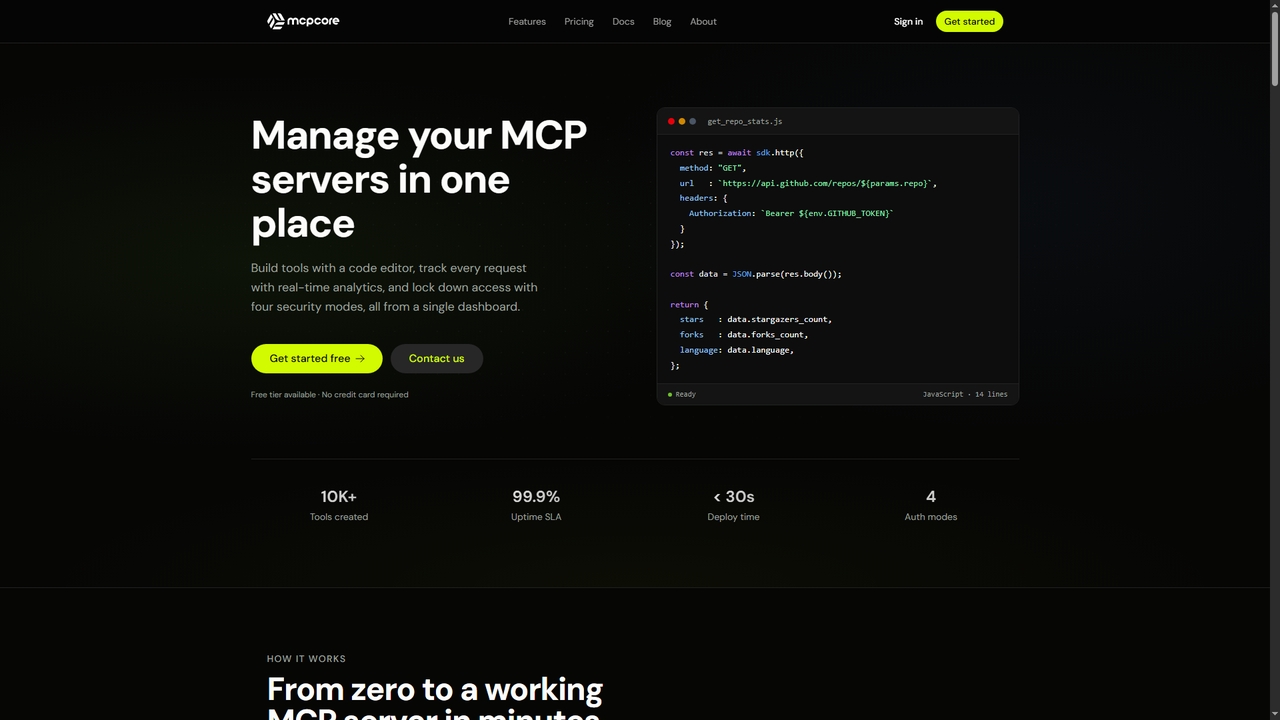
MCPCore

MCPCore is a comprehensive platform for building, deploying, and managing production-ready Model Context Protocol (MCP) servers. It provides a browser-based IDE with AI-assisted code generation, built-in security controls, real-time analytics, and one-click deployment, enabling developers to connect AI assistants to custom tools and data sources in minutes without managing complex infrastructure.

Agent Frameworks
Visits 3.3KFavorites 4Likes 4

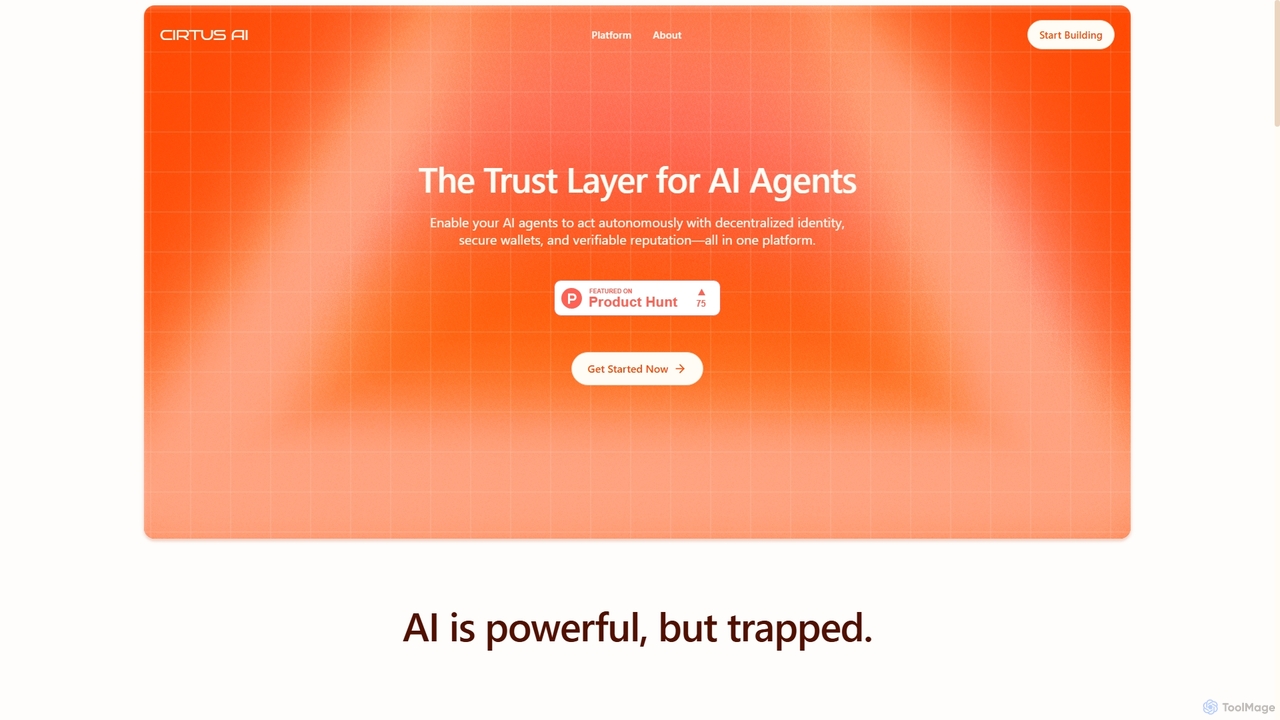
Cirtus AI

Cirtus AI is the trust layer for autonomous AI agents, providing decentralized identity, secure isolated wallets, and verifiable on-chain reputation. It empowers AI agents to act autonomously and securely, mitigating risks associated with direct access to sensitive assets and data, fostering a new era of trusted AI interactions.

Agent Frameworks
Visits 3.4KFavorites 76Likes 79
Free

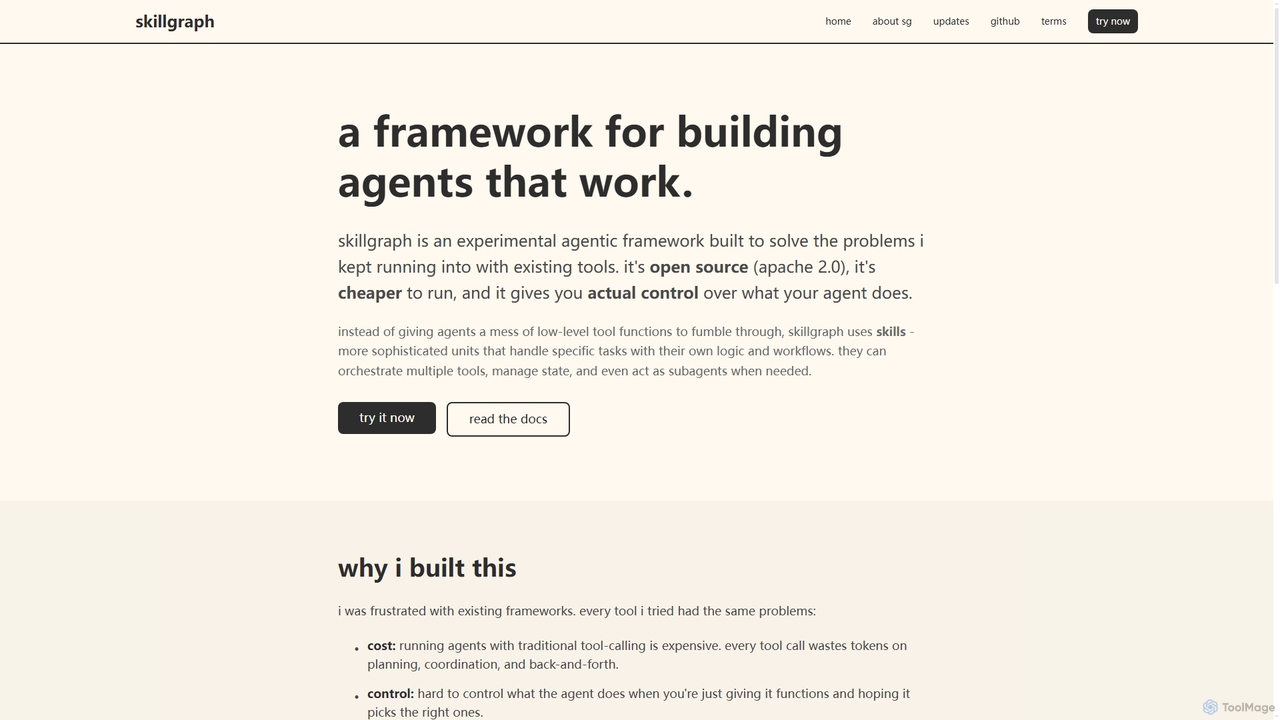
Skillgraph

Skillgraph is an experimental, open-source AI agent framework designed to build robust, controllable, and cost-effective AI agents. It replaces traditional low-level tool-calling with sophisticated 'skills' that manage complex tasks, multi-turn workflows, and internal logic, offering superior control and efficiency for developers.

Agent Frameworks
Visits 6.4KFavorites 139Likes 147

About Agent Frameworks

Agent Frameworks are a class of specialized tools designed to streamline the development, deployment, and management of autonomous AI agents. These frameworks provide structured environments and modular components, enabling developers to build sophisticated AI systems capable of complex decision-making, multi-step task execution, and dynamic interaction. They abstract away much of the underlying complexity, offering robust solutions for orchestrating intelligent behaviors and integrating various AI capabilities.

Core Features

  • Agent Orchestration: Manages the flow of tasks, decisions, and interactions for single or multiple AI agents.
  • Memory Management: Provides mechanisms for agents to store and retrieve information, maintaining context across interactions.
  • Tool Integration: Enables agents to use external APIs, databases, or custom functions to perform actions and gather data.
  • Planning & Reasoning: Facilitates agents in breaking down complex goals into actionable steps and adapting to new information.
  • Observability & Debugging: Offers tools to monitor agent behavior, trace execution paths, and identify issues.

Use Cases

Agent Frameworks are crucial for building AI applications that require more than simple prompt-response interactions. They are used in scenarios demanding autonomous decision-making, complex problem-solving, and dynamic adaptation. Typical users include AI engineers, software developers, and researchers creating advanced intelligent systems for various industries.

How to Choose

Selecting an Agent Framework involves evaluating its modularity and extensibility for custom agent components, the breadth of supported LLMs and tool integrations, and the robustness of its planning and memory features. Consider the community support, documentation quality, and ease of deployment for your specific infrastructure. Performance, scalability, and built-in observability tools are also critical for production-ready applications.

Featured tool rankings

Agent Frameworks use cases

1

Automated Research and Report Generation

Researchers and analysts leverage Agent Frameworks to deploy autonomous agents that can scour vast datasets, academic papers, and web sources to gather specific information. These agents then synthesize the findings, identify key trends, and generate comprehensive reports or summaries on predefined topics, significantly reducing manual research time and improving data accuracy. This enables faster insights and more efficient knowledge acquisition for complex subjects.

2

Intelligent Customer Service Agents

Businesses deploy multi-agent systems built with Agent Frameworks to create sophisticated customer service solutions. These agents can handle complex customer queries, understand nuanced intent, access knowledge bases, and even escalate issues to human agents with relevant context. This leads to improved customer satisfaction, reduced response times, and allows human support staff to focus on more critical or sensitive interactions, enhancing overall service efficiency.

3

Adaptive Game AI Development

Game developers utilize Agent Frameworks to create highly adaptive and intelligent Non-Player Characters (NPCs) and game environments. These frameworks enable NPCs to learn from player interactions, adapt their strategies dynamically, and exhibit more realistic and engaging behaviors. This results in richer gameplay experiences, more challenging opponents, and immersive virtual worlds where AI agents can respond intelligently to unforeseen circumstances and player actions.

4

Complex Workflow Automation

Enterprises leverage Agent Frameworks to automate intricate, multi-step business processes that involve data extraction, analysis, decision-making, and action execution across various systems. For instance, an agent can manage a supply chain by monitoring inventory, placing orders, tracking shipments, and updating stakeholders. This reduces manual intervention, minimizes errors, and significantly boosts operational efficiency, allowing businesses to scale complex operations more effectively.

5

Personalized Learning Assistants

Educational platforms and e-learning providers use Agent Frameworks to develop intelligent tutoring systems that adapt to individual student progress and learning styles. These agents can provide tailored explanations, generate practice problems based on identified weaknesses, and offer personalized feedback. This creates a highly engaging and effective learning environment, improving student comprehension and retention rates by offering dynamic, individualized support.

6

Financial Market Analysis and Trading Bots

Financial institutions and individual traders employ Agent Frameworks to build sophisticated trading bots and market analysis tools. These agents can monitor real-time market data, execute complex trading strategies based on predefined rules and predictive models, and manage portfolios autonomously. By integrating with various data sources and trading platforms, they enable rapid decision-making and automated execution, potentially leading to optimized returns and reduced human error in high-stakes environments.

Agent Frameworks FAQ

What are Agent Frameworks and why are they important?

Agent Frameworks are software libraries or platforms that simplify the creation and management of autonomous AI agents. They are crucial because they provide the necessary structure for agents to perform complex, multi-step tasks, manage memory, use external tools, and engage in sophisticated reasoning. This enables developers to build more capable and reliable AI applications that go beyond simple prompt-response interactions, accelerating the development of truly intelligent systems.

How do I choose the right Agent Framework for my project?

To choose the right Agent Framework, consider several key factors. Evaluate its support for various Large Language Models (LLMs) and the ease of integrating custom tools or APIs. Assess its modularity, allowing you to swap components like memory or planning modules. Look for robust planning and reasoning capabilities, good documentation, and an active community for support. Finally, consider its performance, scalability, and compatibility with your existing infrastructure and deployment environment.

What is the difference between an Agent Framework and a standard LLM API call?

A standard LLM API call typically involves sending a single prompt and receiving a single response. In contrast, an Agent Framework provides a comprehensive architecture for an AI agent to perform multi-step reasoning, manage conversational memory, dynamically select and use external tools (APIs, databases), and self-correct based on feedback. Frameworks enable agents to break down complex goals, plan sequences of actions, and maintain state over extended interactions, far beyond what a direct LLM API call can achieve on its own.

What are the key components of an Agent Framework?

The key components of an Agent Framework typically include a Planner, which breaks down complex goals into actionable steps; Memory modules, for storing and retrieving past interactions and learned information; a Tool/Action Executor, enabling agents to interact with external systems; and an Orchestrator, which coordinates the flow between these components. Many frameworks also incorporate Observability features for monitoring and debugging agent behavior, ensuring reliability and transparency.

What are the main benefits of using Agent Frameworks for building AI applications?

Using Agent Frameworks offers several significant benefits for building AI applications. They enable the creation of more autonomous and intelligent systems capable of handling complex, multi-step tasks that would be difficult to achieve with simpler methods. Frameworks reduce development time by providing pre-built components for planning, memory, and tool use. They also improve the reliability and maintainability of AI applications through structured design, better debugging tools, and enhanced observability, leading to more robust and scalable solutions.