
Skillgraph Overview
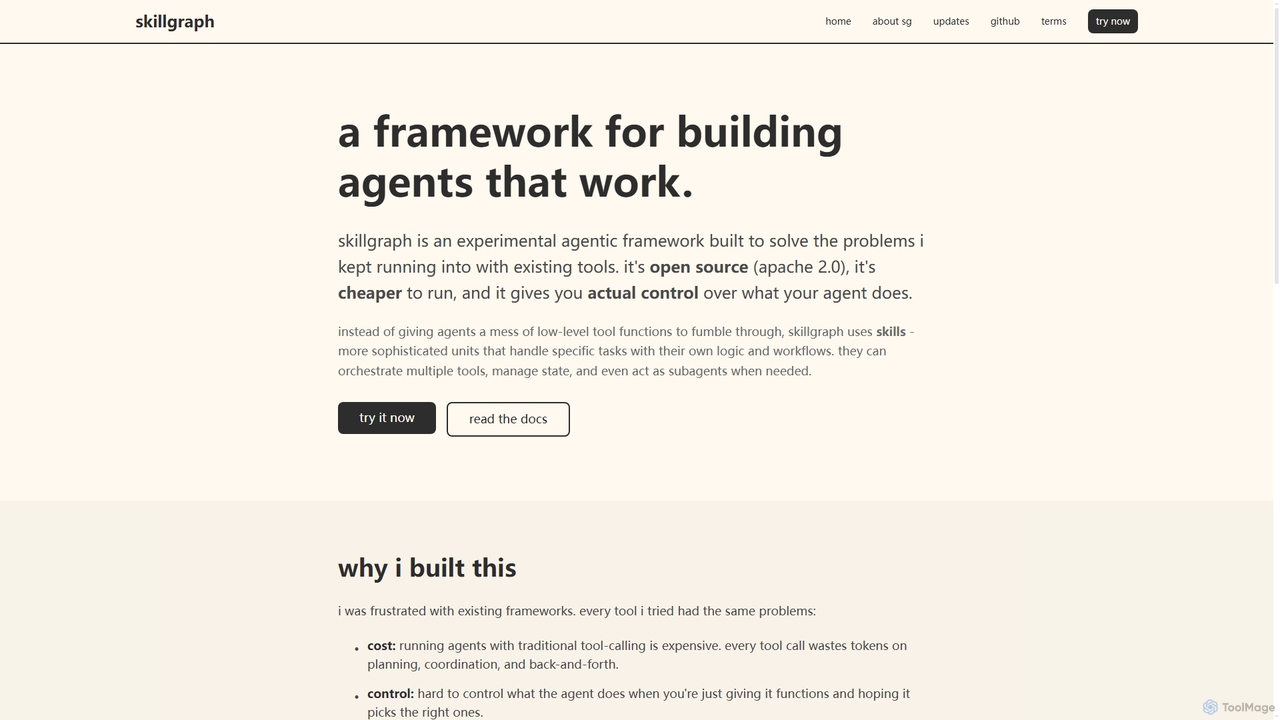
Skillgraph is an innovative, open-source (Apache 2.0 licensed) framework for developing AI agents that are more effective, economical, and controllable than those built with existing tools. It addresses common frustrations like high operational costs, lack of agent control, and complexity in implementing multi-turn workflows. By introducing 'skills' as sophisticated units of work, Skillgraph enables agents to delegate complex tasks, manage state, and orchestrate multiple tools efficiently. It focuses on reducing token waste, simplifying multi-turn interactions, and ensuring high reliability through intelligent caching and fallback mechanisms.
How to use Skillgraph
Developers can use Skillgraph to define and register 'skills,' which are intelligent units encapsulating specific tasks, logic, and workflows. Instead of directly instructing an agent to call low-level tools, developers configure skills that know when they are relevant (via intent detection), can handle multi-turn conversations (Skill Mode), and manage their own internal processes. The framework provides an architecture for memory (Subject-Object), caching, reliability (LLM fallback), and conversation management (summarization, vector search) to support these skills. The code is available on GitHub, allowing for direct implementation and customization.
Core Features of Skillgraph
- Skills-based Architecture: Replaces traditional tool-calling with sophisticated 'skills' that handle their own logic, orchestrate multiple tools, and manage state.
- Native Multi-turn Support (Skill Mode): Allows skills to take exclusive control of the conversation for multiple turns, simplifying complex workflows like booking or form-filling.
- Subject-Object Memory Architecture: A fast, cheap, and effective system for managing conversation state by tracking user goals (Subject) and current discussion topic (Object), replacing complex RAG systems for state.
- Smart Caching: Implements multi-layer caching (Anthropic prompt caching for system prompts, Redis for conversation history) to significantly reduce costs and improve retrieval speed.
- Built-in Reliability (LLM Fallback Chains): Ensures high uptime (99.9%) by implementing fallback chains for LLM API requests (e.g., Beta → Alpha → Retry) and graceful degradation for state analysis.
- Open Source (Apache 2.0): Freely available for commercial use, modification, and distribution, with code on GitHub.
- Intent Understanding: Uses a fast classifier (Utility LLM) to detect user intent and route messages to the most relevant skill based on semantic similarity and keyword matching.
- Vector Search for Recall: Utilizes pgvector to semantically search past messages within a conversation, enabling agents to recall information from earlier in long conversations.
- Conversation Summarization: Employs incremental summarization every 10 messages to manage context limits, allowing conversations to go on indefinitely.
- Multi-LLM Support: Supports various LLMs including Anthropic, OpenAI, Azure, Bedrock, Deepseek, Together, and Huggingface.
- Guardrails & Security: Includes features like rate limiting and SQL injection detection.
Use Cases for Skillgraph
Skillgraph is ideal for developers and organizations looking to build advanced, reliable, and cost-efficient AI agents. Specific use cases include developing sophisticated conversational AI agents for customer support or virtual assistants, creating complex multi-step task automation systems (e.g., booking tickets, processing orders, data collection), and implementing AI-driven workflows that require persistent memory and context over long interactions. It's also suitable for experimenting with and building next-generation agentic AI applications that demand high reliability and cost efficiency.
Advantages of Skillgraph
Skillgraph offers several key advantages over traditional AI agent frameworks. It provides significant cost efficiency by reducing token usage through skill-based delegation and smart caching, leading to an 89% cost reduction on system prompt tokens. Developers gain enhanced control over agent behavior by encapsulating logic within skills, ensuring more predictable outcomes. The framework simplifies multi-turn workflows with native support via Skill Mode, eliminating the need for complex workarounds. Built-in LLM fallback chains and graceful degradation mechanisms ensure robust operation and improved reliability even during API outages. Furthermore, its Subject-Object memory architecture offers a fast and cheap alternative to traditional RAG for managing conversational state, and its open-source nature provides flexibility for commercial use and community contributions.
Skillgraph FAQ
Traffic
Latest traffic
Status
Monthly traffic trend
- 2026-1: 716
- 2026-2: 676
- 2026-3: 99
- 2026-4: 3.3K
- 2026-5: 2.9K
Geography
Top 5 countries / regions
- 🇻🇳Vietnam50.0%
- 🇳🇬Nigeria36.2%
- 🇨🇿Czechia13.8%
Top keywords
| Keyword | Cost per click |
|---|---|
| ai skill graph | $0.00 |
| "skill graph" | $0.00 |
| skill graph | $0.00 |
| skillgraph | $0.00 |
Skillgraph Alternatives
Cirtus AI
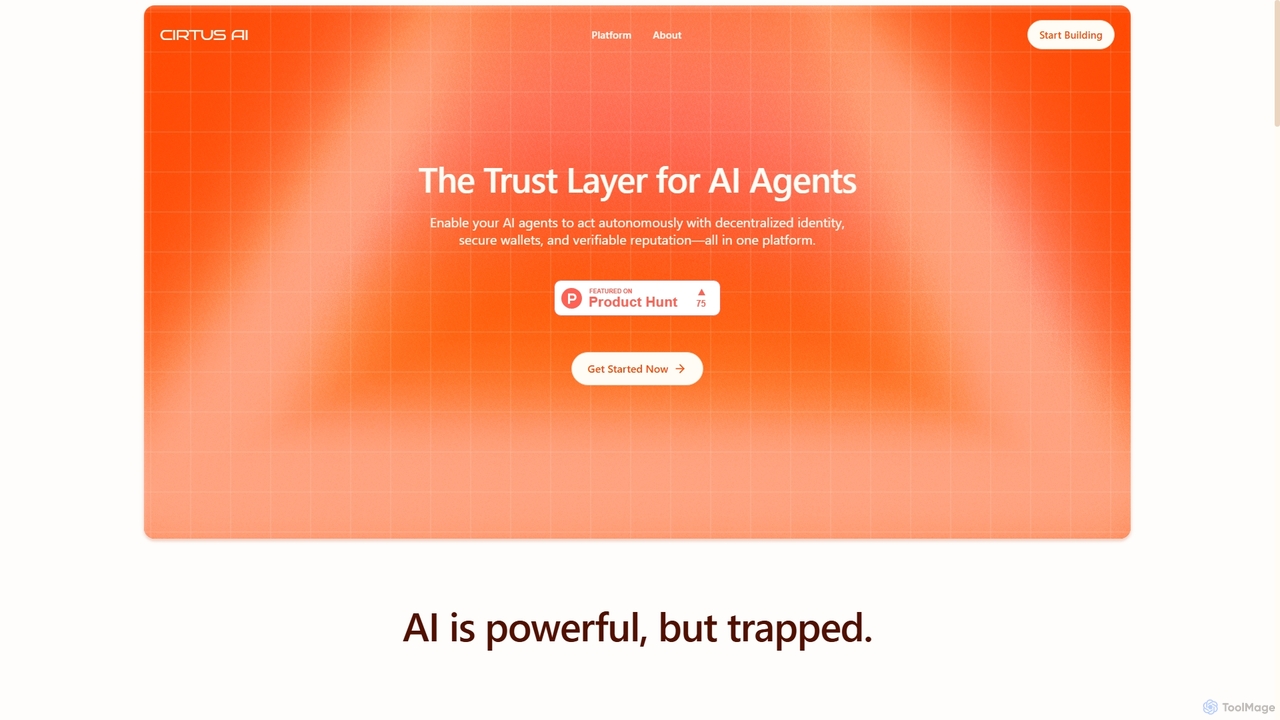
Cirtus AI is the trust layer for autonomous AI agents, providing decentralized identity, secure isolated wallets, and verifiable on-chain reputation. It empowers AI agents to act autonomously and securely, mitigating risks associated with direct access to sensitive assets and data, fostering a new era of trusted AI interactions.
Agent Frameworks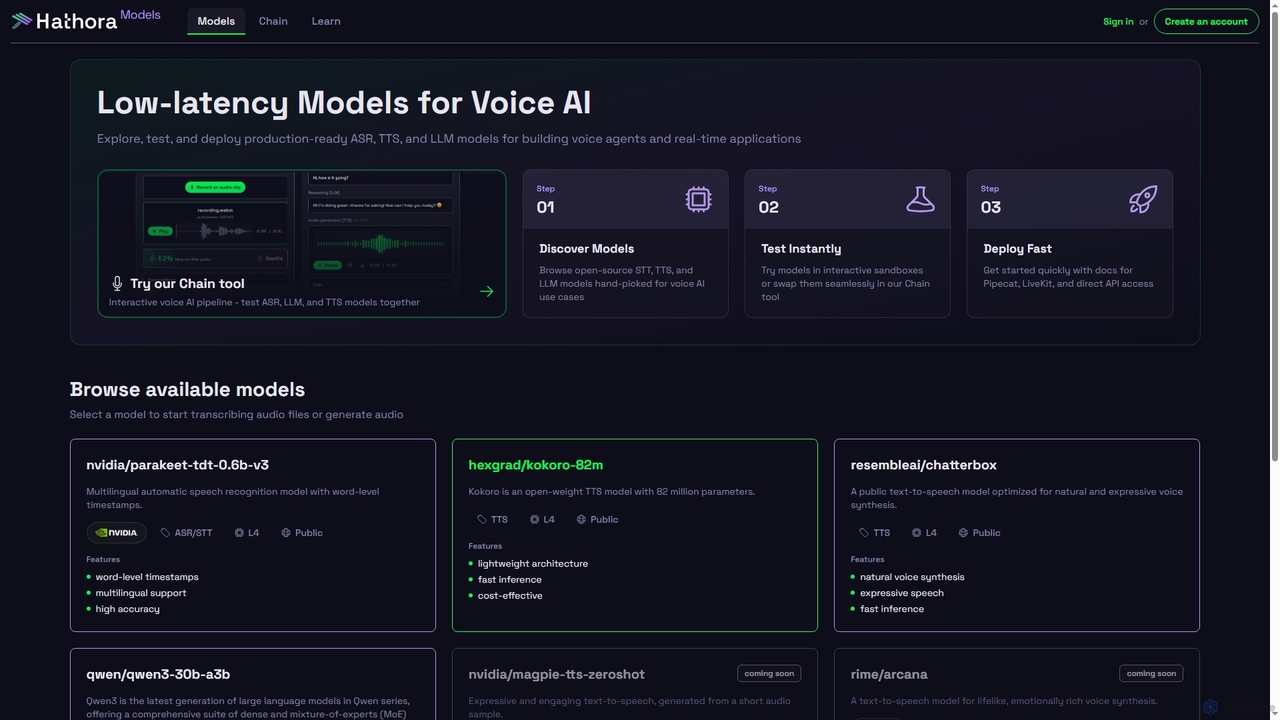
Models
Models by Hathora offers a curated catalog of low-latency ASR, TTS, and LLM models optimized for voice AI and real-time applications. Developers can explore, test, and deploy production-ready models quickly, featuring interactive sandboxes and direct API access for seamless integration into voice agents and other applications.
Api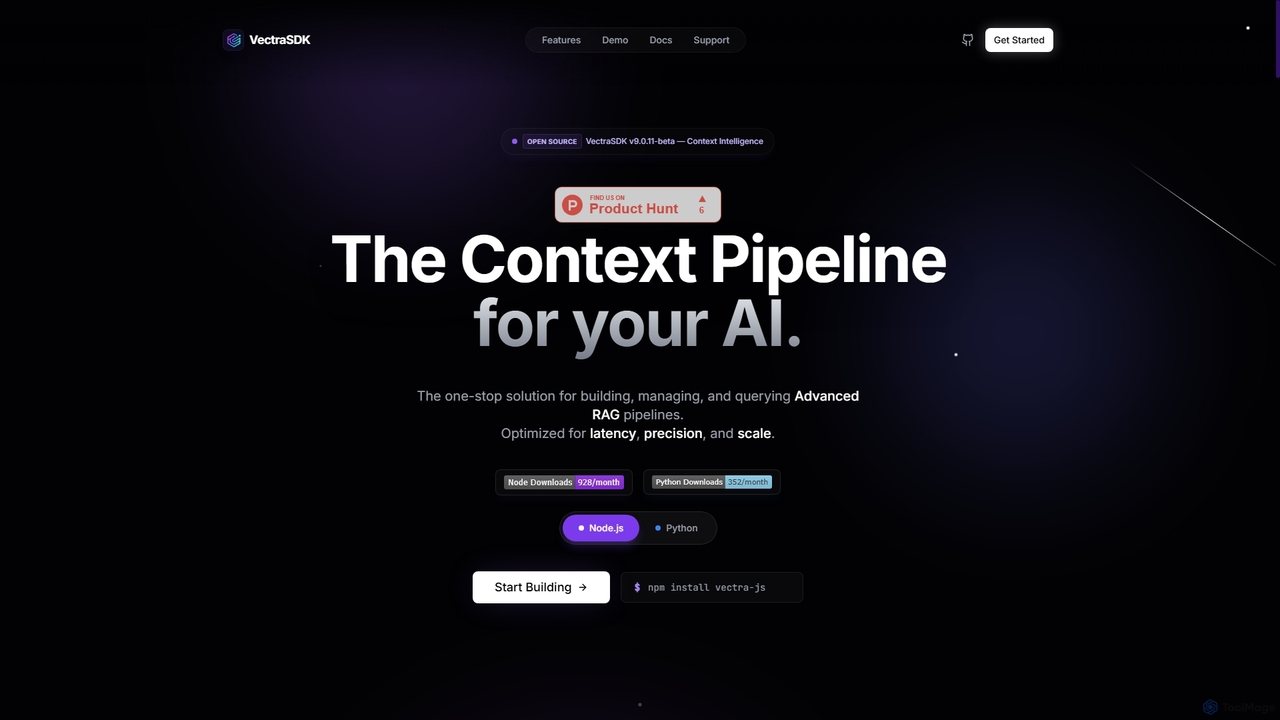
Vectra
Vectra is an open-source, production-grade SDK for Node.js and Python, designed to build, manage, and query advanced Retrieval-Augmented Generation (RAG) pipelines. It offers a comprehensive toolkit for developing context-aware AI applications, optimized for low latency, high precision, and scalability.
Rag Pipelines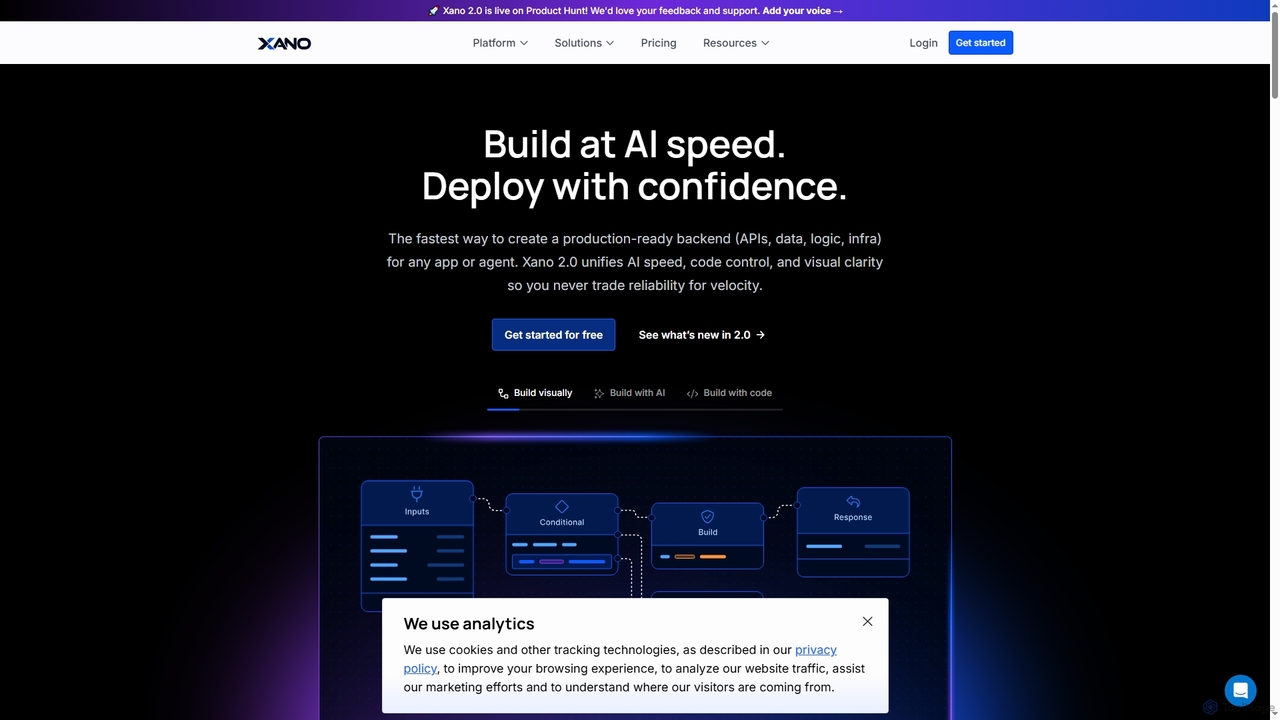
Xano
Xano is a scalable no-code backend platform that empowers developers and teams to build production-ready applications and AI agents at speed. It provides a unified solution for APIs, a managed Postgres database, visual logic, and auto-scaling infrastructure, eliminating the need for complex DevOps.
Agent Building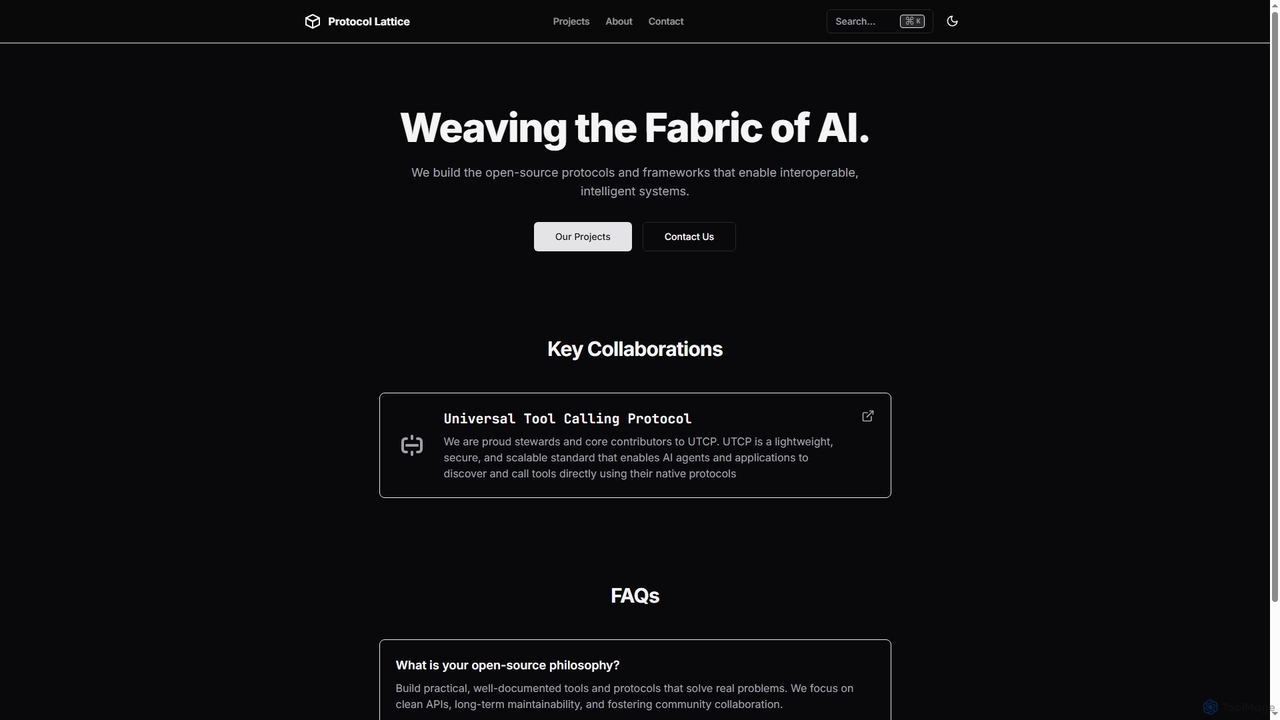
Protocol Lattice
Protocol Lattice is an organization dedicated to building open-source protocols and frameworks that foster interoperable, intelligent AI systems. Their flagship project, the Universal Tool Calling Protocol (UTCP), provides a lightweight, secure, and scalable standard for AI agents and applications to discover and interact with tools using their native protocols. They emphasize practical, well-documented solutions and community collaboration.
InteroperabilitySkillgraph Categories
Skillgraph Jobs
Skillgraph Embed Widget
Copy this embed code to place the badge on your blog, article, or product site and send readers directly to this ToolMage detail page.

Related AI tools
Models
Models by Hathora offers a curated catalog of low-latency ASR, TTS, and LLM models optimized for voice AI and real-time applications. Developers can explore, test, and deploy production-ready models quickly, featuring interactive sandboxes and direct API access for seamless integration into voice agents and other applications.
ApiVectra
Vectra is an open-source, production-grade SDK for Node.js and Python, designed to build, manage, and query advanced Retrieval-Augmented Generation (RAG) pipelines. It offers a comprehensive toolkit for developing context-aware AI applications, optimized for low latency, high precision, and scalability.
Rag PipelinesProtocol Lattice
Protocol Lattice is an organization dedicated to building open-source protocols and frameworks that foster interoperable, intelligent AI systems. Their flagship project, the Universal Tool Calling Protocol (UTCP), provides a lightweight, secure, and scalable standard for AI agents and applications to discover and interact with tools using their native protocols. They emphasize practical, well-documented solutions and community collaboration.
Interoperability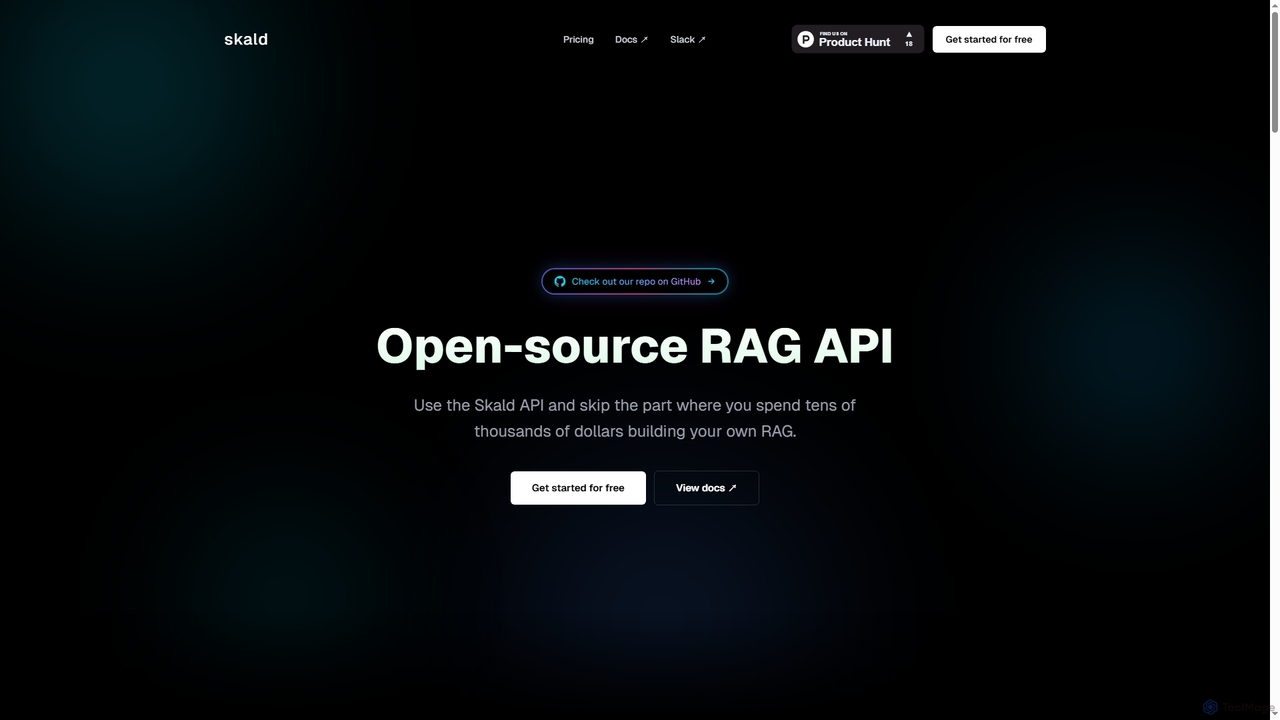
Skald
Skald is an open-source RAG API designed for developers to quickly build AI agents without the complexity of managing RAG infrastructure. It simplifies knowledge storage, context management, and semantic search, offering a powerful solution for integrating long-term memory into AI applications.
RagXano
Xano is a scalable no-code backend platform that empowers developers and teams to build production-ready applications and AI agents at speed. It provides a unified solution for APIs, a managed Postgres database, visual logic, and auto-scaling infrastructure, eliminating the need for complex DevOps.
Agent Building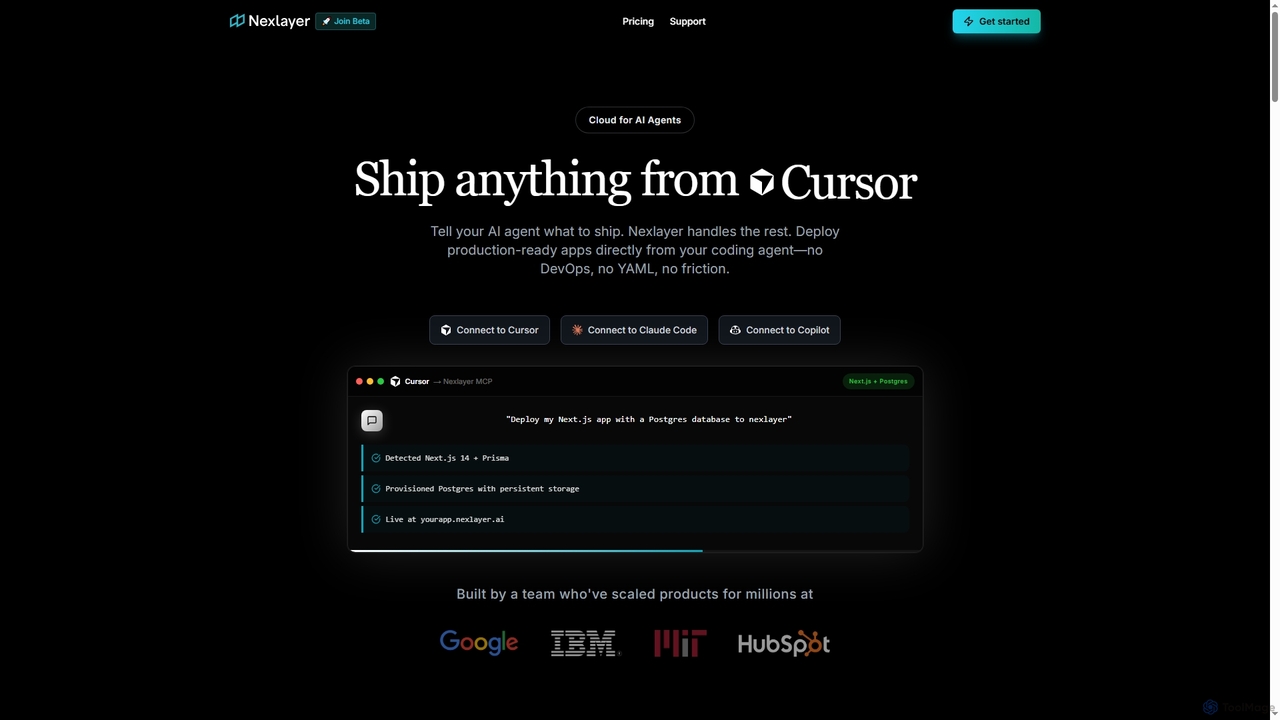
Nexlayer
Nexlayer is the first agent-native cloud platform designed to empower AI coding agents to deploy production-ready applications swiftly. It automates complex infrastructure, enabling developers and founders to ship full-stack apps, APIs, and databases in minutes without DevOps overhead.
Application Development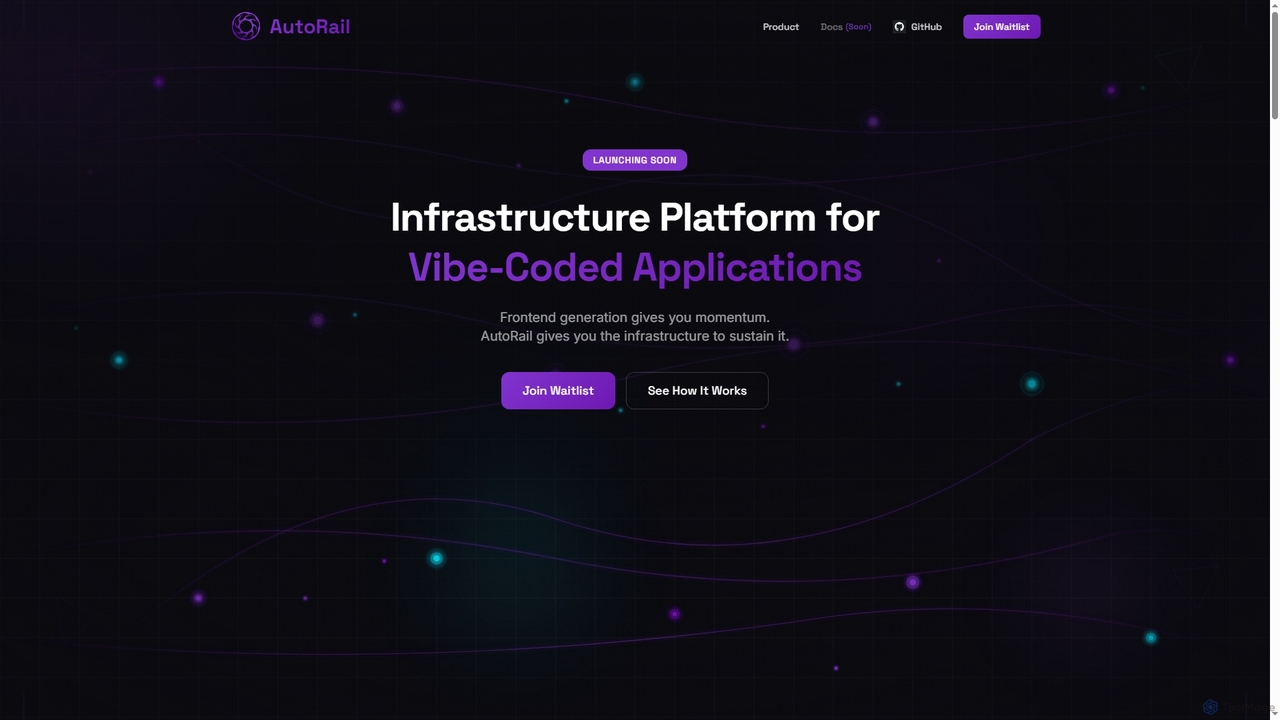
AutoRail
AutoRail is an infrastructure platform designed to transform "vibe-coded" prototypes into production-ready applications. It automatically provisions essential backend primitives like stateful memory, workflow orchestration, and auto-scaling, bridging the critical gap between rapid frontend development and robust, scalable production systems without manual configuration.
Ai Infrastructure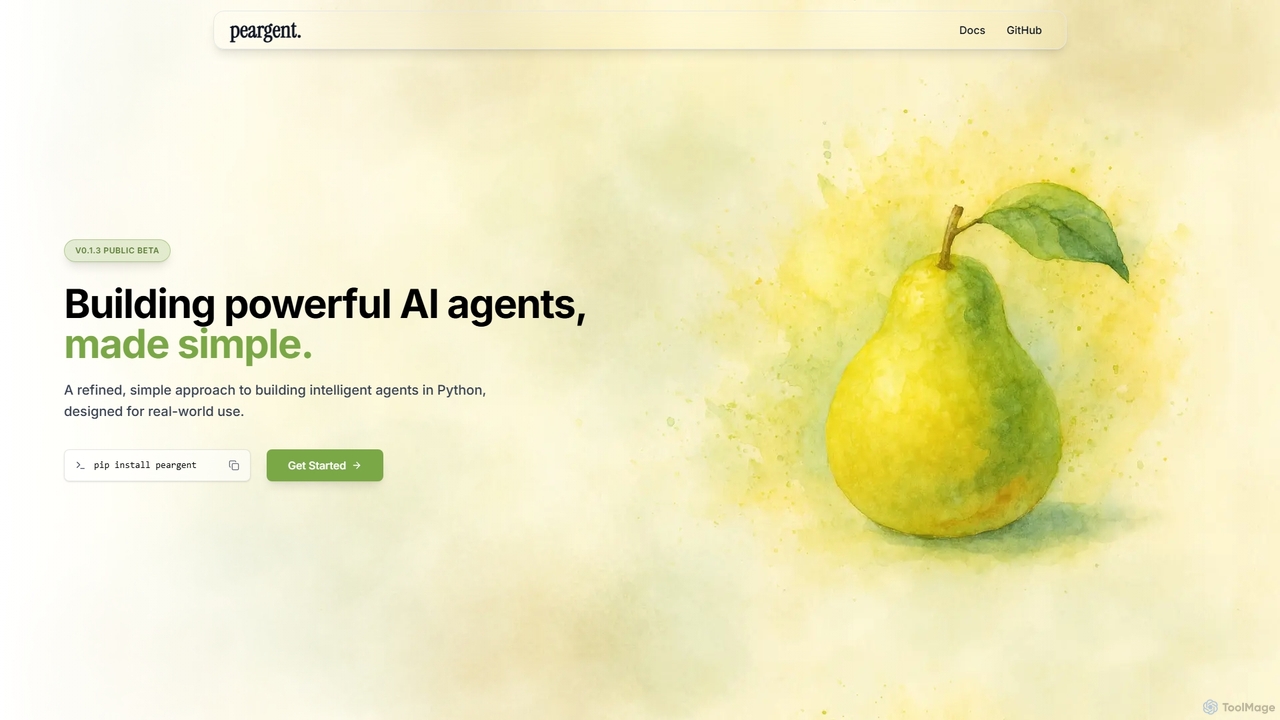
Peargent
Peargent is a modern, powerful Python framework designed for building intelligent, production-grade AI agents. It offers an intuitive API, flexible LLM support, multi-agent orchestration, and persistent memory, enabling developers to create scalable and robust AI solutions for real-world use.
Agent Development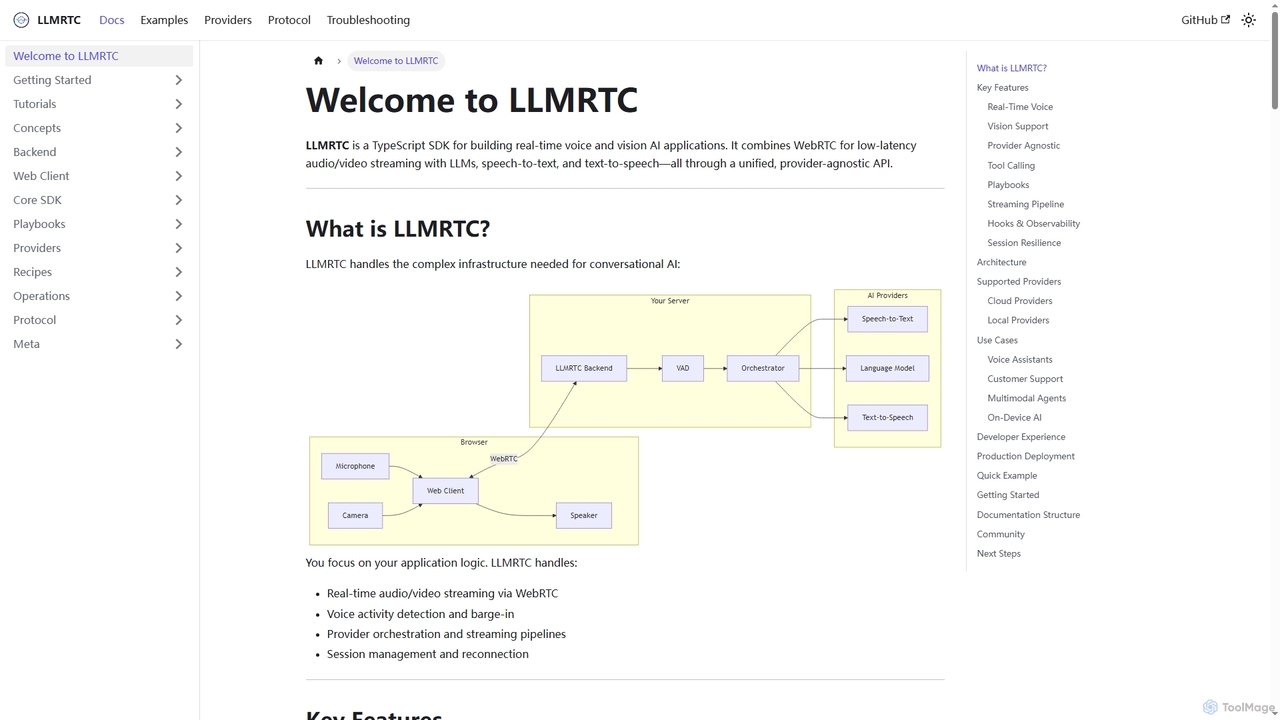
LLMRTC
LLMRTC is a TypeScript SDK for building real-time voice and vision AI applications. It integrates WebRTC for low-latency audio/video streaming with LLMs, speech-to-text, and text-to-speech technologies through a unified, provider-agnostic API. Developers can focus on application logic while LLMRTC handles complex conversational AI infrastructure.
Conversational AiCirtus AI
Cirtus AI is the trust layer for autonomous AI agents, providing decentralized identity, secure isolated wallets, and verifiable on-chain reputation. It empowers AI agents to act autonomously and securely, mitigating risks associated with direct access to sensitive assets and data, fostering a new era of trusted AI interactions.
Agent Frameworks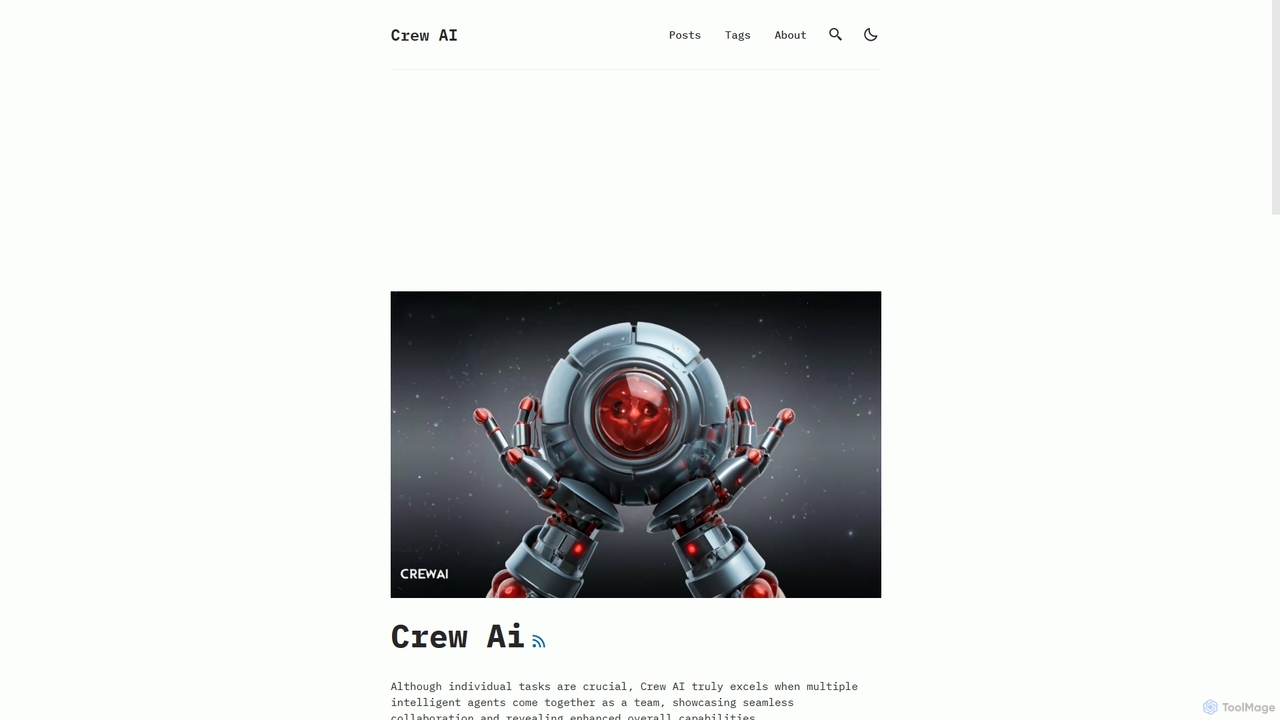
CrewAI
CrewAI is an advanced open-source framework for orchestrating role-playing, autonomous AI agents. By fostering collaborative intelligence, it enables agents with distinct roles and tools to work together seamlessly to solve complex tasks. This multi-agent system simplifies the development of sophisticated applications, from automated content creation to complex data analysis, by managing agent interactions, task delegation, and workflow processes.
Agent
Jyek
Jyek is an AI agent platform that understands objectives, creates execution plans, uses tools, and delivers verifiable results for complex, multi-step tasks.
Automation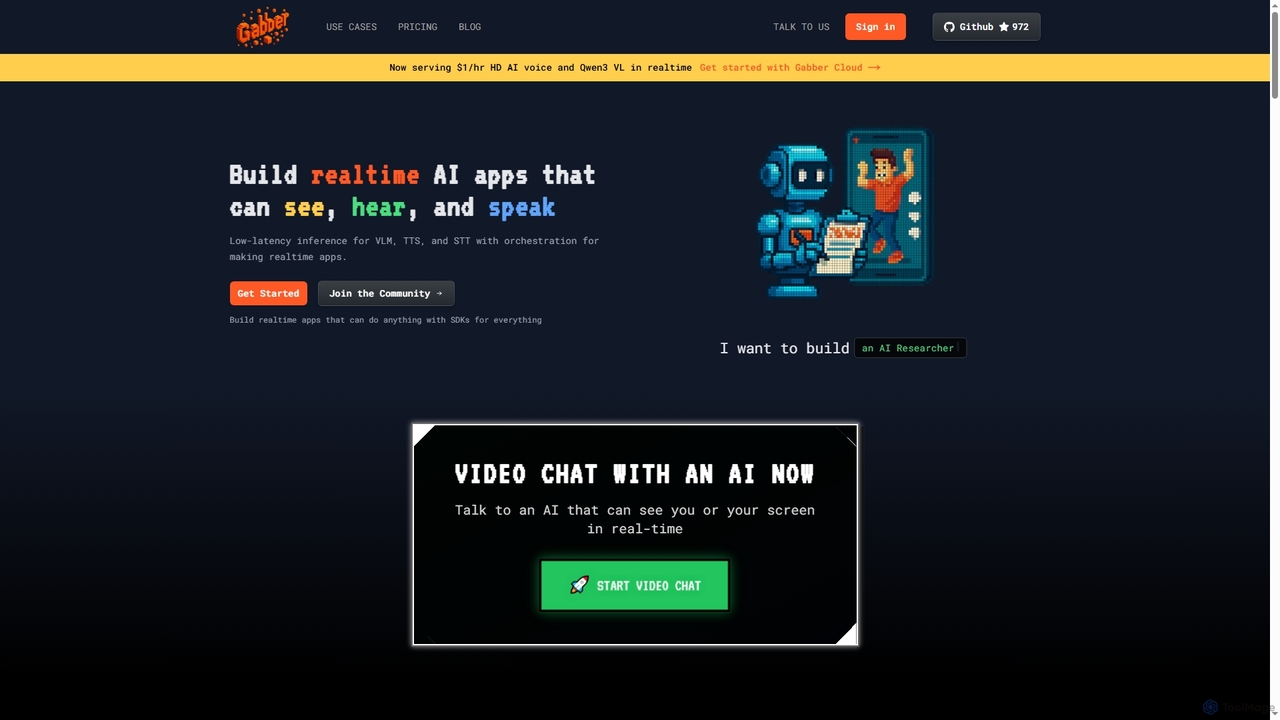
Gabber
Gabber is a powerful platform for building real-time, multimodal AI applications that can see, hear, and speak. It offers low-latency inference for Vision Language Models (VLM), Text-to-Speech (TTS), and Speech-to-Text (STT), coupled with a graph-based orchestration system for rapid development and deployment.
Conversational Ai
MindMeld
A powerful, open-source conversational AI platform from Cisco, designed for developers. It provides a comprehensive Python-based framework for building deep-domain voice interfaces and chatbots with advanced Natural Language Processing (NLP) capabilities, offering full control and on-premise deployment.
Chatbot Builder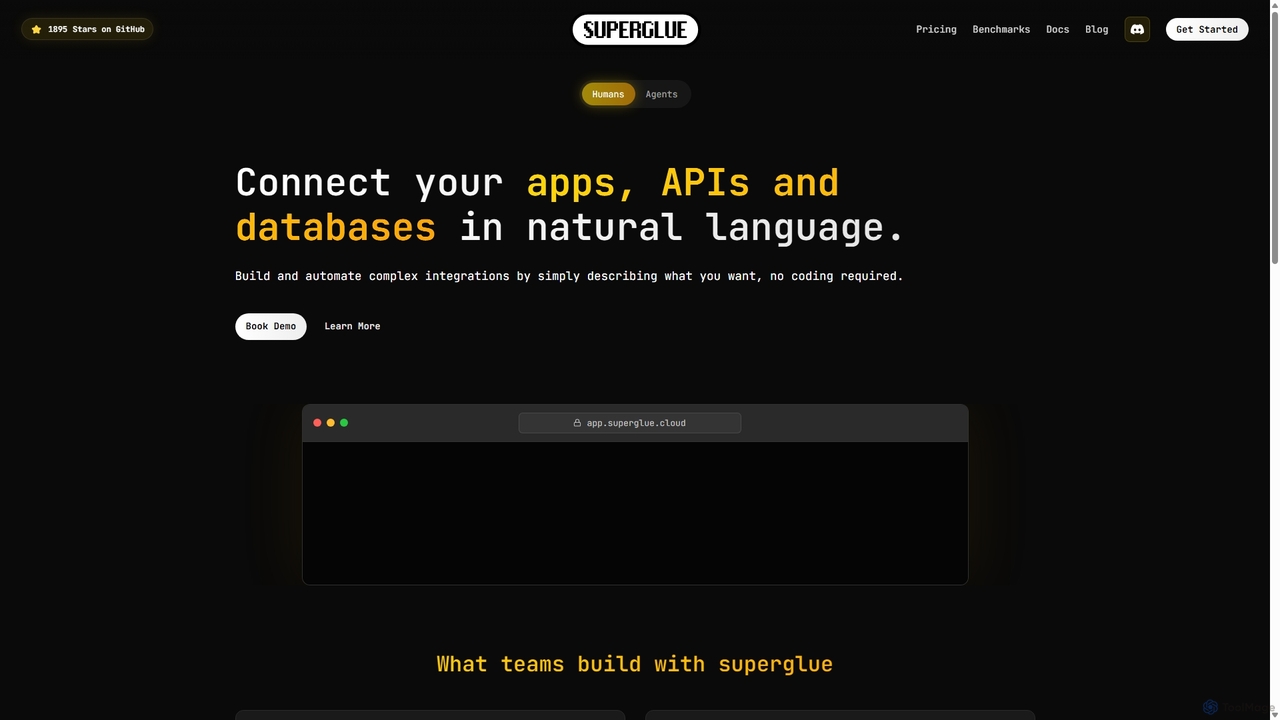
Superglue
Superglue is an AI-powered platform that translates natural language intent into reliable API execution. It enables developers and teams to automate ETL pipelines, build API connectors instantly, migrate data, and create complex workflows using a chat interface or code. It's designed to empower AI agents with dynamic, production-ready tools for any API.
Tooling
Skillgraph Comments (0)
Sign in to comment.
Sign inNo comments yet.