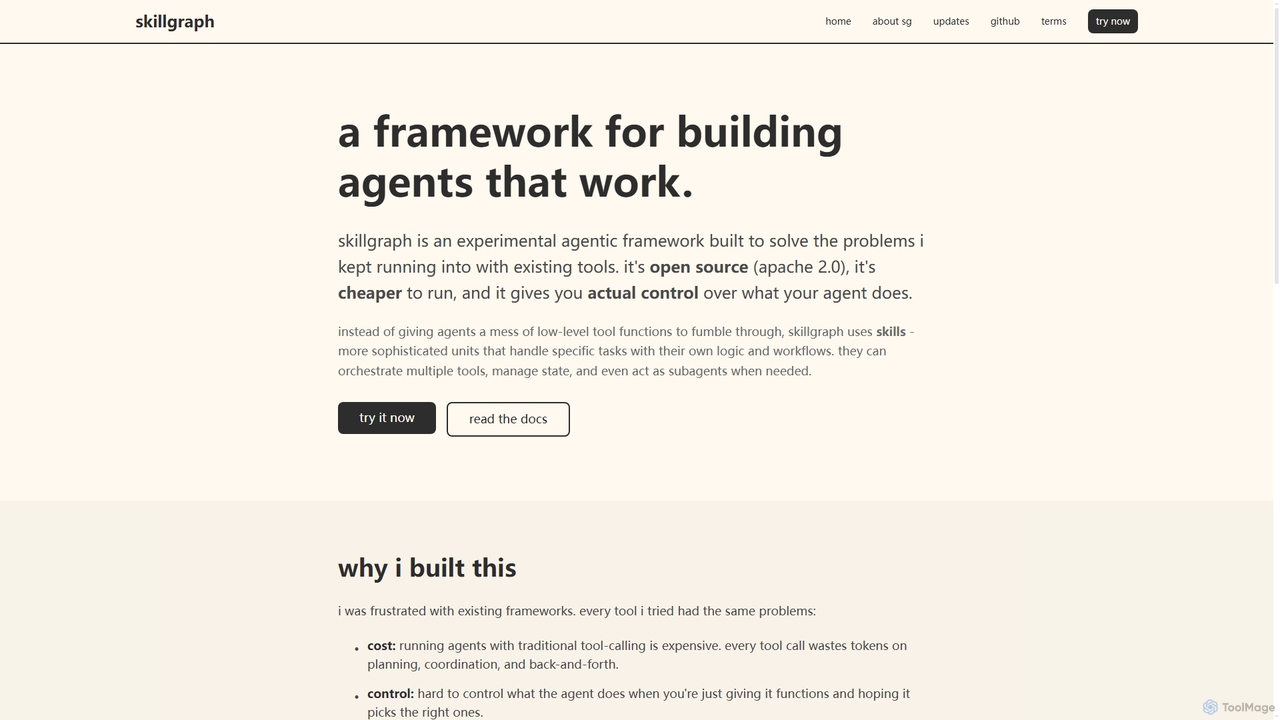
LLM Orchestration refers to AI-powered tools and frameworks specifically designed to manage, coordinate, and optimize the interactions between large language models (LLMs), external data sources, and various software tools. Within the broader context of AI Development, these platforms enable developers to move beyond simple, single-turn LLM prompts, constructing sophisticated, multi-step AI applications capable of complex reasoning, planning, and execution. By providing structured methodologies for chaining LLM calls, integrating external APIs, and managing conversational context, LLM orchestration significantly enhances the reliability, efficiency, and overall capabilities of AI systems, transforming raw LLM power into intelligent, goal-oriented agents.
Core Features
- Chain Management: These tools allow developers to define and execute intricate sequences of LLM calls, logical operations, and conditional branching, enabling the creation of multi-stage reasoning processes. This ensures that tasks requiring several steps, such as data analysis followed by report generation, are handled coherently.
- Tool Integration: A critical feature is the ability to seamlessly connect LLMs with external APIs, databases, web search engines, and custom functions. This empowers LLMs to interact with the real world, retrieve up-to-date information, perform calculations, or execute specific actions beyond their inherent linguistic capabilities.
- Context Management: Effective orchestration platforms manage the conversational history and retrieve relevant external data or user-specific information. This ensures that LLMs maintain coherence over extended interactions and can leverage a rich, dynamic context for more accurate and personalized responses.
- Prompt Engineering & Management: They offer advanced capabilities for dynamically generating, templating, and optimizing prompts based on the current state, user input, and available tools. This reduces manual prompt tuning and improves the consistency and quality of LLM outputs across diverse scenarios.
- Agentic Capabilities: Many orchestration frameworks facilitate the development of autonomous AI agents. These agents can interpret user goals, break them down into sub-tasks, select appropriate tools, execute actions, and iterate on their plans, bringing a higher level of intelligence and problem-solving to AI applications.
Applicable Scenarios
LLM orchestration is indispensable for a wide array of professionals, including AI engineers building advanced intelligent agents, data scientists automating complex analytical pipelines, and product developers creating dynamic, personalized user experiences. Typical applications include the development of sophisticated customer service chatbots that can access knowledge bases and perform actions, automated content creation workflows that integrate fact-checking, and intelligent data extraction systems that transform raw information into structured formats for further analysis.
How to Choose
When selecting an LLM orchestration tool, prioritize platforms that offer robust flexibility in defining complex workflows and extensive integration capabilities with a broad range of LLMs and external services. Evaluate its scalability and performance characteristics to ensure it can handle production-level loads, alongside strong observability and debugging features for easier development and maintenance. Consider the availability of pre-built components, the quality of documentation, and the vibrancy of its community support, as these factors significantly impact development velocity and long-term sustainability for your AI Development projects.