Superglue
Superglue is an AI-powered platform that translates natural language intent into reliable API execution. It enables developers and …
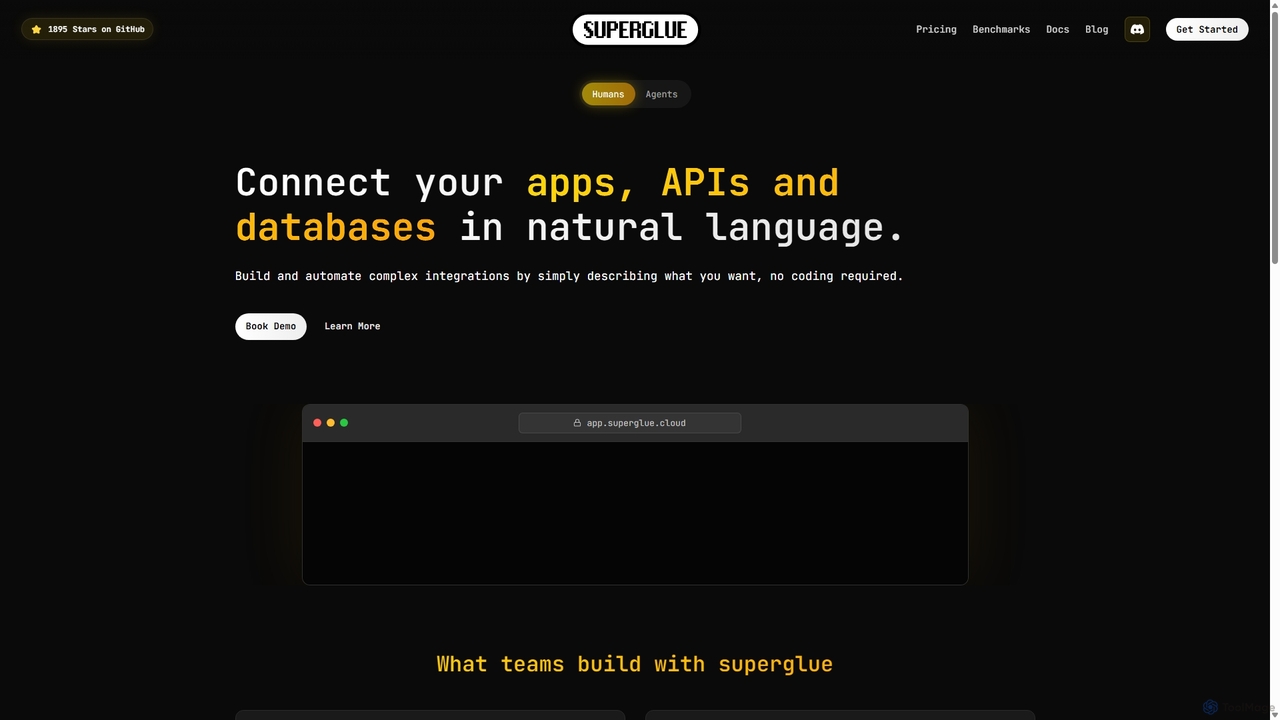
Superglue is an AI-powered platform that translates natural language intent into reliable API execution. It enables developers and teams to automate ETL pipelines, build API connectors instantly, migrate data, and create complex workflows using a chat interface or code. It's designed to empower AI agents with dynamic, production-ready tools for any API.
About Tooling
AI Agent Tooling provides the essential components and libraries that empower AI agents to perform actions and interact with external systems. These tools function as specialized skills or capabilities, enabling agents to go beyond conversation by executing code, accessing databases, or calling APIs. By integrating this tooling, developers can build autonomous agents capable of handling complex, multi-step tasks in the digital and physical world. This transforms a conversational AI into a functional, task-oriented autonomous entity.
Core Features
- Function Calling: Allows agents to reliably connect to and utilize external tools and APIs.
- Code Execution: Provides a secure environment (sandbox) for agents to write and run code to solve problems.
- Data Connectivity: Enables agents to interact with various data sources like databases, files, and web content.
- System Interaction: Grants agents the ability to perform actions on a computer, such as file management or command execution.
Use Cases
This tooling is crucial for developers building sophisticated autonomous agents, data scientists automating analysis workflows, and businesses creating custom AI assistants. For example, an agent can use web search tools for research, a code interpreter for data analysis, and API tools to book a flight, all within a single automated process.
How to Choose
When selecting AI Agent Tooling, consider the specific capabilities your agent needs (e.g., web browsing, code execution). Evaluate the ease of integration with your existing agent framework (like LangChain or LlamaIndex), the security features of the execution environment, and the breadth of pre-built integrations with third-party services.

ToolingUse Cases
Automated Market Research and Reporting
A business analyst uses an AI agent equipped with web browsing and data analysis tools. The analyst tasks the agent with researching market trends for a new product. The agent autonomously browses financial news sites, industry reports, and social media, extracts relevant data points using its tools, and then uses a code interpreter tool to perform statistical analysis and generate charts. Finally, it compiles all findings into a structured report, saving the analyst dozens of hours of manual work.
Automated Software Debugging and Patching
A developer integrates an AI agent into their CI/CD pipeline. When a build fails, the agent is triggered. Using file system tools, it reads the error logs. With a code interpreter, it runs diagnostic scripts to replicate the issue. After identifying the bug, it searches internal documentation and external forums for solutions using a web search tool. It then attempts to write a code patch, tests it in its sandboxed environment, and if successful, submits a pull request for human review. This automates the initial, time-consuming phase of debugging.
Personalized Travel Itinerary Planning
A user interacts with a travel planning agent. The user states, 'Plan a 5-day trip to Tokyo for me next month, focusing on technology and food.' The agent uses a calendar API tool to check the user's availability, a flight search tool to find optimal flights, a hotel booking tool to find accommodation, and web search tools to identify top-rated tech museums and restaurants. It then synthesizes this information, creates a day-by-day itinerary, and presents it to the user for approval, handling a complex multi-domain task seamlessly.
Managing Cloud Infrastructure
A DevOps engineer uses an AI agent with tools that can interact with cloud provider APIs (like AWS, GCP, Azure). The engineer can issue natural language commands like, 'Deploy a new staging server with our standard configuration and notify the team on Slack.' The agent uses its API tools to provision the virtual machine, apply the configuration script, and then uses a Slack API tool to post a confirmation message to the relevant channel, streamlining a common but multi-step operational task.
E-commerce Customer Support Automation
An e-commerce platform deploys an AI agent with tools to access the order database and shipping provider APIs. When a customer asks, 'Where is my order?', the agent doesn't give a generic answer. It uses its database tool to retrieve the customer's order status and a shipping API tool to get real-time tracking information. It can then provide a precise update, like 'Your order 12345 is currently out for delivery and is expected to arrive today by 5 PM.' It can also initiate a return process by using another API tool if requested.
Complex Data Query and Visualization
A data scientist needs to analyze sales data from a large SQL database. Instead of writing complex queries manually, they instruct an AI agent: 'Show me the monthly sales growth for product X in the European market over the last two years and visualize it as a bar chart.' The agent uses a database tool to construct and execute the correct SQL query, retrieves the data, and then uses a code interpreter tool with a plotting library (like Matplotlib) to generate the requested bar chart, presenting the result directly to the scientist.