Ai Agent Best in category 3 results Autonomous Agent AI Tool

Popular AI tools in the Autonomous Agent field of Ai Agent include Cognition、4149、Agent TARS, etc., helping you quickly improve efficiency.

Cognition

Cognition

Cognition is an applied AI lab that created Devin, the world's first fully autonomous AI software engineer. Devin …

224.5K
4149

4149

4149 is a pioneering platform that provides proactive AI teammates. These autonomous agents are designed to take initiative, …

3.9K
Free
Agent TARS

Agent TARS

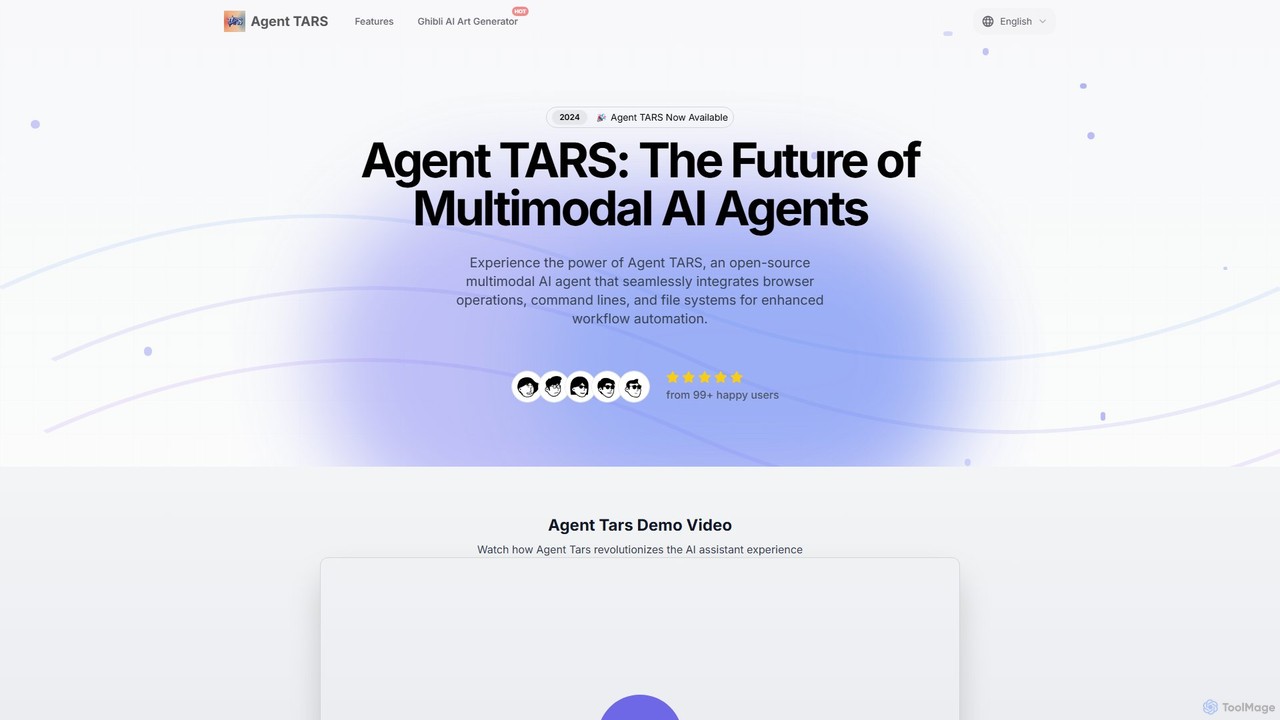
Agent TARS is a powerful, open-source multimodal AI agent designed for developers and teams. It automates complex workflows …

2.7K

About Autonomous Agent

Autonomous Agents are a sophisticated class of AI tools designed to independently achieve complex goals without direct human supervision. They operate by perceiving their digital environment, creating multi-step plans, and executing tasks across various applications and websites. This ability to autonomously strategize and act makes them powerful for automating workflows that traditionally require human reasoning and intervention. Unlike simpler AI assistants, they can self-correct based on outcomes, adapting their approach to successfully complete the assigned objective.

Core Features

  • Goal-Oriented Planning: Decomposes high-level objectives into a sequence of concrete, executable steps.
  • Independent Action Execution: Interacts with web browsers, APIs, and files to perform tasks without manual guidance.
  • Self-Correction and Adaptation: Analyzes the results of its actions and modifies its plan to overcome obstacles.
  • Environment Perception: Gathers and processes real-time information from digital sources to inform its decisions.
  • Memory Management: Utilizes both short-term and long-term memory to track progress and learn from past interactions.

Use Cases

Autonomous Agents are particularly valuable for roles involving complex research, development, and digital management. For instance, market analysts use them to automate competitor analysis, developers to streamline project setup and testing, and e-commerce managers to dynamically adjust pricing and manage inventory based on real-time data.

How to Choose

When selecting an Autonomous Agent, evaluate its task complexity capabilities—can it handle multi-step, cross-platform workflows? Assess its integration ecosystem to ensure it connects with your essential tools. Consider the level of control and oversight offered, allowing you to review and approve plans. Finally, scrutinize its security protocols for handling sensitive data and credentials.

Autonomous AgentUse Cases

1

Automated Market and Competitor Analysis

A marketing strategist needs to compile a comprehensive report on a new market segment. Instead of spending days manually gathering data, they assign the task to an Autonomous Agent with a high-level goal: 'Analyze the top 5 competitors in the SaaS CRM market for small businesses, focusing on pricing, key features, and customer reviews.' The agent autonomously browses websites, extracts pricing information from tables, scrapes reviews from platforms like G2 and Capterra, and synthesizes the findings into a structured document. This process reduces research time from over 20 hours to under an hour, providing the strategist with actionable insights almost instantly.

2

End-to-End Software Development Assistance

A software developer is starting a new project. They instruct an Autonomous Agent to 'Set up a new Python project with Django, create a basic user authentication model, configure a PostgreSQL database, and write initial unit tests.' The agent accesses the terminal, executes commands to create the project structure, installs necessary libraries, writes boilerplate code for the models and views based on best practices, generates test files, and commits the initial setup to a Git repository. This automates the tedious setup phase, allowing the developer to focus immediately on core application logic, saving several hours of repetitive work.

3

Comprehensive and Personalized Travel Planning

A user wants to plan a 7-day trip to Japan. They provide an Autonomous Agent with their budget, travel dates, and interests like 'history, nature, and food.' The agent then performs a series of actions: it searches for the best flight deals, compares hotel prices and locations, researches train schedules between cities, finds top-rated restaurants and historical sites, and compiles all the information into a day-by-day itinerary. It can even proceed to book flights and accommodations after receiving user confirmation. This transforms a multi-day planning effort into a single, concise request, delivering a fully customized travel plan.

4

Dynamic E-commerce Store Management

An e-commerce manager for an online electronics store uses an Autonomous Agent to optimize operations. They set a goal: 'Maintain competitive pricing for our top 10 products and ensure stock levels are above 50 units.' The agent continuously monitors competitor websites and reprices products on the store's backend to stay competitive within predefined margins. Simultaneously, it checks inventory levels via the store's API. If a product's stock drops below the threshold, it automatically drafts a reorder email to the supplier for the manager's approval. This proactive management helps maximize sales and prevent stockouts without constant manual oversight.

5

Automated Scientific Literature Review

A medical researcher is investigating a new drug compound. They task an Autonomous Agent to 'Find all peer-reviewed articles published in the last 5 years on the effects of compound X on neural pathways, summarize their methodologies and key findings, and identify any conflicting results.' The agent connects to academic databases like PubMed and Google Scholar, uses advanced search queries, downloads relevant PDFs, parses the text to extract the required information, and compiles a synthesized report. This automates a core part of the research process, enabling the researcher to quickly grasp the current state of knowledge and focus on designing new experiments.

6

Proactive IT System Monitoring and Remediation

An IT administrator deploys an Autonomous Agent to oversee a network of web servers. The agent's goal is to 'Ensure 99.9% uptime and optimal performance.' It continuously monitors server logs, CPU usage, and network traffic. If it detects an unusual spike in errors from a specific server, it autonomously diagnoses the issue by checking recent deployments and system logs. It might identify a memory leak, automatically restart the relevant service, and then verify that the error rate returns to normal. Finally, it sends a detailed incident report to the administrator, turning a potential outage into a resolved issue before it impacts users.

Autonomous AgentFrequently Asked Questions