Ai Agent Best in category 2 results Orchestration AI Tool

Popular AI tools in the Orchestration field of Ai Agent include UBOS、superduperdb, etc., helping you quickly improve efficiency.

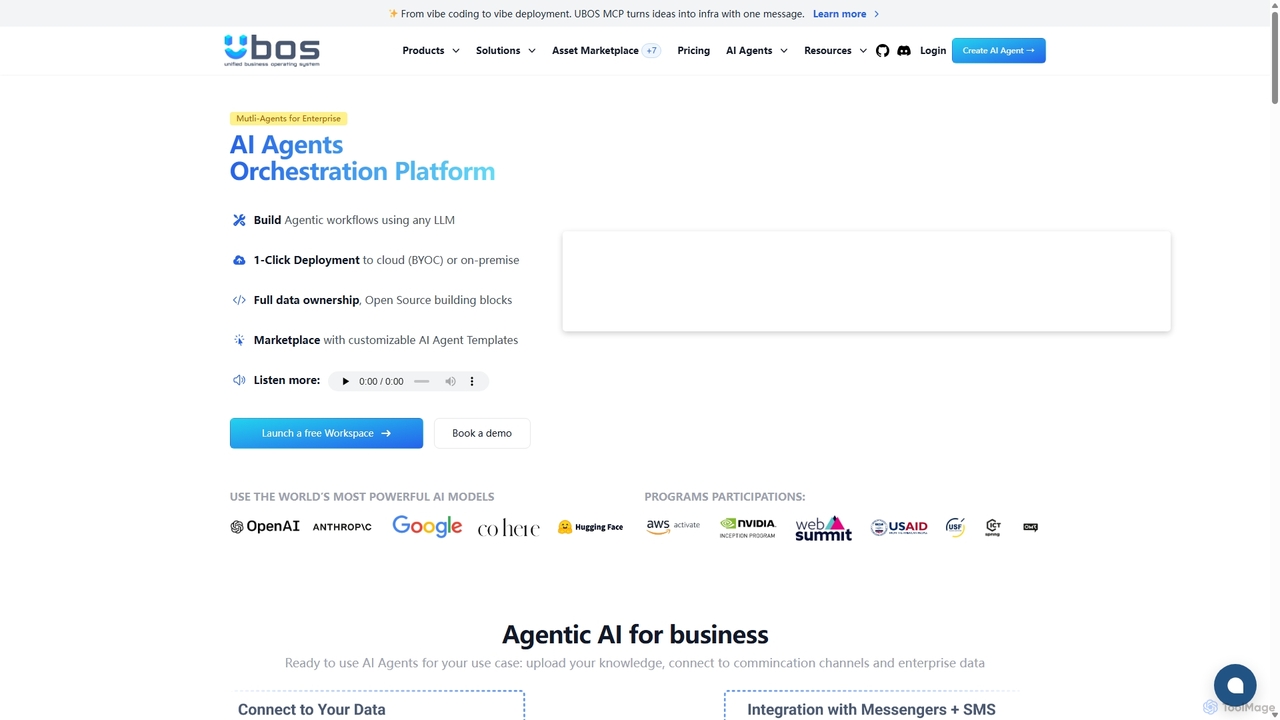
UBOS

UBOS

UBOS is a low-code AI orchestration platform for enterprises to build, deploy, and scale multi-agent AI workflows. It …

49.3K
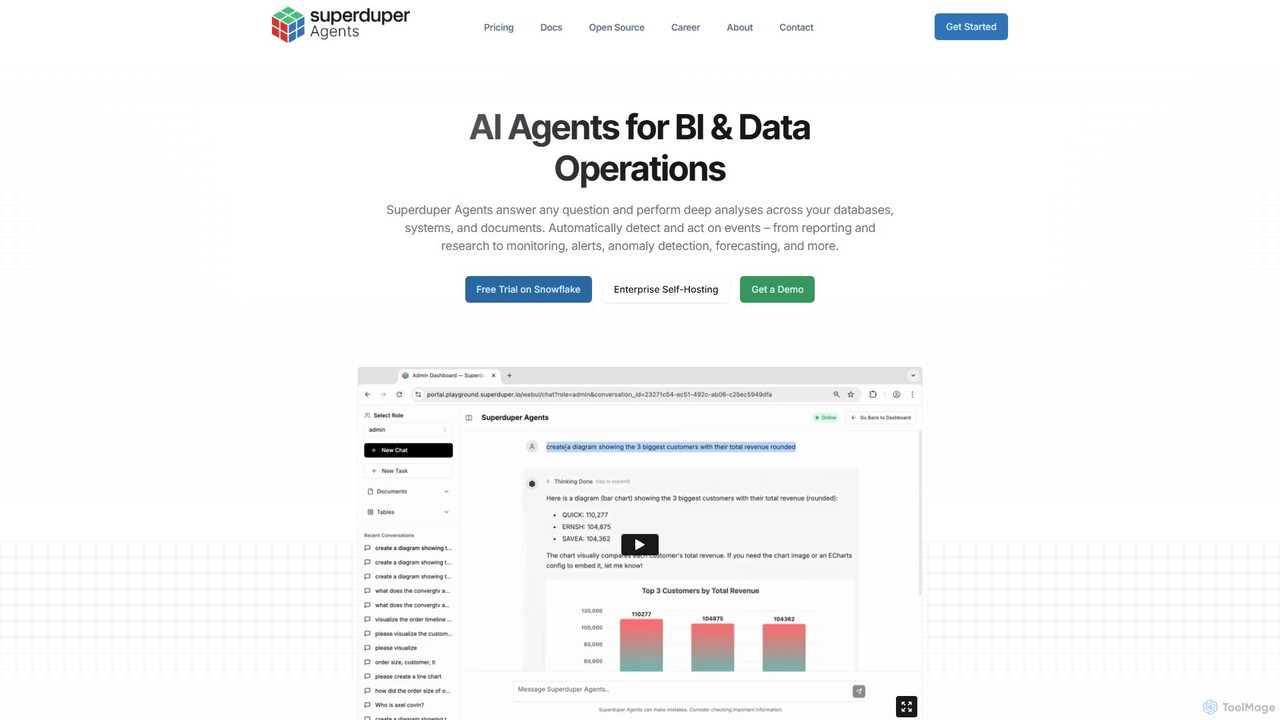
superduperdb

superduperdb

superduperdb is an enterprise AI agent orchestration platform that seamlessly integrates with your existing databases and systems. It …

3.6K

About Orchestration

Orchestration tools are specialized AI platforms designed to manage and coordinate complex workflows involving multiple AI models, services, or agents. These tools provide a framework for sequencing tasks, managing data flow, and ensuring seamless interaction between diverse AI components. By automating the execution and monitoring of multi-step AI processes, orchestration solutions enable the creation of sophisticated, robust, and scalable AI applications that can tackle intricate real-world problems.

Core Features

  • Workflow Design: Visually define and configure multi-step AI pipelines with conditional logic and parallel execution.
  • Task Management: Assign, monitor, and manage individual AI tasks, ensuring proper execution order and resource allocation.
  • Data Flow Control: Seamlessly transfer data between different AI models and services, handling transformations and validations.
  • Error Handling & Recovery: Implement strategies for detecting and resolving failures within complex AI workflows, ensuring system resilience.
  • Performance Monitoring: Track the execution status, latency, and resource utilization of AI processes for optimization.

Use Cases

Orchestration tools are essential for enterprises building advanced AI systems, data scientists managing complex machine learning pipelines, and developers integrating multiple AI services. They are particularly valuable in scenarios requiring dynamic decision-making, adaptive responses, or the combination of generative AI with analytical models to achieve comprehensive solutions.

How to Choose

When selecting an AI orchestration tool, consider its compatibility with your existing AI models and infrastructure, the flexibility of its workflow design capabilities, and its scalability to handle increasing loads. Evaluate its error handling mechanisms, monitoring features, and the ease of integrating new AI services or custom code. Pricing models and community support are also important factors for long-term viability.

OrchestrationUse Cases

1

Automating Multi-Stage Content Generation

A marketing team needs to generate personalized ad copy, images, and video scripts. An orchestration tool can sequence an AI text generator for copy, an AI image generator for visuals, and an AI video script writer, ensuring consistent branding and data flow between each stage, significantly reducing manual coordination and time-to-market.

2

Dynamic Customer Service Agent Routing

A customer support center uses an orchestration platform to manage interactions. Initial queries are handled by a general chatbot. If the query involves a product issue, it's routed to a specialized diagnostic AI. If a human agent is needed, the orchestration ensures all previous AI interactions and data are seamlessly transferred, providing a comprehensive context.

3

Complex Financial Fraud Detection

Financial institutions employ orchestration to combine multiple AI models for fraud detection. Transactions first pass through a rule-based engine, then a machine learning model for anomaly detection, and finally a generative AI for explaining suspicious patterns to human analysts. The orchestration manages this sequence, ensuring real-time processing and decision support.

4

Personalized Learning Path Generation

An educational platform uses orchestration to create adaptive learning paths. Based on a student's initial assessment (analyzed by one AI), the system orchestrates a content recommendation AI, a progress tracking AI, and a feedback generation AI, dynamically adjusting the curriculum and resources to optimize individual learning outcomes.

5

Supply Chain Optimization with Predictive Analytics

A logistics company leverages orchestration to integrate various AI models for supply chain management. This includes demand forecasting AI, inventory optimization AI, and route planning AI. The orchestration ensures that outputs from forecasting feed into inventory, which then informs route planning, creating a cohesive and optimized operational strategy.

6

AI-Powered Drug Discovery Pipeline

Pharmaceutical researchers utilize orchestration to manage complex drug discovery workflows. This involves sequencing AI models for target identification, molecule generation, property prediction, and synthesis planning. The orchestration platform ensures data integrity and efficient progression through each computational stage, accelerating research cycles.

OrchestrationFrequently Asked Questions