
LLMRTC Overview
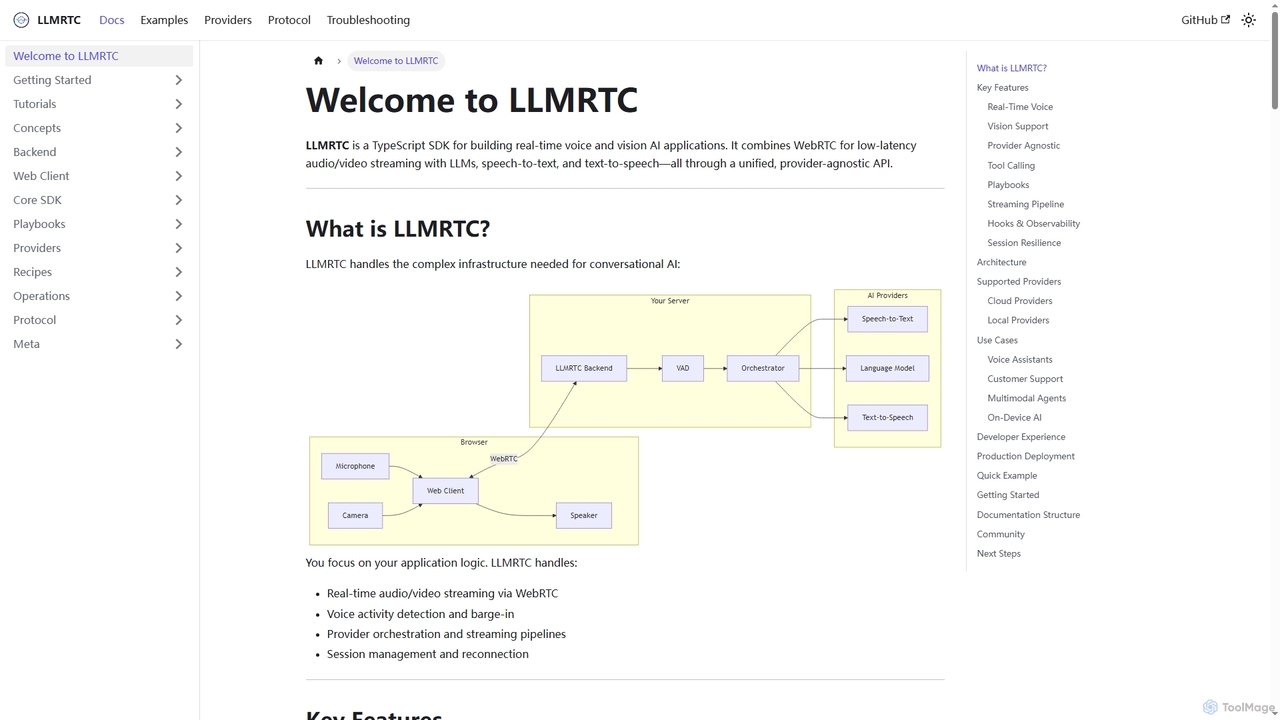
LLMRTC is a powerful and flexible TypeScript SDK engineered to streamline the development of real-time conversational AI applications that leverage both voice and vision. It fundamentally combines the low-latency audio and video streaming capabilities of WebRTC with advanced AI components like Large Language Models (LLMs), Speech-to-Text (STT), and Text-to-Speech (TTS). This integration is presented through a unified, provider-agnostic API, significantly simplifying the infrastructure complexities typically associated with building sophisticated AI assistants and multimodal agents.
How to use LLMRTC
To use LLMRTC, developers integrate its core packages: @llmrtc/llmrtc-core for shared foundations, @llmrtc/llmrtc-backend for the Node.js server handling WebRTC, VAD, and provider orchestration, and @llmrtc/llmrtc-web-client for browser-side audio/video capture and playback. After installing Node.js (v20+) and npm (v9+), developers can choose between a cloud-based path (requiring API keys for providers like OpenAI for LLM, STT, TTS) or a local-only stack (using models like Ollama, Faster-Whisper, Piper). The backend server is initiated with chosen providers and a system prompt, while the frontend client connects via a WebSocket URL to stream audio and receive AI responses, facilitating real-time bidirectional communication.
Core Features of LLMRTC
- Real-Time Voice: Enables bidirectional audio streaming with sub-second latency, incorporating server-side Voice Activity Detection (VAD) and barge-in functionality for natural interruptions.
- Vision Support: Allows sending camera frames or screen captures alongside speech, enabling vision-capable models to interpret visual context.
- Provider Agnostic: Offers flexibility to switch or mix various cloud (e.g., OpenAI, Anthropic, Google Gemini, AWS Bedrock, ElevenLabs) and local AI providers (e.g., Ollama, Faster-Whisper, Piper) without code changes.
- Tool Calling: Facilitates dynamic interaction by allowing models to call developer-defined tools (using JSON Schema), execute them, and seamlessly continue the conversation.
- Playbooks: Provides a structured approach to build complex, multi-stage conversations with per-stage prompts, tools, and configurable automatic transitions based on tool calls, intents, keywords, or LLM decisions.
- Streaming Pipeline: Optimizes perceived latency by allowing responses to start playing via TTS before the full LLM generation is complete, using sentence-boundary detection.
- Hooks & Observability: Includes over 20 hook points for extensive logging, debugging, and custom behavior, alongside built-in metrics for tracking performance indicators like TTFT and token counts.
- Session Resilience: Ensures robust connections with automatic reconnection using exponential backoff, preserving conversation history through network interruptions, and graceful degradation during provider failures.
- TypeScript-First Development: Offers full type safety and IntelliSense support across all APIs, enhancing developer experience and reducing errors.
Use Cases for LLMRTC
LLMRTC is ideal for a wide range of real-time AI applications. It can be used to develop sophisticated voice assistants akin to Siri or Alexa, complete with custom domain-specific tools for tasks like order checking or appointment booking. In customer support, multi-stage playbooks can guide users through authentication and issue resolution, integrating with CRM and ticketing systems. Multimodal agents can be built by combining voice with vision capabilities, allowing users to share screens or camera feeds for context-aware assistance. Furthermore, LLMRTC supports on-device AI deployments, enabling fully local, private, and cost-free conversational experiences using local LLM, STT, and TTS models.
Advantages of LLMRTC
The primary advantages of LLMRTC include its ability to abstract away the complexities of real-time communication and AI provider integration, allowing developers to focus on core application logic. Its provider-agnostic nature offers unparalleled flexibility and future-proofing, enabling easy switching or mixing of AI models. The robust WebRTC integration ensures low-latency, high-quality audio/video streaming, crucial for natural conversational flows. Features like tool calling, playbooks, and streaming pipelines empower developers to create highly interactive, sophisticated, and efficient conversational experiences. The strong developer experience, backed by TypeScript and comprehensive error handling, further enhances productivity and reliability.
LLMRTC FAQ
LLMRTC Alternatives
Daily
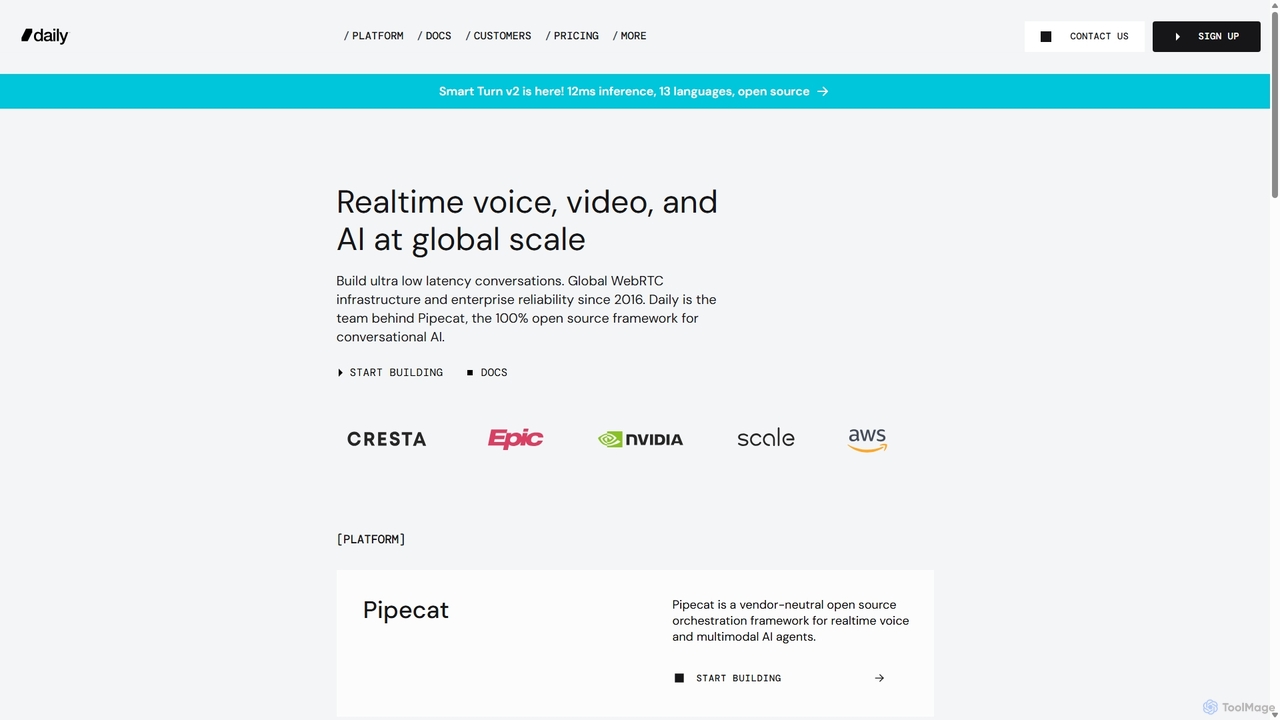
Daily is a developer platform for real-time video, voice, and AI. It provides robust APIs and SDKs for building ultra-low latency, scalable, and high-quality conversational experiences, including human-to-human video calls and advanced voice AI agents through its open-source framework, Pipecat.
Conversational Ai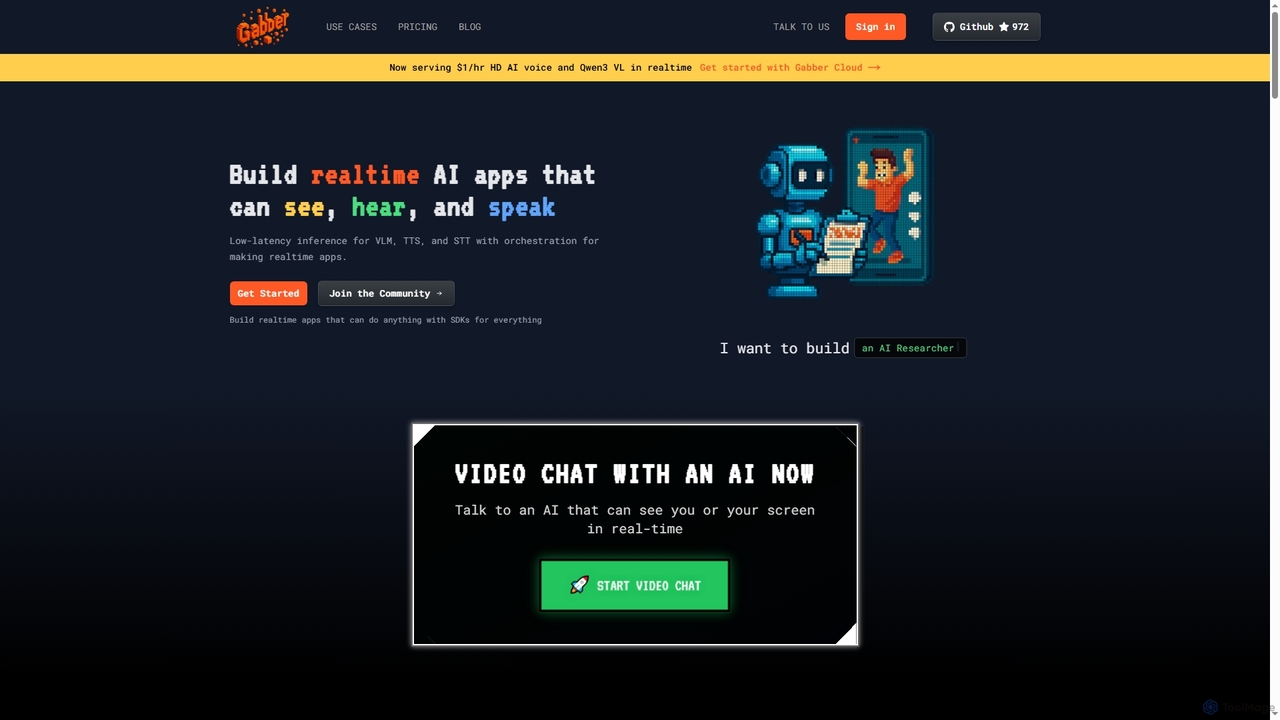
Gabber
Gabber is a powerful platform for building real-time, multimodal AI applications that can see, hear, and speak. It offers low-latency inference for Vision Language Models (VLM), Text-to-Speech (TTS), and Speech-to-Text (STT), coupled with a graph-based orchestration system for rapid development and deployment.
Conversational Ai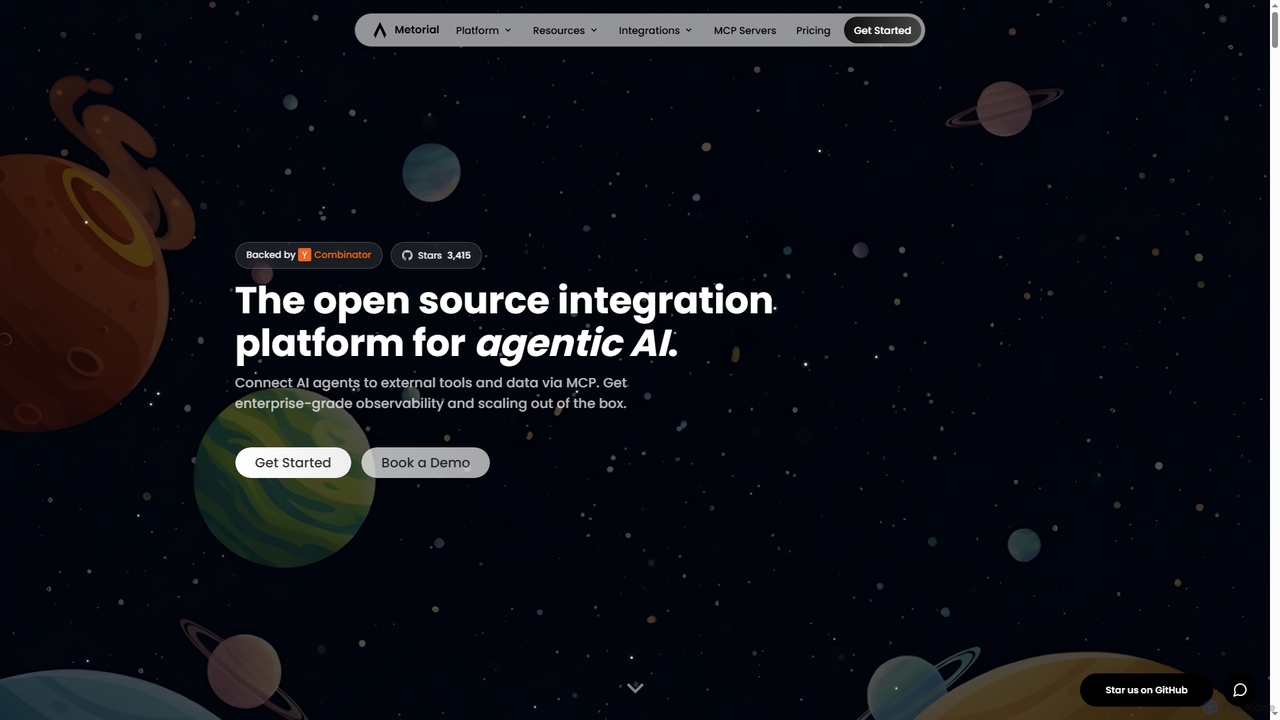
Metorial
Metorial is an integration platform for AI agents, enabling developers to quickly build, deploy, and monitor powerful agentic AI applications. It provides seamless connections to hundreds of tools, data sources, and APIs via its serverless Model Context Protocol (MCP) platform, offering robust SDKs, observability, and enterprise-grade security for scalable AI solutions.
Agentic Ai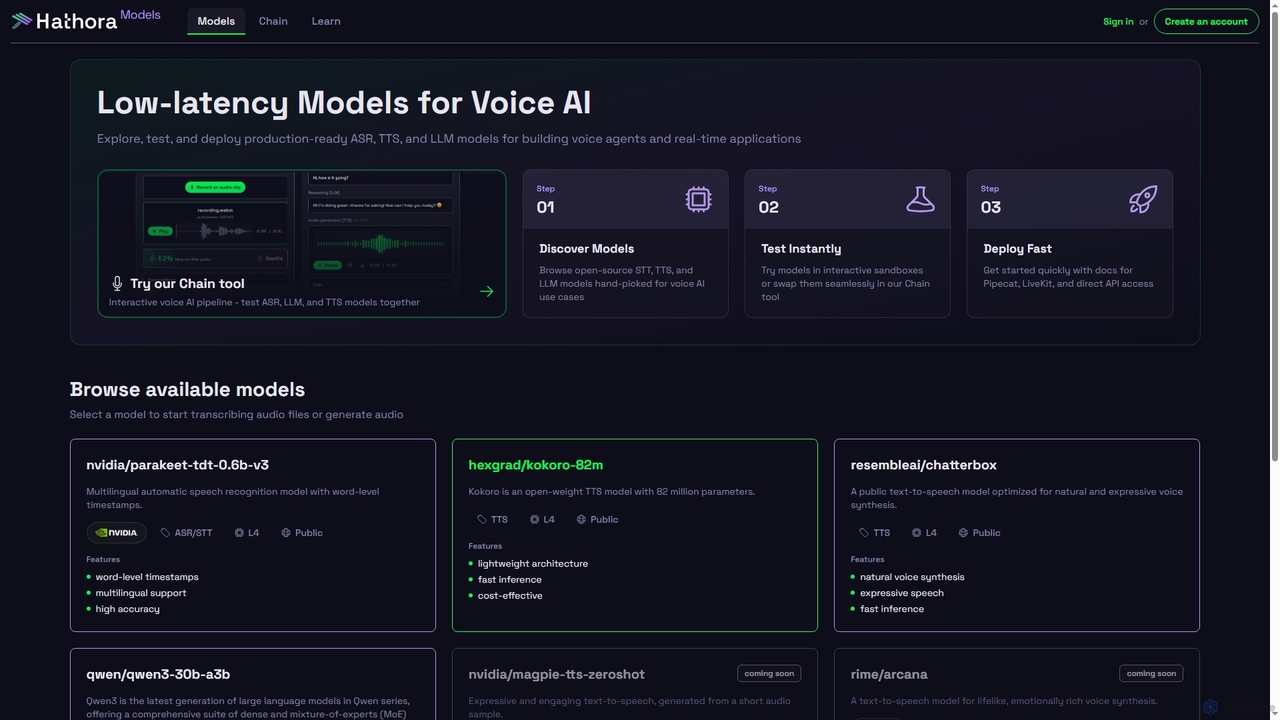
Models
Models by Hathora offers a curated catalog of low-latency ASR, TTS, and LLM models optimized for voice AI and real-time applications. Developers can explore, test, and deploy production-ready models quickly, featuring interactive sandboxes and direct API access for seamless integration into voice agents and other applications.
Api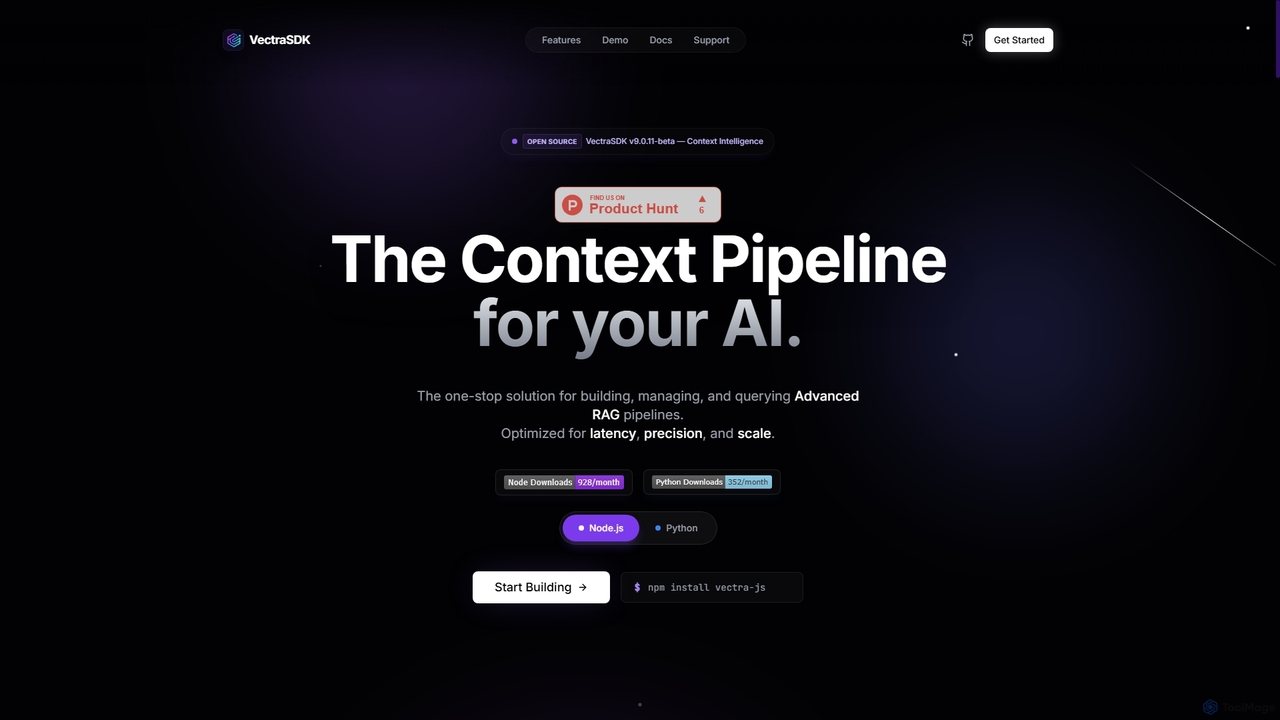
Vectra
Vectra is an open-source, production-grade SDK for Node.js and Python, designed to build, manage, and query advanced Retrieval-Augmented Generation (RAG) pipelines. It offers a comprehensive toolkit for developing context-aware AI applications, optimized for low latency, high precision, and scalability.
Rag PipelinesLLMRTC Categories
LLMRTC Jobs
LLMRTC Embed Widget
Copy this embed code to place the badge on your blog, article, or product site and send readers directly to this ToolMage detail page.

Related AI tools
Gabber
Gabber is a powerful platform for building real-time, multimodal AI applications that can see, hear, and speak. It offers low-latency inference for Vision Language Models (VLM), Text-to-Speech (TTS), and Speech-to-Text (STT), coupled with a graph-based orchestration system for rapid development and deployment.
Conversational AiMetorial
Metorial is an integration platform for AI agents, enabling developers to quickly build, deploy, and monitor powerful agentic AI applications. It provides seamless connections to hundreds of tools, data sources, and APIs via its serverless Model Context Protocol (MCP) platform, offering robust SDKs, observability, and enterprise-grade security for scalable AI solutions.
Agentic AiModels
Models by Hathora offers a curated catalog of low-latency ASR, TTS, and LLM models optimized for voice AI and real-time applications. Developers can explore, test, and deploy production-ready models quickly, featuring interactive sandboxes and direct API access for seamless integration into voice agents and other applications.
ApiDaily
Daily is a developer platform for real-time video, voice, and AI. It provides robust APIs and SDKs for building ultra-low latency, scalable, and high-quality conversational experiences, including human-to-human video calls and advanced voice AI agents through its open-source framework, Pipecat.
Conversational AiVectra
Vectra is an open-source, production-grade SDK for Node.js and Python, designed to build, manage, and query advanced Retrieval-Augmented Generation (RAG) pipelines. It offers a comprehensive toolkit for developing context-aware AI applications, optimized for low latency, high precision, and scalability.
Rag Pipelines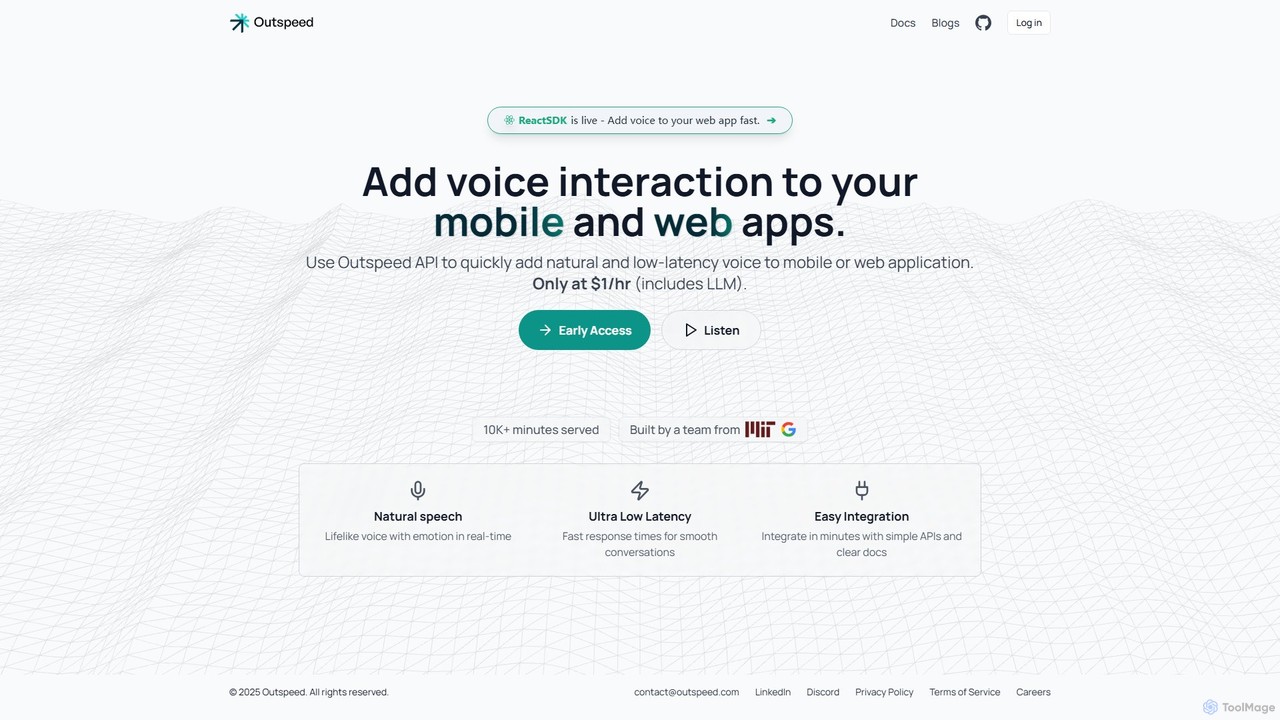
Outspeed
An API and SDK for developers to build and deploy AI voice companions with real-time emotion and memory. Easily integrate natural, low-latency voice interactions into web and mobile applications.
Voice Chatbot
Zyphra
Zyphra is an open-source AI research company developing high-performance, efficient foundational models. They provide state-of-the-art small language models (SLMs), text-to-speech (TTS) systems, and specialized reasoning models for developers and researchers, focusing on democratizing advanced AI for on-device and enterprise applications.
Model Development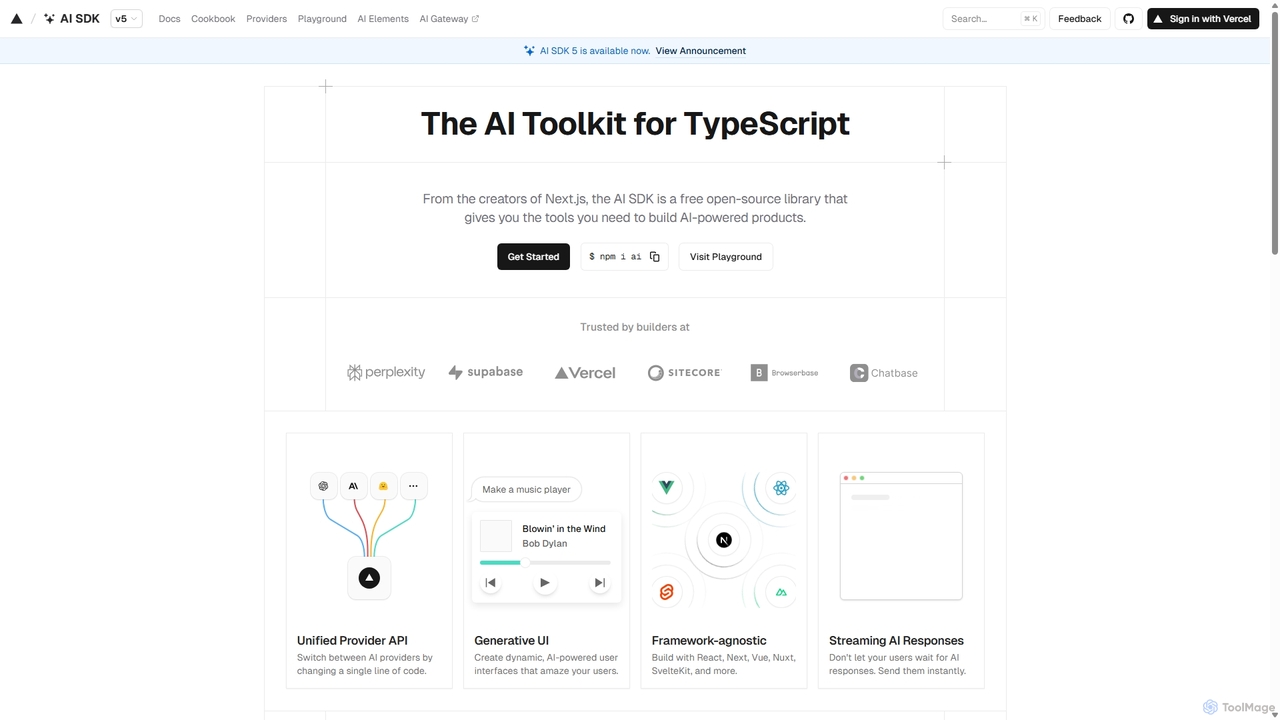
AI SDK
AI SDK by Vercel is a free, open-source TypeScript toolkit designed to help developers build AI-powered applications. It provides a unified API to seamlessly integrate with various large language models like OpenAI, Anthropic, and Google Gemini. The SDK is framework-agnostic, supporting React, Next.js, Vue, Svelte, and more, enabling the creation of features like streaming responses and generative UIs with minimal effort.
Model Integration
Jyek
Jyek is an AI agent platform that understands objectives, creates execution plans, uses tools, and delivers verifiable results for complex, multi-step tasks.
Automation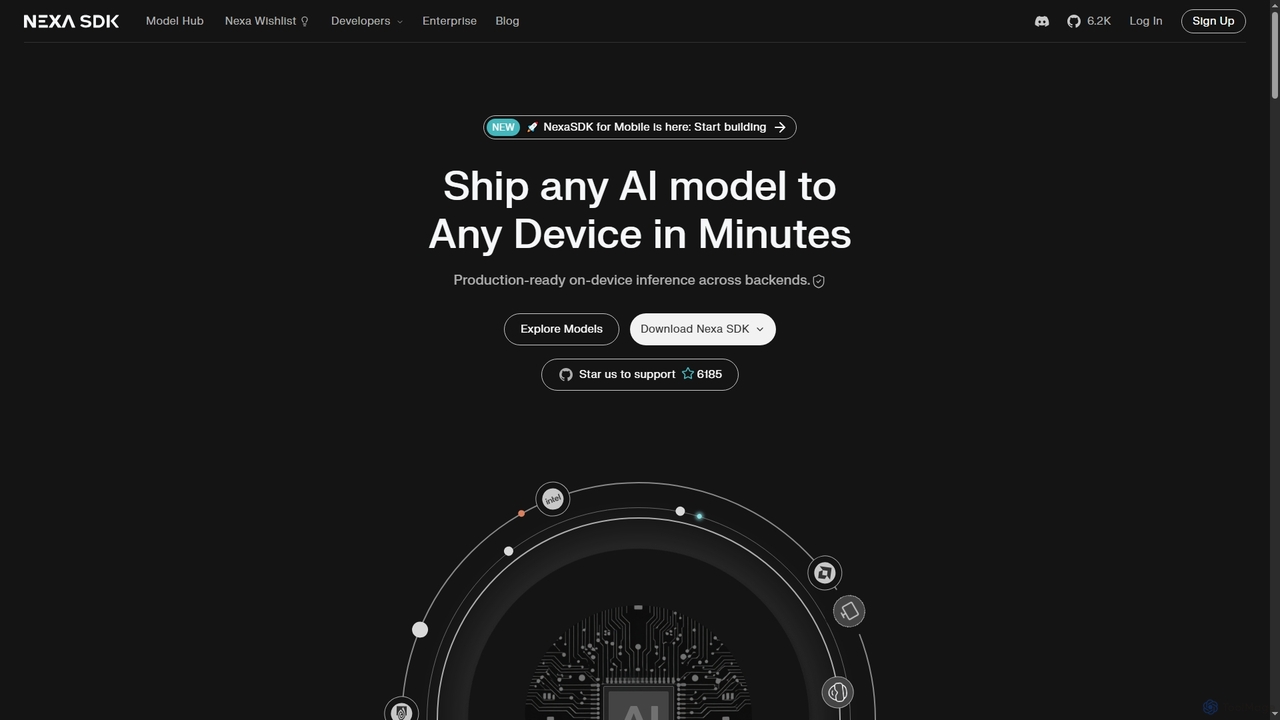
Nexa SDK
Nexa SDK is a powerful toolkit enabling developers to deploy any AI model, including frontier and state-of-the-art models, to any device (mobile, PC, IoT, automotive) in minutes. It offers production-ready on-device inference with hardware acceleration across NPUs, GPUs, and CPUs, optimized for speed and energy efficiency.
Ai Development Kit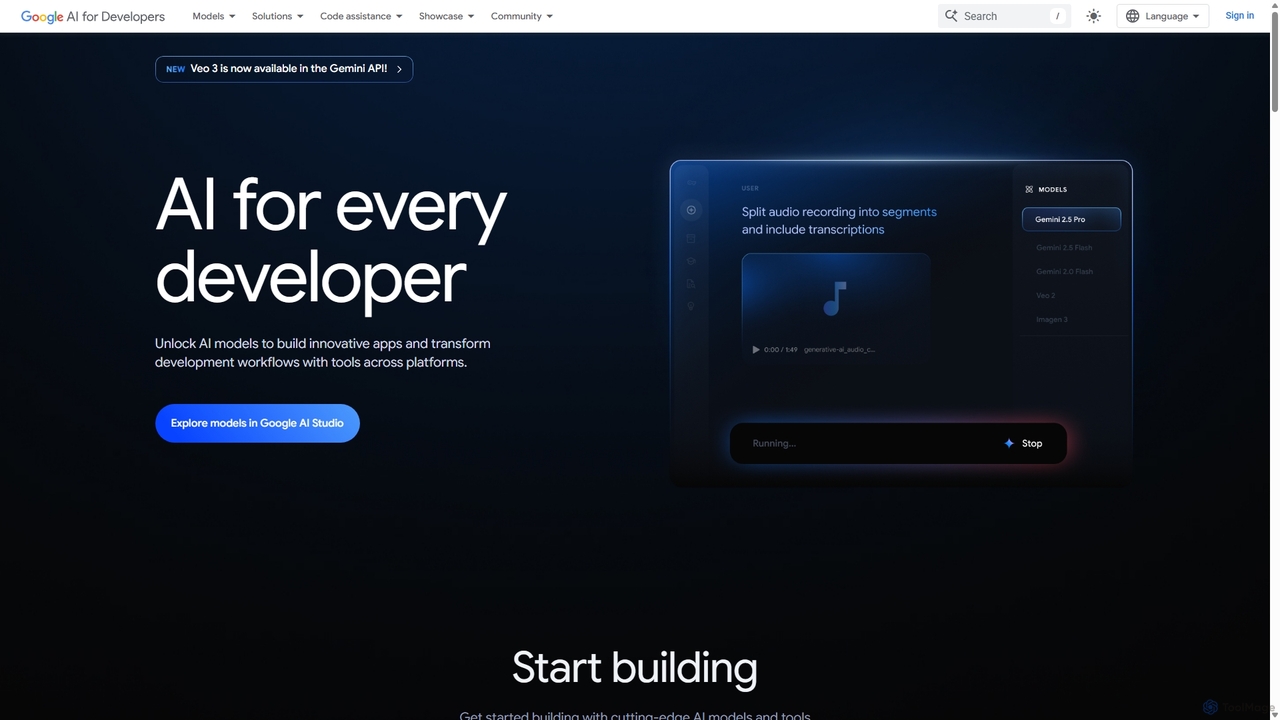
Google AI for Developers
A comprehensive platform by Google providing developers with access to cutting-edge AI models like Gemini, Imagen, and Veo via API, alongside the open-source Gemma models. It includes tools like Google AI Studio for prototyping, AI Edge for on-device deployment, and integrated code assistance to build innovative applications and streamline development workflows responsibly.
Large Language Models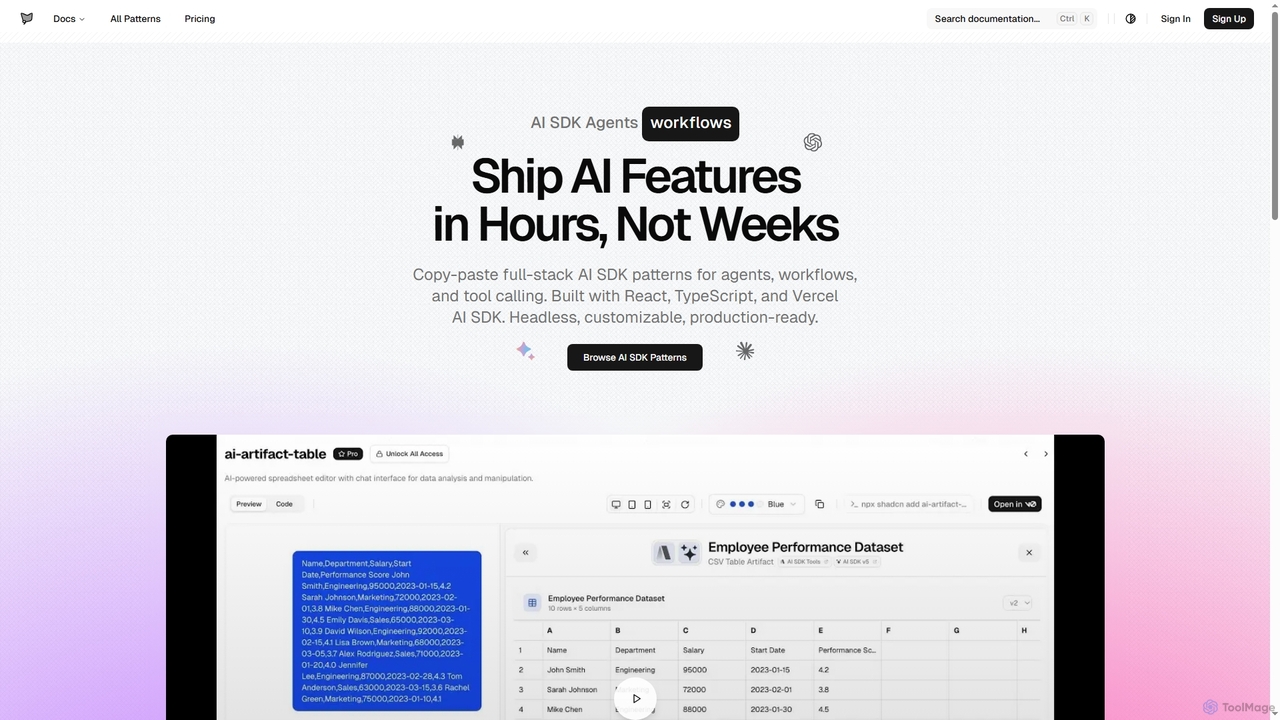
AI SDK Agents
AI SDK Agents provides production-ready React components for rapidly building AI applications. Leverage copy-paste patterns for agents, workflows, tool calling, and streaming responses, built with React, TypeScript, and Vercel AI SDK. Accelerate your AI feature development from weeks to hours, ensuring customizable and headless integration into your projects.
Ui Components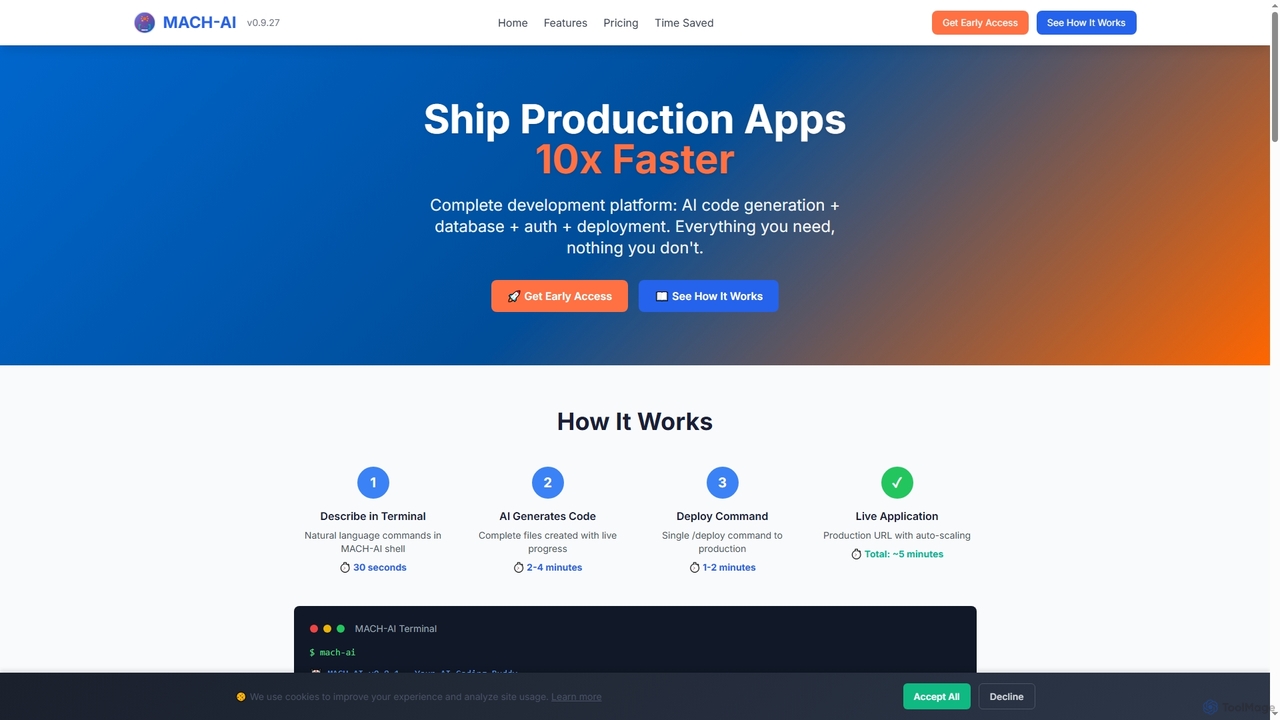
MACH-AI
MACH-AI is an AI coding assistant and complete development platform that transforms concepts into production-ready cloud applications in minutes. It integrates AI code generation, built-in database, authentication, and one-command deployment, enabling developers to build and launch scalable web applications 10x faster across Python, JavaScript, and TypeScript.
Application Deployment
Gradientj
Gradientj is a powerful platform for developers and businesses to build, test, and deploy autonomous AI agents. It provides a comprehensive suite of tools, including a reasoning engine, pre-built components, and seamless integrations, to transform complex workflows into intelligent, automated processes from prompt to production.
Intelligence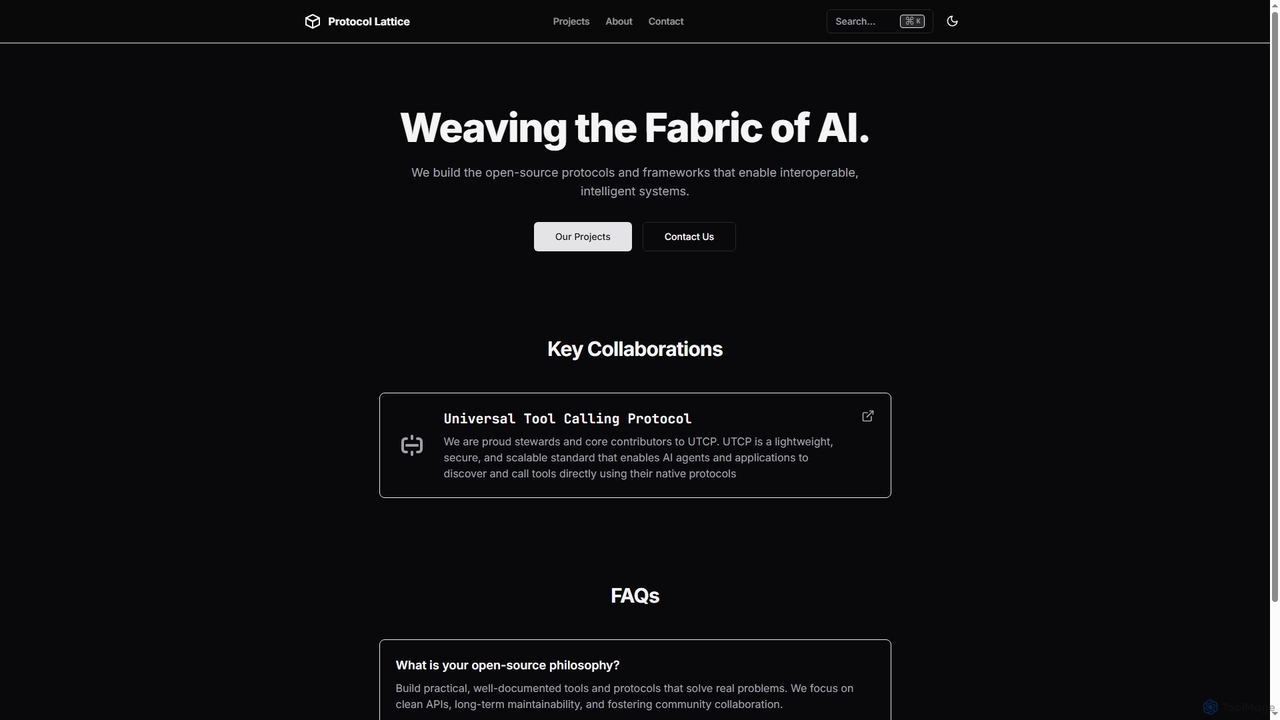
Protocol Lattice
Protocol Lattice is an organization dedicated to building open-source protocols and frameworks that foster interoperable, intelligent AI systems. Their flagship project, the Universal Tool Calling Protocol (UTCP), provides a lightweight, secure, and scalable standard for AI agents and applications to discover and interact with tools using their native protocols. They emphasize practical, well-documented solutions and community collaboration.
Interoperability
LLMRTC Comments (0)
Sign in to comment.
Sign inNo comments yet.