LLMRTC
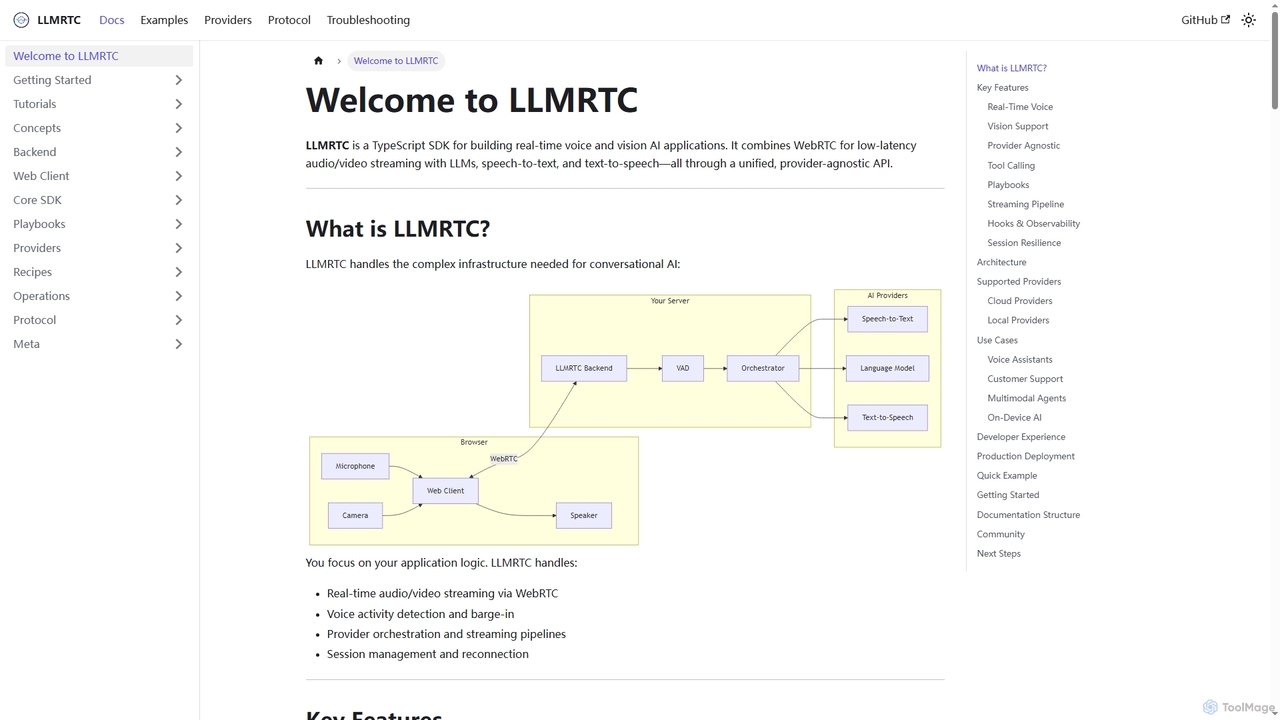
LLMRTC is a TypeScript SDK for building real-time voice and vision AI applications. It integrates WebRTC for low-latency …
LLMRTC is a TypeScript SDK for building real-time voice and vision AI applications. It integrates WebRTC for low-latency audio/video streaming with LLMs, speech-to-text, and text-to-speech technologies through a unified, provider-agnostic API. Developers can focus on application logic while LLMRTC handles complex conversational AI infrastructure.
Daily
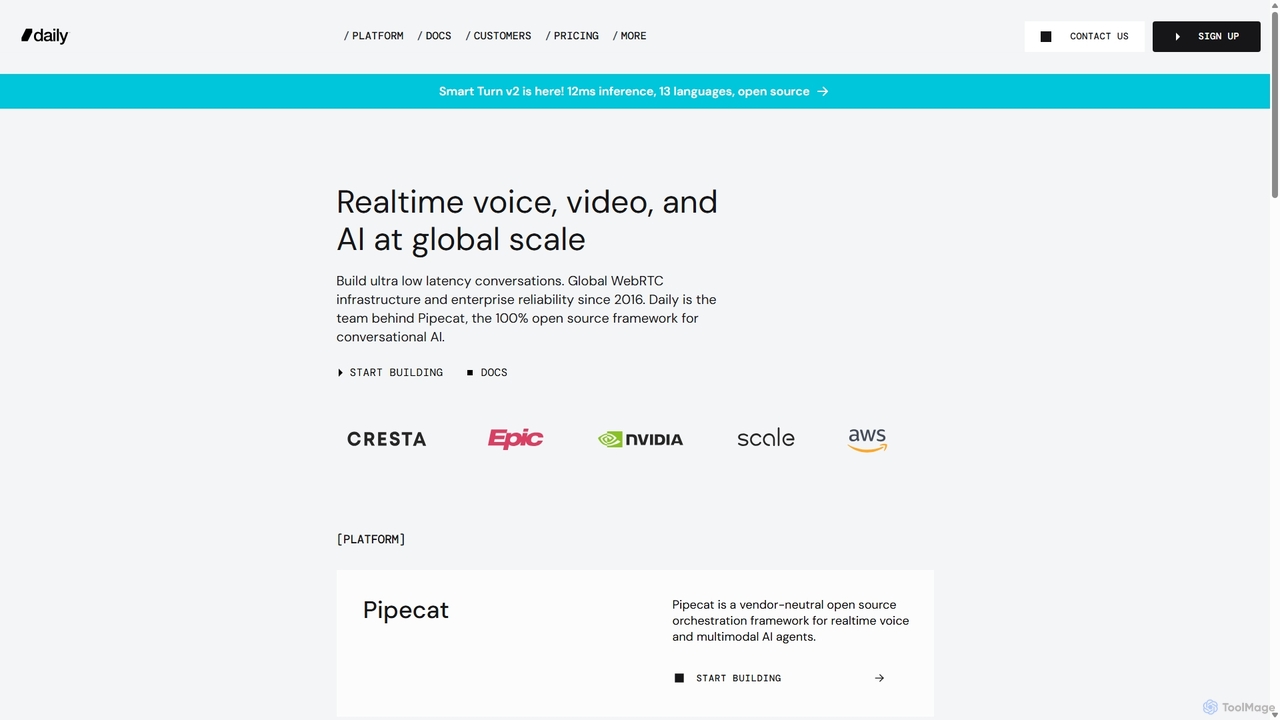
Daily is a developer platform for real-time video, voice, and AI. It provides robust APIs and SDKs for …
Daily is a developer platform for real-time video, voice, and AI. It provides robust APIs and SDKs for building ultra-low latency, scalable, and high-quality conversational experiences, including human-to-human video calls and advanced voice AI agents through its open-source framework, Pipecat.
About Conversational Ai
Conversational AI tools are a specialized category of artificial intelligence designed to understand, process, and generate human-like dialogue. They leverage core technologies like Natural Language Understanding (NLU) and Natural Language Generation (NLG) to power interactions via text or voice. These tools are primarily used to automate communication, enhance user engagement, and provide instant, scalable support across various digital channels. Their ability to maintain context and understand user intent makes them highly effective for creating interactive and personalized experiences.
Core Features
- Natural Language Understanding (NLU): Accurately interprets user intent, extracts key entities, and analyzes sentiment from unstructured text or speech.
- Dialogue Management: Maintains the context of a conversation, handles turn-taking, and guides the user through a logical flow.
- Natural Language Generation (NLG): Creates coherent, contextually appropriate, and human-sounding responses in text or voice formats.
- Multi-Channel Integration: Seamlessly deploys and operates across websites, mobile apps, social media messengers, and voice assistants.
- Personalization Engine: Adapts conversations and recommendations based on user data, past interactions, and real-time context.
Use Cases
Conversational AI is widely adopted in customer service for automating FAQs and support tickets, in sales for lead qualification and appointment setting, and in HR for employee onboarding and internal helpdesks. E-commerce platforms also use it to provide personalized shopping assistance and product recommendations.
How to Choose
When selecting a Conversational AI tool, evaluate its NLU accuracy and language support. Consider the ease of use, such as the availability of a no-code builder versus developer-focused APIs. Also, assess its integration capabilities with your existing CRM or helpdesk software, and review the analytics features for monitoring performance and user behavior.
Conversational AiUse Cases
24/7 Automated Customer Support
E-commerce businesses deploy Conversational AI chatbots on their websites to provide instant support around the clock. These bots handle common queries like 'Where is my order?', process return requests, and answer frequently asked questions about products. By integrating with backend systems, the AI can provide personalized, real-time information without human intervention. This significantly reduces customer wait times, frees up human agents to handle complex issues, and lowers overall operational costs for the support center.
Automated Sales Lead Qualification
Marketing and sales teams use Conversational AI on their landing pages to engage potential customers proactively. The AI initiates conversations with website visitors, asks targeted qualifying questions about their needs, budget, and timeline, and identifies high-intent leads. For qualified prospects, the tool can automatically schedule a demo or a call with a sales representative directly in their calendar. This process ensures the sales team spends their time on promising leads, increasing conversion rates and shortening the sales cycle.
Internal IT and HR Helpdesk
Large organizations implement Conversational AI within internal communication platforms like Slack or Microsoft Teams to create an automated helpdesk. Employees can ask the AI for assistance with common IT issues, such as resetting a password or requesting software access. It can also handle HR-related questions about company policies, benefits, or leave requests. The AI resolves simple queries instantly and creates detailed tickets for complex problems, improving employee productivity and reducing the support teams' manual workload.
Interactive Appointment Scheduling
Service-based businesses like clinics, salons, or consulting firms use Conversational AI to automate their booking process. Customers can interact with the AI via the company website or a messaging app to find available time slots, book appointments, reschedule, or cancel. The system can also send automated reminders to reduce no-shows. This provides a convenient, self-service option for clients and eliminates the administrative burden of manually managing schedules and phone calls.
Personalized E-commerce Shopping Assistant
Online retailers leverage Conversational AI to act as a virtual shopping assistant, guiding customers through their product catalog. The AI asks about the customer's preferences, occasion, or style to offer tailored recommendations, similar to an in-store sales associate. It can answer specific product questions, compare items, and even assist with the checkout process. This creates a more engaging and personalized shopping experience, leading to higher customer satisfaction and increased average order value.
Language Learning and Practice Partner
Educational technology platforms integrate Conversational AI to create immersive language learning experiences. Learners can practice their speaking and writing skills by having realistic, open-ended conversations with an AI tutor. The AI can provide instant feedback on grammar, pronunciation, and vocabulary usage. This offers a safe and accessible environment for students to build confidence and fluency at their own pace, supplementing traditional learning methods with practical application.