
Duration
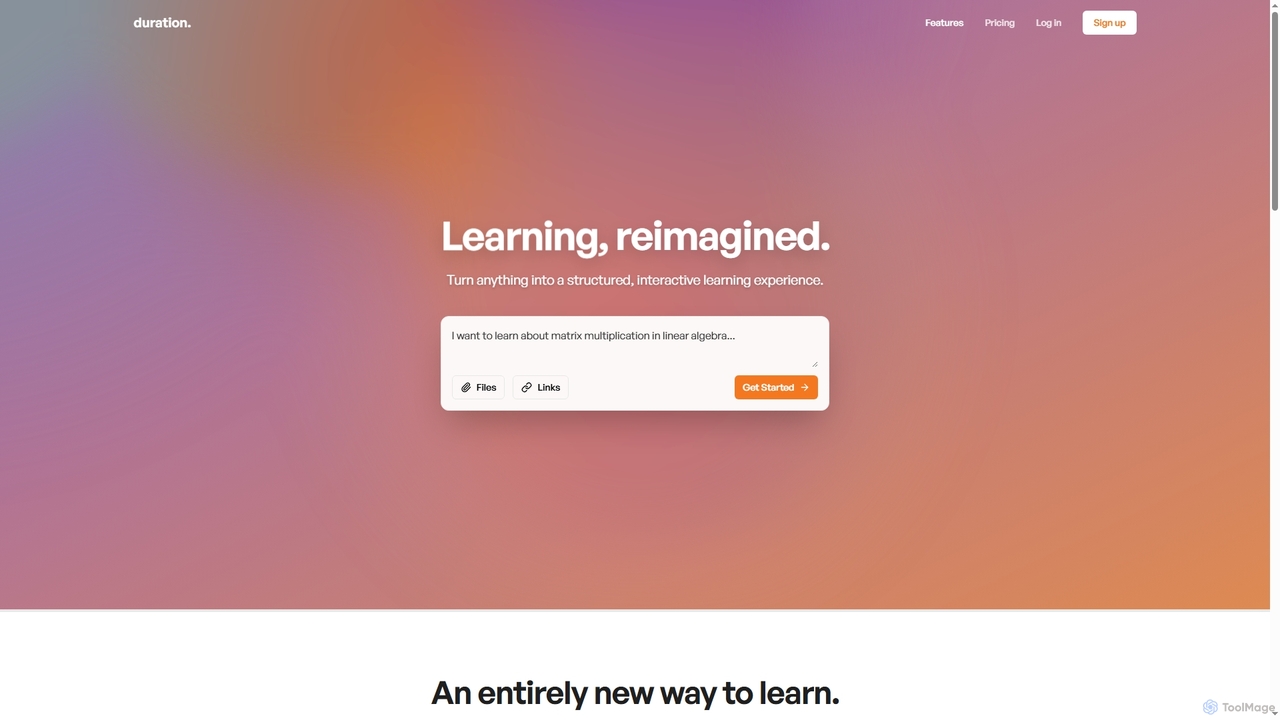
Duration is an AI-powered learning platform that creates personalized, structured study plans tailored to your goals, experience, and …
Duration is an AI-powered learning platform that creates personalized, structured study plans tailored to your goals, experience, and progress. It offers diverse content formats like videos, podcasts, and articles, reinforced with interactive exercises and quizzes for effective, engaging learning.
About Adaptive Learning
Adaptive Learning tools are AI-powered platforms that dynamically adjust educational content and pace based on an individual learner's progress, performance, and preferences. Leveraging artificial intelligence, these systems analyze real-time data to create highly personalized learning paths, ensuring optimal engagement and knowledge retention. They are designed to cater to diverse learning styles and paces, making education more efficient and effective for students and professionals alike.
Core Features
- Personalized Content Delivery: Dynamically presents learning materials, exercises, and assessments tailored to each learner's needs.
- Real-time Performance Tracking: Monitors learner progress, identifies strengths and weaknesses, and provides immediate feedback.
- Dynamic Difficulty Adjustment: Automatically increases or decreases the challenge level of tasks based on mastery, preventing boredom or frustration.
- AI-driven Recommendations: Suggests relevant resources, topics, or remedial content to address specific learning gaps.
- Skill Gap Identification: Pinpoints areas where a learner struggles, offering targeted interventions to improve understanding.
Use Cases
Adaptive Learning tools are widely adopted across various educational and professional settings. In K-12 and higher education, they provide individualized support for students, helping them master subjects at their own pace. For corporate training, these platforms ensure employees receive relevant, efficient upskilling and compliance education. They are also invaluable in professional development and language acquisition, offering customized paths to achieve specific learning goals.
How to Choose
When selecting an Adaptive Learning tool, consider its level of content customization and flexibility to integrate with existing curricula. Evaluate the robustness of its analytics and reporting features for tracking individual and group progress. Assess its scalability to accommodate your user base and the intuitiveness of its user interface for both learners and administrators. Finally, review the platform's ability to support diverse media types and its overall pedagogical approach.
Adaptive LearningUse Cases
Enhancing Corporate Training Programs
HR departments and corporate trainers utilize adaptive learning platforms to deliver personalized training modules to employees. By analyzing individual skill gaps and learning styles, the platform tailors content, exercises, and assessments, ensuring each employee receives targeted development. This leads to faster skill acquisition, improved job performance, and higher completion rates for mandatory compliance training, ultimately boosting overall workforce competency.
Personalized Student Learning Paths
K-12 educators or university professors utilize adaptive learning platforms to create individualized study plans for students. The AI assesses each student's current knowledge, learning style, and pace, then delivers tailored modules, quizzes, and resources. This ensures students focus on areas where they need improvement, accelerating comprehension and achieving better academic outcomes compared to a one-size-fits-all approach.
Personalized K-12 Student Support
Teachers in K-12 education deploy adaptive learning tools to provide differentiated instruction. These platforms identify specific areas where students struggle or excel, then deliver tailored exercises, explanations, and challenges. This allows students to progress at their own pace, receive targeted remediation for weak areas, and accelerate in subjects they master, leading to improved academic achievement and greater engagement across diverse classrooms.
Corporate Training & Employee Upskilling
HR departments and corporate trainers deploy adaptive learning solutions to deliver highly relevant and efficient training programs. The system identifies an employee's existing skills and knowledge gaps, then customizes the training content, sequence, and assessments. This approach minimizes time spent on already mastered topics, maximizes engagement, and ensures employees acquire critical skills more quickly and effectively, boosting overall workforce competency.
Optimizing Higher Education Course Delivery
Universities and colleges integrate adaptive learning systems into online and blended courses to offer students customized study plans. These systems provide interactive exercises, immediate feedback, and supplementary resources based on individual performance, helping students master complex concepts. This approach boosts engagement, improves comprehension, and can significantly reduce dropout rates in challenging subjects by providing tailored support to each learner.
Language Learning Customization
Individuals learning a new language benefit from adaptive platforms that adjust lessons based on their proficiency, vocabulary retention, and grammatical understanding. The AI dynamically selects exercises, introduces new words, and revisits challenging concepts at optimal intervals. This personalized approach helps learners overcome specific difficulties, reinforces memory, and accelerates fluency development, making the learning process more engaging and less frustrating.
Accelerating Language Acquisition
Language learners benefit from adaptive platforms that dynamically adjust vocabulary, grammar exercises, and conversational practice based on their current proficiency and common errors. The system identifies areas needing reinforcement and provides targeted content, accelerating progress compared to static curricula. This personalized approach makes language learning more efficient, engaging, and tailored to individual learning styles, leading to faster fluency and better retention.
Skill Gap Identification & Remediation
Professionals seeking career advancement or reskilling use adaptive learning tools to pinpoint and address specific skill deficiencies. The platform conducts initial assessments to identify knowledge gaps in areas like data science, project management, or digital marketing. It then provides targeted learning modules and practice exercises to fill these gaps efficiently, enabling users to acquire necessary competencies without redundant study, directly impacting career growth.
Skill Development for Professional Certification
Professionals preparing for industry certifications (e.g., IT, finance, healthcare) use adaptive learning tools to optimize their study time. These platforms assess existing knowledge, identify weak areas, and then deliver focused study materials and practice tests. This ensures comprehensive coverage of required knowledge domains and higher pass rates by concentrating efforts where they are most needed, making the certification process more efficient and less stressful.
Exam Preparation Optimization
Students preparing for standardized tests (e.g., SAT, GRE, professional certifications) leverage adaptive learning systems to optimize their study time. The AI analyzes performance on practice questions, identifies weak areas, and then prioritizes content and question types that will yield the greatest improvement. This data-driven approach ensures focused revision, reduces study fatigue, and significantly enhances the likelihood of achieving target scores by concentrating efforts where they matter most.
Efficient Onboarding for New Employees
Companies leverage adaptive learning to streamline the onboarding process for new hires. Platforms deliver tailored information about company culture, policies, tools, and role-specific responsibilities based on the new employee's department and prior experience. This personalized approach accelerates integration into the team, reduces the time to productivity, and ensures new hires quickly grasp essential information without being overwhelmed by irrelevant content, leading to a smoother transition.
Onboarding & Compliance Training
Organizations implement adaptive learning for new employee onboarding and mandatory compliance training. Instead of generic modules, the system tailors content based on the employee's role, department, and prior experience. For compliance, it ensures understanding of critical regulations by adapting explanations and scenarios until mastery is demonstrated. This streamlines the onboarding process, ensures legal adherence, and quickly integrates new hires into their roles with relevant knowledge.