Ai Best in category 1 results Agent Frameworks AI Tool

Popular AI tools in the Agent Frameworks field of Ai include Dank, etc., helping you quickly improve efficiency.

Dank

Dank

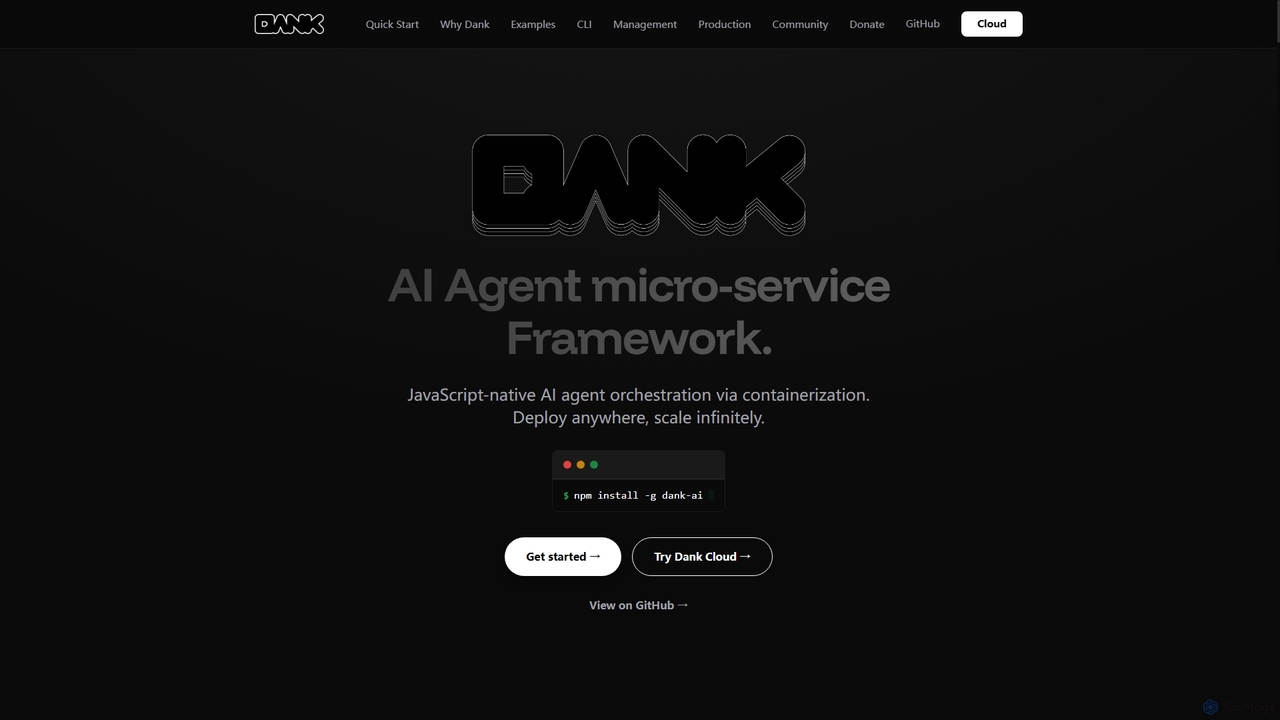
Dank is a JavaScript-native, open-source framework for orchestrating and deploying containerized AI agents. It enables developers to build, …

2.2K

About Agent Frameworks

Agent Frameworks are specialized software libraries and platforms designed to streamline the development, deployment, and management of AI agents. These frameworks provide the foundational components for building autonomous or semi-autonomous programs that can perceive their environment, reason, make decisions, and execute actions to achieve predefined goals. They often integrate with large language models (LLMs) to enhance an agent's understanding and interaction capabilities, enabling complex, multi-step task automation across various domains.

Core Features

  • Task Orchestration: Manages the sequence of steps an agent takes to complete complex tasks, including planning, execution, and error handling.
  • Tool Integration: Allows agents to access and utilize external tools, APIs, or functions (e.g., web search, code interpreters, databases) to extend their capabilities.
  • Memory Management: Provides mechanisms for agents to store and retrieve past interactions, observations, and learned information, enabling contextual awareness and long-term reasoning.
  • Decision Making & Reasoning: Facilitates the agent's ability to analyze situations, choose appropriate actions, and adapt its behavior based on goals and environmental feedback.
  • Observability & Monitoring: Offers tools to track agent behavior, debug processes, and understand decision paths, crucial for development and optimization.

Use Cases

Agent Frameworks are instrumental for developers and researchers building sophisticated AI applications. They are used to create intelligent assistants that can automate complex workflows, develop adaptive systems for data analysis, or design interactive simulations. These frameworks simplify the integration of advanced AI capabilities into existing software, reducing development time and enhancing the autonomy of applications.

How to Choose

Selecting an Agent Framework involves evaluating its support for different LLMs, the flexibility of its tool integration, and its memory management capabilities. Consider the framework's community support, documentation quality, and the ease of defining complex agent behaviors. Scalability, deployment options, and the level of control over agent reasoning processes are also critical factors for long-term project success.

Agent FrameworksUse Cases

1

Automated Customer Support Agents

Customer service teams can leverage Agent Frameworks to build sophisticated AI agents capable of handling complex customer inquiries beyond simple FAQs. These agents can access knowledge bases, integrate with CRM systems, and even escalate issues to human agents with relevant context, significantly reducing response times and improving service quality.

2

Intelligent Data Analysis & Reporting

Data scientists and business analysts can use Agent Frameworks to create autonomous agents that can query databases, perform complex statistical analysis, generate insights, and even draft comprehensive reports. The agent can adapt its analysis based on new data or specific business questions, automating tedious data processing workflows.

3

Personalized Learning & Tutoring Systems

Educational platforms can deploy agents built with these frameworks to offer personalized learning experiences. An agent can assess a student's progress, recommend tailored learning paths, provide explanations, and generate practice problems, adapting its teaching strategy in real-time to optimize learning outcomes.

4

Software Development & Debugging Assistants

Developers can utilize Agent Frameworks to build AI assistants that help with coding, debugging, and code review. These agents can understand codebases, suggest improvements, identify potential bugs, and even generate test cases, acting as an intelligent pair programmer to accelerate development cycles.

5

Automated Marketing Campaign Management

Marketing professionals can employ Agent Frameworks to develop agents that manage and optimize digital marketing campaigns. An agent can analyze market trends, generate ad copy variations, schedule posts across platforms, and adjust bidding strategies in real-time based on performance data, maximizing ROI and reach.

6

Research & Information Gathering Agents

Researchers and content creators can deploy agents to autonomously gather, synthesize, and summarize information from vast online sources. These agents can navigate websites, extract relevant data, cross-reference facts, and present findings in a structured format, significantly speeding up literature reviews and content generation processes.

Agent FrameworksFrequently Asked Questions