ToolMage
Sign in

Best 1 Ai Agent Platforms for Ai

Popular Ai Agent Platforms in Ai include Ouro, helping you work more efficiently.

Ouro
Freemium

Ouro

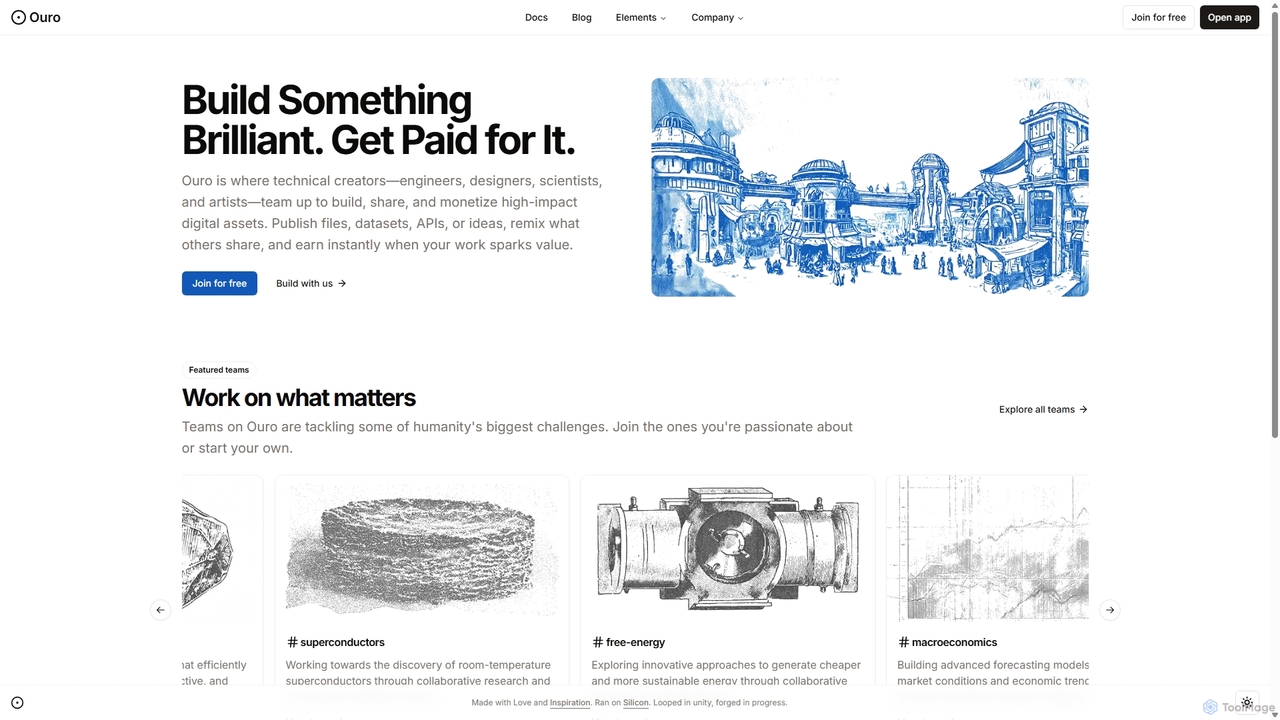
Ouro is a collaborative platform for technical creators—engineers, scientists, and AI developers—to build, share, and monetize high-impact digital assets. It enables users to publish APIs, datasets, and AI agents, fostering a community focused on solving major challenges and creating passive income streams.

Ai Agent Platforms
Visits 7.1KFavorites 154Likes 144

About Ai Agent Platforms

Ai Agent Platforms are sophisticated AI-powered systems designed to build, deploy, and manage autonomous AI agents. These platforms enable agents to understand complex goals, plan multi-step actions, execute tasks using various tools, and learn from interactions, operating with minimal human oversight. They represent a significant leap towards truly intelligent automation, allowing AI to proactively achieve objectives across diverse digital environments.

Core Features

  • Autonomous Planning: Agents can break down high-level goals into actionable sub-tasks and strategize execution paths.
  • Tool Integration: Seamlessly connect with external APIs, databases, and software to perform real-world operations.
  • Memory & Learning: Maintain context over time, learn from past experiences, and adapt behavior for improved performance.
  • Decision Making: Evaluate options, prioritize tasks, and make informed choices to progress towards objectives.
  • Human-in-the-Loop: Provide mechanisms for human oversight, intervention, and feedback to guide agent behavior.

Applicable Scenarios

Businesses leverage Ai Agent Platforms for automating complex workflows in areas like customer service, where agents can handle multi-turn queries and resolve issues end-to-end. Developers use them to create intelligent assistants that can manage project tasks, write code, and debug. Marketing teams deploy agents for dynamic content generation and campaign optimization, adapting strategies based on real-time data.

How to Choose

When selecting an Ai Agent Platform, consider its orchestration capabilities for complex tasks, the breadth and ease of tool integration, the robustness of its memory and learning mechanisms, and the flexibility of its human-in-the-loop controls. Evaluate the platform's scalability for future needs and its security features for data protection, alongside the clarity of its pricing model.

Ai Agent Platforms use cases

1

Automated Customer Support Resolution

Customer service departments can deploy AI agents to handle complex, multi-turn customer inquiries from start to finish. An agent can diagnose issues, access knowledge bases, interact with CRM systems to update records, and even initiate refunds or schedule follow-ups, significantly reducing human agent workload and improving resolution times without constant supervision.

2

Intelligent Software Development Assistant

Developers utilize AI agent platforms to create assistants that can autonomously perform coding tasks. This includes generating code snippets based on natural language prompts, identifying and suggesting fixes for bugs, writing unit tests, and even managing version control operations, accelerating development cycles and improving code quality.

3

Dynamic Marketing Campaign Optimization

Marketing teams can use AI agents to continuously monitor campaign performance across various channels. Agents can analyze real-time data, identify underperforming ads, automatically adjust bidding strategies, modify ad copy, and even suggest new target audiences, ensuring optimal budget allocation and maximizing ROI without manual intervention.

4

Personalized Learning & Tutoring Systems

Educational institutions or e-learning platforms can build AI agents that act as personalized tutors. These agents assess a student's learning style and progress, adapt teaching materials, provide tailored explanations, generate practice questions, and offer feedback, creating a highly individualized and effective learning experience.

5

Supply Chain Anomaly Detection & Response

Logistics and supply chain managers deploy AI agents to monitor vast datasets for anomalies. Agents can detect unusual spikes in demand, predict potential disruptions, automatically re-route shipments, or trigger alerts for human review, ensuring supply chain resilience and minimizing operational delays.

6

Automated Data Analysis & Report Generation

Business analysts can leverage AI agent platforms to automate routine data analysis tasks. Agents can connect to various data sources, extract relevant information, perform complex statistical analyses, identify key trends, and generate comprehensive reports or dashboards, freeing up analysts for more strategic work.

Ai Agent Platforms FAQ

What are Ai Agent Platforms?

Ai Agent Platforms are specialized systems for creating and managing autonomous AI agents. Unlike simple chatbots or single-task AI, these platforms empower agents to understand high-level goals, plan multi-step actions, use various tools, and learn from their environment to achieve complex objectives with minimal human intervention. They are crucial for automating intricate workflows across diverse domains.

How do Ai Agent Platforms differ from traditional AI tools?

Traditional AI tools often focus on specific tasks like image recognition or natural language generation. Ai Agent Platforms, however, provide an overarching framework for orchestration, autonomy, and goal-driven execution. They integrate multiple AI models and external tools, enabling agents to perform sequences of actions, make decisions, and adapt to dynamic situations, moving beyond isolated functions to achieve complex, long-term objectives.

What are the key components of an Ai Agent Platform?

Key components typically include a planning module for breaking down goals, a memory system for context and learning, tool integration capabilities for interacting with external systems, a decision-making engine for choosing actions, and often a human-in-the-loop interface for oversight and feedback. These elements work together to enable intelligent, autonomous behavior.

Who can benefit from using Ai Agent Platforms?

A wide range of users can benefit. Businesses can automate complex operational workflows, from customer service to supply chain management. Developers can build more intelligent and autonomous applications. Researchers can simulate complex systems. Content creators can automate multi-stage content generation and distribution. Essentially, anyone looking to automate multi-step, goal-oriented tasks that require adaptability and interaction with multiple systems.

What should I consider when integrating an Ai Agent Platform into my existing systems?

When integrating, prioritize API compatibility and the platform's ability to connect with your existing databases, CRM, ERP, and other software. Evaluate the security protocols for data exchange and access control. Consider the scalability to handle increasing workloads and the flexibility to customize agent behaviors and integrate proprietary tools. A clear understanding of the platform's data governance and monitoring capabilities is also essential for smooth operation.