

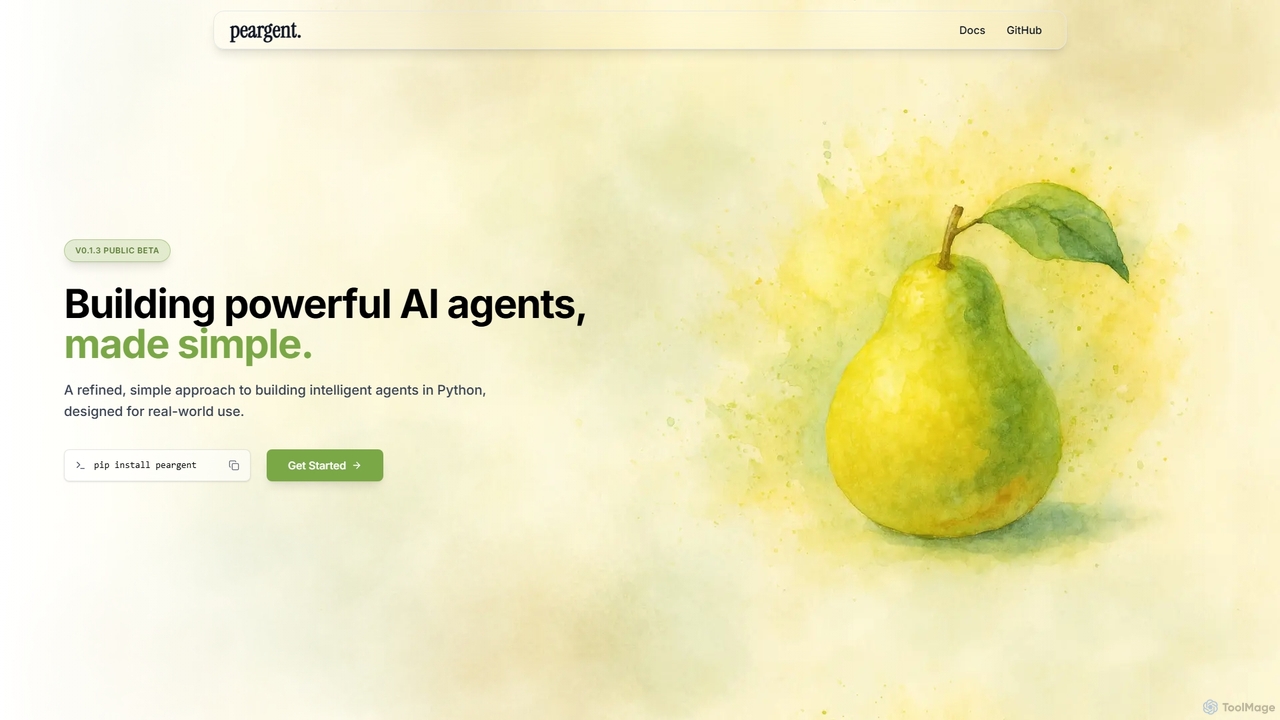
Peargent Overview
Peargent is a sophisticated yet simple Python framework designed for developing intelligent AI agents capable of real-world applications. It provides a clean, intuitive API to build conversational agents that can leverage various tools, maintain memory, collaborate, and scale efficiently for production environments. Currently in public beta (v0.1.3), it empowers developers to create robust AI solutions with features like flexible LLM support, powerful tool systems, and advanced observability.
How to use Peargent
To use Peargent, developers typically start by writing Python code. A basic agent can be created in just a few lines using `peargent.create_agent`, specifying a persona and an LLM model (e.g., 'gpt-4'). For more complex scenarios, users can define specialized agents, create custom tools, and orchestrate their interactions within a `Pool` managed by a `Router`. Persistent memory can be configured using various storage backends like Sqlite, PostgreSQL, or Redis. The official documentation provides a `QuickStart` guide and practical examples to help users set up their first agent and scale to multi-agent systems.
Core Features of Peargent
- Flexible LLM Support: Works seamlessly with OpenAI, Groq, Google Gemini, and Azure OpenAI.
- Powerful Tool System: Execute actions with built-in timeout, retries, and input/output validation.
- Persistent Memory: Supports multiple backends including in-memory, file, Sqlite, PostgreSQL, and Redis.
- Multi-Agent Orchestration: Coordinate specialized agents for complex workflows and collaborative tasks.
- Production-Ready Observability: Built-in tracing, cost tracking, and performance metrics for robust monitoring.
- Type-Safe Structured Outputs: Easily validate responses using Pydantic models for reliable data handling.
- Intuitive API: Clean and simple API for efficient agent creation and management.
- Global State Management: Agents share context through a global State for cohesive operations.
- Router Coordination: Agents operate within a Pool, coordinated by a Router in round-robin or LLM-based mode.
- History Management: Persists reasoning and decisions to maintain continuity across workflows.
Use Cases for Peargent
Peargent is ideal for a wide range of applications requiring intelligent automation and complex AI interactions. It can be used for building advanced conversational AI assistants, developing automated research and analysis agents that can interact with external tools, and creating sophisticated workflow automation systems involving multiple specialized AI agents. Furthermore, it's suitable for implementing intelligent data processing, response generation, and developing AI-driven content creation or technical writing tools, especially where persistent memory and state management are crucial for continuous interactions.
Advantages of Peargent
Peargent offers significant advantages for AI agent development, combining simplicity with powerful, production-grade capabilities. Its intuitive API allows for rapid prototyping and deployment of agents, while its flexible LLM support ensures compatibility with leading models. The robust tool system, persistent memory options, and multi-agent orchestration capabilities enable the creation of highly sophisticated and scalable AI systems. With built-in observability features like tracing and cost tracking, Peargent ensures that agents are not only intelligent but also reliable and manageable in production environments, making it a developer-friendly choice for building real-world AI solutions.
Peargent FAQ
Peargent Alternatives
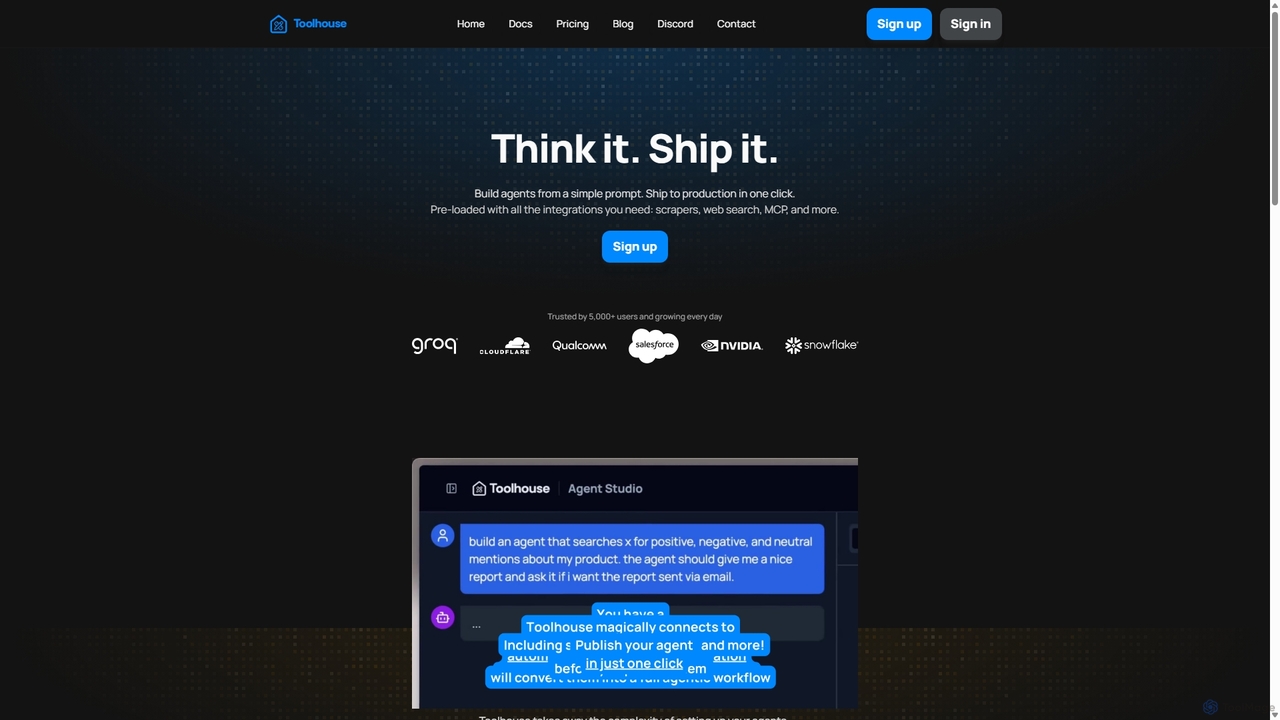
Toolhouse
Toolhouse is a no-code/low-code platform that democratizes AI agent creation. It allows developers to build, deploy, and manage production-grade AI agents from simple prompts. With pre-built integrations for web scraping, search, RAG, and databases, Toolhouse abstracts away the complexity of infrastructure, enabling one-click deployment of agents as scalable APIs. It's designed to empower developers of all skill levels to ship AI-powered applications quickly.
Agent Development
AgentRank
AgentRank is an AI-powered platform designed for developers to build, discover, and share intelligent AI agents. It fosters a community environment for creating functional AI solutions, complete with integration capabilities via MCP servers.
Marketplace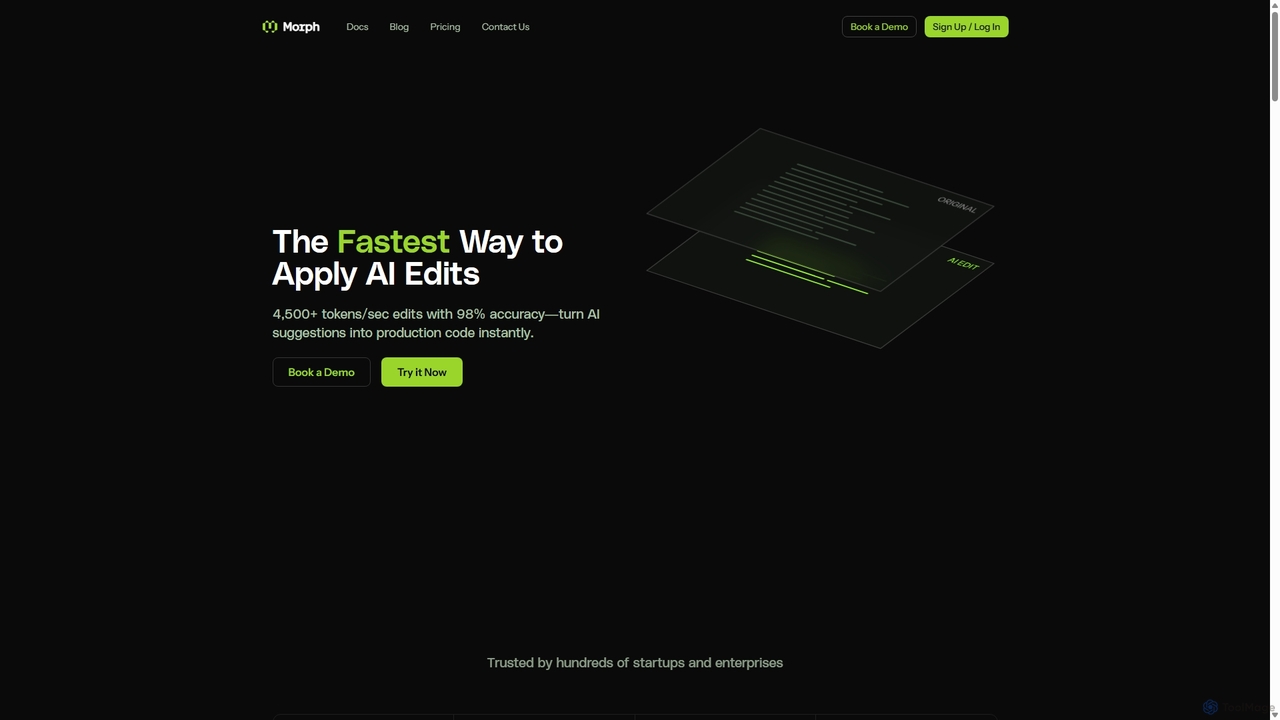
Morph
Morph is an API-first platform for developers, providing the fastest and most accurate way to apply AI-generated edits to code and files. With speeds of 4,500+ tokens/sec and 98% accuracy, it empowers AI agents to perform reliable, semantic modifications, bridging the gap between AI suggestions and production-ready implementation.
Infrastructure
Xunfei Spark Agent Development Platform
A comprehensive, one-stop platform by iFlytek for building, debugging, and deploying AI agents. Powered by the Spark Large Language Model, it enables developers to create intelligent applications through a low-code interface, an extensive plugin marketplace, and robust management tools, covering the entire agent lifecycle.
Agent Builder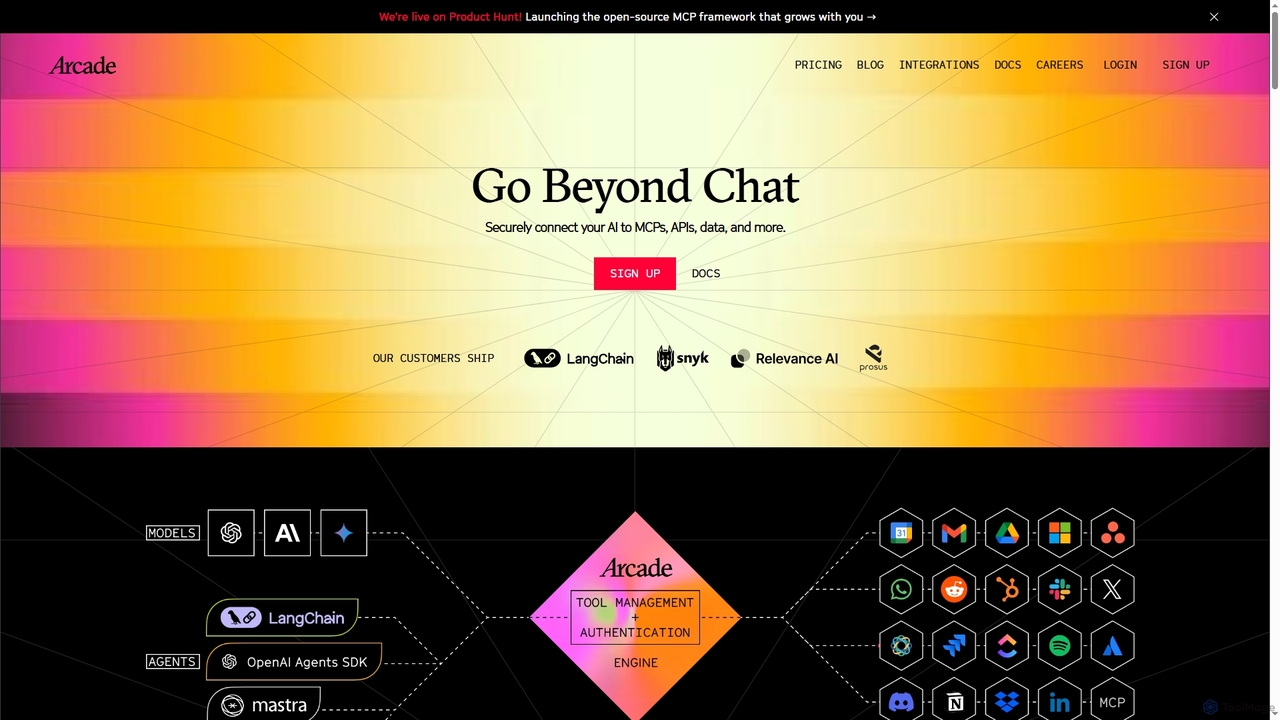
Arcade
Arcade is an AI tool-calling platform for developers, enabling AI agents to securely perform actions on behalf of users. It connects AI to services like Gmail, Slack, and APIs through pre-built connectors and a custom SDK, handling complex authentication (OAuth) automatically. This allows developers to build assistants that go beyond chat to execute real-world tasks.
FrameworkPeargent Categories
Peargent Jobs
Peargent Embed Widget
Copy this embed code to place the badge on your blog, article, or product site and send readers directly to this ToolMage detail page.

Related AI tools
Morph
Morph is an API-first platform for developers, providing the fastest and most accurate way to apply AI-generated edits to code and files. With speeds of 4,500+ tokens/sec and 98% accuracy, it empowers AI agents to perform reliable, semantic modifications, bridging the gap between AI suggestions and production-ready implementation.
Infrastructure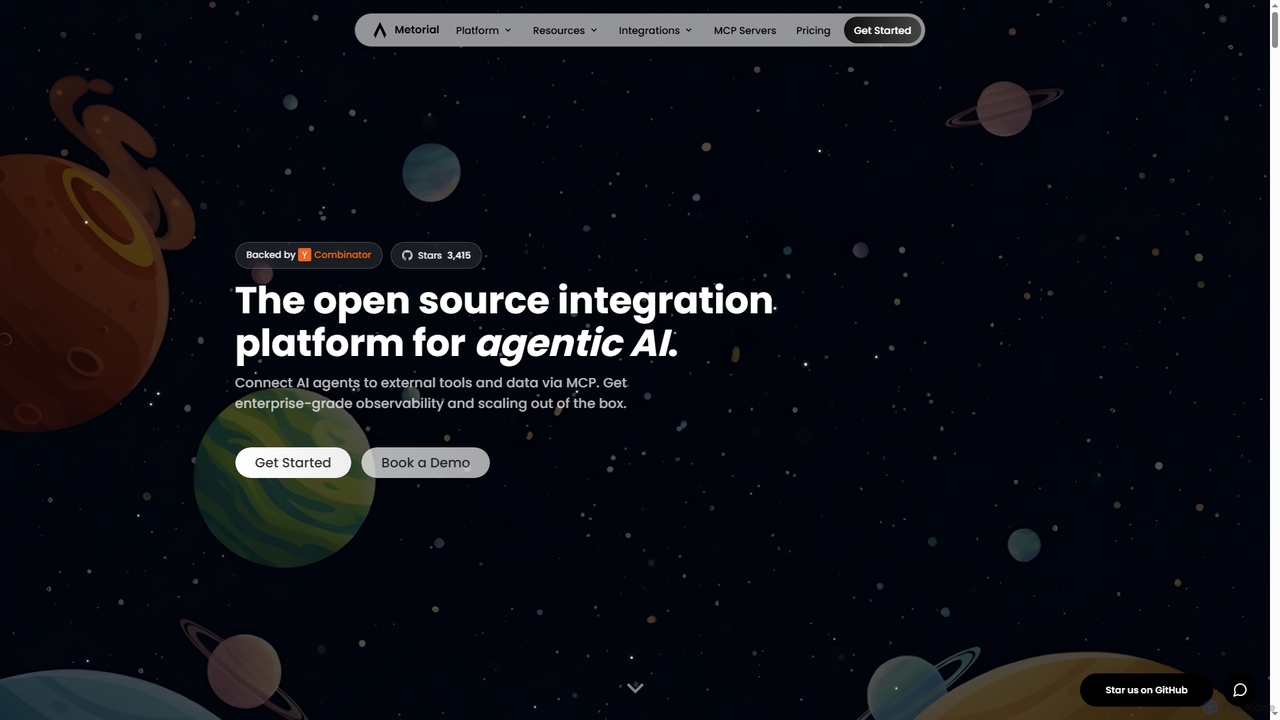
Metorial
Metorial is an integration platform for AI agents, enabling developers to quickly build, deploy, and monitor powerful agentic AI applications. It provides seamless connections to hundreds of tools, data sources, and APIs via its serverless Model Context Protocol (MCP) platform, offering robust SDKs, observability, and enterprise-grade security for scalable AI solutions.
Agentic Ai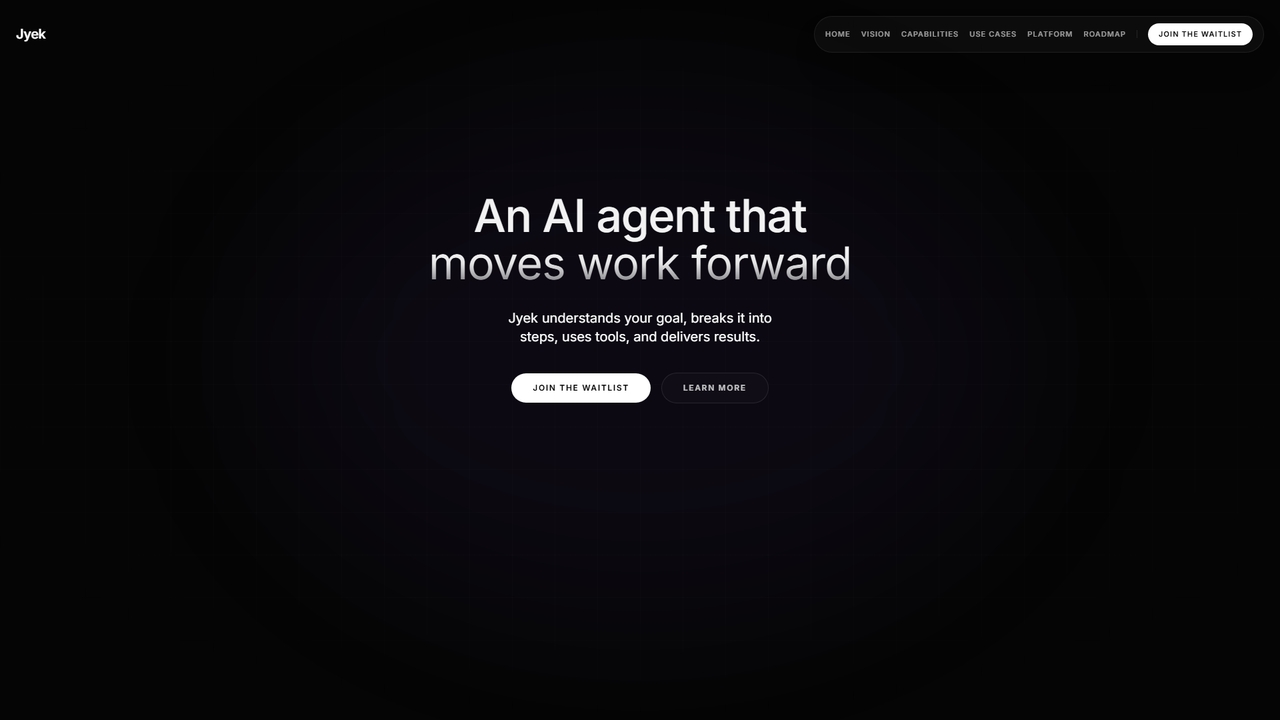
Jyek
Jyek is an AI agent platform that understands objectives, creates execution plans, uses tools, and delivers verifiable results for complex, multi-step tasks.
Automation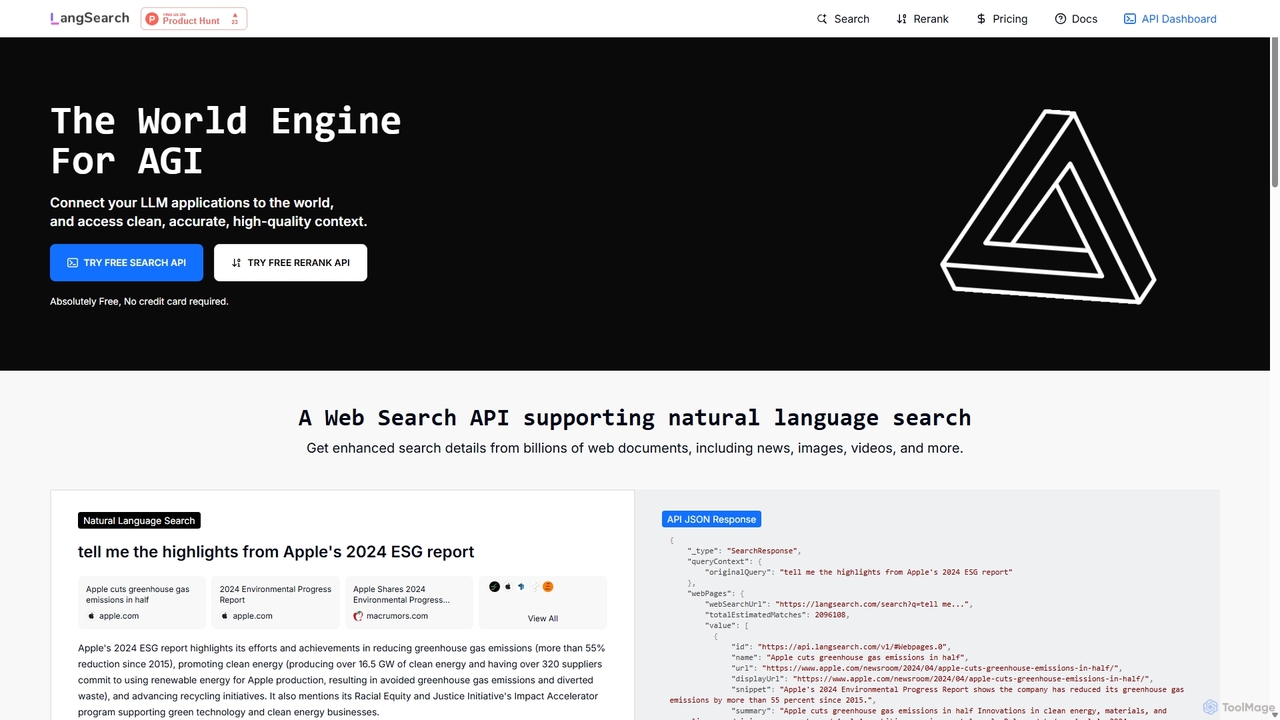
LangSearch
LangSearch provides free Web Search and Semantic Rerank APIs designed to connect LLM applications with clean, accurate, real-world context. It supports natural language queries, hybrid search, and offers a highly efficient reranker to improve result accuracy for AI agents, chatbots, and RAG systems.
Llm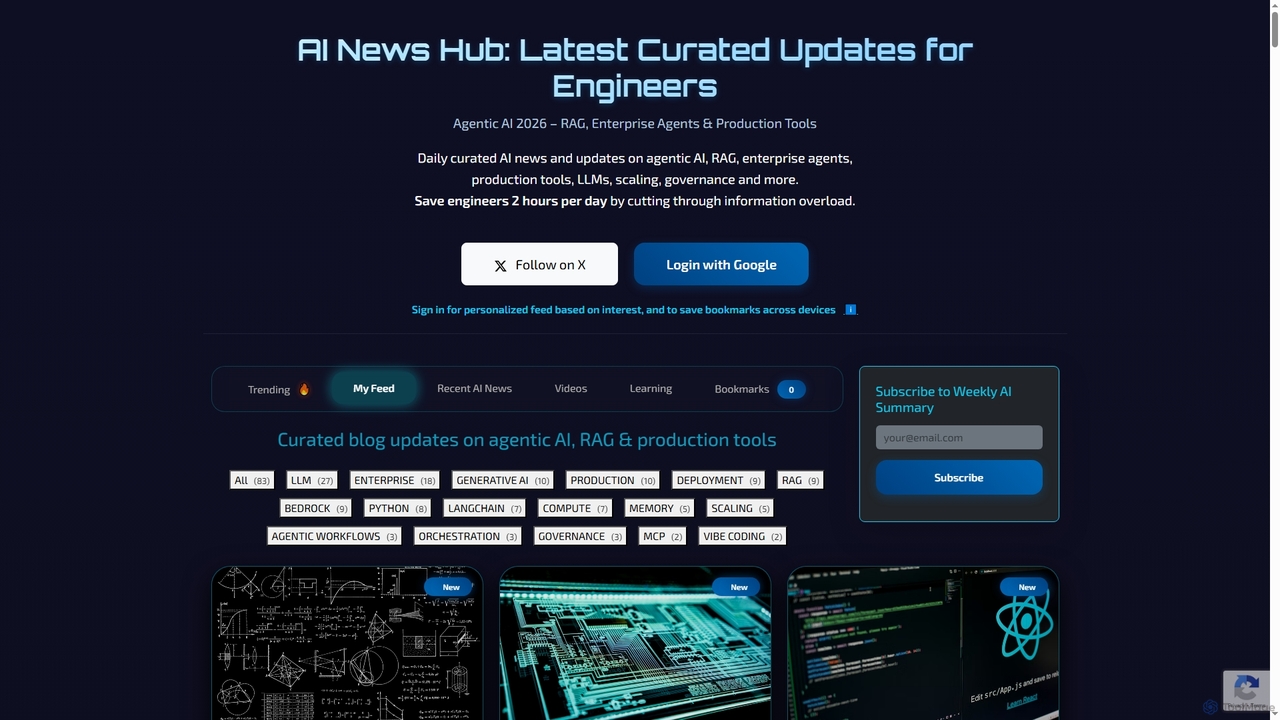
AI News Hub
AI News Hub is a comprehensive platform providing real-time AI announcements, curated blog updates on agentic AI, RAG, and production tools. It offers a personalized feed, bookmarking capabilities, and a rich collection of learning resources, including roadmaps, courses, and videos, to keep developers and enthusiasts informed and skilled in the rapidly evolving AI landscape.
AggregationXunfei Spark Agent Development Platform
A comprehensive, one-stop platform by iFlytek for building, debugging, and deploying AI agents. Powered by the Spark Large Language Model, it enables developers to create intelligent applications through a low-code interface, an extensive plugin marketplace, and robust management tools, covering the entire agent lifecycle.
Agent BuilderArcade
Arcade is an AI tool-calling platform for developers, enabling AI agents to securely perform actions on behalf of users. It connects AI to services like Gmail, Slack, and APIs through pre-built connectors and a custom SDK, handling complex authentication (OAuth) automatically. This allows developers to build assistants that go beyond chat to execute real-world tasks.
Framework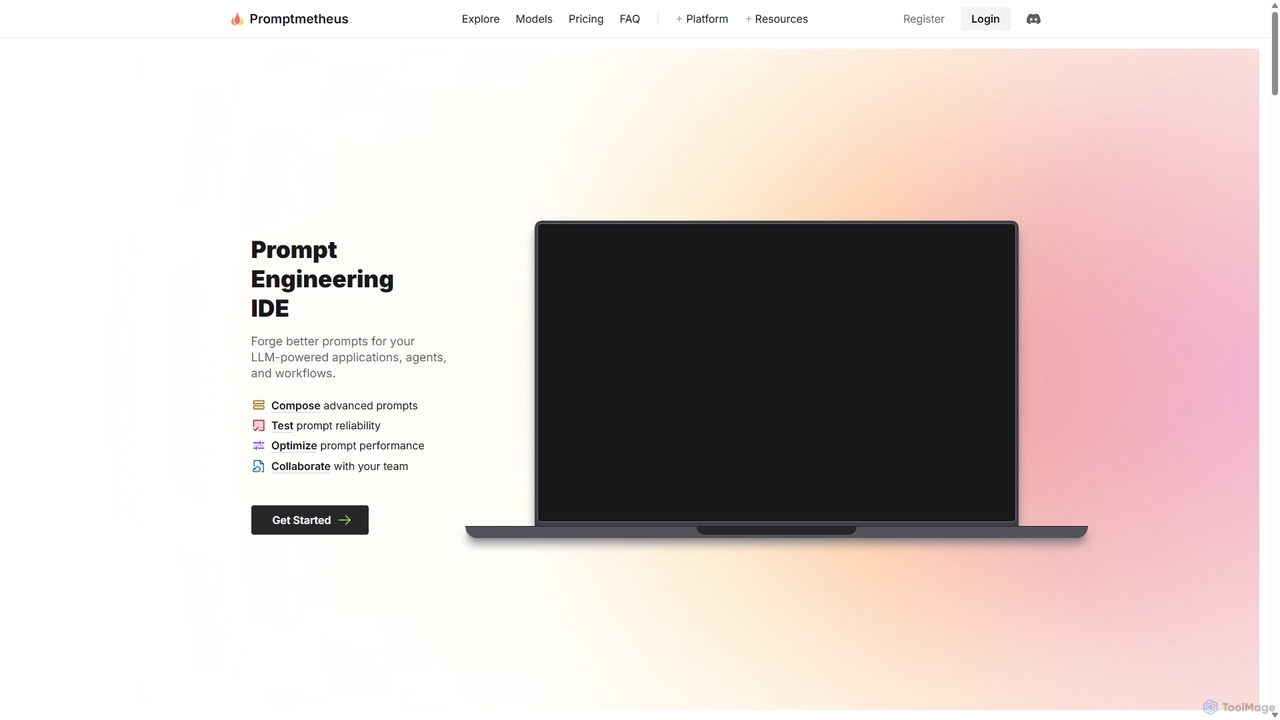
Promptmetheus
Promptmetheus is a professional Prompt Engineering IDE designed for developers and teams to build, test, and optimize high-quality prompts for LLM-powered applications. It supports over 100 LLMs, offers advanced composition tools, reliability testing, performance optimization, and real-time team collaboration, enabling a systematic and efficient approach to prompt design.
Model Management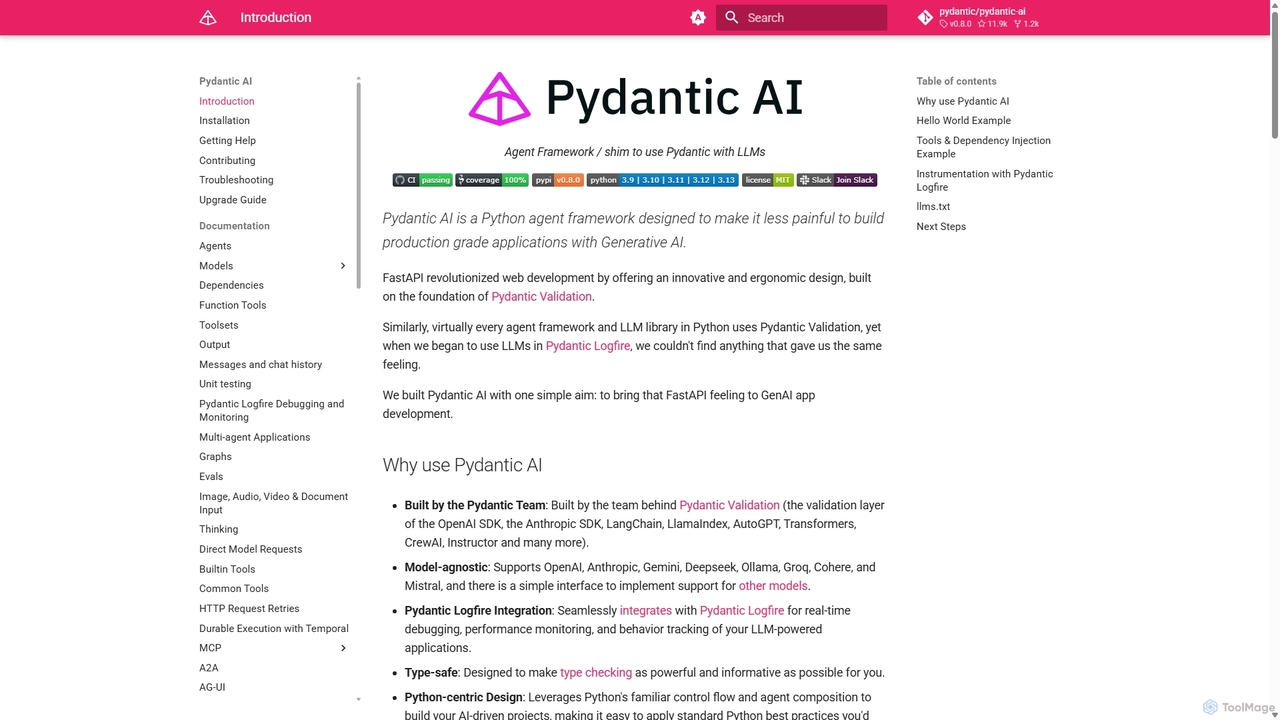
Pydantic AI
Pydantic AI is a Python agent framework from the creators of Pydantic, designed to simplify building production-grade Generative AI applications. It offers a model-agnostic approach, supporting major LLMs like OpenAI, Gemini, and Anthropic. By leveraging Pydantic's robust validation, it ensures type-safe, structured outputs, aiming to bring the ergonomic and intuitive developer experience of FastAPI to the world of AI agent development.
Agent Builder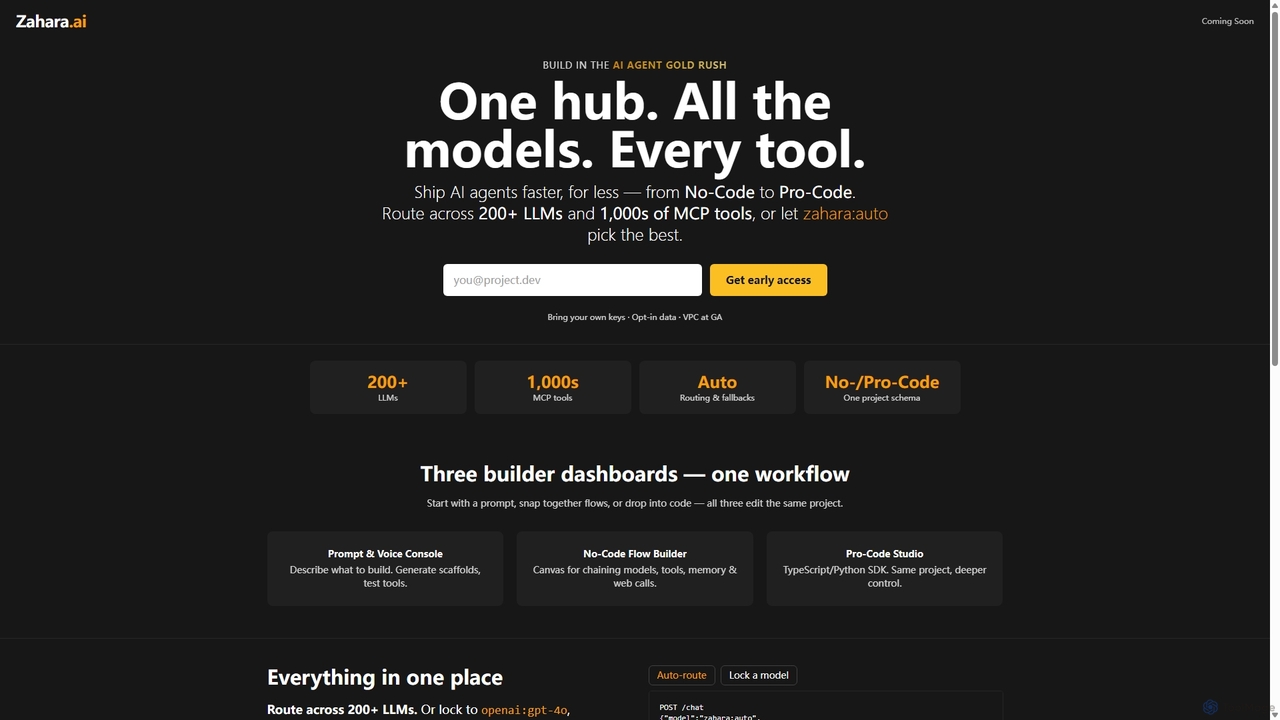
Zahara.ai
Zahara.ai is a unified development hub for building, deploying, and monetizing AI agents. It provides access to over 200 LLMs and thousands of tools, supporting a flexible workflow from No-Code to Pro-Code. Features like automatic model routing and integrated cost management streamline the entire agent creation lifecycle.
Agent Builder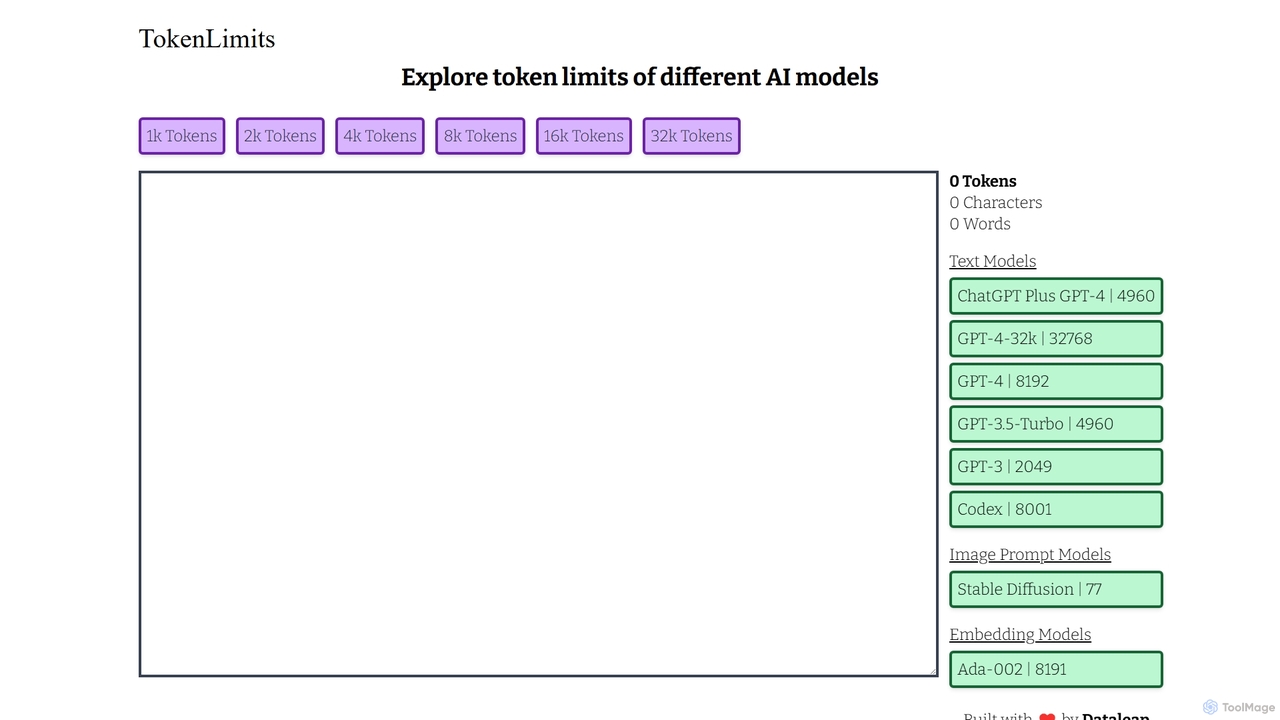
TokenLimits
A free, quick-reference web tool for developers, researchers, and AI enthusiasts to check the token limits of popular AI models. It provides a centralized, up-to-date database for text, image, and embedding models, simplifying workflow and development.
Api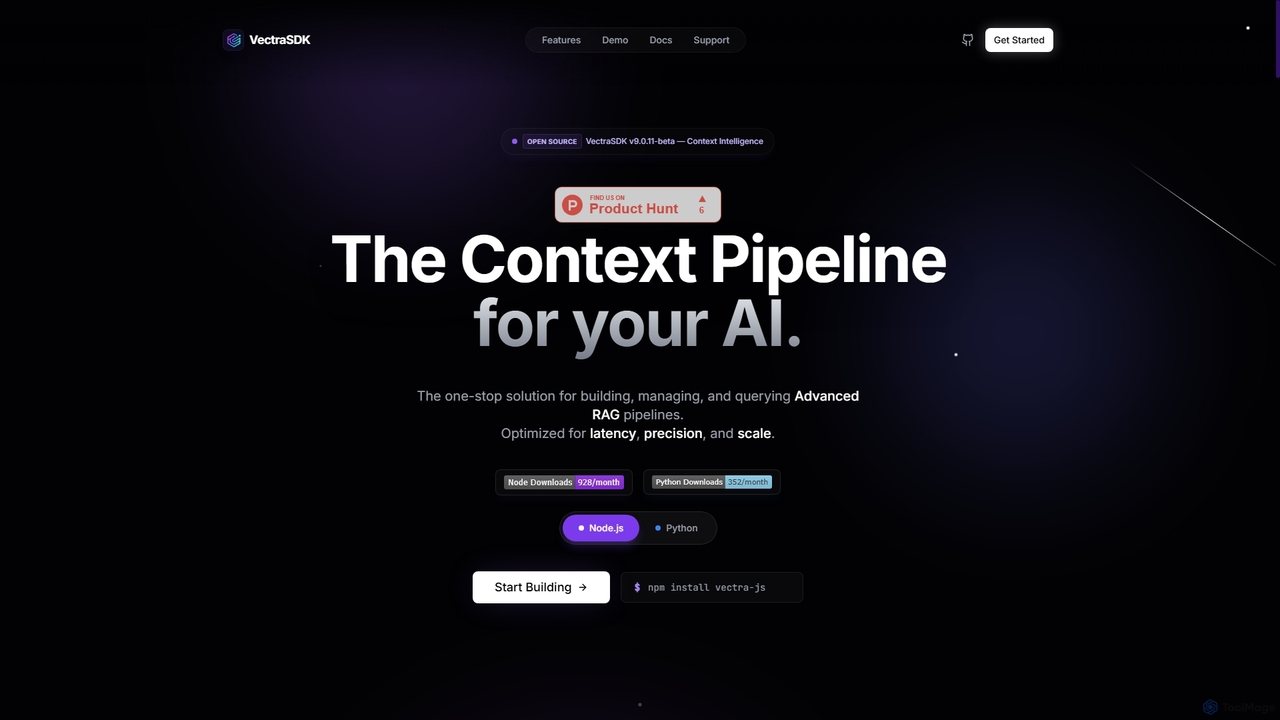
Vectra
Vectra is an open-source, production-grade SDK for Node.js and Python, designed to build, manage, and query advanced Retrieval-Augmented Generation (RAG) pipelines. It offers a comprehensive toolkit for developing context-aware AI applications, optimized for low latency, high precision, and scalability.
Rag Pipelines
ConnectOnion
ConnectOnion is a minimalist Python framework designed to build production-ready AI agents with significantly less code. It simplifies agent creation by combining Markdown prompts and Python functions, reducing boilerplate by up to 85% compared to other frameworks.
Libraries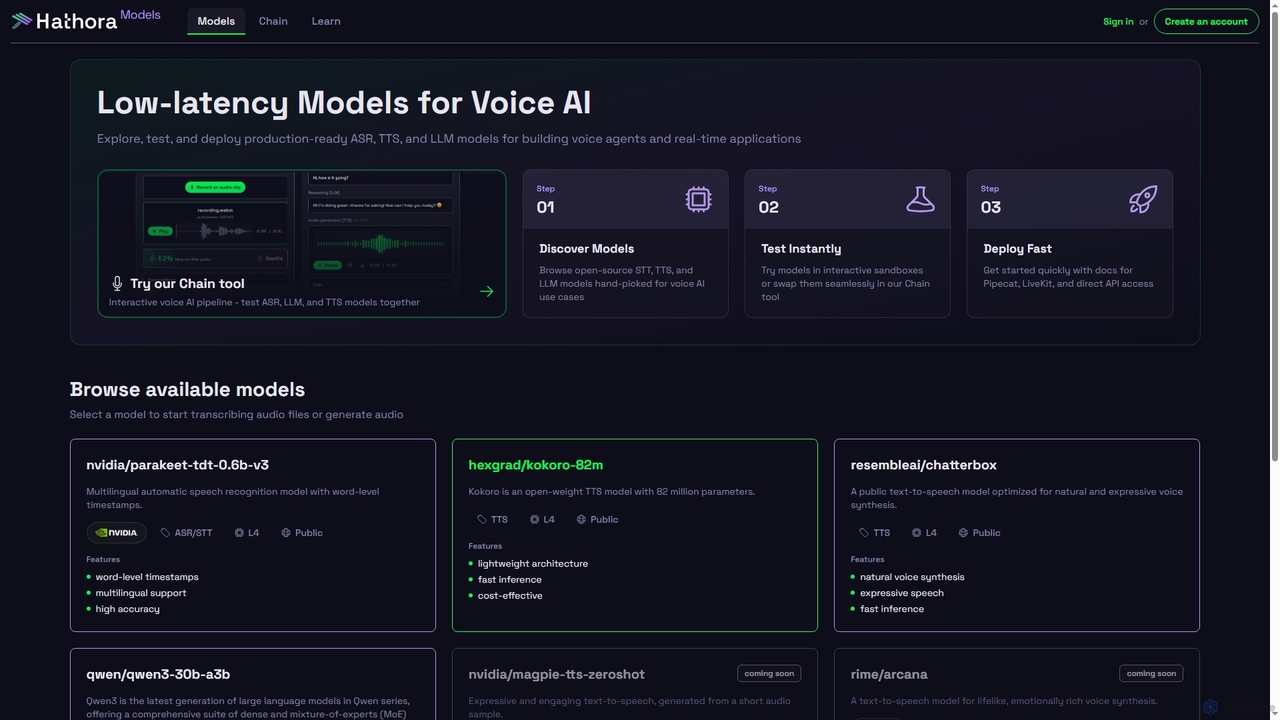
Models
Models by Hathora offers a curated catalog of low-latency ASR, TTS, and LLM models optimized for voice AI and real-time applications. Developers can explore, test, and deploy production-ready models quickly, featuring interactive sandboxes and direct API access for seamless integration into voice agents and other applications.
Api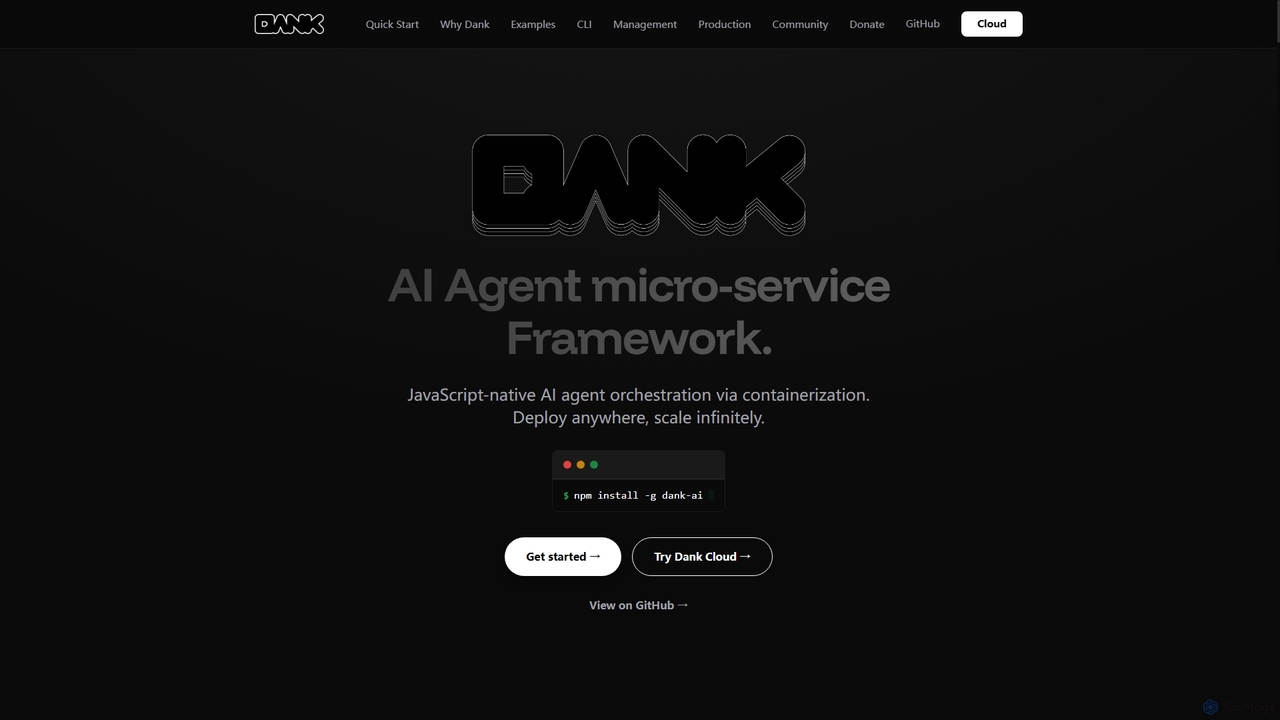
Dank
Dank is a JavaScript-native, open-source framework for orchestrating and deploying containerized AI agents. It enables developers to build, manage, and scale multiple AI agents as microservices across any cloud infrastructure, simplifying complex AI deployments with Docker-native architecture and real-time monitoring.
Agent Frameworks
Peargent Comments (0)
Sign in to comment.
Sign inNo comments yet.