


ConnectOnion Overview
ConnectOnion is a powerful yet simple AI agent framework for Python, built on the philosophy of "Keep simple things simple, make complicated things possible." It enables developers to ship functional AI agents in minutes rather than days by drastically reducing boilerplate code. The core concept is straightforward: an AI agent is created by combining a Markdown prompt with Python functions that act as tools. This approach allows for the creation of a helpful assistant with a calculator tool in just 8 lines of code, a task that might require around 50 lines in other popular frameworks like LangChain.
How to use ConnectOnion
Getting started with ConnectOnion is designed to be quick and intuitive.
1. Installation: Begin by installing the framework via pip: pip install connectonion.
2. Project Creation: Use the built-in CLI to scaffold a new project with co create my-agent. This command automatically sets up the project structure, including an example agent file, an environment file for API keys, and complete framework documentation for AI assistants.
3. Define Components: In your Python script, define a prompt (e.g., "You are a helpful assistant") and the Python functions that will serve as the agent's tools (e.g., a `calculate` function).
4. Create Agent: Instantiate the agent with agent = Agent(prompt, tools=[your_function]).
5. Interact: Use the agent by calling the .input() method, like result = agent.input("What's 42 * 17?").
For an even faster workflow, ConnectOnion promotes "Vibe Coding," where you can paste the entire documentation into an AI coding assistant like Cursor, describe the agent you need, and let the AI generate the complete code.
Core Features of ConnectOnion
- Minimalist Syntax: Reduces code complexity by up to 85%, allowing for agent creation in just a few lines.
- Markdown + Functions = Agent: An intuitive model where prompts are written in Markdown and tools are standard Python functions.
- Powerful CLI: A command-line interface (
co) for quick project scaffolding, environment management, and best practices built-in. - Vibe Coding: A rapid development method using AI assistants like Cursor to write perfect ConnectOnion code by providing them with the framework's documentation.
- Built-in Debugging: The
@xraydecorator provides real-time insights, iteration tracking, and performance metrics to see exactly what an agent is doing. - Automatic Logging: Every agent interaction is automatically logged for easy monitoring and review.
- Stateful Tools: Supports both simple stateless functions and complex, stateful class-based tools (e.g., a `Browser` class for web automation).
- Automatic Schema Generation: Automatically converts Python type hints into OpenAI-compatible function schemas, eliminating manual schema writing.
Use Cases for ConnectOnion
ConnectOnion is versatile and can be used to build a wide range of AI agents, including:
Simple Task Agents: Create agents for specific tasks like mathematical calculations, as shown in the basic examples.
Web Scrapers and Researchers: Build agents that can scrape content from URLs, extract links, and gather information from the web. The CLI includes a `web-research` template.
Automation Bots: Develop agents for web automation using the Playwright template, which includes pre-built tools for starting a browser, navigating pages, filling forms, and taking screenshots.
Email Assistants: Generate agents capable of sending email notifications based on specific triggers or conditions.
Custom AI-Generated Agents: Use the CLI's AI-powered custom template feature to describe a desired agent (e.g., "an agent that monitors GitHub repos for new issues"), and the CLI will generate the complete project.
Advantages of ConnectOnion
The primary advantage of ConnectOnion is its radical simplicity and speed. By abstracting away complexity and eliminating boilerplate, it allows developers to focus on the core logic of their agents. This leads to a significantly faster development cycle. The framework is both beginner-friendly, with zero setup complexity, and powerful enough for production-ready applications. Its innovative "Vibe Coding" approach leverages the power of modern AI assistants, further accelerating development. The built-in debugging and logging tools provide professional-grade visibility and control over agent behavior.
Pricing and Plans
Based on the provided documentation, ConnectOnion is a free, open-source Python library. It is installed using `pip`, and there is no mention of any pricing, plans, or commercial licenses. Users can start building immediately without any cost associated with the framework itself.
FAQs
What is ConnectOnion?
ConnectOnion is a minimalist Python framework for building AI agents. Its core philosophy is to simplify the development process, enabling the creation of powerful agents with minimal boilerplate code by combining Markdown prompts with Python functions as tools.
Is ConnectOnion free to use?
Yes, the documentation indicates that ConnectOnion is a free, open-source library. It can be installed directly from the Python Package Index (PyPI) using `pip install connectonion`, and there is no mention of any costs or paid plans.
How does ConnectOnion reduce code compared to other frameworks?
ConnectOnion abstracts away the complex setup required by other frameworks. It automatically handles schema generation from type hints and provides a simple `Agent` class. This results in creating a functional agent in as few as 8 lines of code, compared to approximately 50 lines for a similar agent in frameworks like LangChain, representing an 85% reduction in boilerplate.
What is "Vibe Coding"?
"Vibe Coding" is a development workflow promoted by ConnectOnion. It involves providing the complete framework documentation to an AI coding assistant (like Cursor). The developer then describes the desired agent in natural language, and the AI assistant generates the full, correct ConnectOnion code, enabling extremely rapid prototyping and development.
How can I debug an agent built with ConnectOnion?
ConnectOnion includes a built-in debugging tool called `@xray`. By applying this decorator to your tool functions (e.g., `@xray def my_tool(...)`), you can get detailed, real-time insights into the agent's execution, including which tool is being called, the user's original task, and the current iteration number.
What kind of tools can an agent use?
An agent can use any Python function as a tool. ConnectOnion also supports stateful tools by allowing you to pass an entire class instance to the agent. When a class instance is provided, ConnectOnion automatically discovers all its public methods with type hints and makes them available as tools for the agent, which is ideal for complex tasks like web browser automation.
ConnectOnion Alternatives
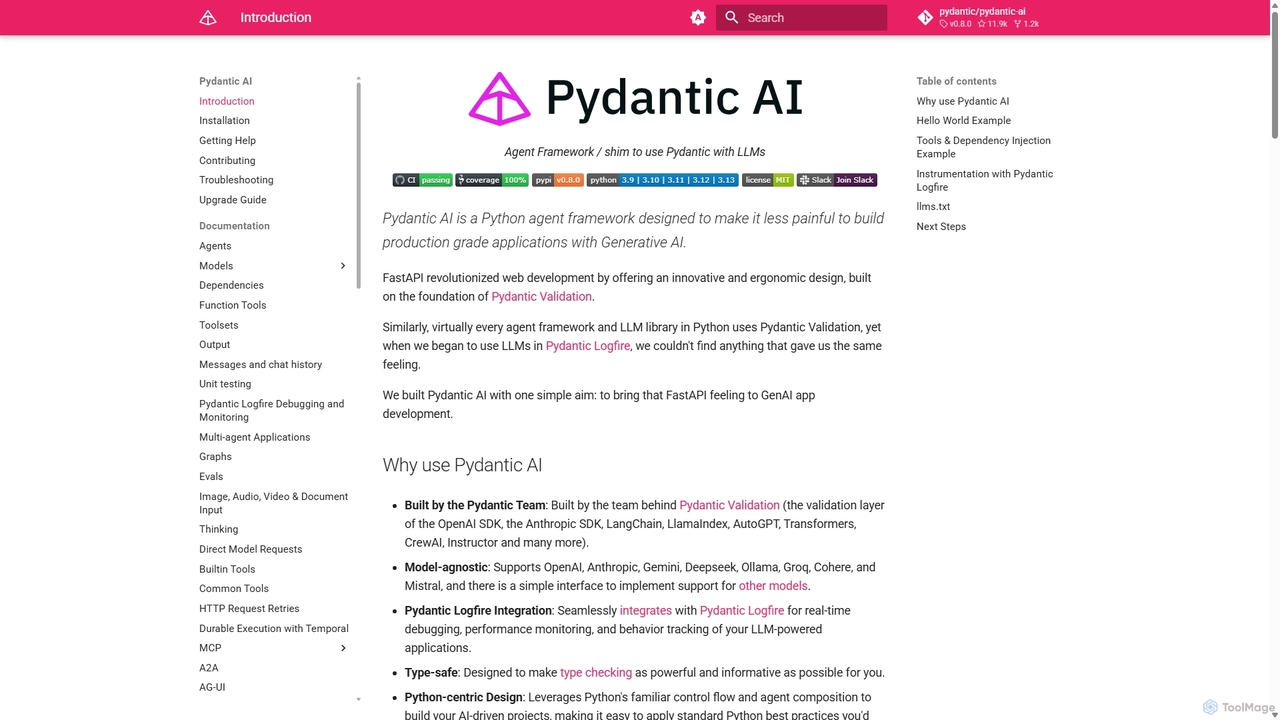
Pydantic AI
Pydantic AI is a Python agent framework from the creators of Pydantic, designed to simplify building production-grade Generative AI applications. It offers a model-agnostic approach, supporting major LLMs like OpenAI, Gemini, and Anthropic. By leveraging Pydantic's robust validation, it ensures type-safe, structured outputs, aiming to bring the ergonomic and intuitive developer experience of FastAPI to the world of AI agent development.
Agent Builder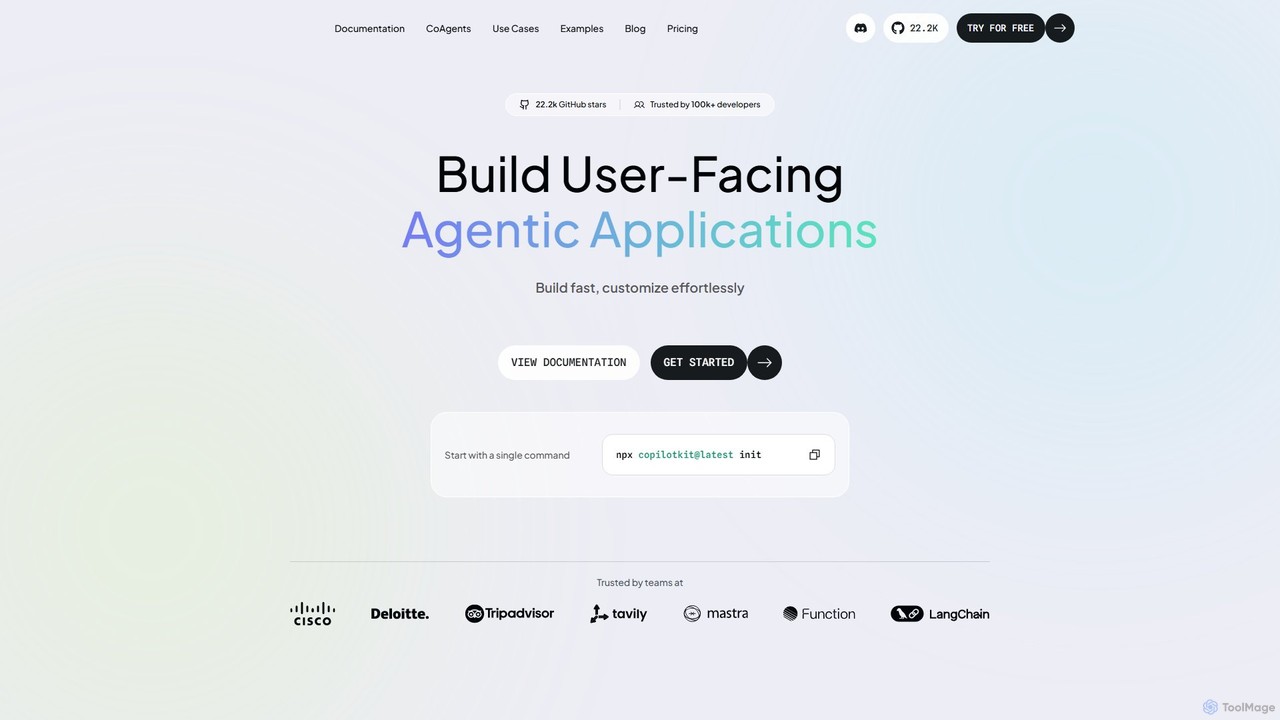
CopilotKit
CopilotKit is an open-source, full-stack framework for developers to build, deploy, and customize in-app AI copilots and agentic applications. It provides front-end components, back-end logic, and seamless integrations with any LLM or agent framework, enabling the creation of powerful, user-facing AI assistants.
Frameworks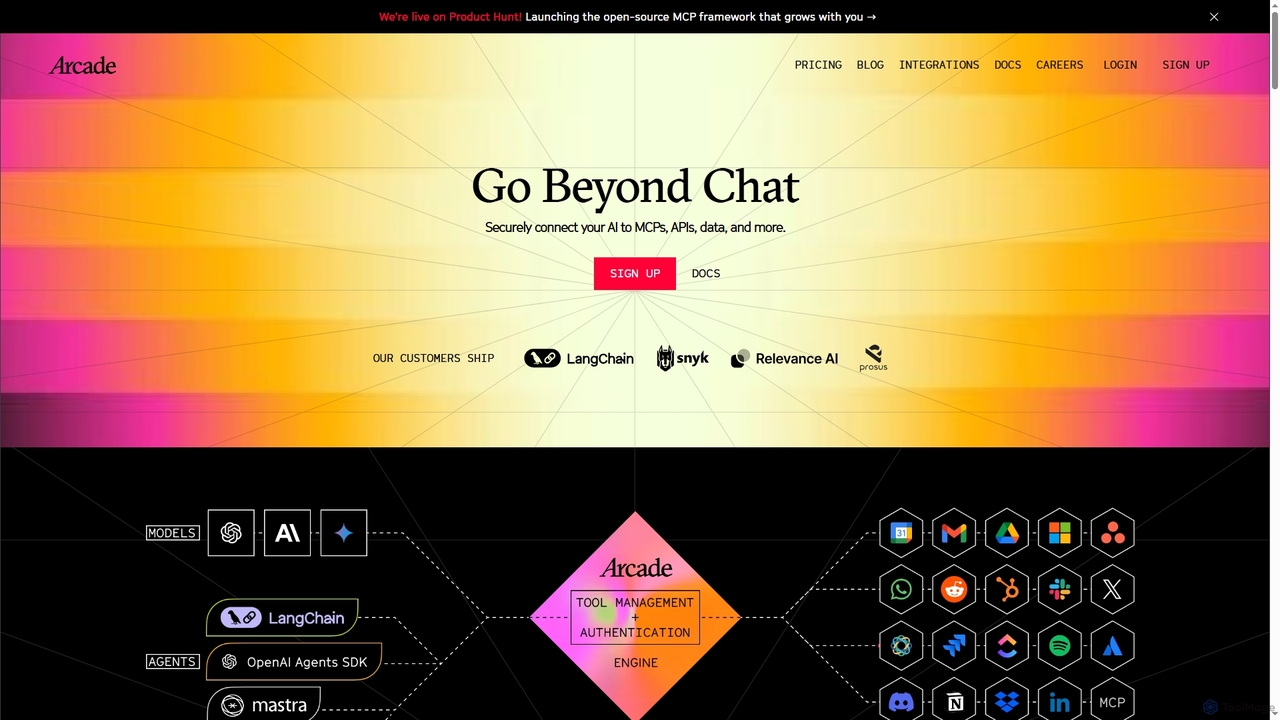
Arcade
Arcade is an AI tool-calling platform for developers, enabling AI agents to securely perform actions on behalf of users. It connects AI to services like Gmail, Slack, and APIs through pre-built connectors and a custom SDK, handling complex authentication (OAuth) automatically. This allows developers to build assistants that go beyond chat to execute real-world tasks.
Framework
smolagents
smolagents is a minimalist, open-source AI agent framework developed by Hugging Face. It empowers developers to build and deploy powerful, code-first AI agents with minimal Python code. By focusing on simplicity and efficiency, it enables Large Language Models (LLMs) to interact with tools and the real world seamlessly, supporting a wide range of models and secure execution environments.
Development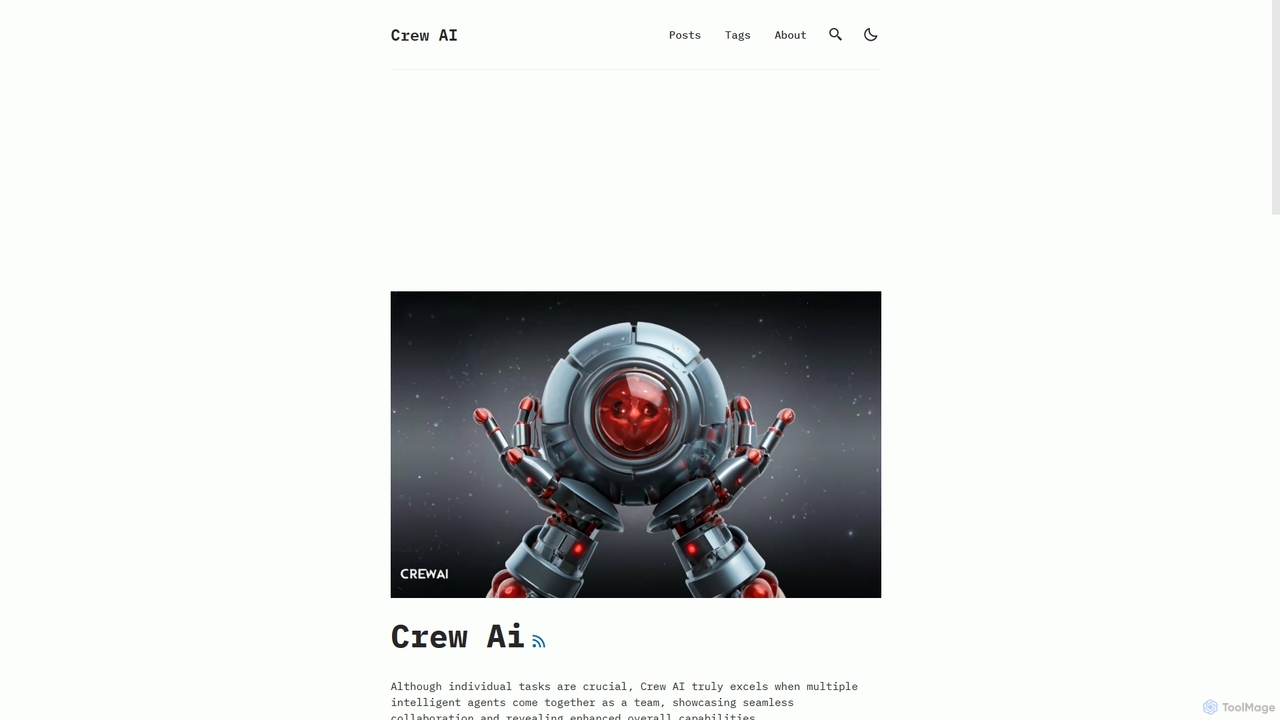
CrewAI
CrewAI is an advanced open-source framework for orchestrating role-playing, autonomous AI agents. By fostering collaborative intelligence, it enables agents with distinct roles and tools to work together seamlessly to solve complex tasks. This multi-agent system simplifies the development of sophisticated applications, from automated content creation to complex data analysis, by managing agent interactions, task delegation, and workflow processes.
AgentConnectOnion Categories
ConnectOnion Jobs
ConnectOnion Embed Widget
Copy this embed code to place the badge on your blog, article, or product site and send readers directly to this ToolMage detail page.

Related AI tools
Pydantic AI
Pydantic AI is a Python agent framework from the creators of Pydantic, designed to simplify building production-grade Generative AI applications. It offers a model-agnostic approach, supporting major LLMs like OpenAI, Gemini, and Anthropic. By leveraging Pydantic's robust validation, it ensures type-safe, structured outputs, aiming to bring the ergonomic and intuitive developer experience of FastAPI to the world of AI agent development.
Agent Buildersmolagents
smolagents is a minimalist, open-source AI agent framework developed by Hugging Face. It empowers developers to build and deploy powerful, code-first AI agents with minimal Python code. By focusing on simplicity and efficiency, it enables Large Language Models (LLMs) to interact with tools and the real world seamlessly, supporting a wide range of models and secure execution environments.
Development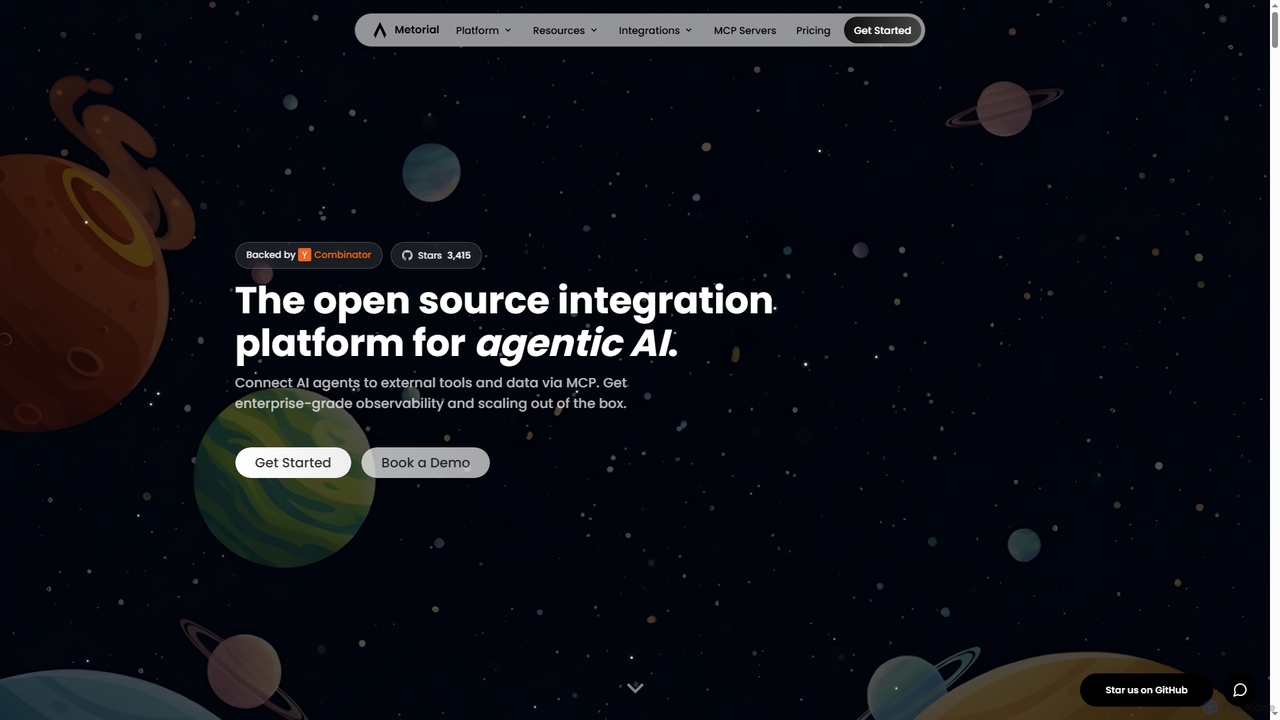
Metorial
Metorial is an integration platform for AI agents, enabling developers to quickly build, deploy, and monitor powerful agentic AI applications. It provides seamless connections to hundreds of tools, data sources, and APIs via its serverless Model Context Protocol (MCP) platform, offering robust SDKs, observability, and enterprise-grade security for scalable AI solutions.
Agentic AiArcade
Arcade is an AI tool-calling platform for developers, enabling AI agents to securely perform actions on behalf of users. It connects AI to services like Gmail, Slack, and APIs through pre-built connectors and a custom SDK, handling complex authentication (OAuth) automatically. This allows developers to build assistants that go beyond chat to execute real-world tasks.
FrameworkCrewAI
CrewAI is an advanced open-source framework for orchestrating role-playing, autonomous AI agents. By fostering collaborative intelligence, it enables agents with distinct roles and tools to work together seamlessly to solve complex tasks. This multi-agent system simplifies the development of sophisticated applications, from automated content creation to complex data analysis, by managing agent interactions, task delegation, and workflow processes.
Agent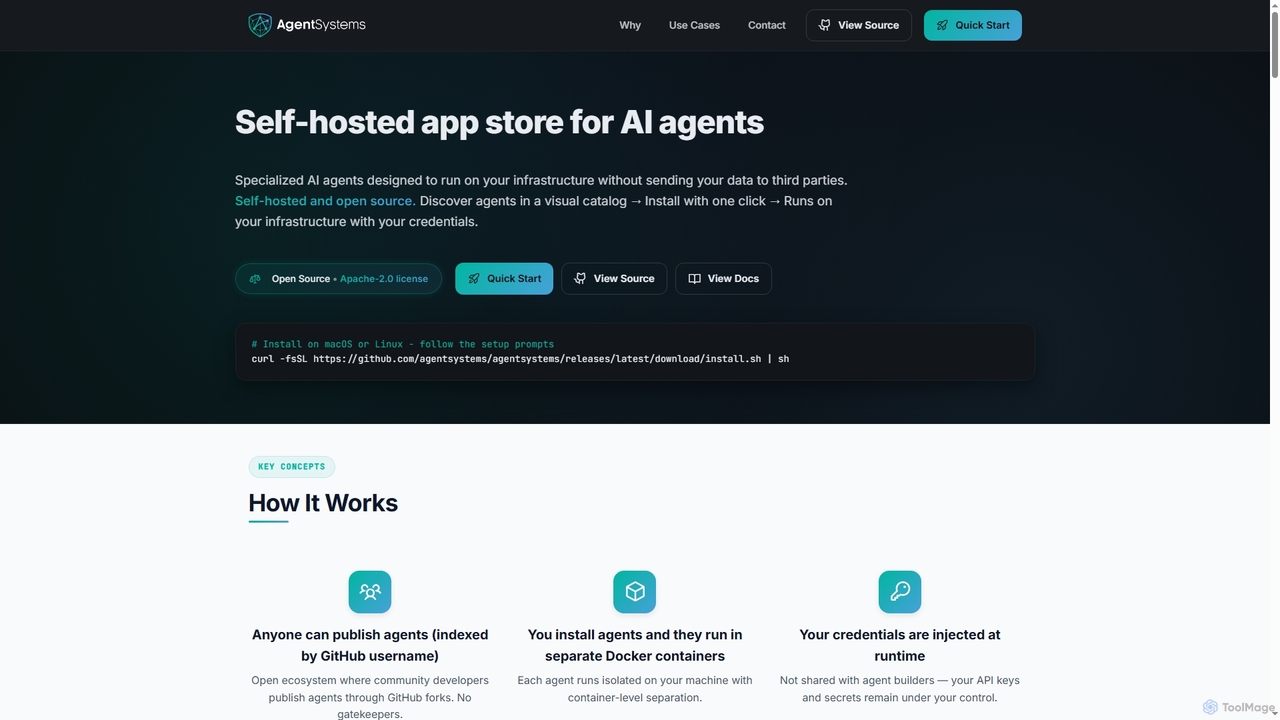
AgentSystems
An open-source, self-hosted platform for discovering, deploying, and managing specialized AI agents on your own infrastructure, ensuring complete data privacy and control.
Self Hosted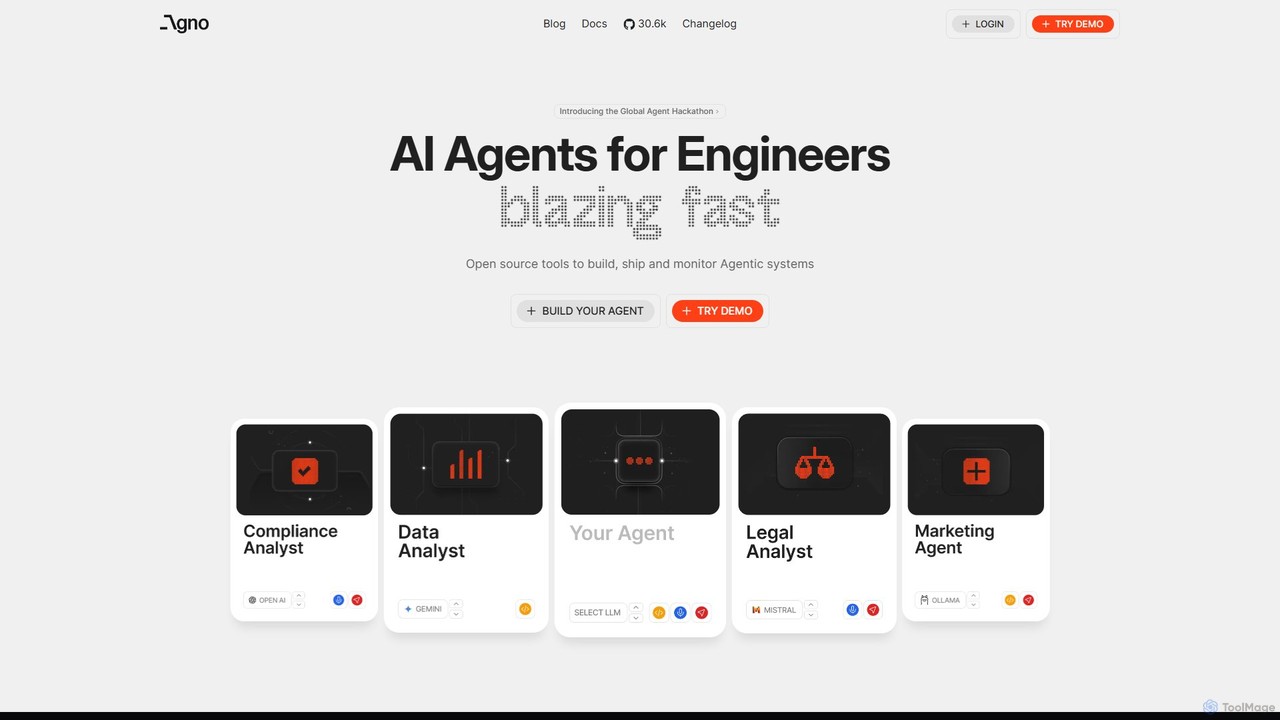
phidata
phidata is an open-source Python framework for building autonomous AI Assistants. It simplifies the integration of LLMs with memory, knowledge bases, and external tools, enabling developers to create powerful, stateful AI applications with ease.
Frameworks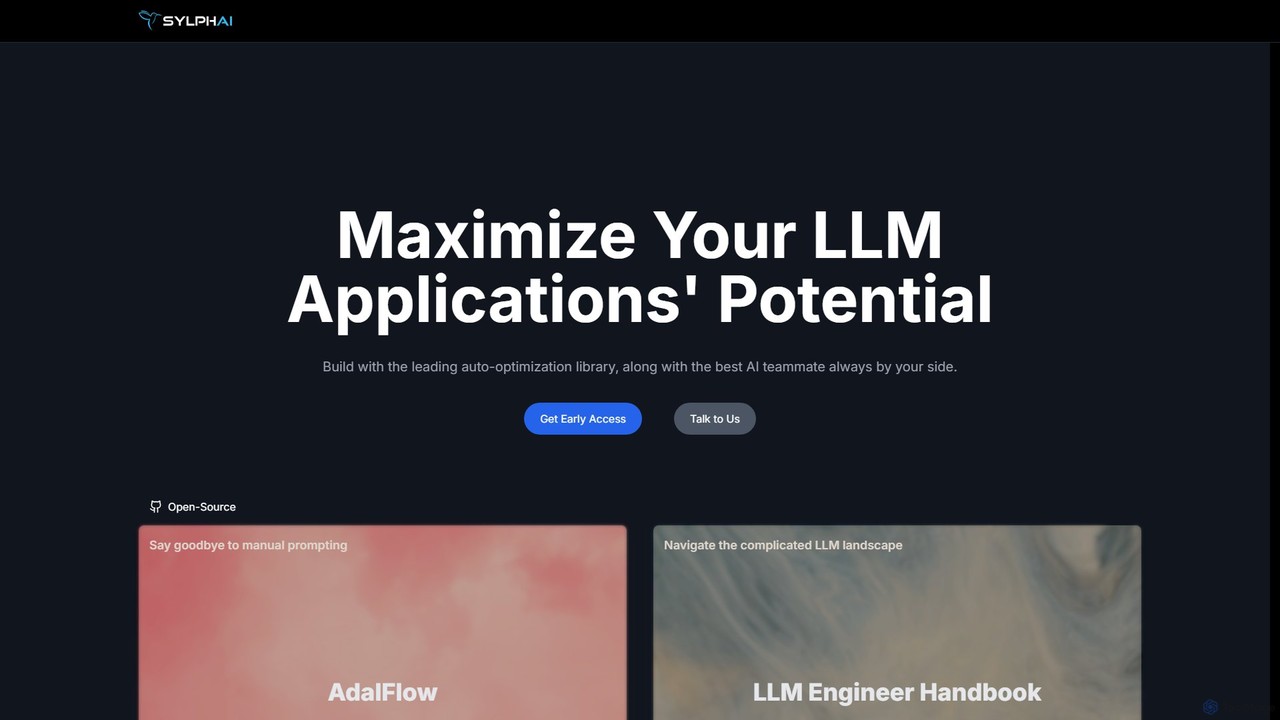
Sylph AI
Sylph AI is a development platform designed to maximize the potential of LLM applications. It features AdalFlow, a leading open-source library for building and auto-optimizing LLM task pipelines, and an AI Teammate that provides expert guidance throughout the entire development workflow, from ideation to production.
Libraries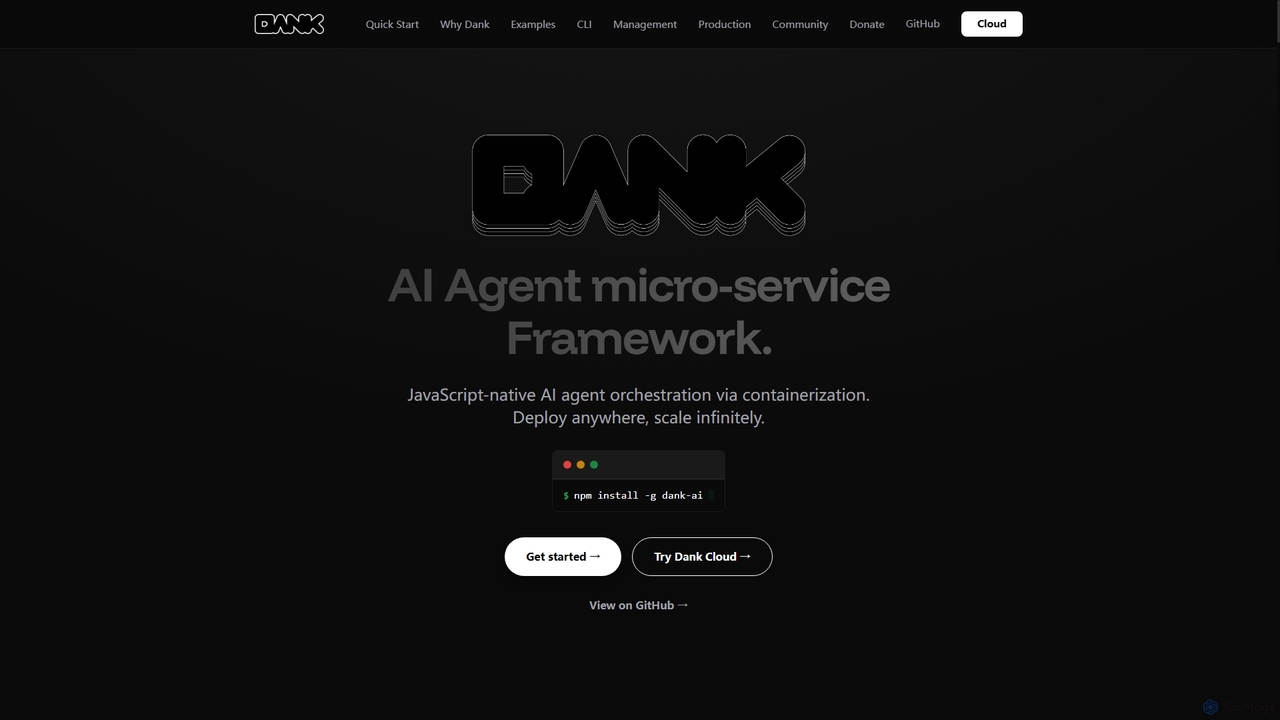
Dank
Dank is a JavaScript-native, open-source framework for orchestrating and deploying containerized AI agents. It enables developers to build, manage, and scale multiple AI agents as microservices across any cloud infrastructure, simplifying complex AI deployments with Docker-native architecture and real-time monitoring.
Agent Frameworks
Jyek
Jyek is an AI agent platform that understands objectives, creates execution plans, uses tools, and delivers verifiable results for complex, multi-step tasks.
Automation
MindMeld
A powerful, open-source conversational AI platform from Cisco, designed for developers. It provides a comprehensive Python-based framework for building deep-domain voice interfaces and chatbots with advanced Natural Language Processing (NLP) capabilities, offering full control and on-premise deployment.
Chatbot Builder
Peargent
Peargent is a modern, powerful Python framework designed for building intelligent, production-grade AI agents. It offers an intuitive API, flexible LLM support, multi-agent orchestration, and persistent memory, enabling developers to create scalable and robust AI solutions for real-world use.
Agent Development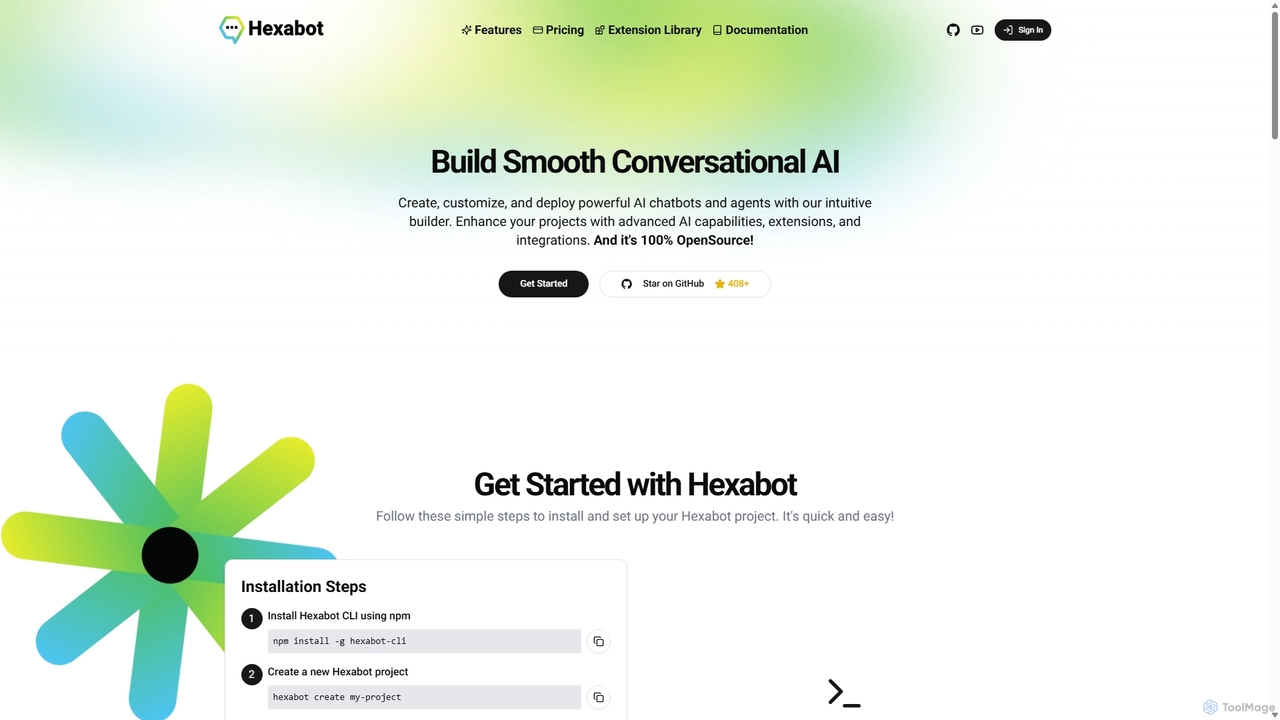
Hexabot
Hexabot is a 100% open-source platform for building, customizing, and deploying powerful AI chatbots and agents. It offers an intuitive low-code builder, on-premise hosting for data privacy, and a vast library of extensions. Ideal for developers and businesses seeking to enhance customer experience and automate workflows across multiple channels and languages.
Chatbot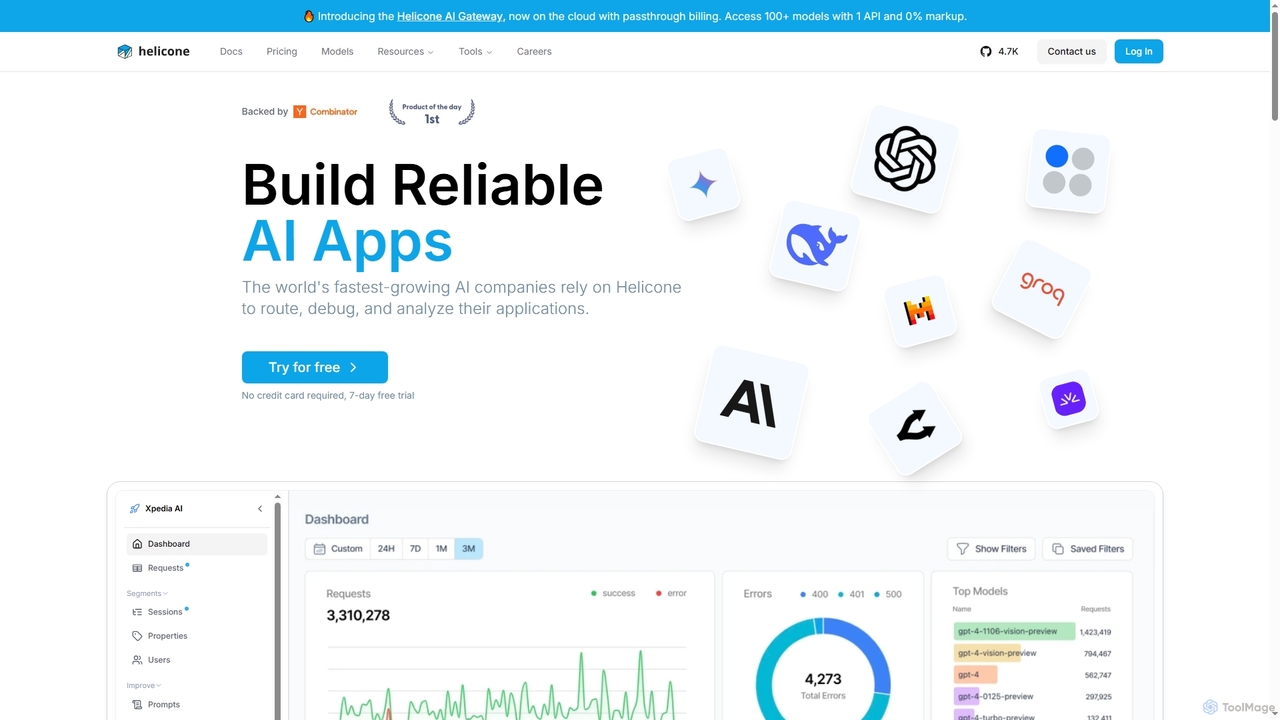
Helicone
Helicone is an open-source platform offering an AI Gateway and LLM Observability for developers. It helps build reliable AI applications by providing tools to route, monitor, debug, and analyze LLM usage. Key features include a unified API for 100+ models, intelligent caching, rate limiting, prompt management, and detailed performance analytics.
Api Management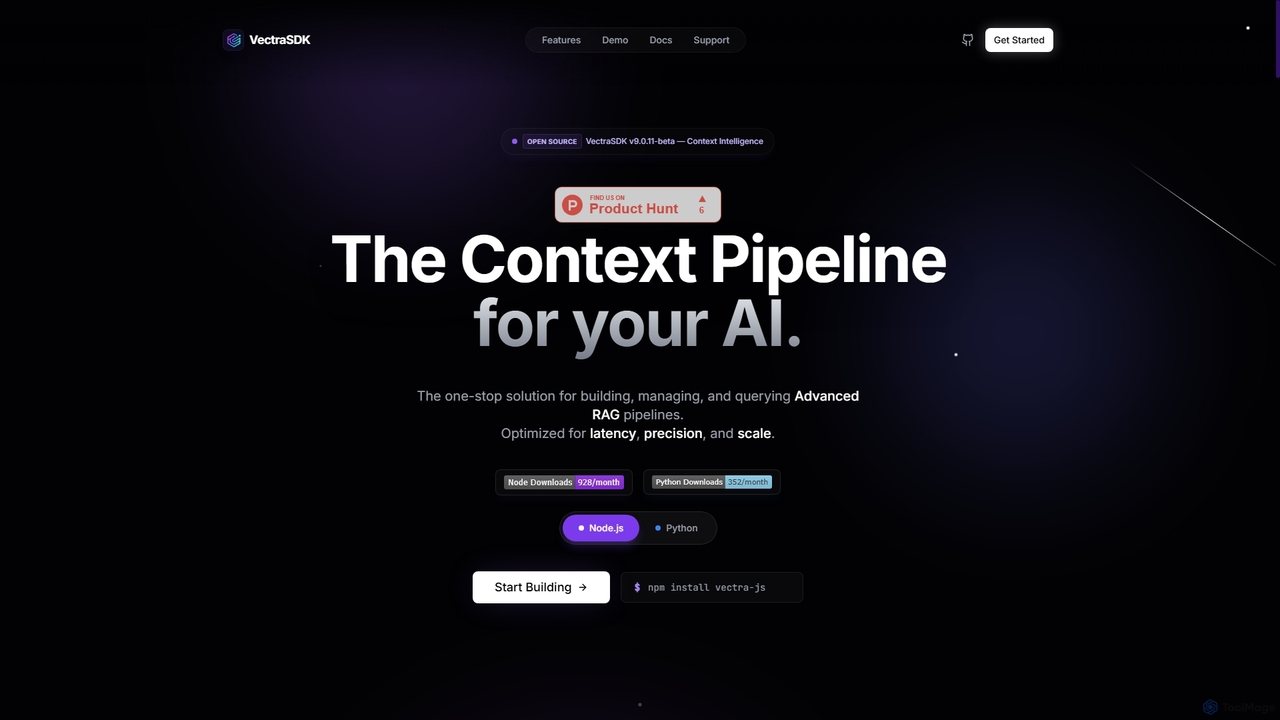
Vectra
Vectra is an open-source, production-grade SDK for Node.js and Python, designed to build, manage, and query advanced Retrieval-Augmented Generation (RAG) pipelines. It offers a comprehensive toolkit for developing context-aware AI applications, optimized for low latency, high precision, and scalability.
Rag Pipelines
ConnectOnion Comments (0)
Sign in to comment.
Sign inNo comments yet.