Code Best in category 3 results Libraries AI Tool

Popular AI tools in the Libraries field of Code include Sylph AI、LangUI、hyperficient, etc., helping you quickly improve efficiency.

Sylph AI

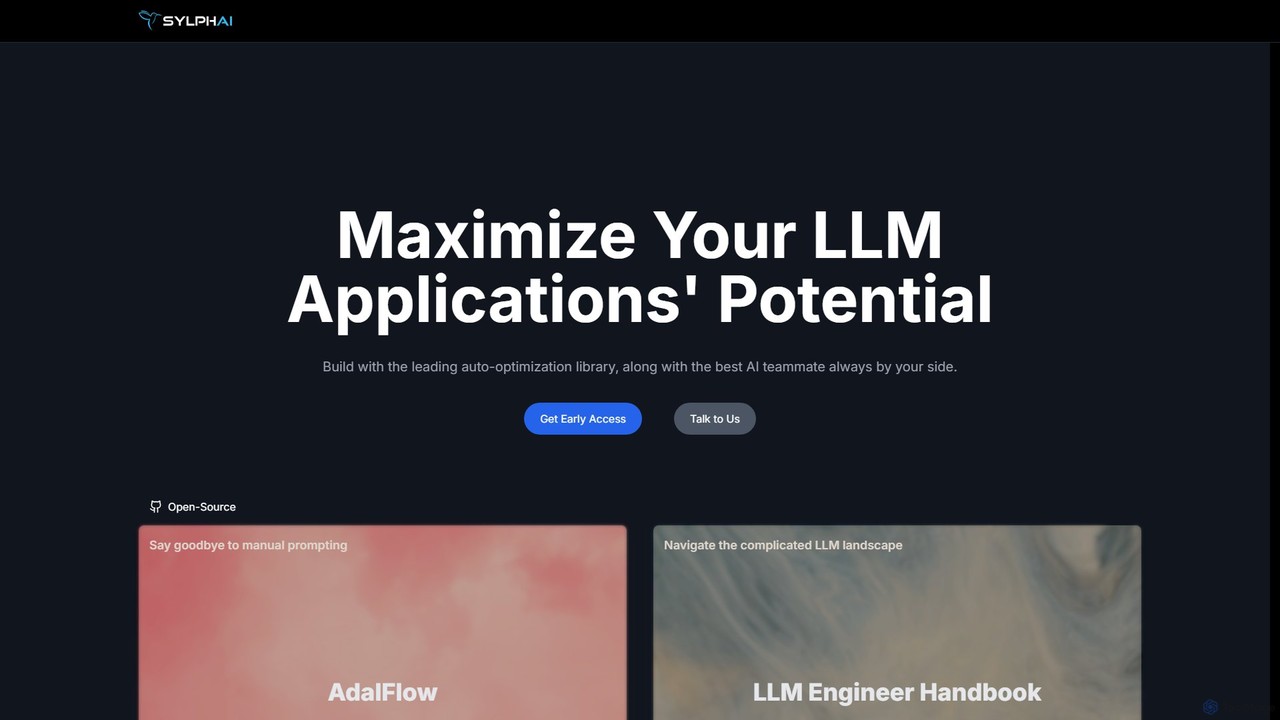
Sylph AI

Sylph AI is a development platform designed to maximize the potential of LLM applications. It features AdalFlow, a …

28.0K
LangUI

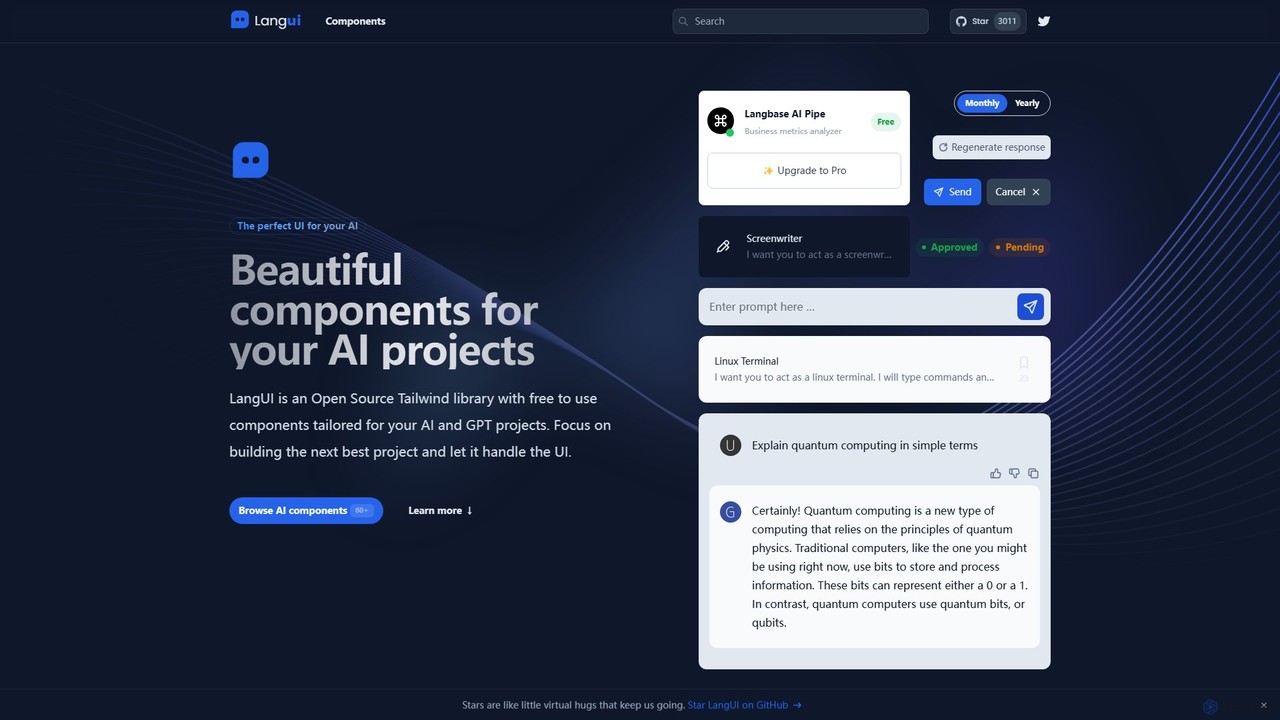
LangUI

LangUI is an open-source Tailwind CSS component library offering over 60 free, ready-to-use components specifically designed for AI …

4.7K
Free
hyperficient

hyperficient

hyperficient is an open-source AI tool for developers and ML engineers that automates the search for the most …

2.1K

About Libraries

AI Libraries are collections of pre-written code, functions, and modules that developers utilize to build artificial intelligence applications. These libraries abstract away complex mathematical and algorithmic details, providing ready-to-use tools for machine learning, deep learning, natural language processing, and computer vision. By leveraging AI libraries, developers can significantly accelerate the development cycle, enabling rapid prototyping and deployment of sophisticated AI solutions across various domains.

Core Features

  • Pre-built Algorithms: Offer implementations of common machine learning and deep learning algorithms, such as classification, regression, clustering, and neural networks.
  • Data Handling & Preprocessing: Provide utilities for loading, cleaning, transforming, and augmenting datasets, essential steps for preparing data for AI models.
  • Model Training & Evaluation: Include functions for training AI models, optimizing hyperparameters, and evaluating performance using metrics like accuracy, precision, and recall.
  • Specialized Modules: Contain dedicated components for specific AI tasks, such as tokenization and embeddings for NLP, or object detection and image segmentation for computer vision.
  • GPU Acceleration: Often integrate with hardware accelerators like GPUs to speed up computationally intensive tasks, particularly in deep learning.

Applicable Scenarios

AI libraries are indispensable for developers and researchers working on AI-driven projects. They are widely used in academic research for experimenting with new models, in startups for rapid prototyping of AI features, and in large enterprises for building scalable, production-grade AI systems. From automating data analysis to powering intelligent applications, these libraries form the backbone of modern AI development.

How to Choose

When selecting an AI library, consider its compatibility with your existing tech stack and programming language, such as Python or R. Evaluate the breadth of its features, community support, and documentation quality, which are crucial for troubleshooting and learning. Assess its performance and scalability for your specific data volume and computational requirements, and check if it offers specialized tools for your AI domain, like NLP or computer vision.

LibrariesUse Cases

1

Building a Custom Recommendation Engine

An e-commerce developer leverages AI libraries like scikit-learn or TensorFlow to analyze vast amounts of user browsing history, purchase patterns, and product attributes. By training machine learning models on this data, the developer can create a personalized recommendation engine that suggests relevant products to individual customers, significantly boosting conversion rates and improving the shopping experience. This process automates the discovery of complex relationships within customer data.

2

Developing an Automated Image Recognition System

A security firm's R&D team employs computer vision libraries like OpenCV and PyTorch to build an automated surveillance system. They use these libraries to implement object detection and facial recognition algorithms, enabling the system to identify specific objects, people, or unusual activities in real-time video feeds. This significantly enhances security monitoring capabilities, reducing the need for constant human oversight and improving response times to potential threats.

3

Creating a Natural Language Understanding (NLU) Chatbot

A customer service team utilizes NLP libraries like Hugging Face Transformers or NLTK to develop an intelligent chatbot capable of understanding complex user queries. By fine-tuning pre-trained language models, the chatbot can accurately interpret user intent, extract key information, and provide relevant responses, even for nuanced or ambiguous language. This significantly improves customer support efficiency, reduces agent workload, and offers 24/7 assistance.

4

Implementing Predictive Maintenance for Industrial IoT

A manufacturing engineer integrates AI libraries into an Industrial IoT (IIoT) platform to predict equipment failures. By collecting sensor data from machinery and applying time-series analysis and anomaly detection algorithms from libraries like Prophet or scikit-learn, the system can identify subtle deviations that indicate impending malfunctions. This enables proactive maintenance, minimizing downtime, extending equipment lifespan, and optimizing operational costs in smart factories.

5

Accelerating Drug Discovery with Deep Learning

Biotech researchers utilize deep learning libraries such as PyTorch or TensorFlow to accelerate drug discovery processes. They apply these libraries to analyze complex molecular structures, predict drug-target interactions, and screen vast chemical libraries for potential therapeutic compounds. This significantly reduces the time and cost associated with traditional drug development, enabling faster identification of promising candidates and advancing medical breakthroughs.

6

Automating Financial Fraud Detection

A fintech developer integrates AI libraries into their transaction monitoring system to automate fraud detection. By using libraries like scikit-learn for anomaly detection or TensorFlow for deep learning-based pattern recognition, the system can analyze millions of transactions in real-time, identifying suspicious activities that deviate from normal behavior. This proactive approach helps financial institutions prevent fraudulent transactions, protect customer assets, and comply with regulatory requirements more effectively.

LibrariesFrequently Asked Questions