ToolMage
Sign in

Best 7 Code Review AI tools for Code

Popular Code Review AI tools in Code include Traycer, CTO.ai, GitLoop, Ellipsis, Goast.ai, apigovernance, and Kamara AI, helping you work more efficiently.

Traycer
Freemium

Traycer

Traycer is an advanced AI coding assistant designed for large codebases. It champions a "Plan First, Code Second" approach, generating detailed, actionable plans before writing any code. It integrates with popular AI agents like Copilot and Claude, verifies changes, and offers automated code reviews to streamline development, improve code quality, and significantly boost productivity for individual developers and teams.

Code Review
Visits 65.5KFavorites 114Likes 123
Goast.ai
Freemium

Goast.ai

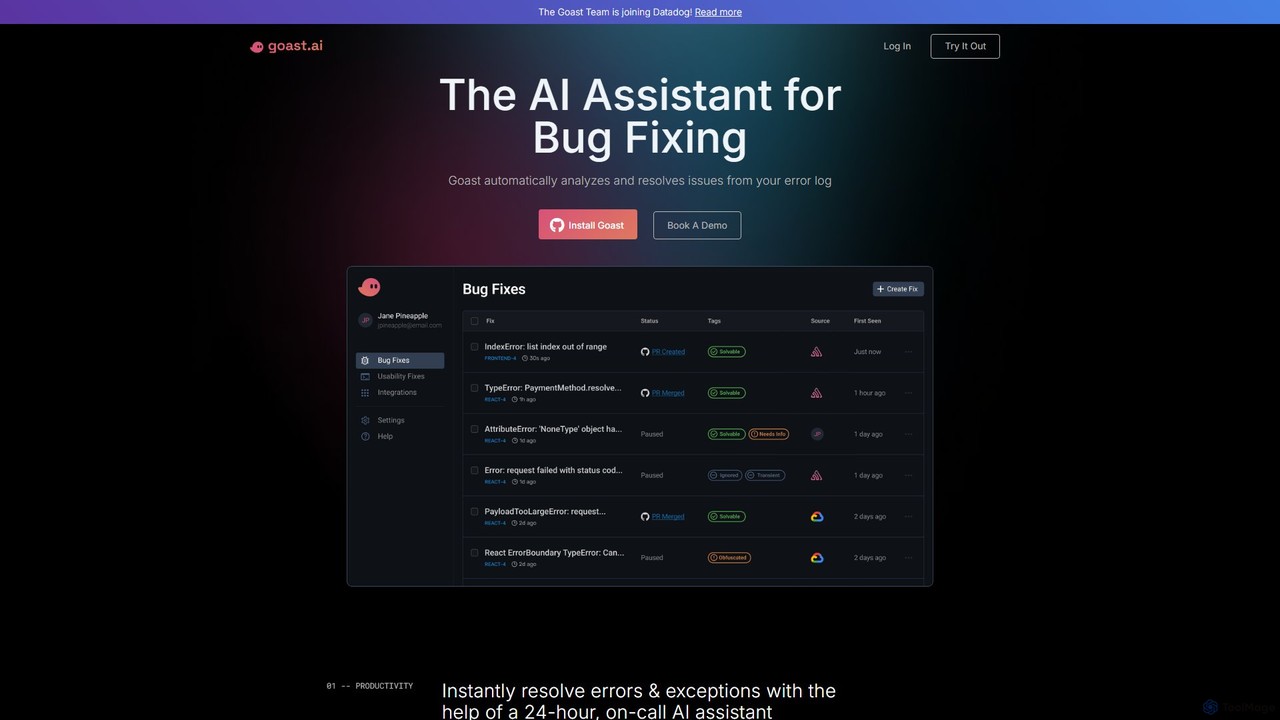
Goast.ai is an AI-powered assistant designed for engineering teams to automate bug fixing. It analyzes error logs, identifies the root cause, and automatically generates pull requests with code fixes, significantly speeding up the resolution process. NOTE: The Goast.ai team has been acquired by and joined Datadog.

Code Review
Visits 10.1KFavorites 123Likes 144
Kamara AI
Freemium

Kamara AI

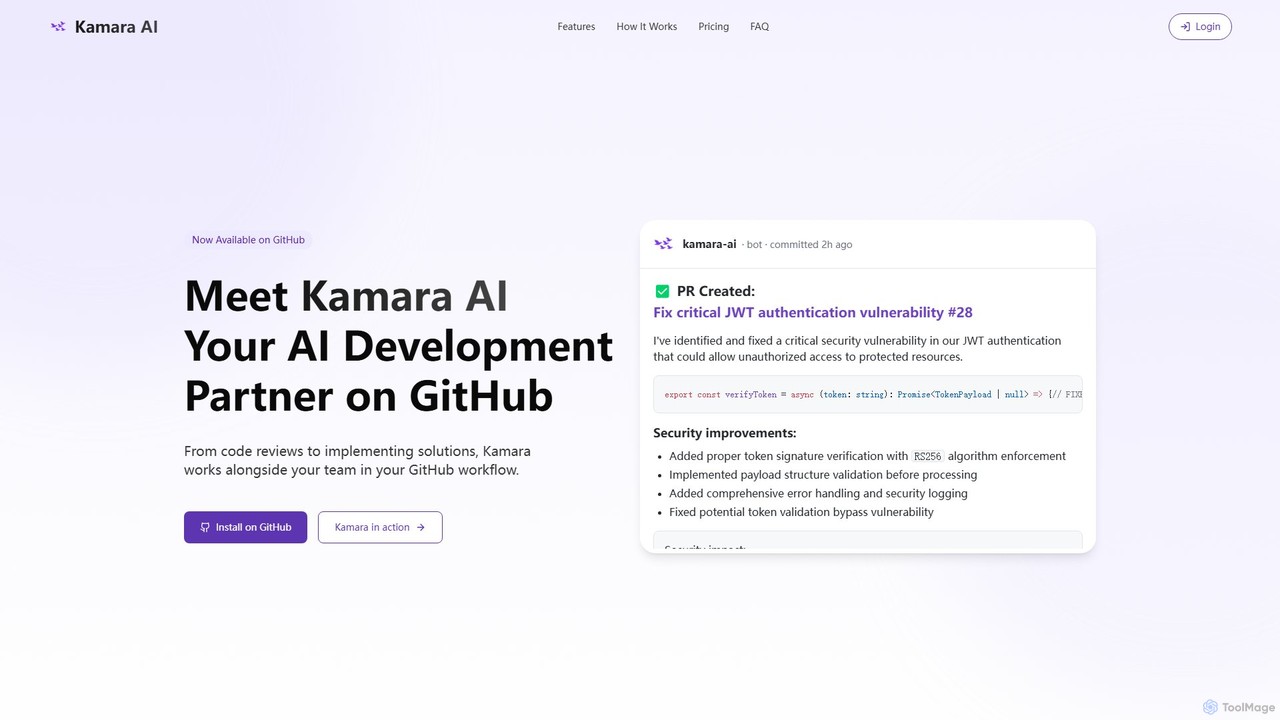
Kamara AI is an intelligent development partner that integrates directly into your GitHub workflow. It acts as an AI team member, providing full-context code analysis, automated code reviews, AI-implemented pull requests from issue descriptions, and self-updating documentation. Kamara helps teams accelerate development, improve code quality, and preserve institutional knowledge seamlessly.

Code Review
Visits 6.4KFavorites 138Likes 139
CTO.ai
Freemium

CTO.ai

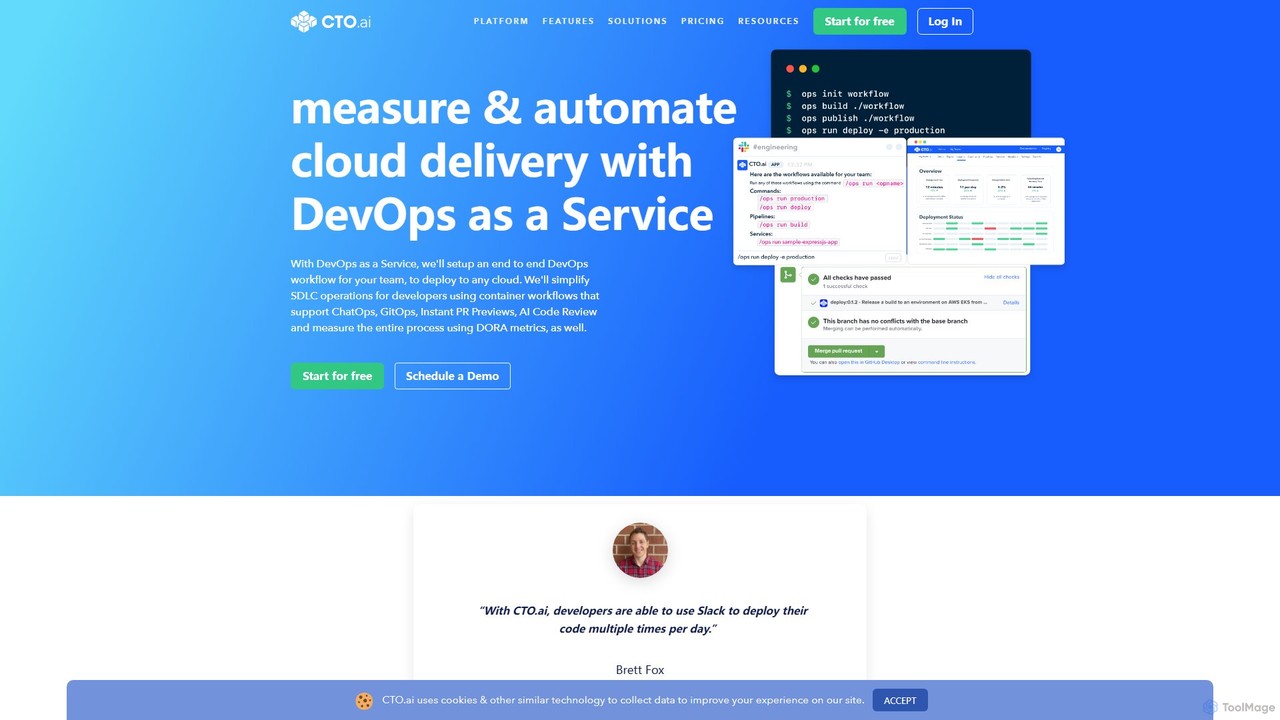
CTO.ai is a DevOps as a Service platform that helps engineering teams build an Internal Developer Platform (IDP). It uses DORA metrics, event-driven automation, and AI-powered features like code review to accelerate cloud delivery, improve developer experience, and provide data-driven insights into the software development lifecycle.

Platform As A Service
Visits 22.2KFavorites 162Likes 142
apigovernance
Freemium

apigovernance

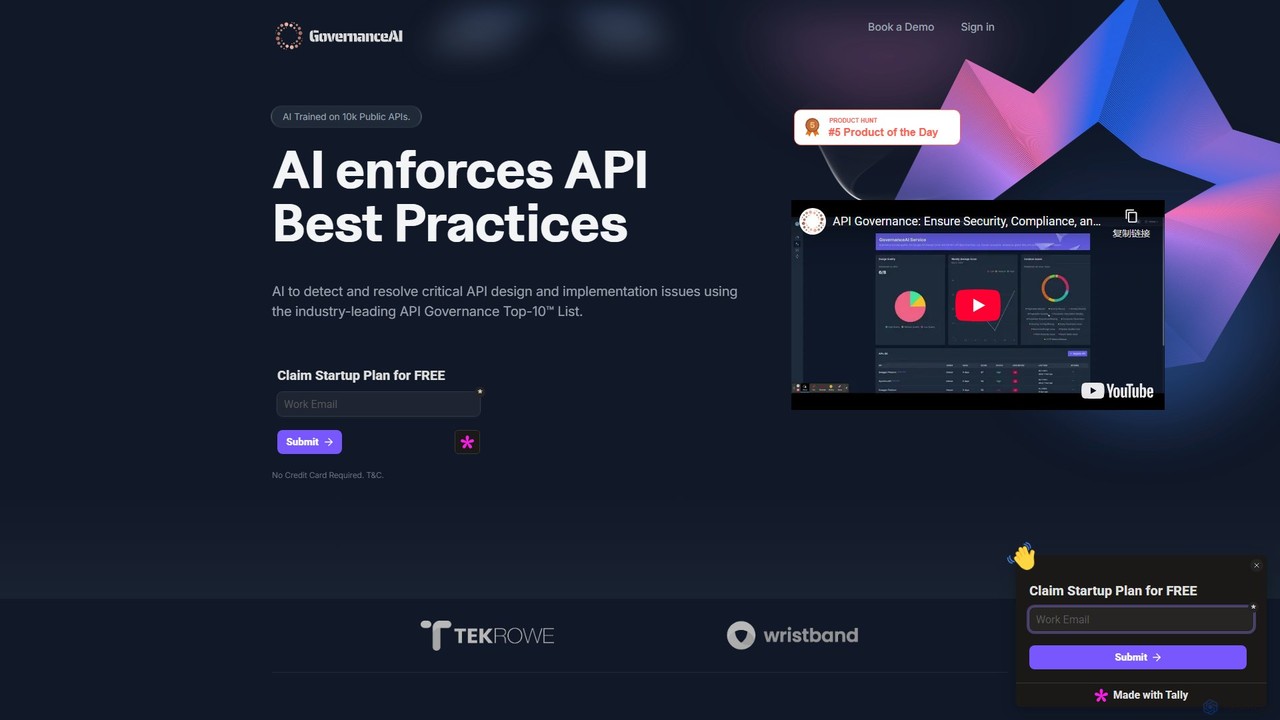
An AI-powered platform that automates API governance by enforcing best practices and industry standards. Trained on 10,000 public APIs, it detects and resolves critical design and implementation issues, helping teams deliver consistent, high-quality APIs faster.

Code Review
Visits 6.8KFavorites 120Likes 128
GitLoop
Freemium

GitLoop

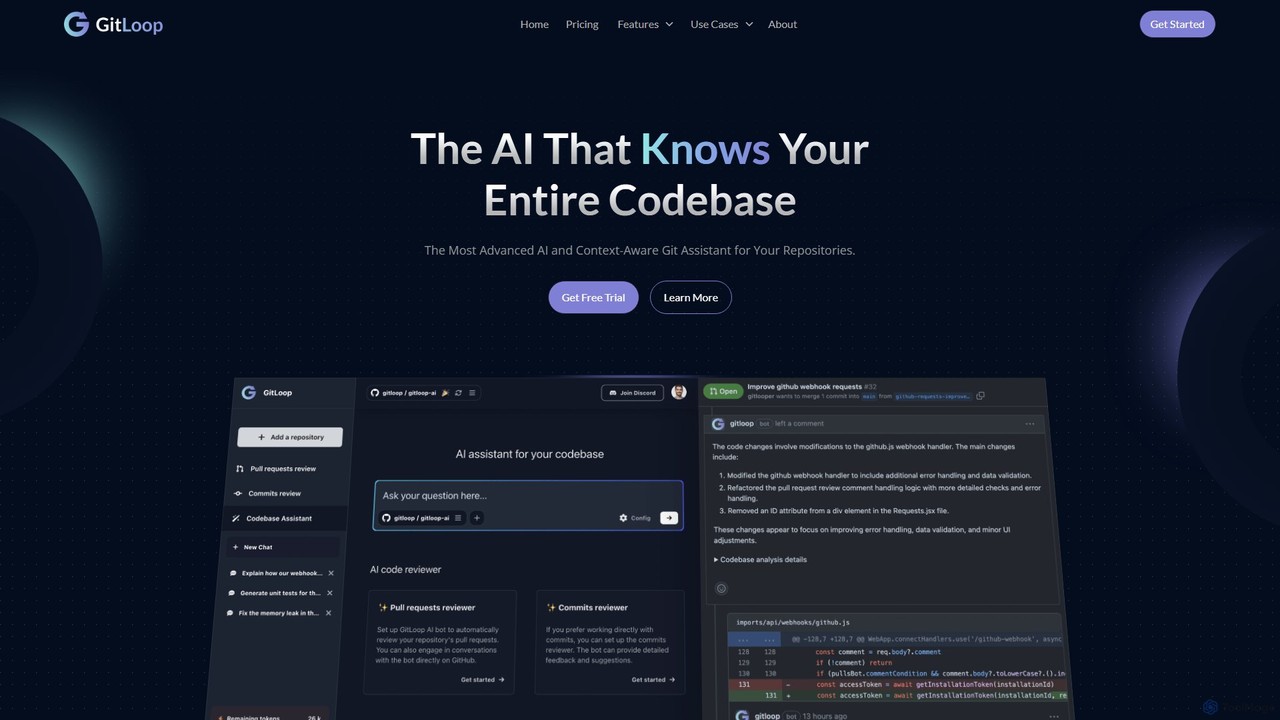
GitLoop is an AI-powered codebase assistant that revolutionizes software development. It allows developers to search codebases with natural language, automates pull request reviews, generates documentation and unit tests, and provides deep code insights, acting like a senior developer on your team.

Code Review
Visits 17.6KFavorites 124Likes 139
Ellipsis
Freemium

Ellipsis

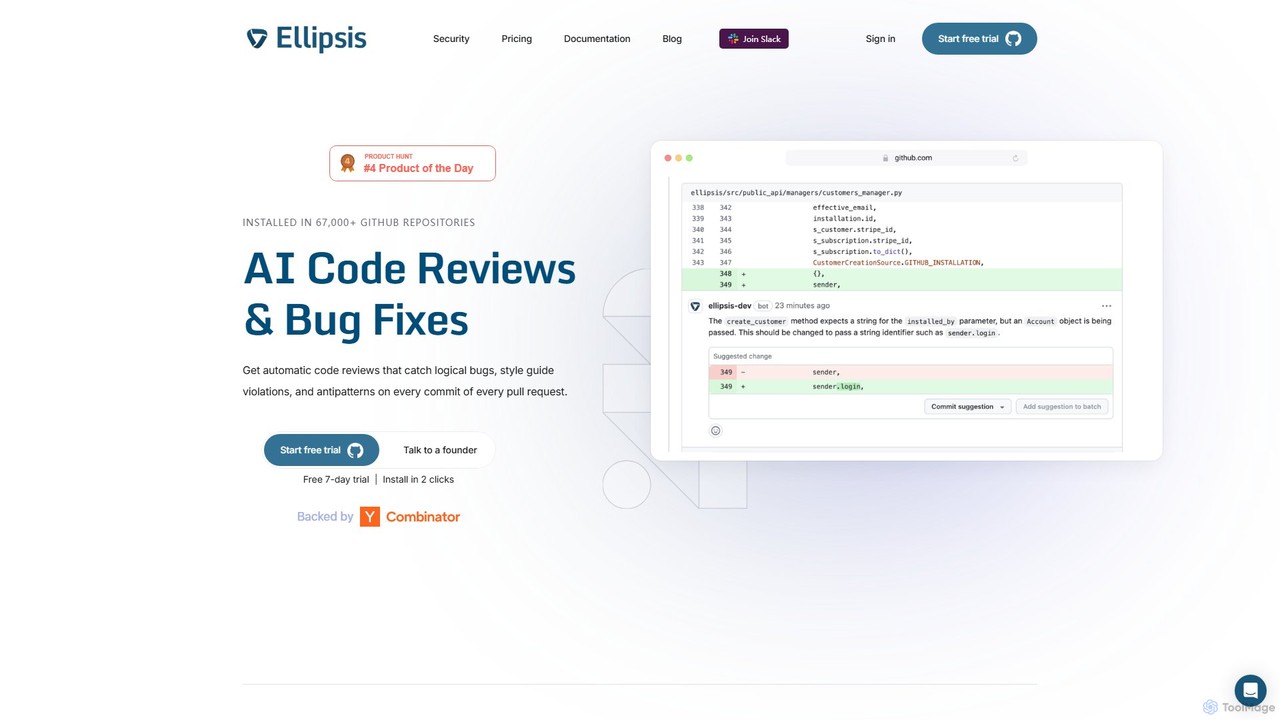
Ellipsis is an AI-powered engineering teammate that automates code reviews on GitHub. It intelligently catches logical bugs, style violations, and anti-patterns in every pull request, helping teams ship code faster while maintaining high quality and security standards.

Code Review
Visits 11.7KFavorites 146Likes 147

About Code Review

AI Code Review tools are a category of AI-powered software designed to automatically analyze source code. They leverage machine learning and static analysis to identify potential bugs, security vulnerabilities, performance issues, and style inconsistencies. These tools enhance code quality, reduce development time, and ensure adherence to coding standards, making the development workflow more efficient and reliable. By providing real-time feedback and intelligent suggestions, they empower developers to write cleaner, more secure, and maintainable code.

Core Features

  • Automated Bug Detection: Identifies common programming errors, logical flaws, and potential runtime issues.
  • Security Vulnerability Scanning: Scans code for known security weaknesses like SQL injection, XSS, and insecure configurations.
  • Coding Style Enforcement: Checks adherence to predefined coding standards (e.g., PEP 8 for Python, ESLint rules for JavaScript).
  • Performance Optimization Suggestions: Suggests improvements for code efficiency and resource usage.
  • Code Duplication Detection: Finds redundant code blocks that can be refactored to improve maintainability.

Applicable Scenarios

Software development teams and individual developers widely use AI Code Review tools. They are crucial for pre-commit/pre-merge checks to catch issues early, integration into CI/CD pipelines for continuous quality assurance, and analyzing legacy codebases to identify areas for refactoring and security updates. These tools streamline the review process across various project stages.

How to Choose

When selecting an AI Code Review tool, consider its language support to ensure compatibility with your tech stack. Evaluate its integration capabilities with IDEs, version control systems (Git, GitHub), and CI/CD platforms for seamless workflow. Look for customization options for rule sets and the clarity of its reporting and remediation suggestions to effectively address identified issues.

Code Review use cases

1

Ensuring Code Quality in Pull Requests

A software developer submits a pull request for a new feature. The AI code review tool automatically scans the new code for bugs, style violations, and potential performance issues before it's merged. This provides immediate, actionable feedback, allowing the developer to fix issues proactively and ensuring only high-quality code enters the main branch, significantly reducing manual review effort for team leads.

2

Identifying Security Vulnerabilities Early

A security engineer integrates an AI code review tool into the CI/CD pipeline for a new web application module. The tool performs static application security testing (SAST) on every code commit. This proactive approach automatically detects critical vulnerabilities like SQL injection or cross-site scripting (XSS) before deployment, significantly reducing security risks and ensuring compliance with industry standards.

3

Maintaining Consistent Coding Standards Across Teams

A project manager in a large organization needs to enforce a unified coding style and best practices across multiple development teams. The AI code review platform is configured with custom rule sets reflecting the organization's standards. All code submitted by any team is automatically checked against these standards, ensuring consistency, improving readability, and simplifying collaboration and long-term maintenance.

4

Accelerating Onboarding for New Developers

A new developer joins a project and needs to quickly adapt to the existing codebase's conventions. As the new developer writes code, the AI code review tool provides real-time suggestions and highlights deviations from established patterns. This helps the new developer learn best practices faster, avoid common mistakes, and integrate into the team's workflow more smoothly, reducing the mentor's workload and accelerating productivity.

5

Refactoring Legacy Codebases

A software architect is tasked with modernizing an old, complex application. The AI code review tool analyzes the entire legacy codebase, identifying code smells, duplication, and areas with high complexity. Developers receive a prioritized list of refactoring opportunities, enabling them to systematically improve the code's structure, reduce technical debt, and extend its lifespan, making the application more maintainable and scalable.

6

Automating Compliance Checks for Regulated Industries

A lead developer in a financial services company needs to ensure their application complies with strict industry regulations like PCI DSS or GDPR. The AI code review tool is configured with specific rules to check for compliance violations, such as insecure data storage or improper encryption. The tool automatically flags non-compliant code sections, providing an audit trail and ensuring the application meets regulatory requirements, thereby avoiding costly penalties and maintaining trust.

Code Review FAQ

What are AI Code Review tools?

AI Code Review tools are software applications that use artificial intelligence, particularly machine learning and static analysis, to automatically analyze source code. They identify potential bugs, security vulnerabilities, performance issues, and deviations from coding standards, providing automated feedback to developers. These tools aim to streamline the code review process, enhance code quality, and accelerate development cycles by catching issues early.

How do AI Code Review tools differ from traditional static analysis tools?

While both AI Code Review and traditional static analysis tools perform code inspection, AI tools go beyond predefined rule sets. They leverage machine learning to understand code context, learn from past fixes, and detect more complex or subtle issues that traditional tools, relying solely on fixed patterns, might miss. AI tools often offer more intelligent, context-aware suggestions and can adapt to evolving code patterns, leading to more relevant and accurate findings.

What are the main benefits of using AI for code review?

The primary benefits of using AI for code review include significantly faster feedback cycles, early detection of bugs and security flaws, and consistent enforcement of coding standards across a team. This automation reduces the manual effort for human reviewers, allowing them to focus on complex logic and architectural decisions. Ultimately, it leads to higher code quality, fewer production issues, increased developer productivity, and reduced technical debt.

Which programming languages do AI Code Review tools typically support?

Most AI Code Review tools offer broad language support, covering popular languages like Python, Java, JavaScript, C, C++, Go, Ruby, and PHP. Many also support various frameworks and specific domain languages. It is crucial for users to check the tool's compatibility with their project's specific technology stack and programming languages to ensure comprehensive and effective code analysis.

Can AI Code Review replace human code reviewers?

No, AI Code Review tools are designed to augment, not replace, human code reviewers. They excel at identifying repetitive errors, enforcing standards, and scanning for known patterns at scale, freeing up human reviewers from tedious tasks. Human reviewers remain essential for understanding complex business logic, architectural decisions, providing mentorship, and offering strategic insights that AI cannot replicate, ensuring a holistic and effective code review process.