Postlog
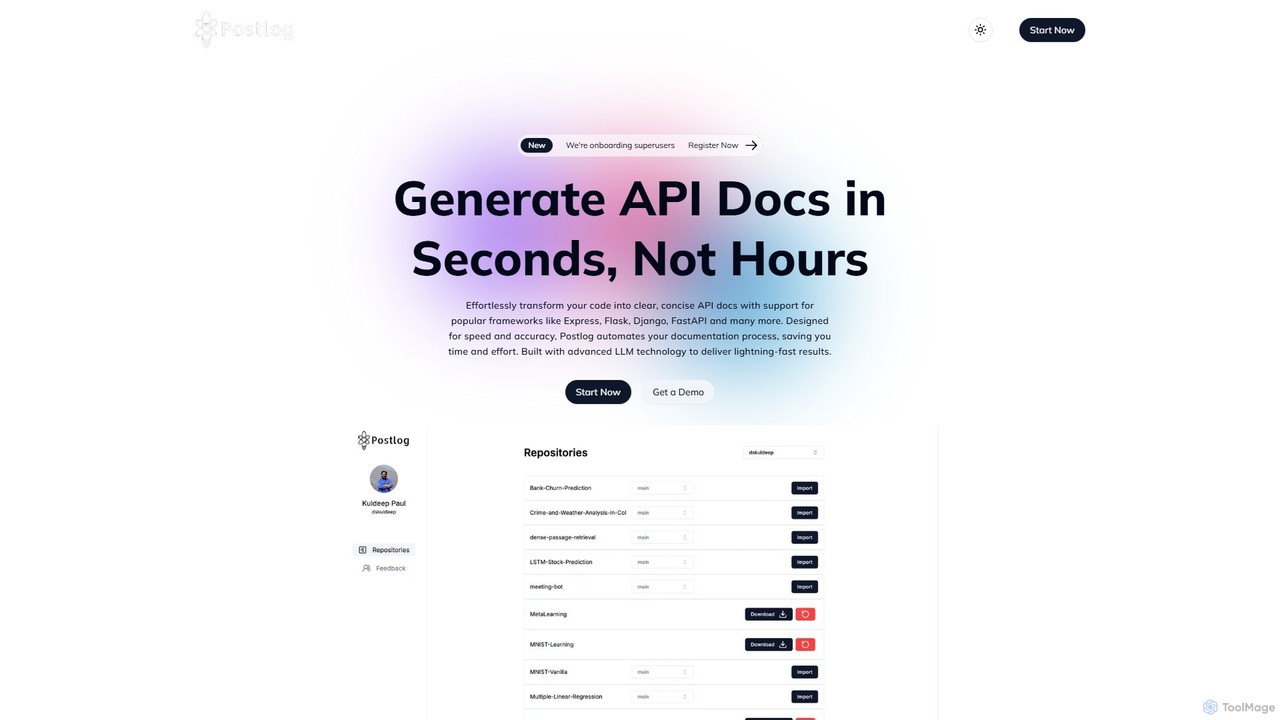
Postlog is an AI-powered tool that automatically generates comprehensive API documentation from your codebase in seconds. It supports …
Postlog is an AI-powered tool that automatically generates comprehensive API documentation from your codebase in seconds. It supports multiple frameworks like Express, Flask, and Django, using an LLM to ensure accuracy and clarity, saving developers significant time and effort.
FlowTestAI
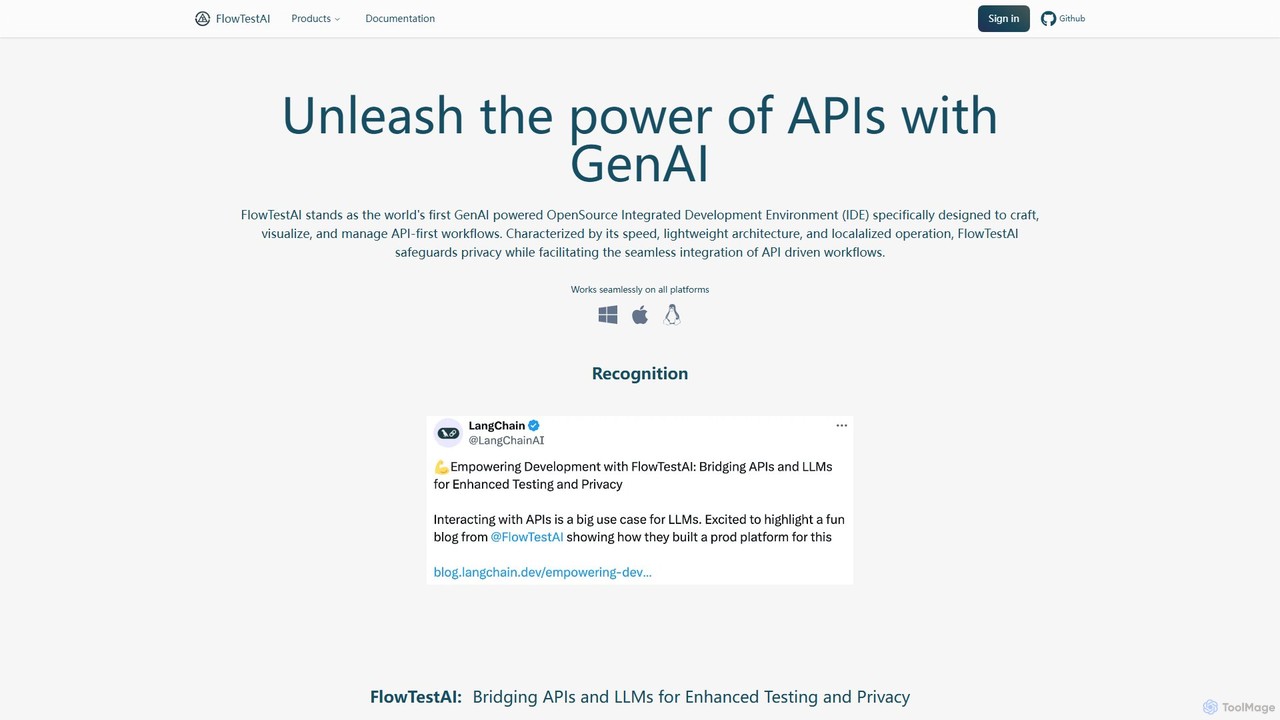
FlowTestAI is the first open-source, GenAI-powered IDE for API-first workflows. It allows developers to describe end-to-end user experiences …
FlowTestAI is the first open-source, GenAI-powered IDE for API-first workflows. It allows developers to describe end-to-end user experiences in natural language and automatically translates them into executable API tests. Featuring a visual interface, CLI for CI/CD integration, and an analytics dashboard, it simplifies API testing, enhances collaboration, and prioritizes privacy with local operation.
About Api Management
API Management tools are a class of AI-powered solutions designed to oversee the entire lifecycle of Application Programming Interfaces (APIs). These platforms provide a centralized system for publishing, documenting, securing, monitoring, and analyzing APIs, ensuring efficient and controlled access to digital services. They enable organizations to expose their digital assets securely, foster developer engagement, and scale their API programs effectively, serving as a critical component within the broader "Code" ecosystem for modern software development.
Core Features
- API Gateway: Manages all API traffic, enforcing security policies, routing requests, and handling authentication.
- Security & Access Control: Implements robust authentication (OAuth, API keys) and authorization mechanisms to protect APIs from unauthorized access.
- Developer Portal: Offers a self-service platform for developers to discover, subscribe to, test, and understand APIs through comprehensive documentation.
- Analytics & Monitoring: Provides real-time insights into API performance, usage patterns, error rates, and overall health for proactive management.
- Lifecycle Management: Supports versioning, deprecation, and retirement of APIs, ensuring smooth transitions and backward compatibility.
Applicable Scenarios
API Management is crucial for businesses looking to expose internal services to external partners or customers, manage a complex microservices architecture, or monetize their data and functionalities. It's widely adopted by enterprises building robust digital platforms, SaaS providers offering integrations, and organizations aiming to streamline inter-application communication securely and efficiently.
How to Choose
When selecting an API Management solution, consider its scalability to handle varying traffic loads, the breadth of its security features, and its integration capabilities with existing identity providers and development tools. Evaluate the quality of its developer portal for ease of use and comprehensive documentation, alongside its monitoring and analytics dashboards for actionable insights into API performance and adoption.

Api ManagementUse Cases
Monetizing Digital Services
A SaaS company wants to offer its core functionalities as a paid API service to third-party developers. API Management tools enable them to package APIs, set up tiered access plans, enforce rate limits, and track usage for billing, transforming their software into a revenue-generating platform.
Securing Microservices Architecture
An enterprise with a complex microservices architecture needs to ensure secure and controlled communication between internal services. An API Management solution acts as a central gateway, applying consistent security policies, authentication, and authorization across all internal APIs, preventing unauthorized access and data breaches.
Building a Partner Ecosystem
A financial institution aims to integrate with fintech partners by providing secure access to specific banking functionalities. API Management facilitates the creation of a dedicated developer portal, allowing partners to easily discover, onboard, and integrate with APIs, while ensuring strict compliance and data governance.
Managing Public APIs for Developers
A tech company releases public APIs for its platform to foster innovation and allow external developers to build complementary applications. API Management provides comprehensive documentation, SDKs, and a sandbox environment, simplifying the developer experience and accelerating adoption of their API offerings.
Ensuring API Versioning and Deprecation
As an application evolves, its underlying APIs often require updates or changes. API Management tools allow developers to introduce new API versions gracefully, manage the deprecation of older versions, and communicate these changes effectively to consumers, minimizing disruption and maintaining backward compatibility.
Optimizing API Performance and Reliability
An e-commerce platform relies heavily on APIs for inventory, order processing, and payment gateways. API Management provides real-time monitoring of API health, latency, and error rates, enabling operations teams to quickly identify bottlenecks, troubleshoot issues, and ensure high availability and optimal performance for critical business functions.