

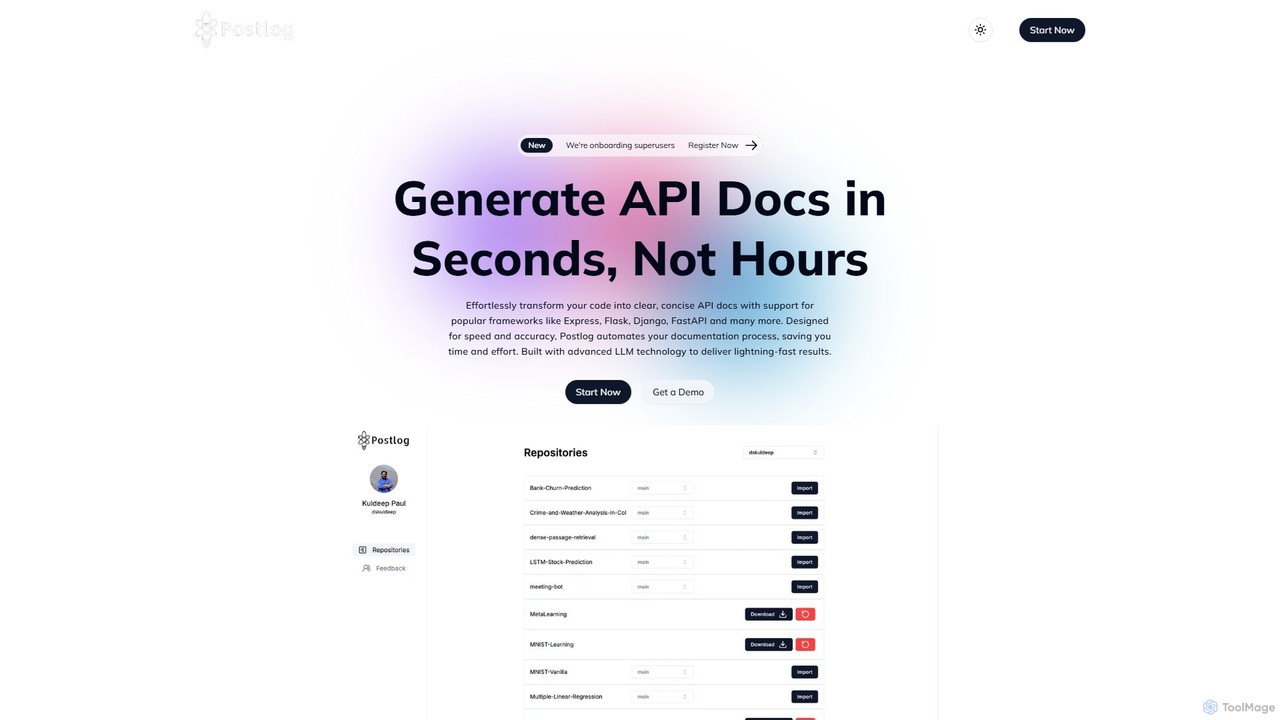
Postlog Overview
Postlog is an innovative AI-driven platform designed to revolutionize the way developers create and maintain API documentation. It addresses a common pain point in software development: the tedious, time-consuming, and error-prone process of manually documenting APIs. By leveraging a sophisticated Large Language Model (LLM), Postlog scans your codebase and instantly generates clear, structured, and comprehensive documentation, ensuring it is always synchronized with your application's latest version.
The platform's core strength lies in its speed and precision. It can parse complex codebases and produce high-quality documentation in mere seconds. This automation frees up valuable developer time, allowing them to focus on building features rather than writing documentation. Postlog's intelligent engine understands the nuances of your code, accurately identifying endpoints, parameters, request/response bodies, and data structures, transforming them into human-readable explanations.
How to use Postlog
Using Postlog is designed to be a seamless part of the development workflow. The typical process is as follows:
- Sign Up and Connect: Create an account on the Postlog website. Connect your project by integrating Postlog with your code repository (e.g., GitHub, GitLab). This is often done via a simple app installation or a configuration file.
- Initial Scan: Once connected, Postlog performs an initial scan of your codebase. Its LLM-powered engine analyzes your API endpoints, whether they are in Express, Flask, Django, Ruby on Rails, or GraphQL.
- Automatic Generation: The tool automatically generates a complete set of API documentation. This includes detailed descriptions of each endpoint, required parameters (path, query, body), data types, and example request/response payloads.
- Review and Customize: The generated documentation is presented in a clean, interactive web interface. Developers can review the documentation, add custom notes, or override AI-generated descriptions for more context.
- Continuous Integration (CI/CD): Integrate Postlog into your CI/CD pipeline. With every code push or pull request, Postlog can automatically re-scan the changes and update the documentation, ensuring it is never out of date. This creates a 'living' documentation that evolves with your code.
Core Features of Postlog
- Lightning-Fast Documentation Generation: Creates complete API docs from your code in seconds, regardless of project size.
- LLM-Powered Precision: Utilizes an advanced Large Language Model to deeply understand code logic, ensuring every endpoint, parameter, and schema is captured with high accuracy.
- Multi-Framework Support: Seamlessly works with popular API frameworks including Express.js, Flask, Django, Ruby on Rails, and GraphQL.
- Seamless CI/CD Integration: Easily integrates into existing development pipelines to automate documentation updates, guaranteeing consistency and accuracy as the code evolves.
- Interactive Documentation UI: Generates a user-friendly, searchable, and interactive documentation website where users can easily explore API endpoints and view code examples.
- Automatic Synchronization: Keeps documentation perpetually in sync with the source code, eliminating the risk of outdated information.
Use Cases for Postlog
Postlog is valuable for a wide range of scenarios:
- Internal Team Collaboration: Provides a single source of truth for internal APIs, accelerating the onboarding of new developers and improving communication between frontend and backend teams.
- Public API Portals: Helps companies create professional, clear, and always-accurate documentation for their external-facing APIs, improving the developer experience for customers and partners.
- Documenting Legacy Systems: Quickly generates a baseline of documentation for older projects that lack proper records, making them easier to maintain and modernize.
- Agile and DevOps Environments: In fast-paced development cycles, Postlog ensures documentation keeps up with frequent changes without becoming a bottleneck.
Advantages of Postlog
The primary advantages of adopting Postlog include:
- Significant Time Savings: Automates a manual task that typically consumes hundreds of developer hours.
- Enhanced Accuracy: By generating docs directly from the code, it eliminates discrepancies and human error, building trust in the documentation.
- Improved Developer Experience (DX): Well-documented APIs are easier to use and integrate, leading to faster development cycles and higher developer satisfaction.
- Accelerated Onboarding: New team members can become productive faster by relying on comprehensive and reliable API documentation.
- Streamlined Workflows: Its integration capabilities make documentation a frictionless part of the development process, not a separate chore.
Pricing and Plans
Postlog operates on a freemium model, offering plans suitable for individuals, teams, and large enterprises.
- Free Plan: Ideal for individual developers, students, and open-source projects. This plan typically includes core features for public repositories with certain usage limits.
- Pro Plan: Designed for professional teams and small to medium-sized businesses. It usually offers support for private repositories, a higher number of projects, collaboration features, and priority support.
- Enterprise Plan: A custom solution for large organizations with specific needs. This plan often includes features like single sign-on (SSO), on-premise deployment options, dedicated support, and service level agreements (SLAs).
For the most current and detailed pricing information, it is recommended to visit the official Postlog website.
Postlog Alternatives
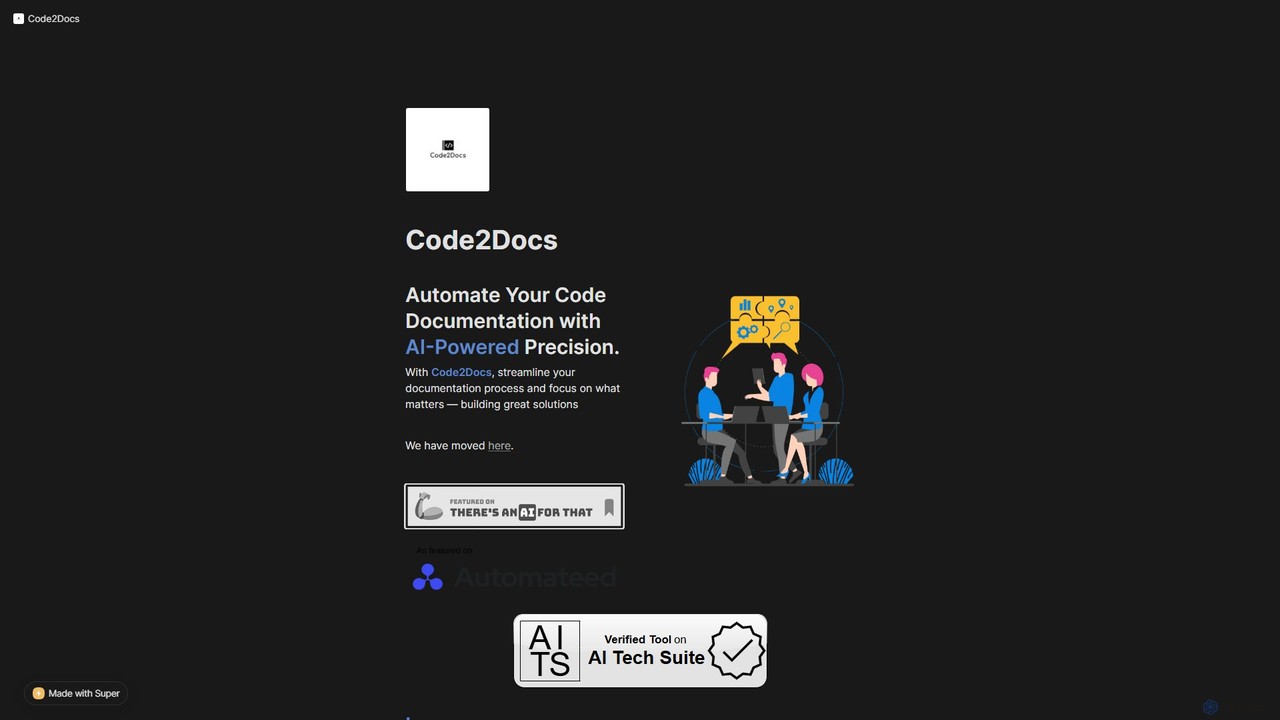
Code2Docs
Code2Docs is an AI-powered tool that automates the creation of comprehensive code documentation. By integrating directly with GitHub or accepting code uploads, it transforms complex codebases into clear, customizable guides, API references, and testing instructions, saving developers time and reducing technical debt.
Code Assistant
smolagents
smolagents is a minimalist, open-source AI agent framework developed by Hugging Face. It empowers developers to build and deploy powerful, code-first AI agents with minimal Python code. By focusing on simplicity and efficiency, it enables Large Language Models (LLMs) to interact with tools and the real world seamlessly, supporting a wide range of models and secure execution environments.
Development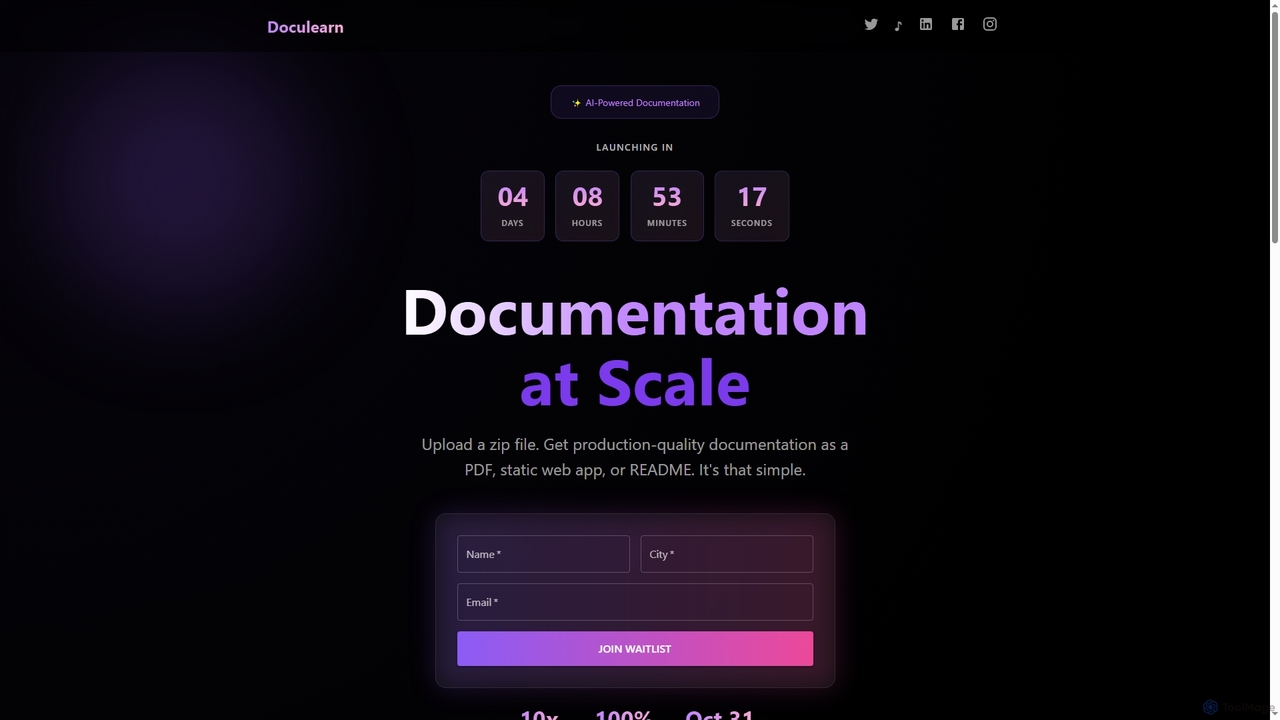
DocuLearn
An AI-powered tool that automatically generates production-quality documentation for codebases. Simply upload a zip file and receive documentation in PDF, static web app, or README formats, streamlining the development workflow.
Documentation
AutoDocs
AutoDocs is an AI-powered documentation tool designed for developers, automating the generation, updating, and refinement of technical documents. It leverages Google's Generative AI and LangChain to streamline the documentation process, allowing builders to focus more on development and less on writing.
Content Generation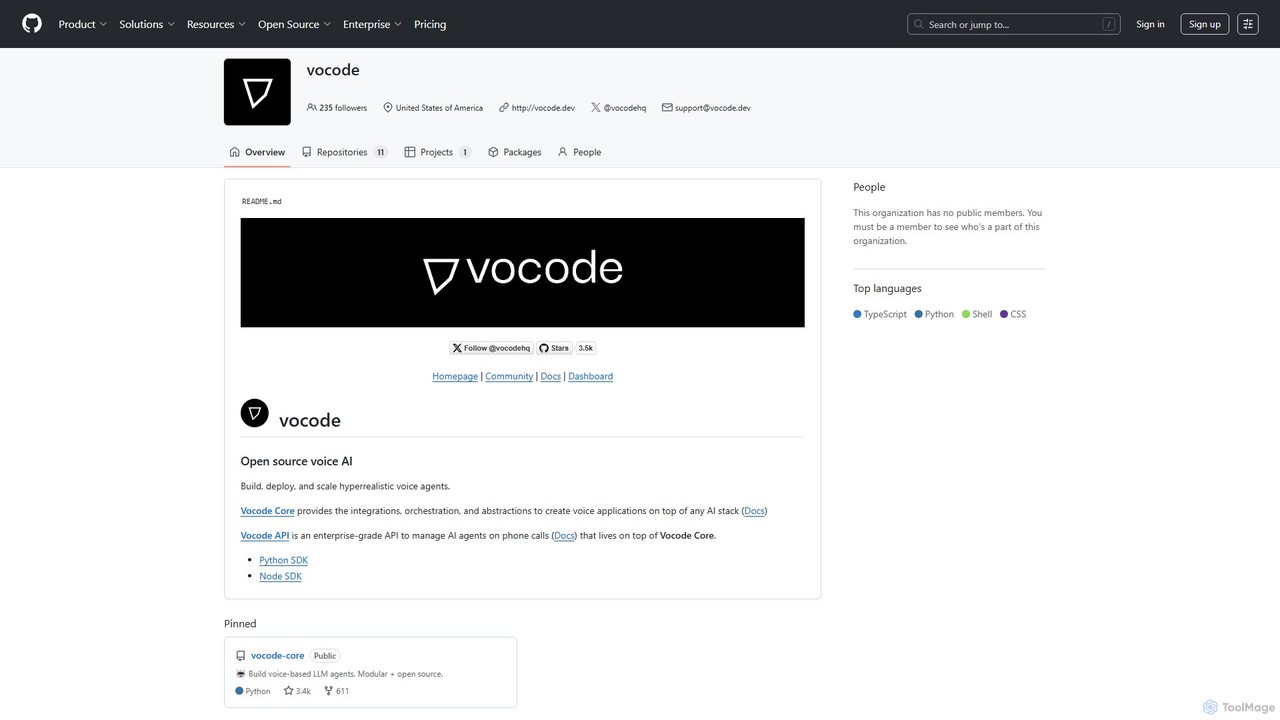
vocode
Vocode is an open-source platform for building, deploying, and scaling hyperrealistic voice AI agents. It provides developers with a core framework and an enterprise-grade API to create sophisticated voice-based LLM applications for tasks like automated customer service, sales calls, and interactive voice response (IVR) systems.
VoicebotPostlog Categories
Postlog Embed Widget
Copy this embed code to place the badge on your blog, article, or product site and send readers directly to this ToolMage detail page.

Related AI tools
smolagents
smolagents is a minimalist, open-source AI agent framework developed by Hugging Face. It empowers developers to build and deploy powerful, code-first AI agents with minimal Python code. By focusing on simplicity and efficiency, it enables Large Language Models (LLMs) to interact with tools and the real world seamlessly, supporting a wide range of models and secure execution environments.
Development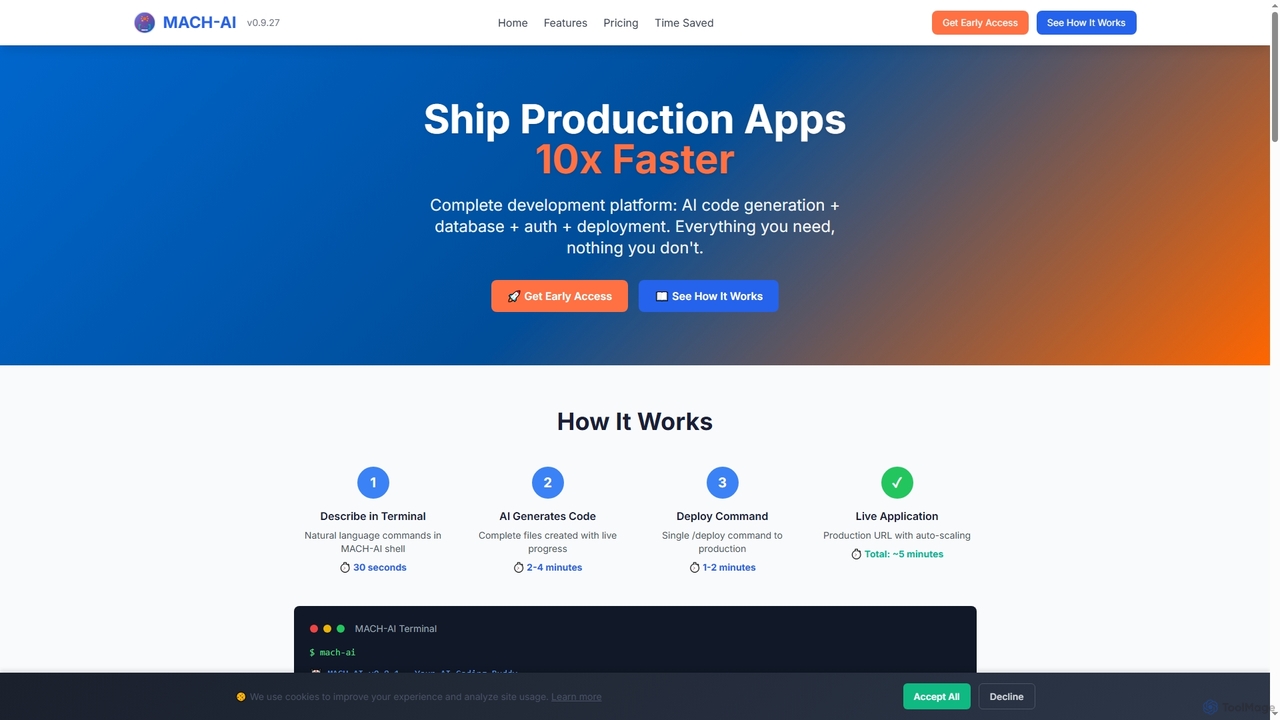
MACH-AI
MACH-AI is an AI coding assistant and complete development platform that transforms concepts into production-ready cloud applications in minutes. It integrates AI code generation, built-in database, authentication, and one-command deployment, enabling developers to build and launch scalable web applications 10x faster across Python, JavaScript, and TypeScript.
Application Deployment
Jyek
Jyek is an AI agent platform that understands objectives, creates execution plans, uses tools, and delivers verifiable results for complex, multi-step tasks.
AutomationCode2Docs
Code2Docs is an AI-powered tool that automates the creation of comprehensive code documentation. By integrating directly with GitHub or accepting code uploads, it transforms complex codebases into clear, customizable guides, API references, and testing instructions, saving developers time and reducing technical debt.
Code Assistantvocode
Vocode is an open-source platform for building, deploying, and scaling hyperrealistic voice AI agents. It provides developers with a core framework and an enterprise-grade API to create sophisticated voice-based LLM applications for tasks like automated customer service, sales calls, and interactive voice response (IVR) systems.
Voicebot
Composio
Composio is a developer platform that acts as a "skill layer" for AI agents. It enables developers to seamlessly connect their AI agents to over 10,000 tools and APIs, handling complex tasks like authentication, execution, and scaling. This allows developers to build powerful, action-oriented AI applications much faster by focusing on agent logic rather than integration plumbing.
Agent Tooling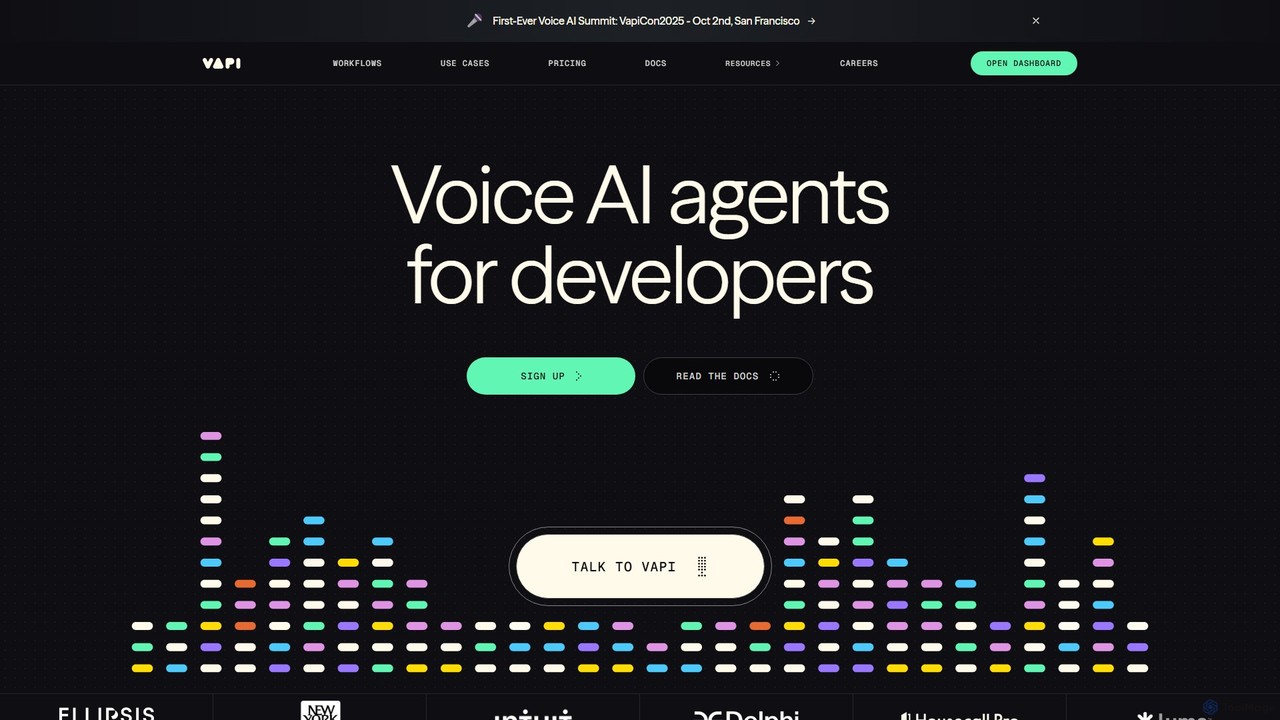
Vapi
Vapi is a developer-first API platform for building, deploying, and scaling advanced, human-like voice AI agents. It enables the creation of sophisticated conversational AI for inbound/outbound calls, in-app assistants, and more, with ultra-low latency and high configurability.
Voice Assistant
pinokio
Pinokio is a desktop browser that allows you to install, run, and control AI applications and terminal-based apps on your computer with a single click. It simplifies the complex setup of open-source AI models by automating environment creation, dependency management, and execution. This empowers users of all skill levels to experiment with powerful AI tools locally, ensuring privacy and full control over their data.
Model Deployment
Telnyx
Telnyx is a full-stack communications platform that enables developers and enterprises to build and deploy high-performance, real-time conversational AI. It integrates global telephony, dedicated AI infrastructure, and powerful APIs on a single platform, providing ultra-low latency and complete control for creating natural-sounding voice assistants and automating communication workflows.
Voice Assistant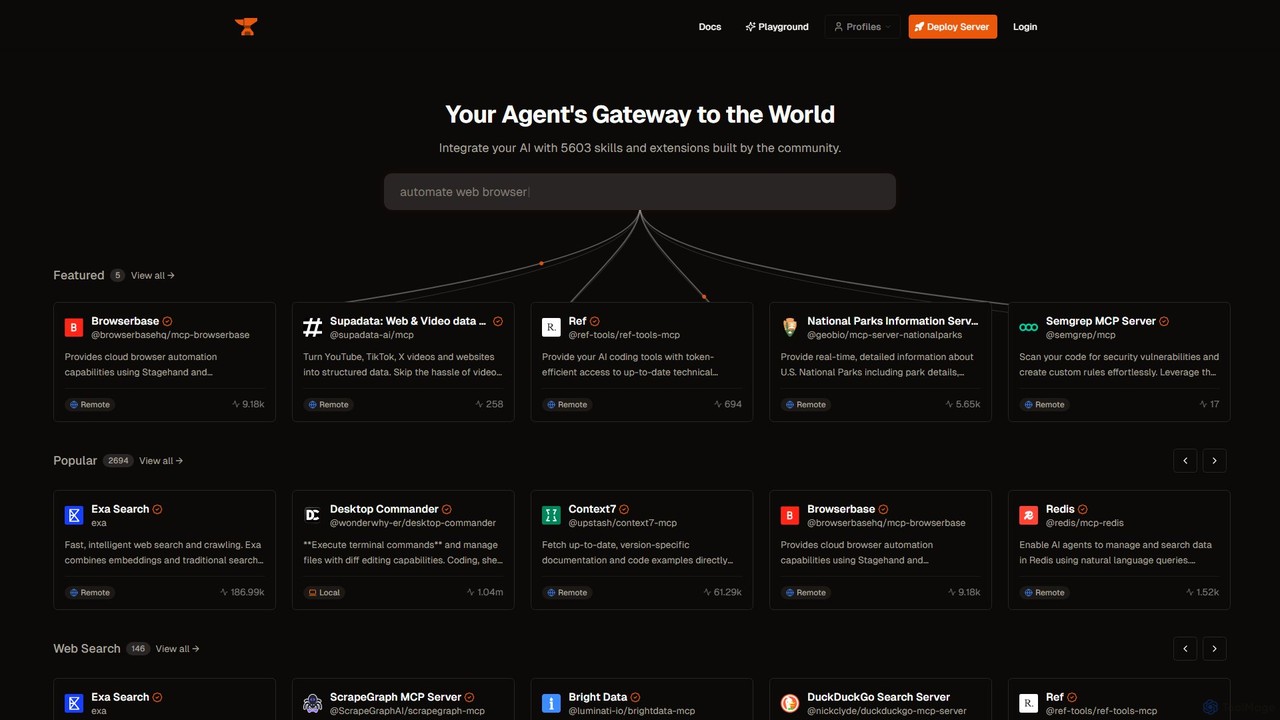
Smithery
Smithery is a registry and protocol for AI agents, providing a gateway to thousands of community-built skills and extensions. It enables developers to easily integrate external tools like web browsers, databases, and APIs into their AI applications, enhancing their capabilities and context awareness.
Database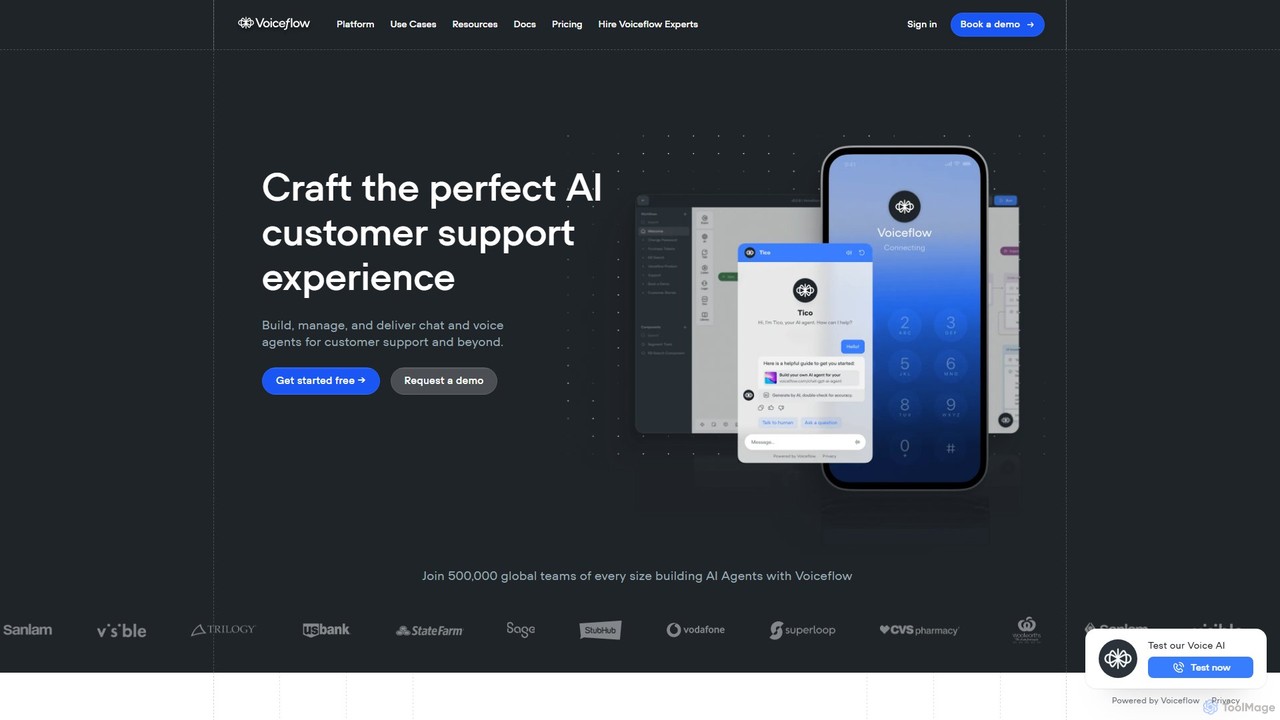
Voiceflow
Voiceflow is a collaborative platform for product teams to design, build, and deploy advanced AI agents. Create human-like voice and chat experiences for customer support and beyond, with full control, scalability, and integration capabilities, independent of any single LLM vendor.
Chatbot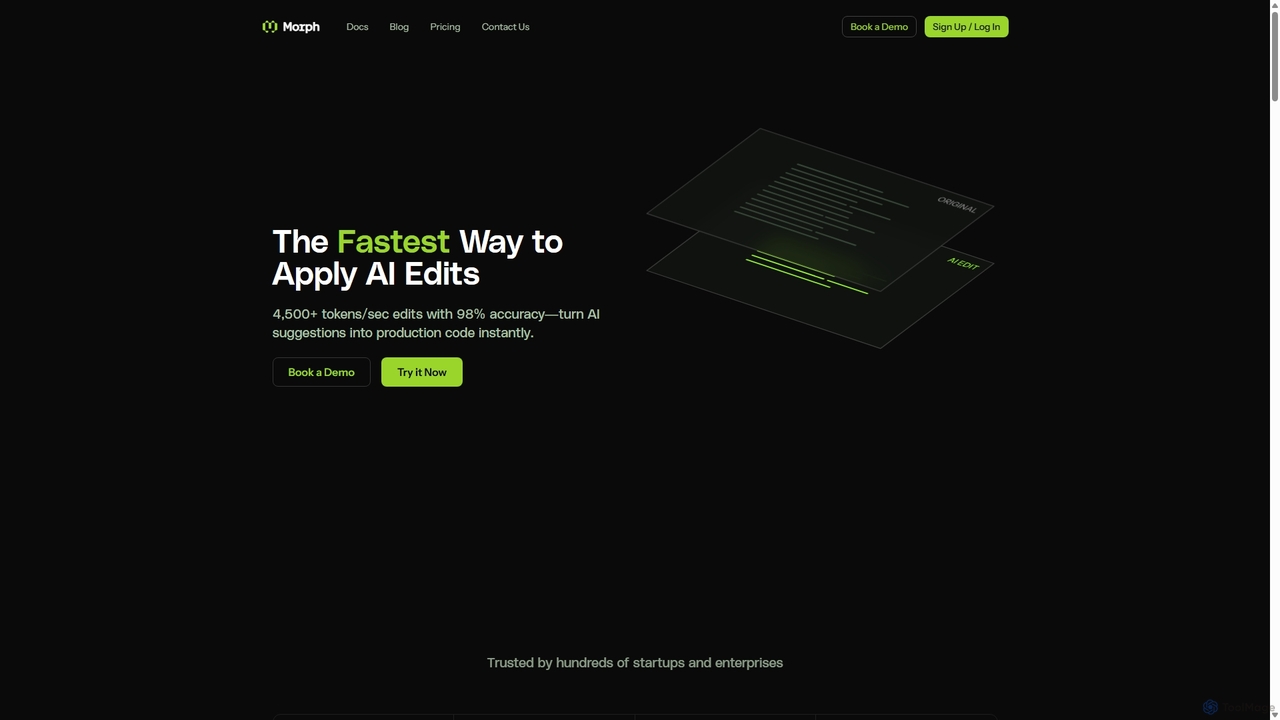
Morph
Morph is an API-first platform for developers, providing the fastest and most accurate way to apply AI-generated edits to code and files. With speeds of 4,500+ tokens/sec and 98% accuracy, it empowers AI agents to perform reliable, semantic modifications, bridging the gap between AI suggestions and production-ready implementation.
Infrastructure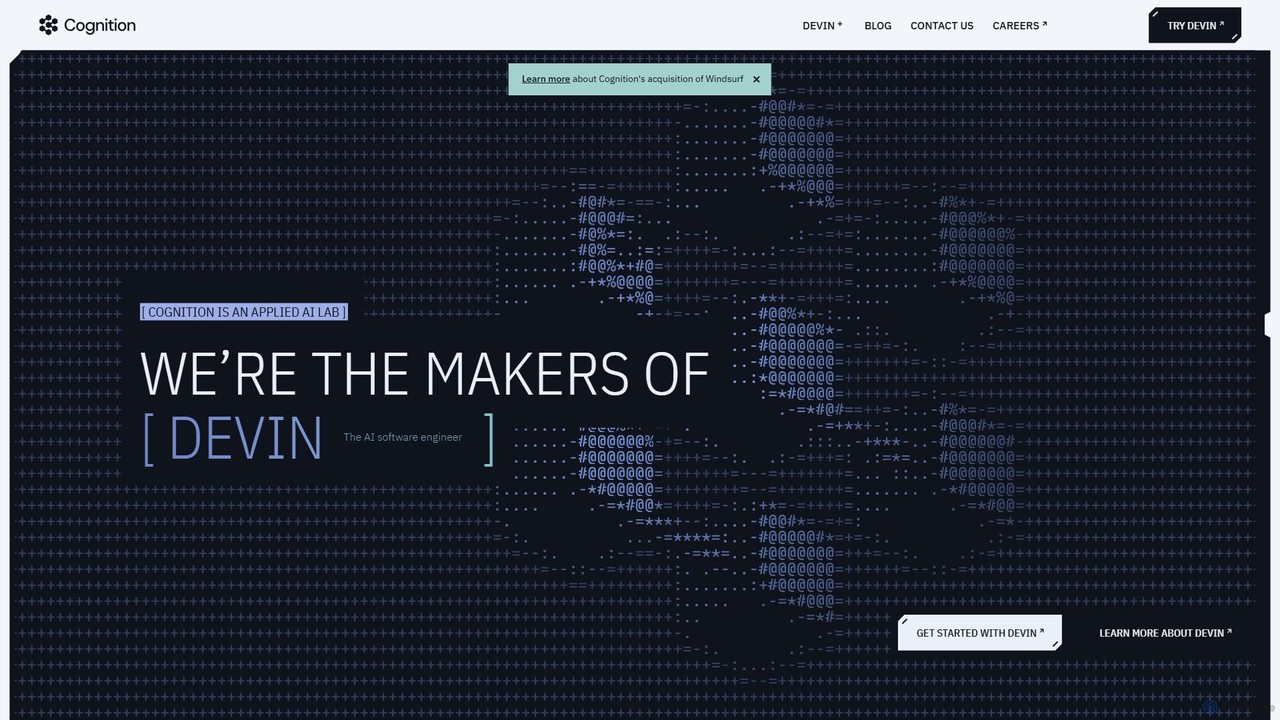
Cognition
Cognition is an applied AI lab that created Devin, the world's first fully autonomous AI software engineer. Devin is designed to handle complex, end-to-end software engineering tasks, from writing code and fixing bugs to deploying entire applications. It functions as a tireless, skilled teammate, capable of planning, executing, and collaborating on development projects.
Autonomous Agent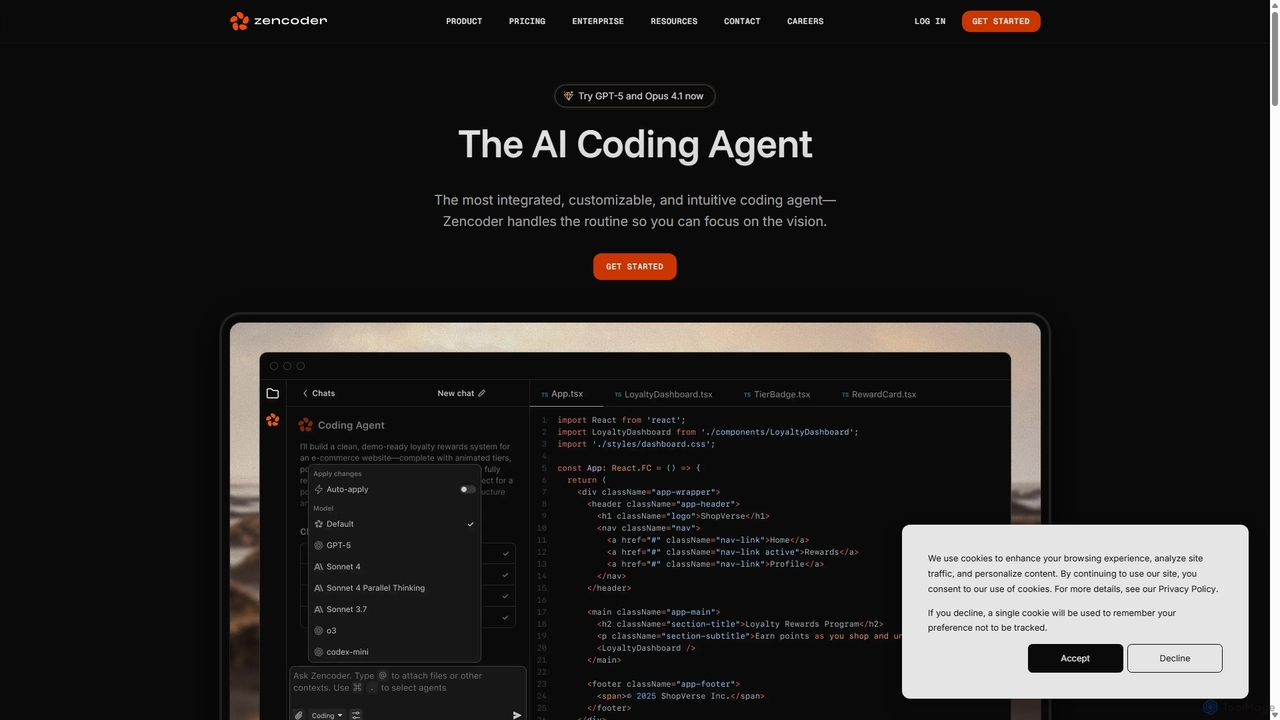
Zencoder
Zencoder is an advanced AI coding agent designed to automate routine development tasks. It deeply integrates into your workflow, understanding your entire codebase to implement features, write tests, fix bugs, and refactor code autonomously. With customizable 'Zen Agents' and seamless integration with VS Code, JetBrains, and over 100 developer tools, Zencoder empowers engineering teams to focus on innovation and ship products faster.
Code Assistant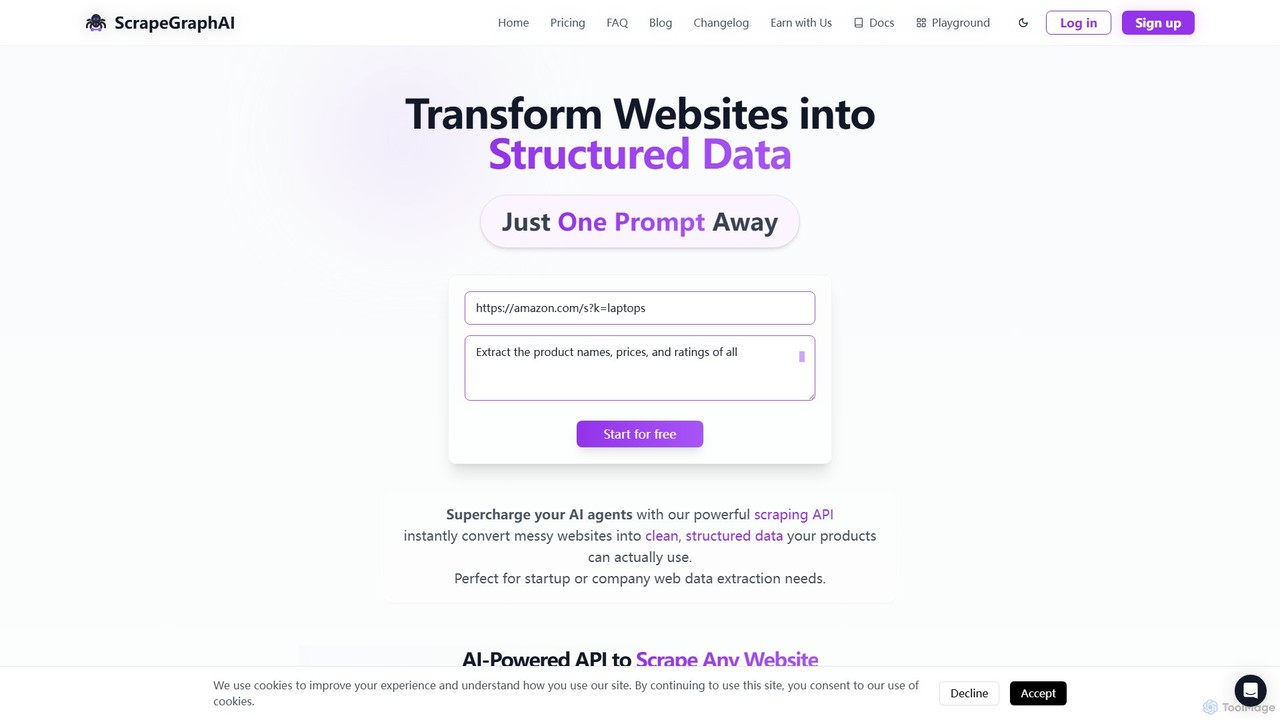
ScrapeGraphAI
ScrapeGraphAI is an AI-powered web scraping API that transforms unstructured websites into clean, structured JSON data using simple natural language prompts. Designed for developers, AI agents, and automated workflows, it simplifies data extraction without complex code.
Analytics
Postlog Comments (0)
Sign in to comment.
Sign inNo comments yet.