Free
Xannotate
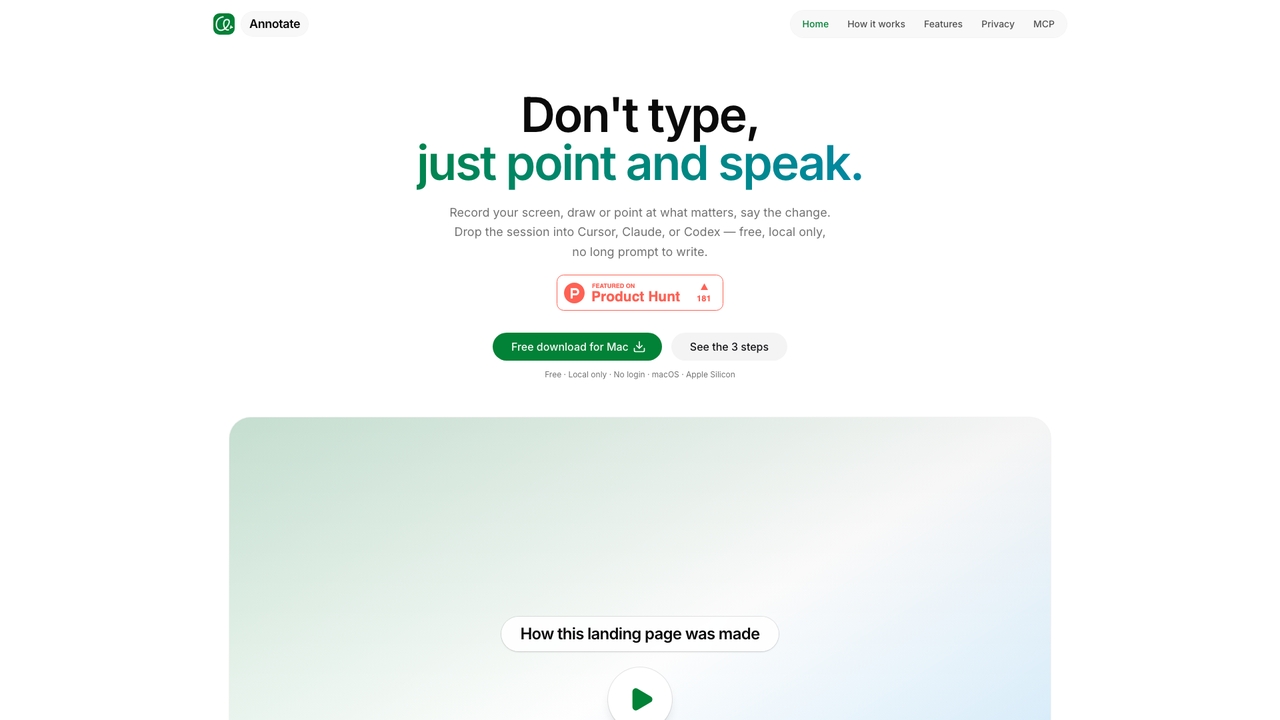
Record, point, speak, and hand off to Cursor, Claude Code, or Codex. Free, local-only macOS app.
UI AnnotationVisits 2.9KFavorites 24Likes 24
Popular Code Assistant in Developer Tools include Google Gemini, GitHub, DeepSeek, doubao, Google Labs, Qwen, Claude, Anthropic, Z.ai, and GigaChat, helping you work more efficiently.
Record, point, speak, and hand off to Cursor, Claude Code, or Codex. Free, local-only macOS app.
UI Annotation
A minimal, highly customizable terminal coding agent that adapts to your workflows. Pi leverages multiple AI providers and models, offers extensive extension capabilities, and provides various interaction modes for developers.
Code Assistant
Happycapy is an agent-native computer platform that allows AI agents to learn and adapt to your workflows. It provides a visual desktop interface where AI agents can perform tasks directly in your browser, from design and writing to automation, delivering results to your inbox while you maintain full control and visibility over the process.
Workflow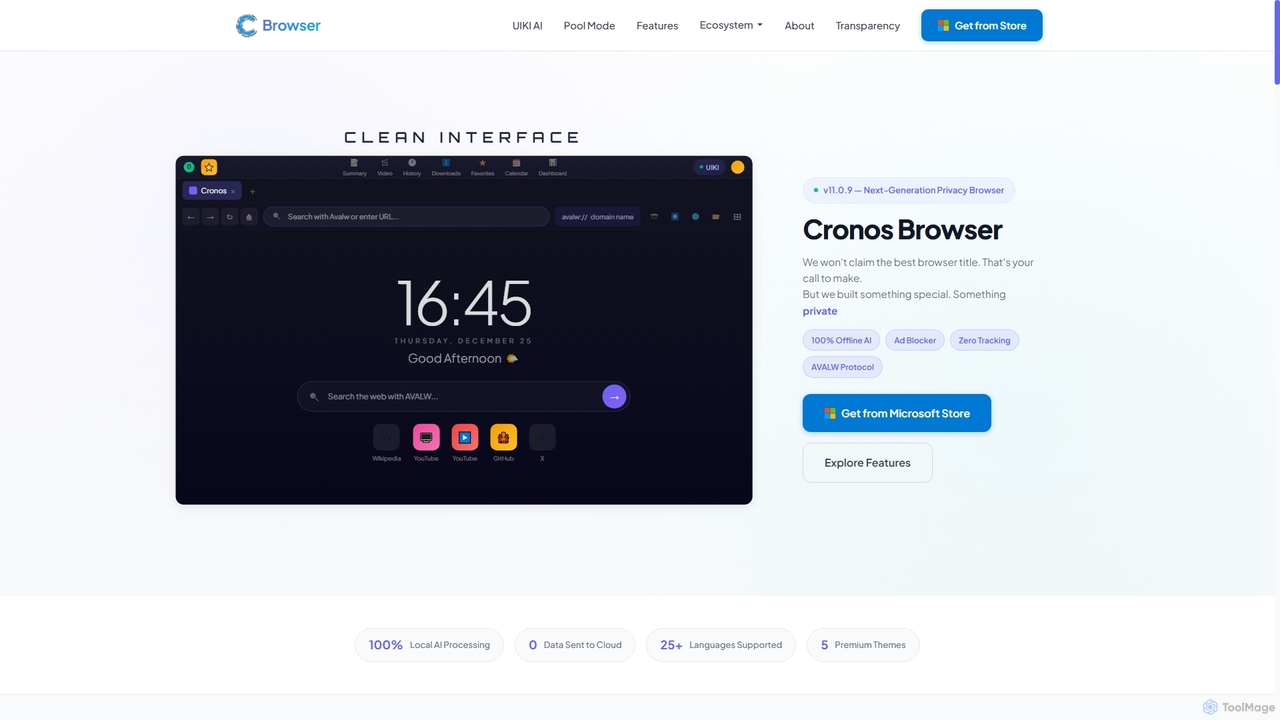
Cronos is a privacy-first web browser integrating 100% local AI, offering unparalleled data protection and enhanced performance. It features an offline AI assistant, a decentralized network, built-in ad blocking, and advanced security protocols, ensuring your browsing experience is fast, secure, and completely private without cloud data transmission.
Privacy Browser
Enso is an AI-powered development environment designed for developers to parallelize intelligence across multiple AI agents within a single project. It integrates advanced Git control, a robust code editor, and AI-driven code review, offering a seamless workflow with persistent AI sessions for each branch.
Development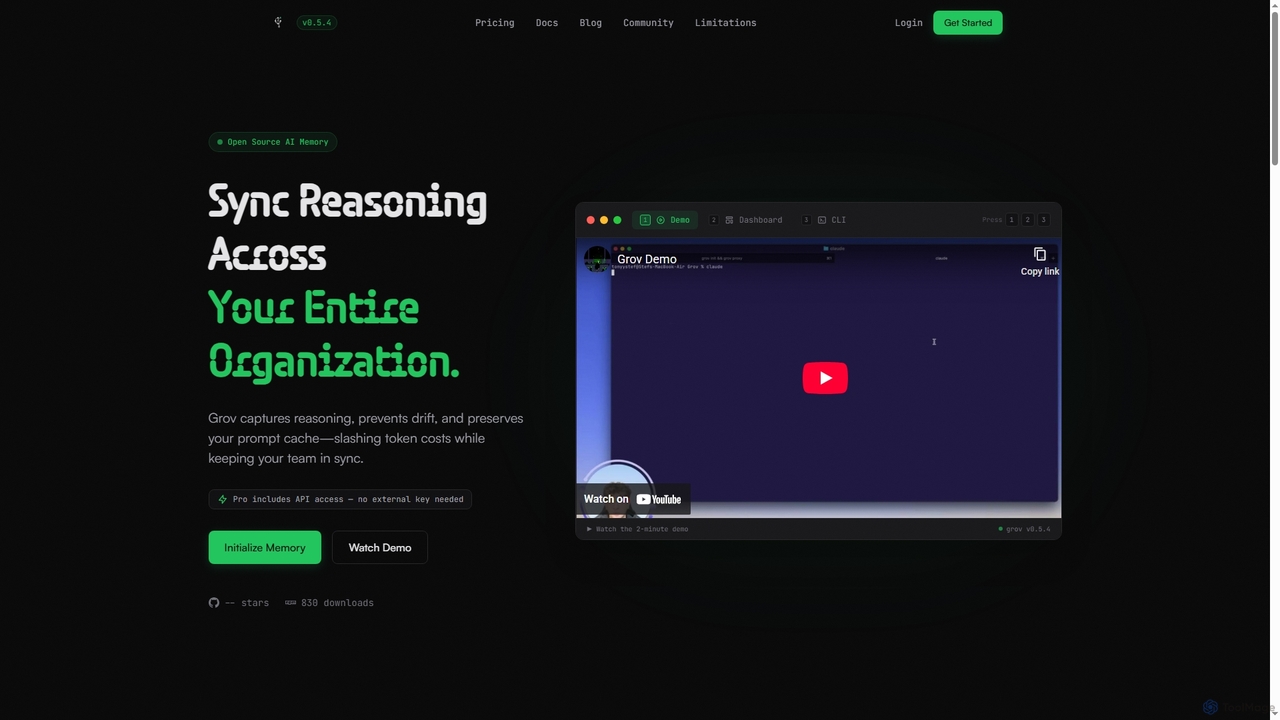
Grov is an open-source collective AI memory for engineering teams, designed to optimize Claude Code sessions. It captures reasoning, prevents AI drift, and preserves prompt caches, significantly reducing token costs and enhancing team synchronization.
Code Assistant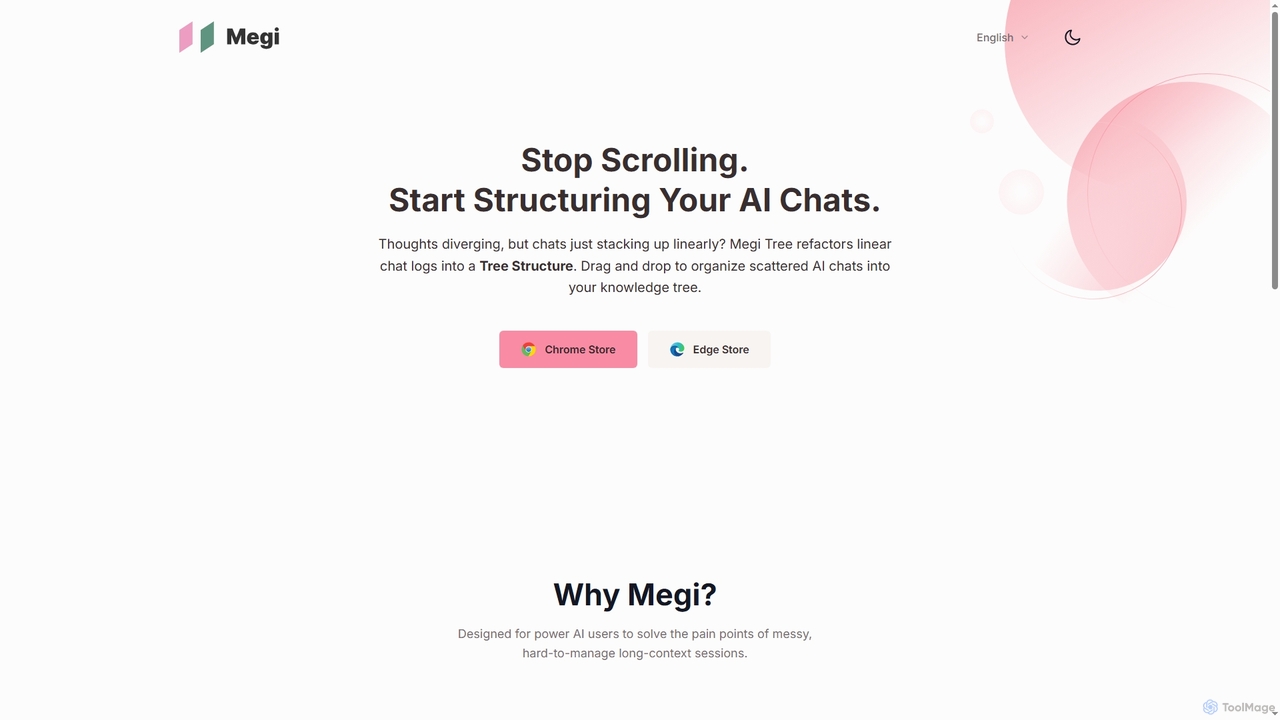
Megi is a powerful browser extension designed for advanced AI users to efficiently manage long and complex AI conversation sessions. It automatically organizes prompts into a structured directory tree, supports major AI platforms like ChatGPT and Gemini, and offers intuitive features like drag-and-drop grouping, immersive navigation, and long text folding to enhance productivity and maintain a clean interface.
Ai Management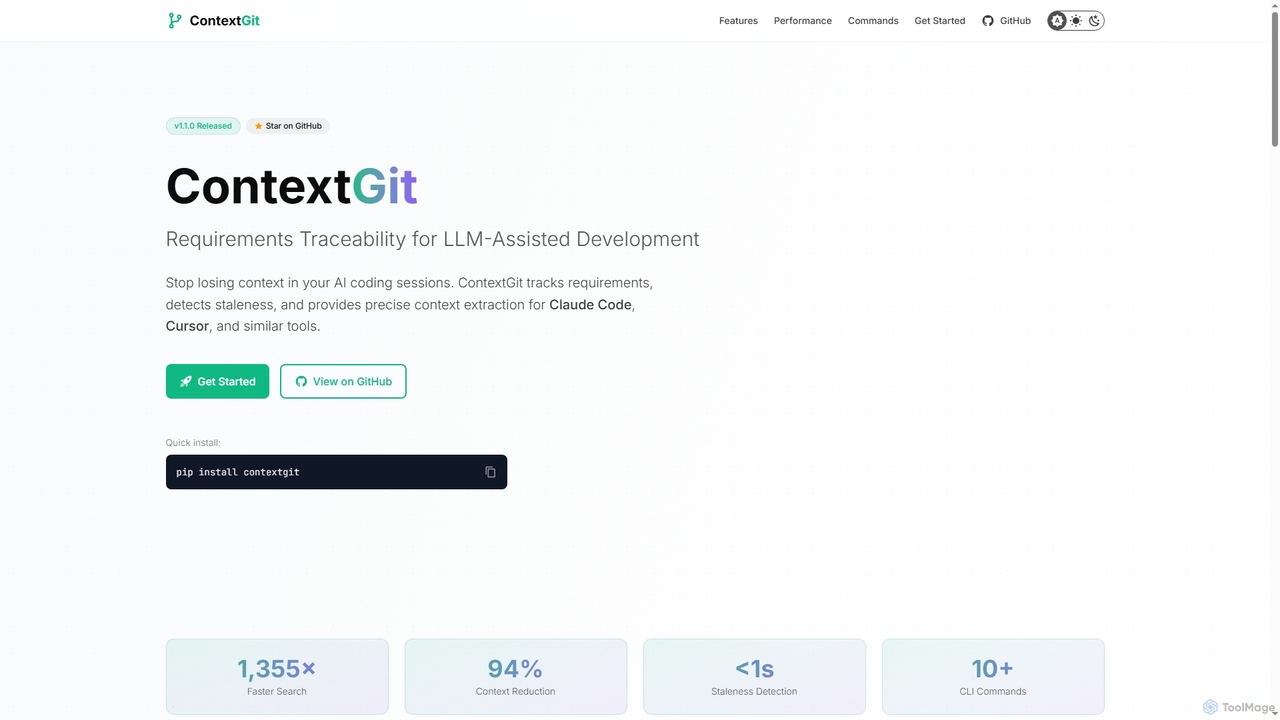
A command-line tool for developers using LLMs, providing requirements traceability, staleness detection, and precise context extraction to enhance AI-assisted coding workflows. It significantly reduces token usage and syncs AI tools with project requirements.
Code Assistant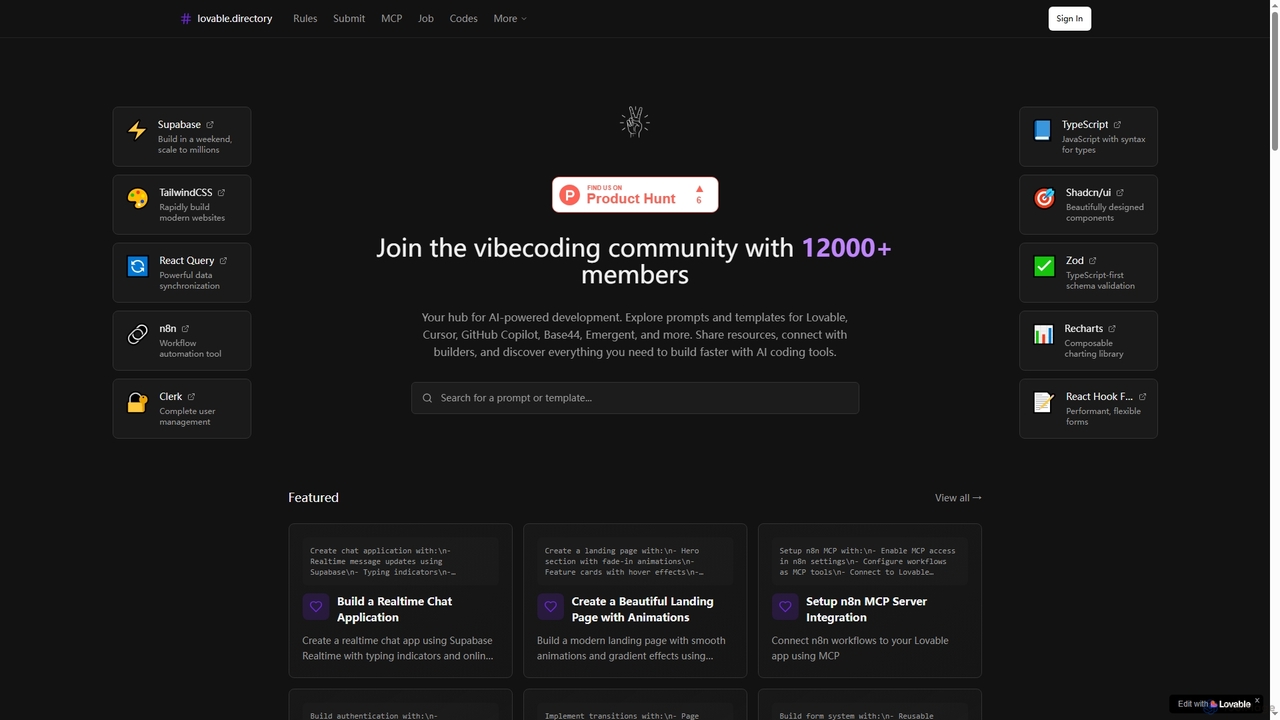
A curated directory of AI coding prompts, templates, and resources for developers using tools like Lovable, Cursor, and GitHub Copilot. It serves as a community hub to help builders accelerate development with practical guides and shared knowledge.
Code Assistant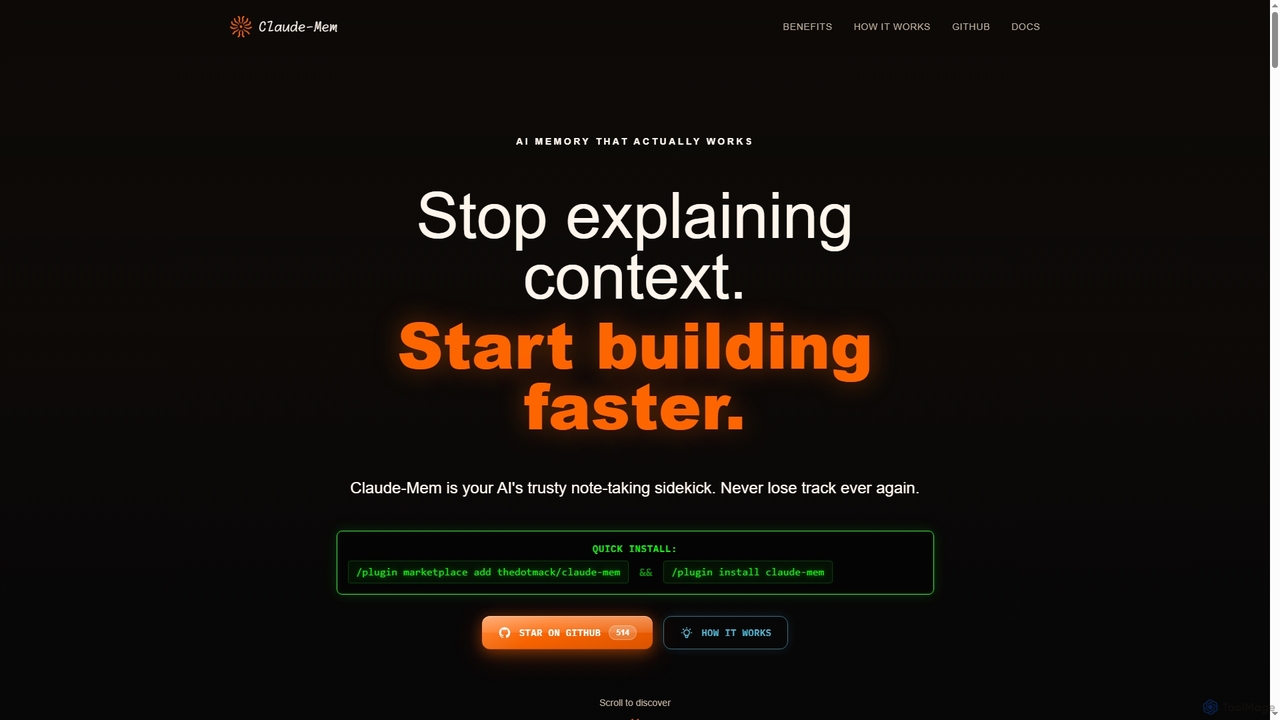
Claude-Mem is an AI memory archive designed for coding assistants. It acts as a note-taking sidekick, automatically observing and recording development context like decisions, bug fixes, and architectural choices in real-time. This provides your AI with a persistent memory across sessions, enhancing productivity and eliminating repetitive explanations.
Ai Assistant
Neurolint is a free CLI tool that automatically detects and fixes bugs in React & Next.js codebases. It uses a deterministic, rule-based 7-layer architecture, not AI, to provide precise fixes for issues like hydration errors, accessibility problems, and performance bottlenecks, ensuring your code remains valid and production-ready.
Code Assistant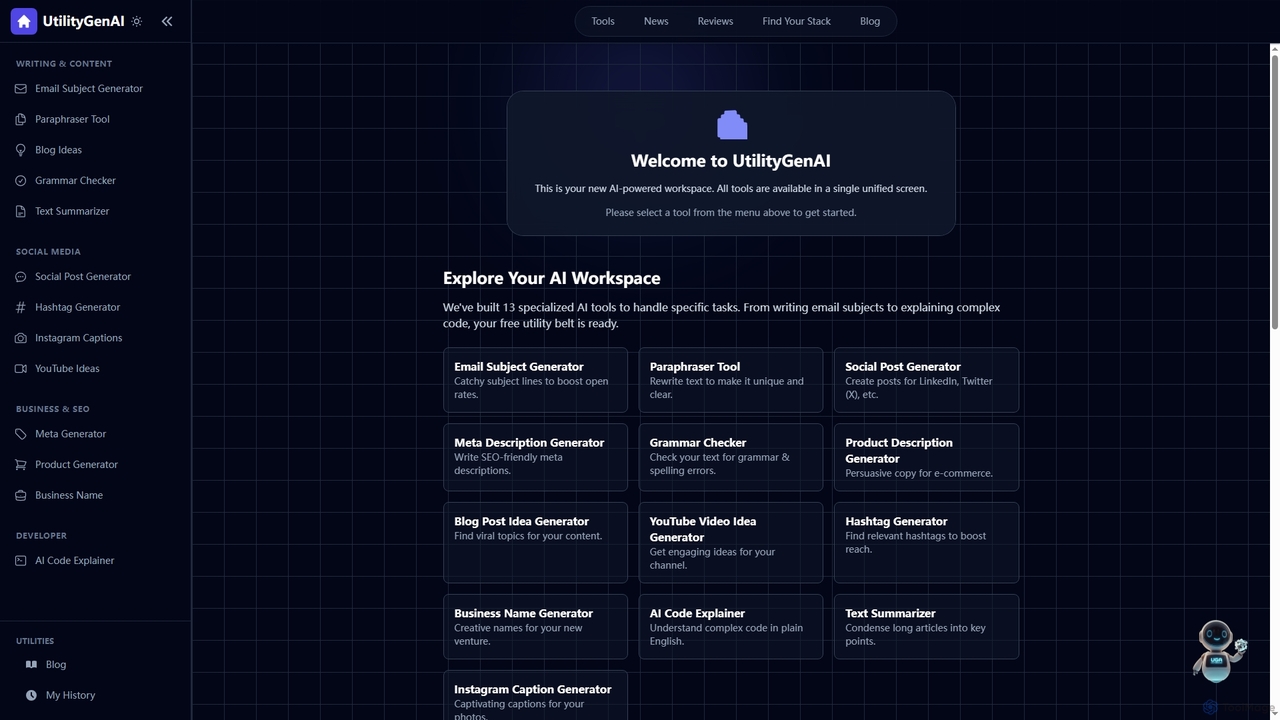
UtilityGenAI is an all-in-one AI workspace offering a suite of 13+ specialized and completely free tools. Designed for students, marketers, and developers, it enhances productivity in tasks like content creation, SEO optimization, and code analysis, all while prioritizing user privacy by not storing any input data.
Code Assistant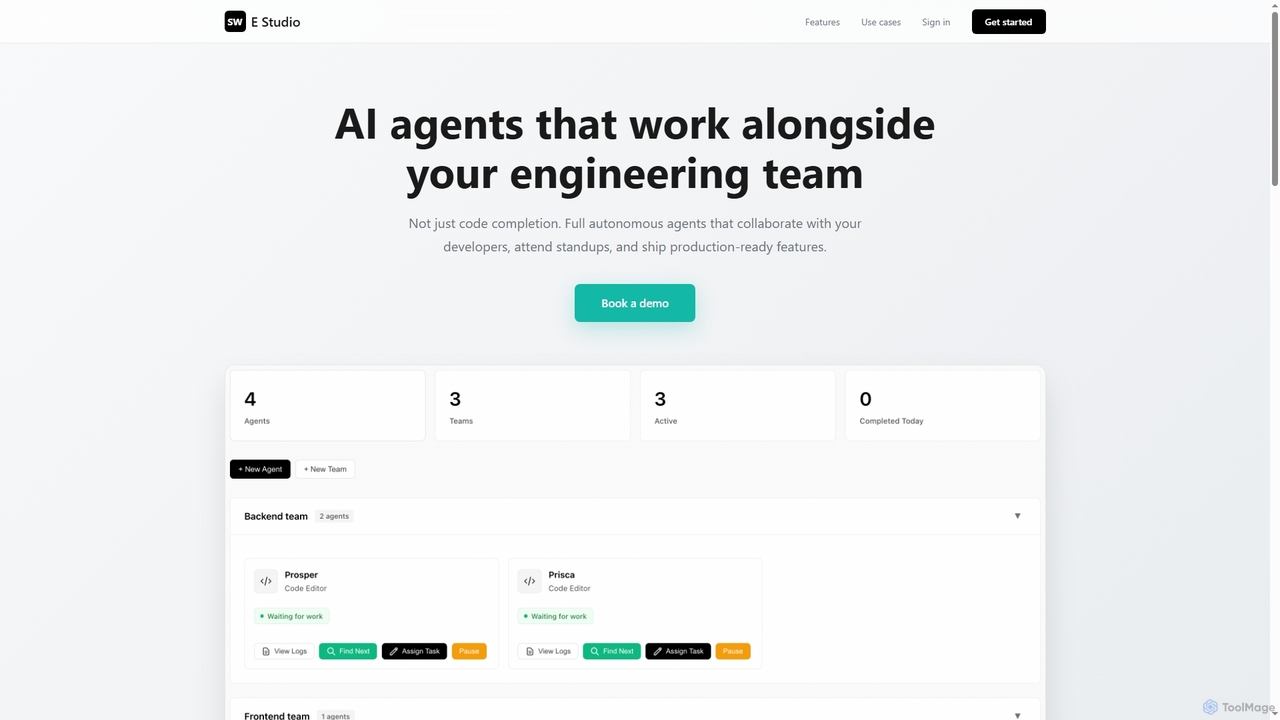
Swe Studio provides autonomous AI agents that function as full members of your engineering team. They independently handle development tasks from Jira tickets to pull requests, collaborating via Slack and GitHub to ship production-ready features.
Code Assistant
An AI platform designed to eliminate AI hallucinations by comparing and cross-fact checking responses from multiple leading LLMs like OpenAI, Google, and Anthropic. It offers robust file analysis, enterprise integrations, and enhanced accuracy for professionals.
Data Analysis
Cosmicup is an all-in-one AI platform offering unlimited access to a wide array of advanced AI models like ChatGPT 5, Claude 4.5, Gemini 2.5, and Grok 4 through a single subscription. It streamlines workflows with features including multi-model interaction, code assistance, document analysis, real-time web search, deep research, and AI image generation, eliminating the need for multiple subscriptions.
Multimodal Ai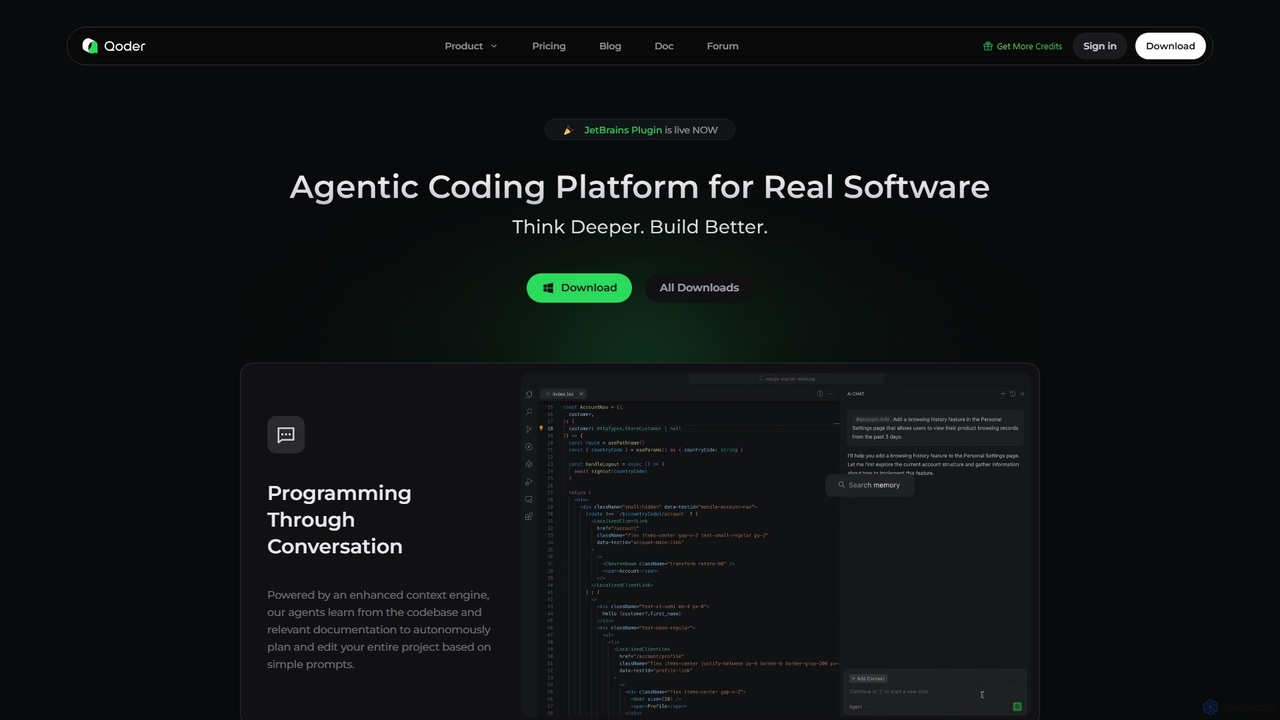
Qoder is an agentic AI coding platform designed for real software development. It leverages an enhanced context engine to autonomously plan, code, and test entire projects based on simple prompts, integrating seamlessly into developer workflows via IDE, CLI, or JetBrains plugin.
Code Assistant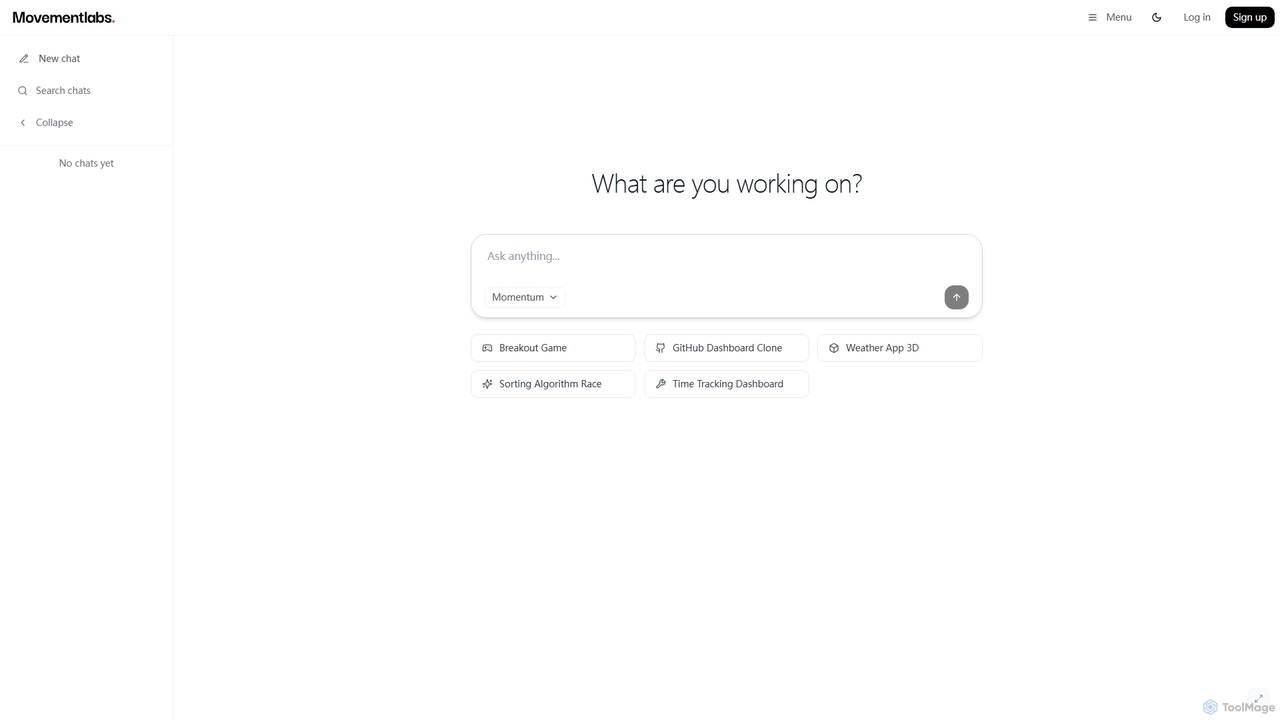
Momentum AI, developed by Movement Labs, is a high-performance artificial intelligence platform renowned for its ultra-fast inference speeds, up to 20 times faster than competitors. Powered by the exclusive Movement Processing Unit (MPU), it delivers benchmark-leading performance for real-time AI applications, including advanced reasoning, code generation, and natural conversations, designed to serve humanity's long-term well-being.
Inference Optimization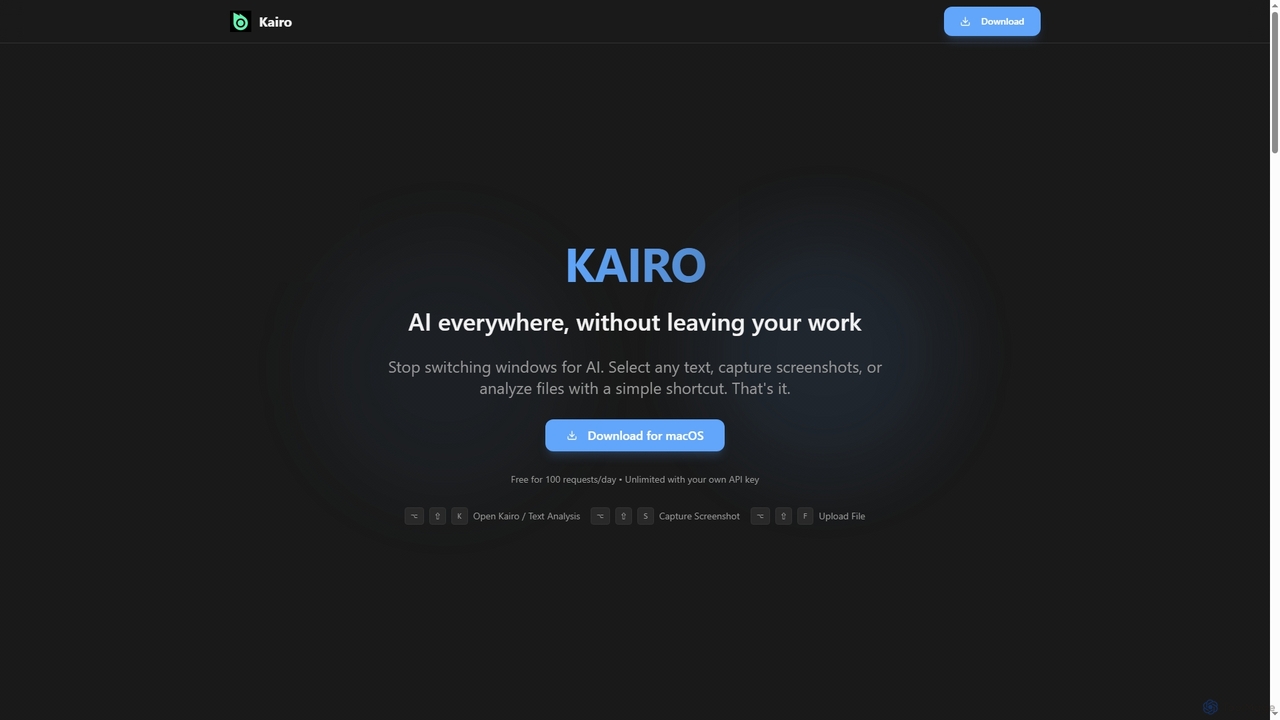
Kairo is an AI-powered desktop assistant for macOS that integrates seamlessly into your workflow, eliminating the need to switch applications for AI tasks. It offers smart text transformation, visual analysis of screenshots, and deep analysis of files directly from any app using simple keyboard shortcuts.
Document Analysis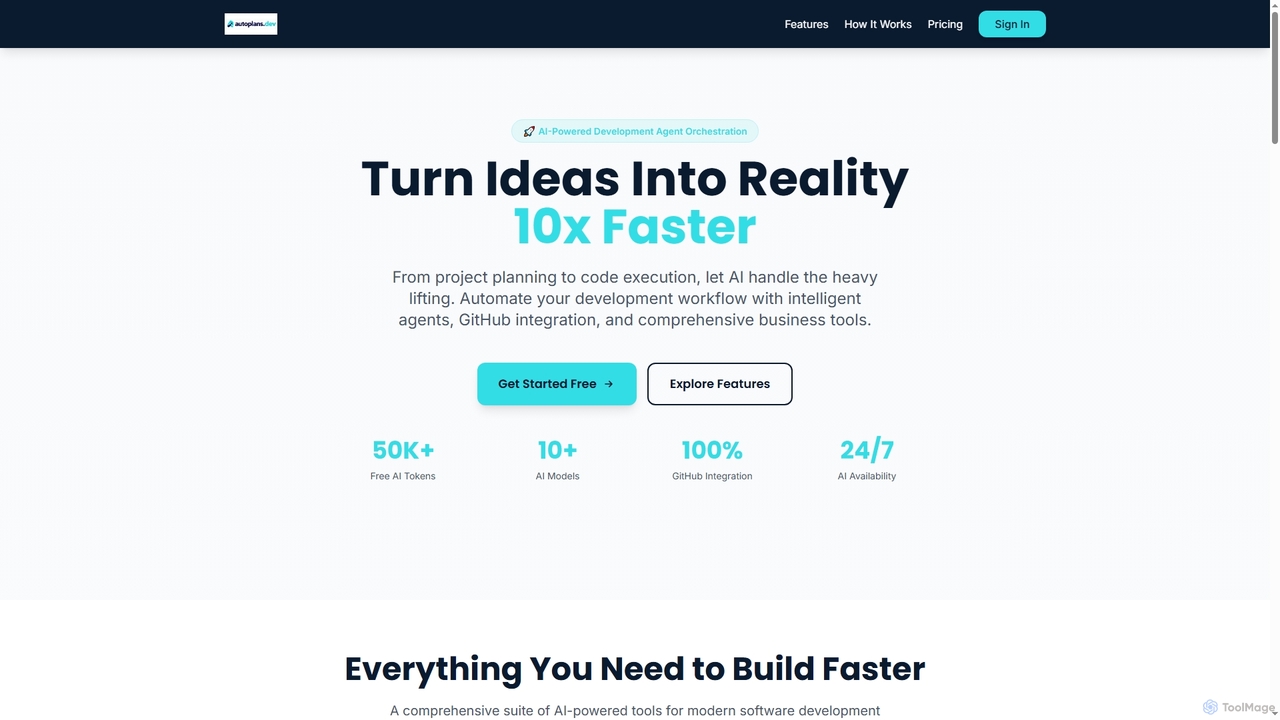
Autoplans is an AI-powered development orchestration platform that automates the entire software development workflow. It uses intelligent agents to transform project ideas into structured plans, generate code, and create GitHub pull requests, aiming to accelerate development by up to 10x.
Code Generation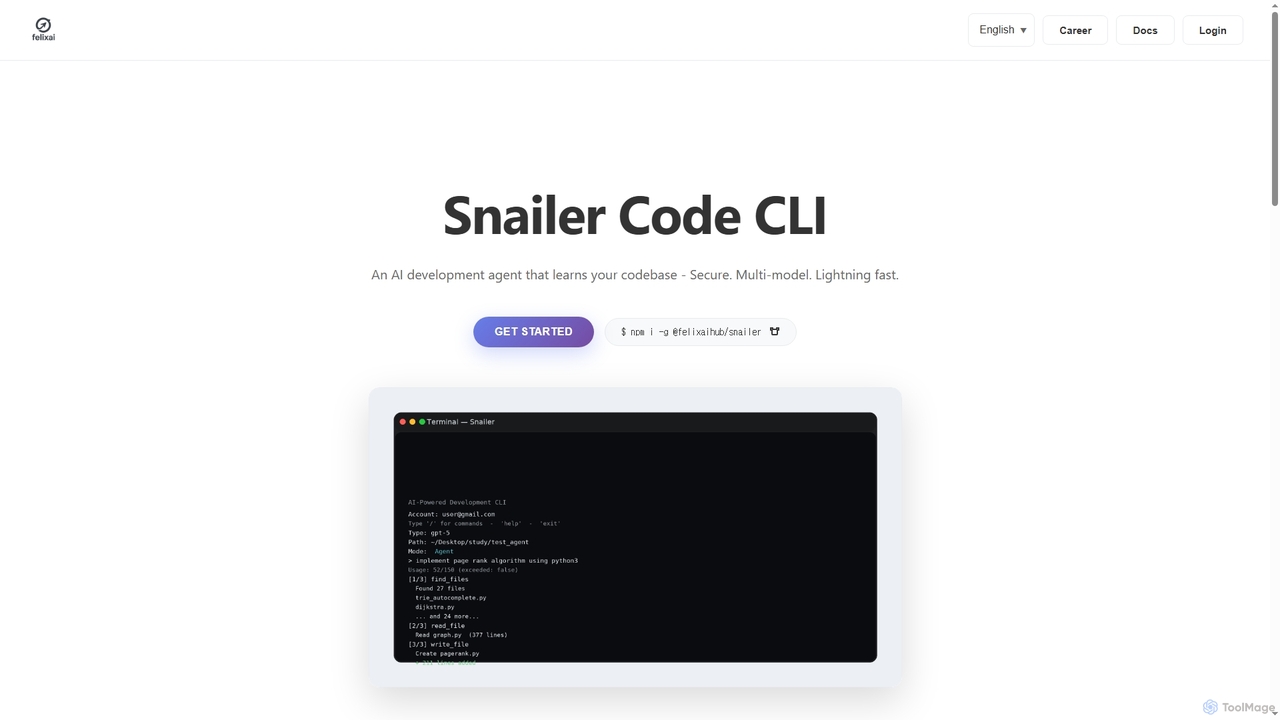
Snailer is a multi-model AI coding agent that operates within your command-line interface (CLI) and integrates with popular IDEs. It understands your codebase, allowing you to describe tasks in plain English to generate, propose, and execute code edits securely and efficiently.
Code Assistant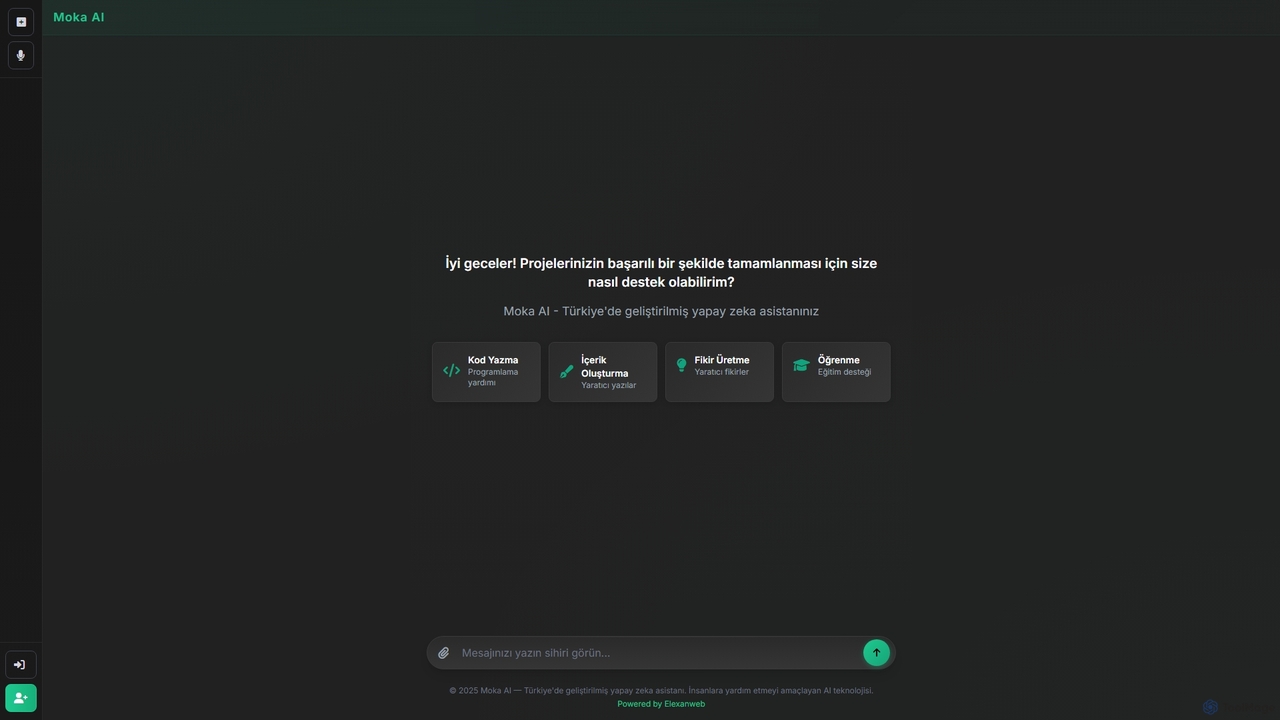
Moka is an AI assistant developed in Turkey, designed to help users with a wide range of tasks including code writing, creative content generation, idea brainstorming, and educational support. It aims to streamline projects and enhance productivity through intelligent chat interactions.
Idea Generation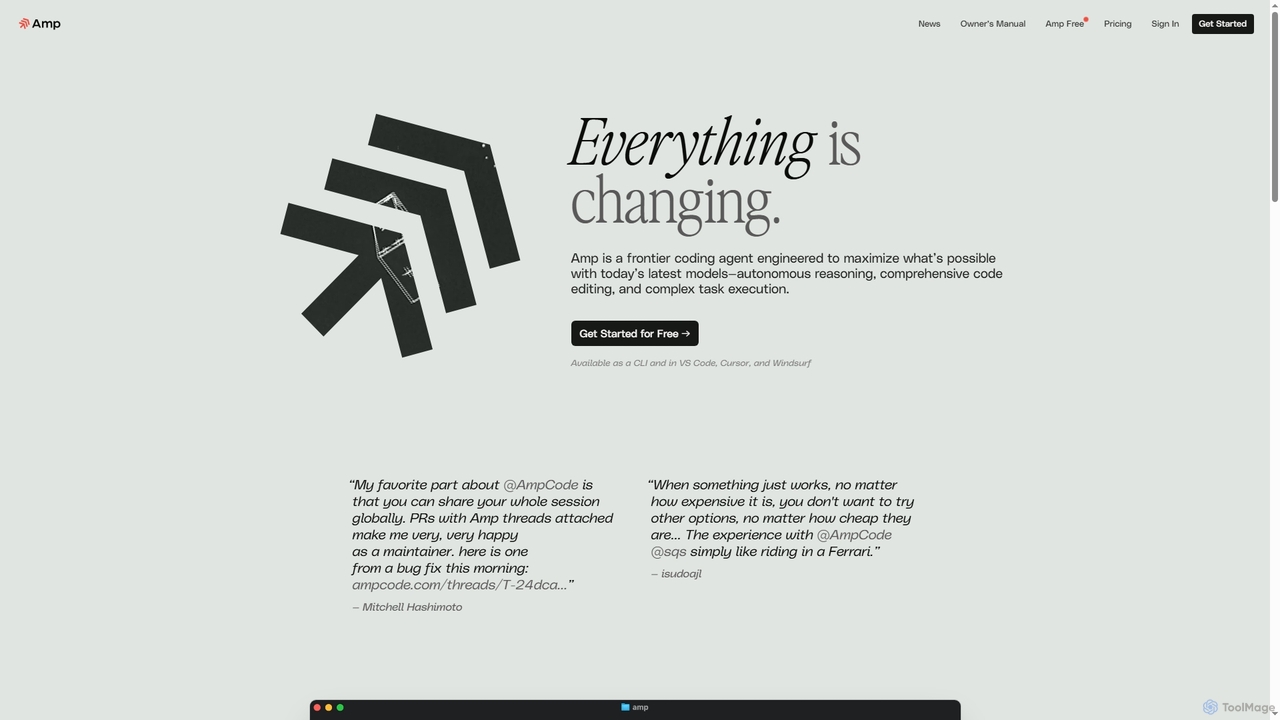
Amp is a frontier AI coding agent designed for developers. It operates as a CLI and within IDEs like VS Code, automating complex tasks such as code editing, debugging, and refactoring. Amp leverages the latest AI models to provide autonomous reasoning and execution, enhancing developer productivity through features like subagents, an Oracle for complex analysis, and deep IDE integration.
Code Assistant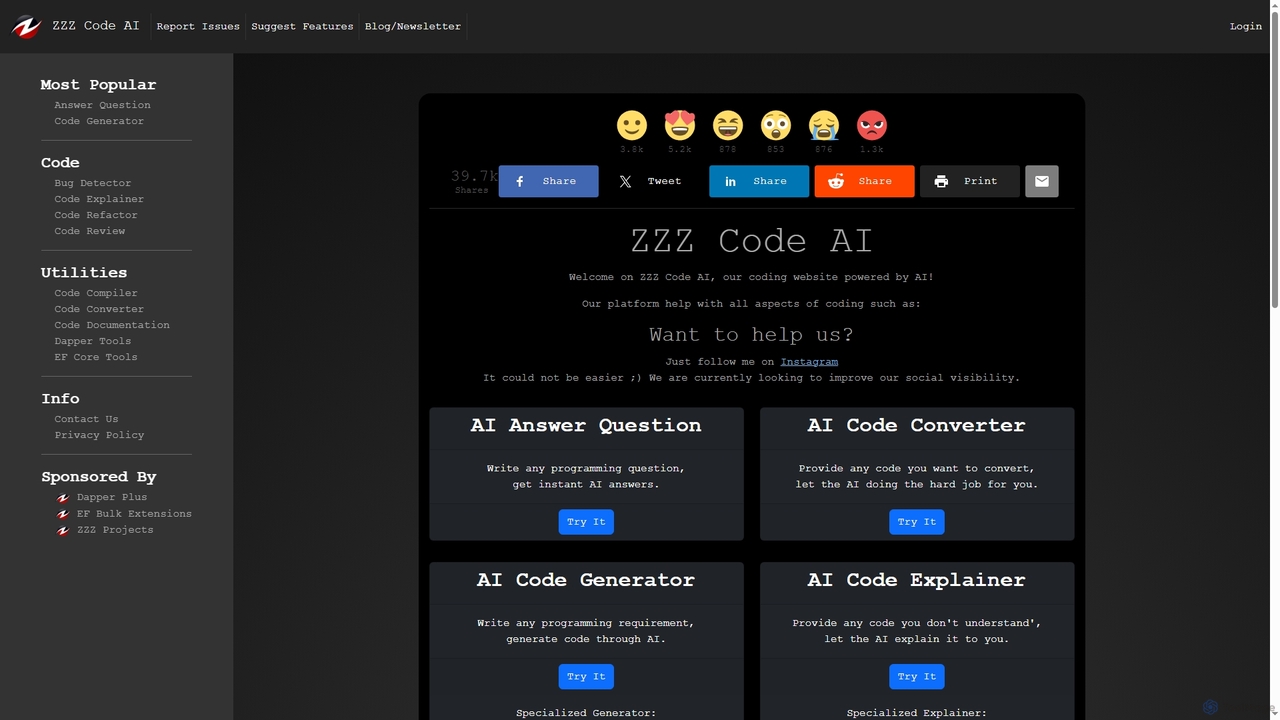
Zzzcode is a free, AI-powered online platform offering a comprehensive suite of coding tools for developers. It can generate, explain, debug, refactor, review, document, and convert code across numerous programming languages, and provide instant answers to programming questions.
Code Assistant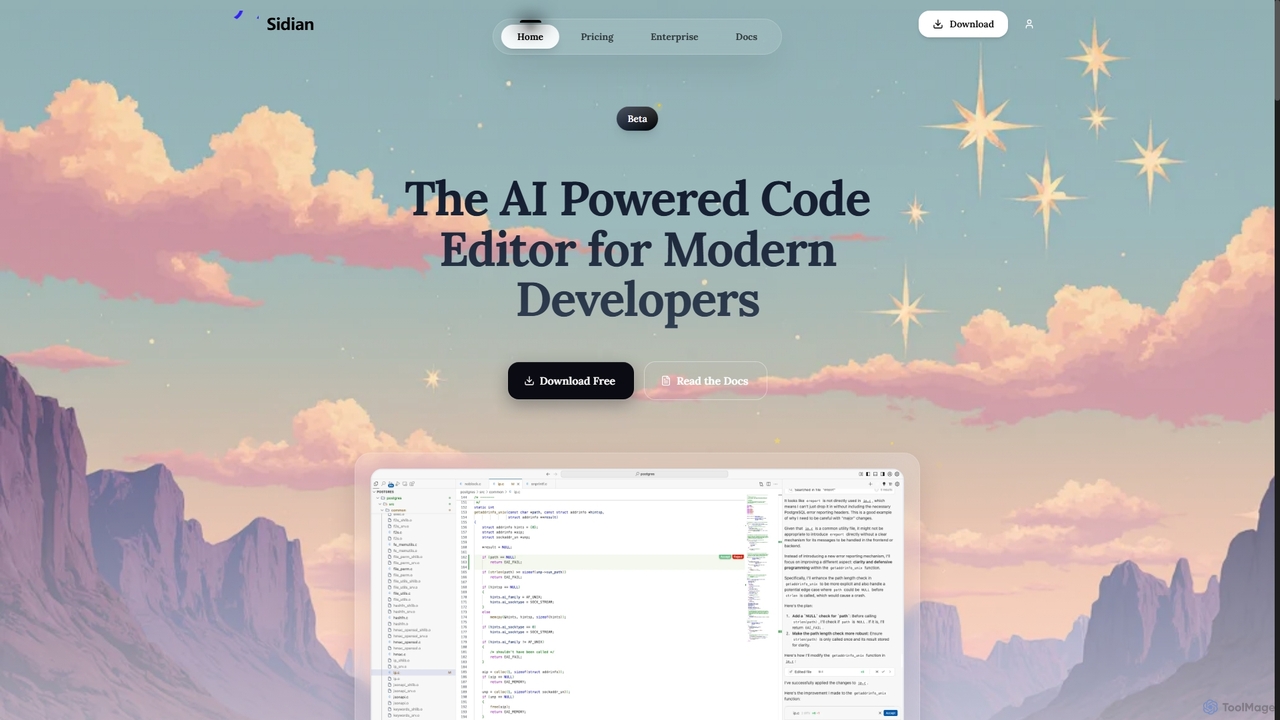
Sidian is an AI-powered code editor designed for modern developers. It features a sophisticated context engine that rapidly understands complex codebases, integrates with major AI providers like OpenAI and Google, and supports local models for enhanced privacy and flexibility.
Code GenerationCode Assistant tools are AI-powered software designed to enhance the productivity and quality of software development by assisting programmers with various coding tasks. Leveraging advanced large language models and machine learning, these tools provide intelligent suggestions, automate repetitive processes, and help identify potential issues. They integrate directly into development environments, streamlining workflows from initial code generation to debugging and optimization, making the coding process faster and more efficient for developers across all skill levels.
Code Assistants are invaluable for software engineers, data scientists, and web developers looking to accelerate their development cycles. They are particularly useful in rapid prototyping, where developers need to quickly scaffold new projects, or when working with unfamiliar libraries and frameworks. Additionally, these tools assist in maintaining large legacy codebases by providing explanations and suggesting refactoring opportunities, and help junior developers learn best practices and new programming concepts more effectively.
When selecting a Code Assistant, consider its integration capabilities with your preferred IDE (e.g., VS Code, IntelliJ), the range of programming languages it supports, and the accuracy and relevance of its suggestions. Evaluate its specific features like code generation, debugging, or refactoring based on your primary needs. Also, assess its pricing model, community support, and data privacy policies, especially if working with sensitive code, to ensure it aligns with your team's workflow and security requirements.
A startup developer needs to quickly build a minimum viable product (MVP). Using a Code Assistant, they can input high-level descriptions of desired features, and the AI generates boilerplate code for common components like API endpoints, database models, or UI elements. This significantly reduces the initial setup time, allowing the developer to focus on core logic and unique features, bringing the product to market faster.
A seasoned developer is transitioning to a new programming language or framework. The Code Assistant acts as an intelligent tutor, providing context-aware code examples, explaining unfamiliar syntax, and suggesting idiomatic patterns. This accelerates the learning curve by offering immediate feedback and practical demonstrations, enabling the developer to become proficient more quickly without constant manual documentation lookups.
A backend engineer frequently writes similar CRUD (Create, Read, Update, Delete) operations or unit tests for new data models. Instead of manually typing out each method, the Code Assistant can generate these repetitive code blocks based on the data model definition or a simple prompt. This automation frees up valuable time, allowing the engineer to concentrate on more complex architectural challenges and innovative solutions.
A development team aims to maintain high code quality and security standards. Integrated Code Assistants can analyze code in real-time, identifying potential bugs, performance bottlenecks, and security vulnerabilities (e.g., SQL injection risks, insecure API calls). The tool suggests best practices and provides refactoring options, helping developers write robust, secure, and maintainable code, reducing technical debt and future security incidents.
A new developer joins a project with a large, undocumented legacy codebase. The Code Assistant can explain complex functions, decipher cryptic variable names, and even generate summaries of entire modules based on their functionality. This drastically reduces the time and effort required for the new team member to understand the existing system, facilitating smoother onboarding and more efficient maintenance of older applications.
A quality assurance (QA) engineer or developer needs to create extensive unit and integration tests for new features. A Code Assistant can analyze the function signatures and expected behaviors, then automatically generate a variety of test cases, including edge cases and mock data. This ensures broader test coverage, reduces manual test writing effort, and helps catch bugs earlier in the development cycle, leading to more reliable software.
AI Code Assistants are intelligent tools that leverage artificial intelligence, primarily large language models, to help developers write, understand, and maintain code more efficiently. They integrate into IDEs to offer features like code auto-completion, generation, explanation, and debugging assistance, acting as a co-pilot for programmers. Their core purpose is to augment human coding capabilities, not replace them.
Traditional IDE features like basic auto-completion or syntax highlighting rely on predefined rules and static analysis. AI Code Assistants, however, use machine learning to understand context, predict intent, and generate novel code snippets based on vast datasets of existing code. This allows them to offer more intelligent, context-aware suggestions, generate entire functions, and even explain complex code, going beyond simple pattern matching to provide truly generative and analytical capabilities.
Most leading AI Code Assistants offer broad language support, covering popular languages like Python, JavaScript, TypeScript, Java, C, Go, Ruby, and PHP. Many also support less common languages or frameworks, as their underlying models are trained on diverse codebases. However, the quality and depth of assistance can vary by language, with more widely used languages generally receiving more refined and accurate suggestions.
While AI Code Assistants are highly capable of generating significant portions of code, they cannot yet write entire complex applications independently from scratch without human guidance. They excel at automating repetitive tasks, generating boilerplate, and assisting with specific functions or modules. Human developers remain crucial for architectural design, complex problem-solving, integrating different components, and ensuring the overall logic and business requirements are met. They are powerful tools for augmentation, not full automation.
Yes, privacy and security are valid concerns. When using cloud-based Code Assistants, your code might be sent to external servers for processing, raising questions about data handling and intellectual property. Some tools offer on-premise or self-hosted solutions to mitigate this. Additionally, generated code might occasionally contain vulnerabilities or license infringements if not carefully reviewed. It's crucial to choose reputable providers, understand their data policies, and always review AI-generated code for security, quality, and compliance before deployment.