Developer Tools Best in category 3 results Agent Frameworks AI Tool

Popular AI tools in the Agent Frameworks field of Developer Tools include CrewAI、Superagent、Agentfield, etc., helping you quickly improve efficiency.

Free
Agentfield

Agentfield

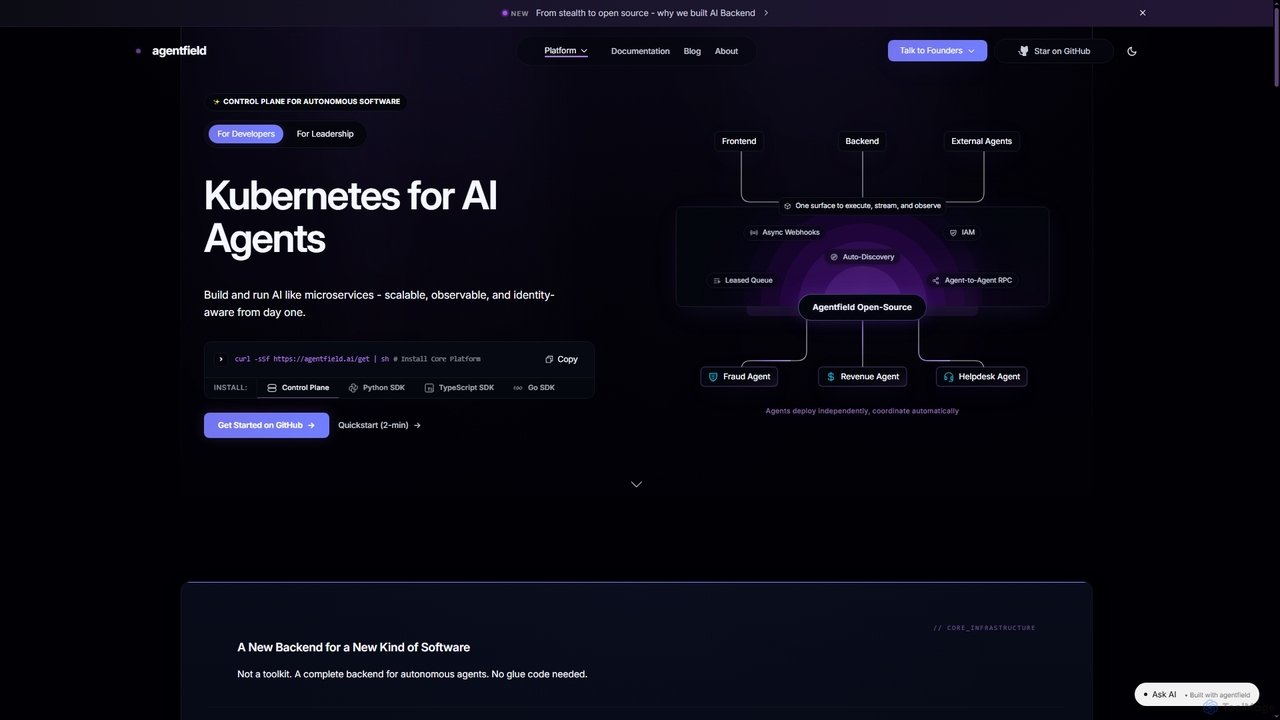
Agentfield is an open-source control plane designed for building and running autonomous AI agents as scalable, observable, and …

22.5K
CrewAI

CrewAI

CrewAI is a powerful multi-agent platform for building and orchestrating collaborative AI agent workflows. It enables developers to …

688.6K
Superagent

Superagent

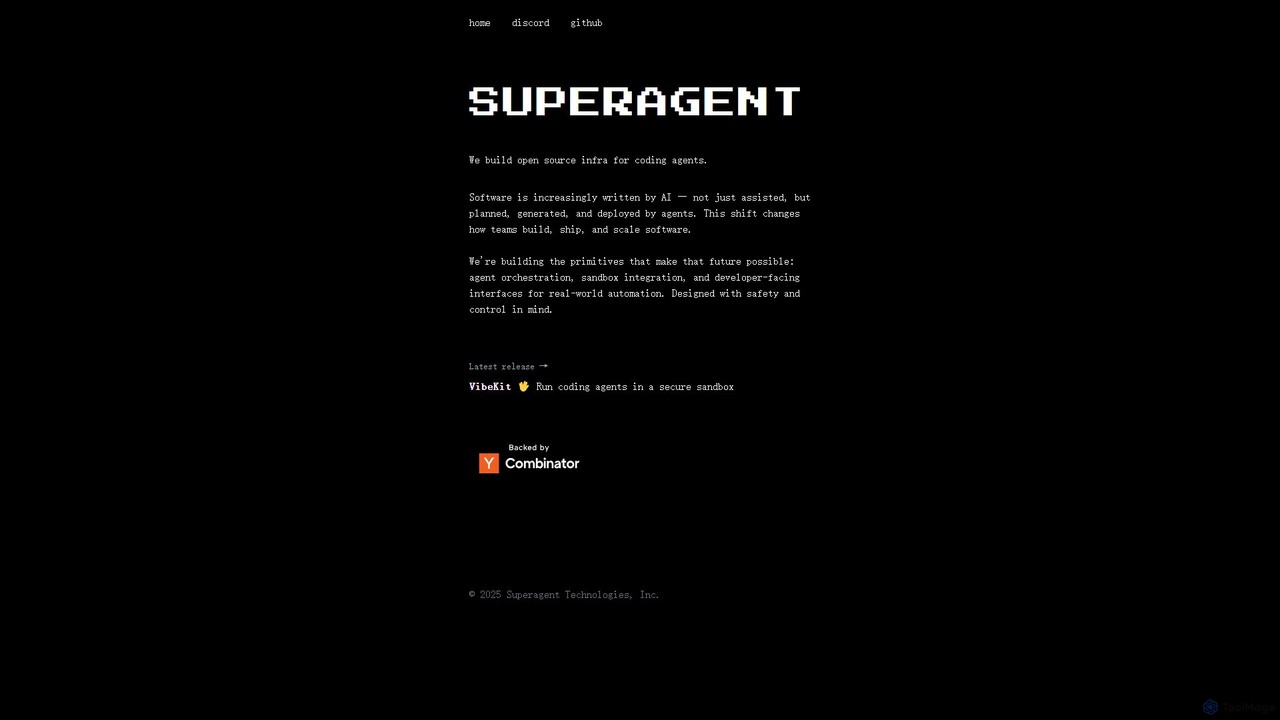
Superagent is an open-source infrastructure for building, managing, and deploying autonomous AI coding agents. Designed for developers, it …

44.1K

About Agent Frameworks

Agent Frameworks are a class of sophisticated developer tools designed to build, deploy, and manage autonomous AI agents. These frameworks provide the architectural scaffolding and core components necessary to orchestrate large language models (LLMs) with external tools, memory, and planning capabilities. They empower developers to create intelligent systems that can reason, plan, execute complex multi-step tasks, and adapt to dynamic environments, significantly extending the capabilities of standalone LLMs for advanced automation and problem-solving.

Core Features

  • Task Orchestration: Manages the sequence of actions, tool calls, and LLM interactions required to achieve a complex goal.
  • Memory Management: Provides mechanisms for agents to retain and retrieve information over time, enabling context-aware and persistent interactions.
  • Tool Integration: Facilitates seamless connection and utilization of external APIs, databases, and custom functions, expanding the agent's operational scope.
  • Planning & Reasoning: Equips agents with the ability to break down high-level goals into sub-tasks, evaluate options, and adapt strategies based on feedback.
  • Human-in-the-Loop: Allows for human oversight, intervention, and feedback at critical junctures to guide agent behavior and ensure alignment.

Applicable Scenarios

Agent Frameworks are invaluable for developers aiming to build highly autonomous and intelligent applications. They are used in automating complex software development workflows, creating sophisticated data analysis pipelines that can self-correct, and developing intelligent assistants capable of dynamic problem-solving across various domains. These frameworks enable the creation of AI systems that go beyond simple prompt-response, offering true agency.

How to Choose

When selecting an Agent Framework, consider its modularity and extensibility for integrating custom components and tools. Evaluate the richness of its existing tool ecosystem and community support for pre-built integrations. Assess its planning and reasoning capabilities, as well as its memory management features. Finally, consider the ease of deployment, scalability, and the level of control it offers over agent behavior to match your project's specific requirements and technical expertise.

Agent FrameworksUse Cases

1

Automated Software Development & Testing

Software engineers can leverage Agent Frameworks to create autonomous coding agents. These agents can interpret high-level requirements, generate code, write unit tests, identify bugs, and even suggest refactorings. By orchestrating LLMs with code repositories and testing environments, the agent can iterate on development tasks, significantly accelerating the software development lifecycle and improving code quality through continuous, automated review.

2

Intelligent Data Analysis & Reporting

Data scientists and analysts can build agents that autonomously explore datasets, identify patterns, generate hypotheses, and produce comprehensive reports. An agent framework can integrate with data visualization libraries, statistical tools, and databases. The agent can then perform complex queries, run experiments, and present findings, adapting its approach based on initial results, thereby streamlining the entire data analysis process from raw data to actionable insights.

3

Personalized Content Creation & Curation

Content marketers and creators can deploy agents to generate highly personalized content, such as blog posts, social media updates, or email newsletters, tailored to specific audience segments. These agents can integrate with content management systems, audience analytics platforms, and image generation tools. By understanding audience preferences and current trends, the agent can plan, create, and even schedule diverse content, ensuring relevance and engagement at scale.

4

Advanced Customer Support & Issue Resolution

Customer service teams can utilize Agent Frameworks to develop intelligent support agents capable of handling complex customer inquiries beyond simple FAQs. These agents can integrate with CRM systems, knowledge bases, and ticketing platforms. They can diagnose problems, access customer history, suggest solutions, and even escalate issues to human agents with pre-filled context, providing a more efficient and personalized support experience.

5

Automated Research & Information Synthesis

Researchers and academics can employ agents to conduct extensive literature reviews, synthesize information from multiple sources, and identify key trends or gaps in knowledge. An agent framework can integrate with academic databases, web search tools, and document analysis APIs. The agent can autonomously formulate search queries, read and summarize papers, cross-reference findings, and generate structured reports, drastically reducing the manual effort in research.

6

Financial Market Analysis & Strategy Generation

Financial analysts can build agents to monitor market data, identify trading opportunities, and generate investment strategies. These agents can integrate with real-time financial data feeds, news APIs, and analytical models. By continuously processing vast amounts of information, the agent can detect anomalies, predict market movements, and propose actionable strategies, providing a powerful tool for informed decision-making in dynamic financial environments.

Agent FrameworksFrequently Asked Questions