ToolMage
Sign in

Best 5 Orchestration AI tools for Cloud Computing

Popular Orchestration AI tools in Cloud Computing include Union.ai, Agentfield, dstack, Pipekit, and TAHO, helping you work more efficiently.

Agentfield
Free

Agentfield

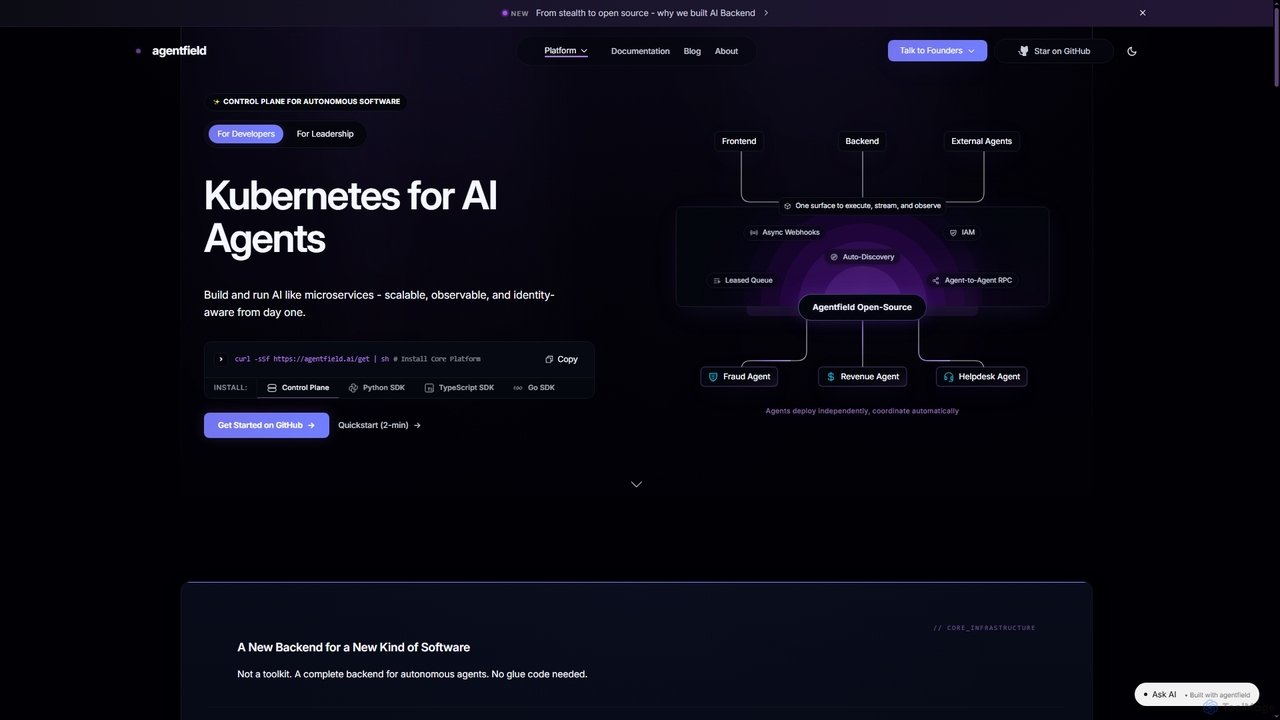
Agentfield is an open-source control plane designed for building and running autonomous AI agents as scalable, observable, and identity-aware microservices. It provides Kubernetes-like orchestration, cryptographic identity management, and production-ready infrastructure to bridge the gap between AI prototypes and robust, trustworthy production deployments.

Orchestration
Visits 22.5KFavorites 54Likes 56
Pipekit
Paid

Pipekit

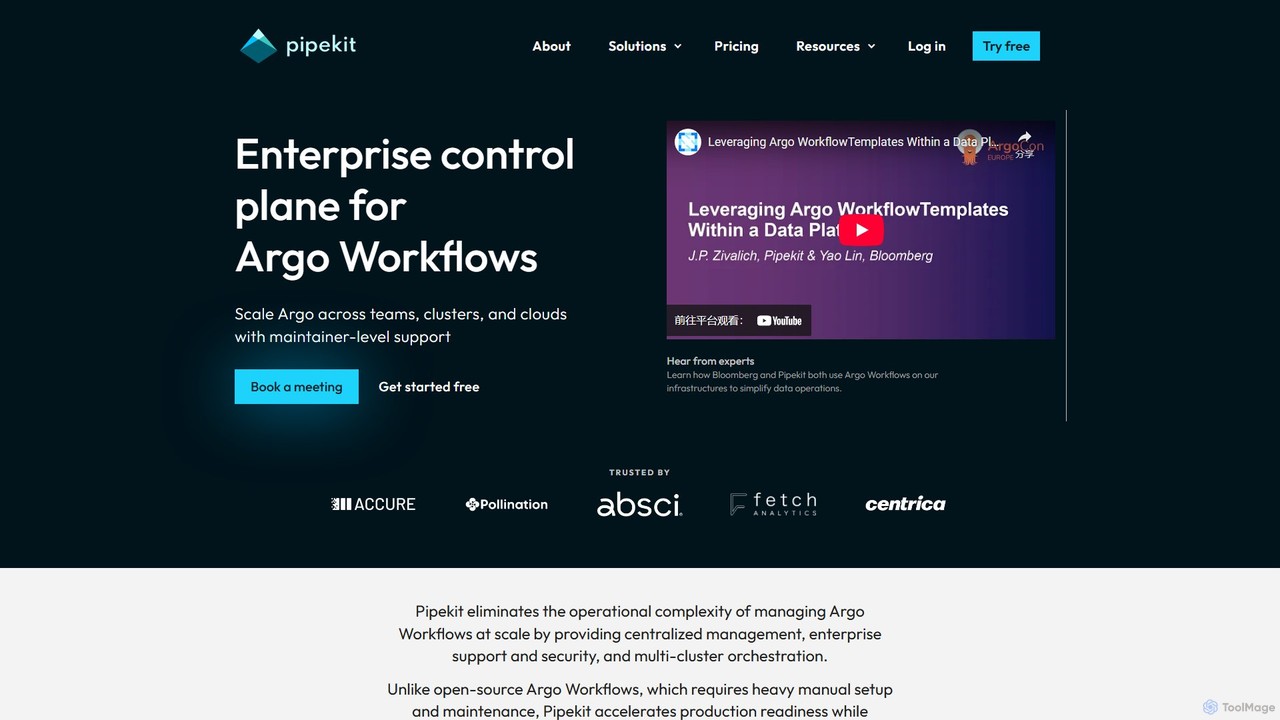
Pipekit is an enterprise-grade control plane and support service for Argo Workflows. It empowers platform and data teams to run, monitor, and govern large-scale data, MLOps, and CI/CD pipelines on Kubernetes across multiple clusters and clouds.

Orchestration
Visits 9.3KFavorites 151Likes 149
dstack
Freemium

dstack

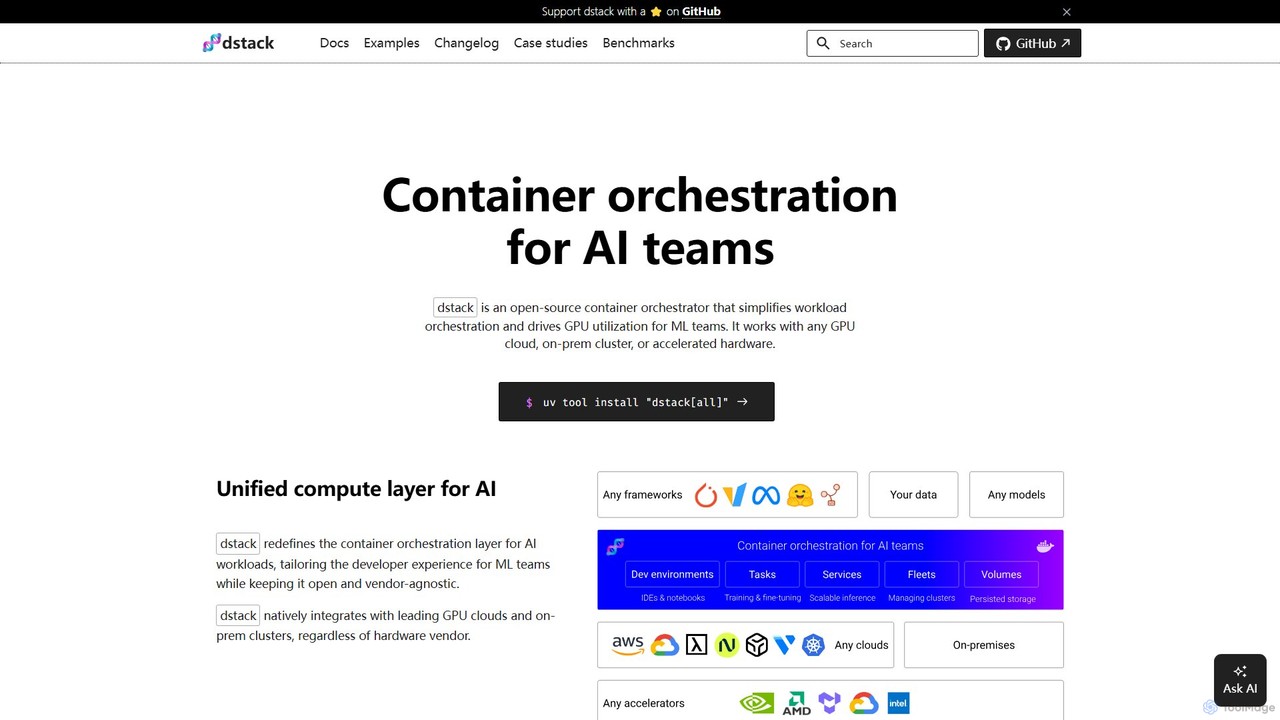
dstack is an open-source container orchestrator designed for AI and ML teams. It simplifies workload orchestration and maximizes GPU utilization across any cloud provider, on-premise cluster, or accelerated hardware. It provides a unified compute layer, streamlining development, training, and model deployment.

Orchestration
Visits 17.2KFavorites 143Likes 150
Union.ai
Freemium

Union.ai

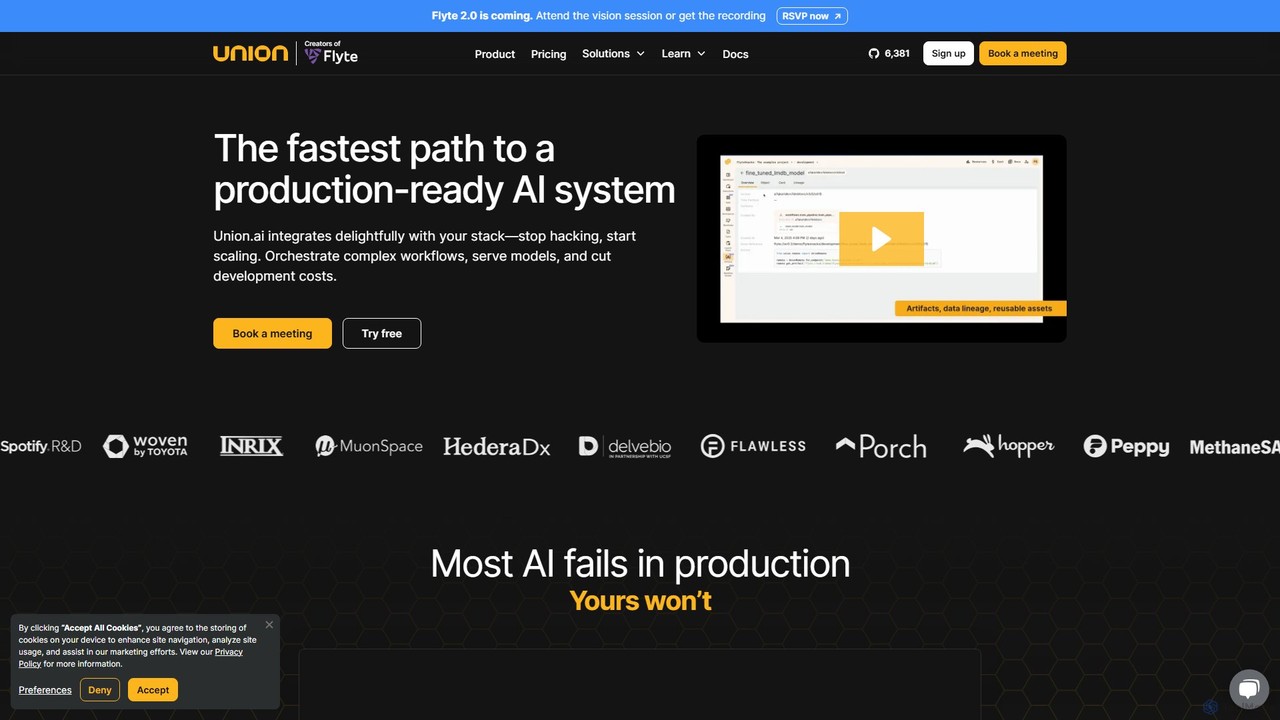
Union.ai is an enterprise-grade, production-ready platform for orchestrating complex AI and machine learning workflows. Built on the open-source Flyte, it empowers teams to build, serve, and scale compound AI systems with unparalleled performance and efficiency. It bridges the data-ML gap, optimizes cloud costs with features like scale-to-zero, and enhances developer velocity through a seamless, integrated experience.

Orchestration
Visits 28.5KFavorites 128Likes 132
TAHO
Freemium

TAHO

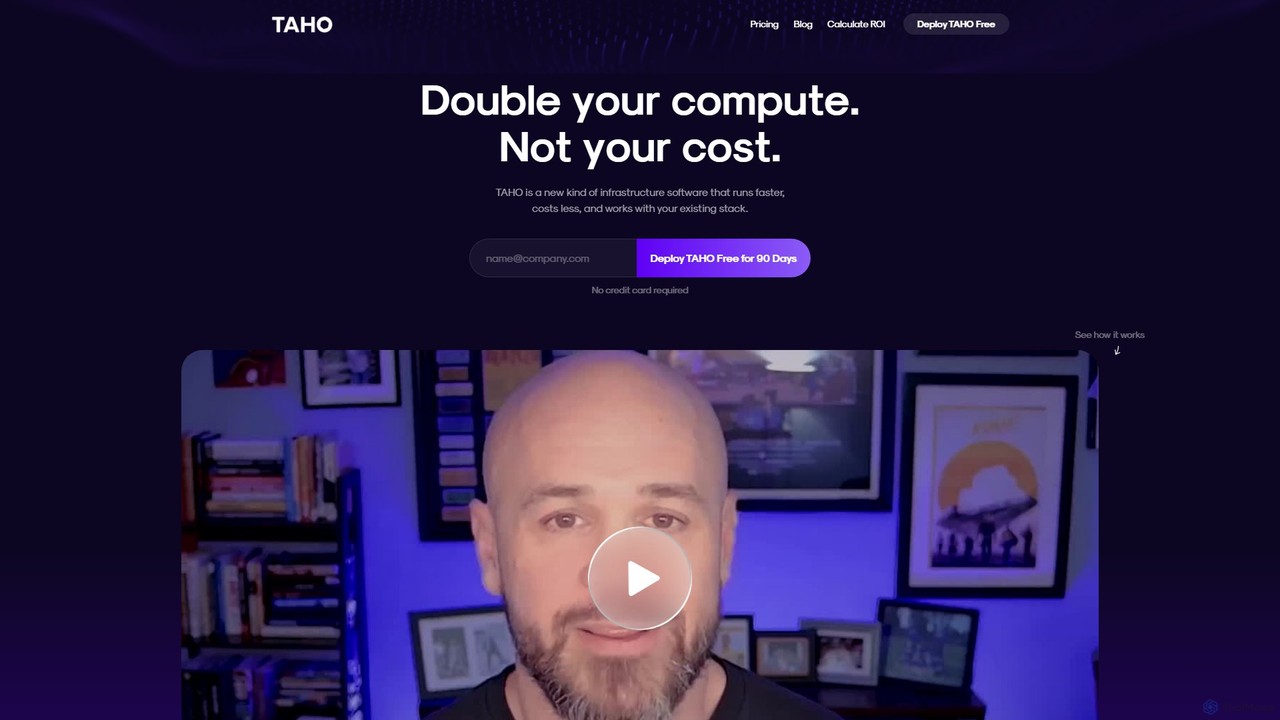
TAHO is a high-performance compute framework designed to replace complex orchestrators like Kubernetes. It doubles your compute efficiency without increasing hardware costs by eliminating overhead and enabling microsecond cold starts. Ideal for AI/ML, edge computing, and high-throughput workloads, TAHO integrates seamlessly with your existing infrastructure, offering a faster, cheaper, and simpler solution for scaling demanding applications on cloud, on-prem, or hybrid environments.

Model Deployment
Visits 4.8KFavorites 106Likes 89

About Orchestration

Orchestration tools are a class of software for automating the configuration, coordination, and management of complex systems and services, particularly within cloud computing environments. They operate by using declarative configurations, often as Infrastructure as Code (IaC), to define a desired state for applications and infrastructure. These tools then automatically execute the necessary tasks to achieve and maintain that state, handling provisioning, deployment, scaling, and healing. This approach simplifies the management of large-scale, distributed systems and ensures consistency across environments.

Core Features

  • Declarative Configuration: Define the desired state of infrastructure and applications using code (IaC).
  • Automated Provisioning: Automatically create, configure, and manage cloud resources like servers, networks, and storage.
  • Workflow Automation: Chain together multiple automated tasks and services to execute complex processes.
  • Self-Healing & Scaling: Automatically detect and replace failed components and adjust resource allocation based on demand.
  • Service Discovery: Enable services to find and communicate with each other dynamically within a distributed system.

Use Cases

Orchestration tools are essential for DevOps, Site Reliability Engineering (SRE), and cloud operations teams. They are used to build and manage CI/CD pipelines, deploy and scale containerized applications with platforms like Kubernetes, and manage entire multi-cloud infrastructures. They are also critical for implementing automated disaster recovery plans and managing complex, multi-tier application deployments.

How to Choose

When selecting an orchestration tool, consider its primary focus: infrastructure provisioning (e.g., Terraform), configuration management (e.g., Ansible), or container orchestration (e.g., Kubernetes). Evaluate its integration capabilities with your existing cloud providers and toolchain. Also, assess the learning curve, the strength of its community support, and whether its declarative model fits your team's workflow.

Featured tool rankings

Orchestration use cases

1

Automated CI/CD Pipeline Management

DevOps teams use orchestration tools to create fully automated Continuous Integration/Continuous Deployment (CI/CD) pipelines. When a developer commits new code, the tool automatically triggers a workflow: it provisions a clean build environment, compiles the code, runs automated tests, and if successful, deploys the application to staging or production environments. This process eliminates manual handoffs, reduces deployment errors, and significantly accelerates the software delivery lifecycle.

2

Infrastructure as Code (IaC) for Cloud Environments

Cloud architects and operations engineers define their entire cloud infrastructure—including virtual networks, servers, databases, and load balancers—in code files. Using an orchestration tool, they can apply these configurations to reliably and repeatedly create identical environments across development, testing, and production. This prevents configuration drift, simplifies infrastructure updates, and allows for version control and peer review of infrastructure changes.

3

Large-Scale Container Management

For applications built with microservices and deployed in containers, orchestration platforms like Kubernetes are indispensable. They automate the deployment, scaling, and networking of thousands of containers. The tool handles tasks like load balancing traffic, restarting failed containers (self-healing), rolling out updates with zero downtime, and efficiently packing containers onto host machines to optimize resource utilization.

4

Automated Disaster Recovery Failover

Site Reliability Engineers (SREs) design automated disaster recovery (DR) workflows using orchestration tools. They codify the entire failover process, which might involve provisioning resources in a secondary region, redirecting network traffic, and restoring data from backups. In the event of an outage, this automated workflow can be triggered to bring the application back online in minutes, minimizing downtime and removing the risk of human error during a crisis.

5

Multi-Cloud and Hybrid Cloud Management

Enterprises operating across multiple cloud providers (e.g., AWS, Azure, GCP) or in a hybrid model use orchestration tools to create a consistent management layer. This allows teams to use a single set of tools and workflows to provision and manage resources regardless of the underlying cloud platform. It simplifies operations, avoids vendor lock-in, and enables strategies like cloud bursting or workload migration between different clouds.

6

Complex Application Deployment and Configuration

Deploying a multi-tier application (e.g., a web front-end, an API service, and a database) involves complex dependencies and configuration steps. Orchestration tools manage this entire process. They can deploy the database first, wait for it to be ready, then deploy the API service with the correct database connection details, and finally deploy the web front-end. This ensures all components are started in the correct order and configured to work together seamlessly.

Orchestration FAQ

What are Orchestration tools?

Orchestration tools are software platforms that automate the management, coordination, and configuration of complex IT systems and workflows. In cloud computing, they use code to define and maintain the desired state of infrastructure and applications, handling tasks like provisioning, deployment, scaling, and self-healing automatically.

How do I choose the right Orchestration tool?

To choose the right tool, first identify your primary need: infrastructure provisioning (like Terraform), configuration management (like Ansible), or container management (like Kubernetes). Then, evaluate its compatibility with your cloud providers and existing tools. Also consider the team's skill set, the tool's learning curve, and the level of community support available.

What is the difference between Orchestration and Automation?

Automation refers to making a single task repeatable without human intervention, like running a script to install software. Orchestration is broader; it involves coordinating multiple automated tasks into a single, cohesive workflow to achieve a larger goal. For example, orchestrating a new server deployment involves automating provisioning, configuration, and application deployment in a specific sequence.

What are the key benefits of using AI in Orchestration?

AI enhances orchestration by adding intelligence to automation. Key benefits include:

  • Predictive Scaling: Analyzing historical data to predict traffic spikes and proactively scale resources.
  • Automated Anomaly Detection: Identifying unusual system behavior and triggering corrective actions.
  • Intelligent Task Routing: Optimizing workflow execution by dynamically assigning tasks based on resource availability.
  • Root Cause Analysis: Automatically analyzing logs and metrics to pinpoint the source of failures.

Who are the primary users of Orchestration tools?

The primary users are technical professionals responsible for system reliability and deployment efficiency. This includes DevOps Engineers who build and maintain CI/CD pipelines, Site Reliability Engineers (SREs) who focus on system uptime and scalability, and Cloud Architects who design and manage cloud infrastructure. These tools are fundamental to modern software operations.