Orq.ai
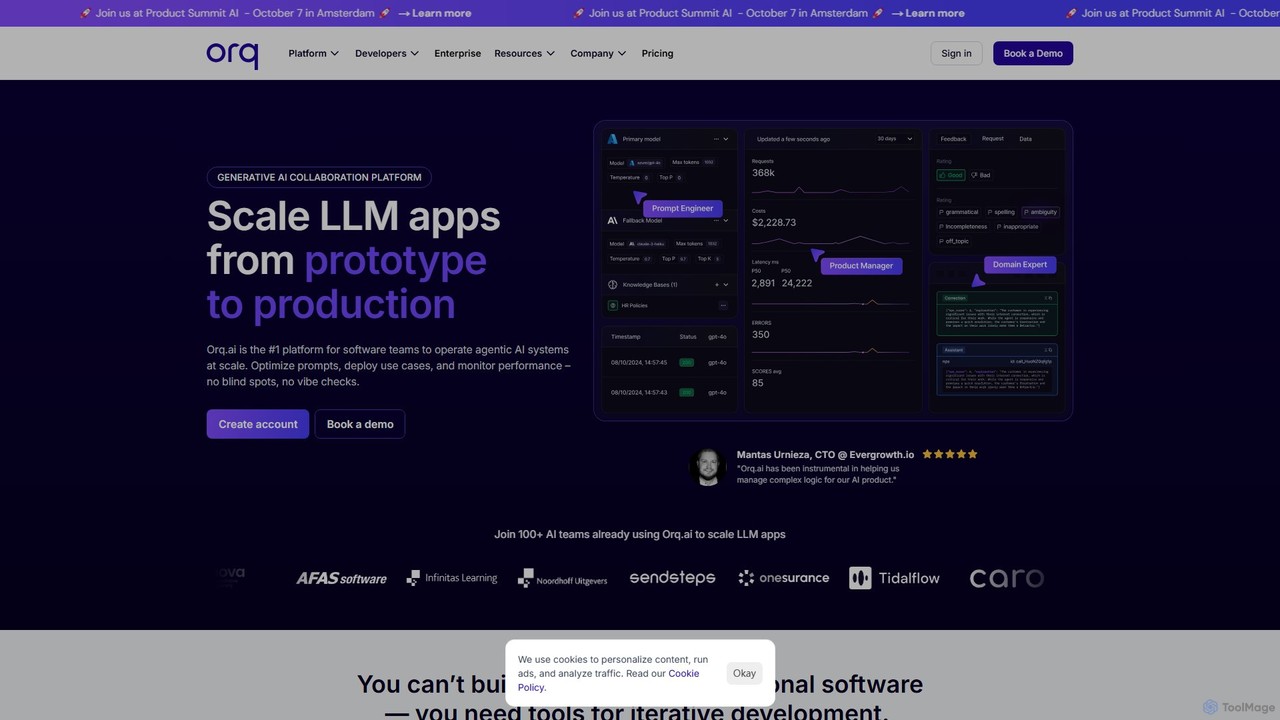
Orq.ai is an end-to-end Generative AI Collaboration Platform for engineering and product teams. It enables users to experiment …
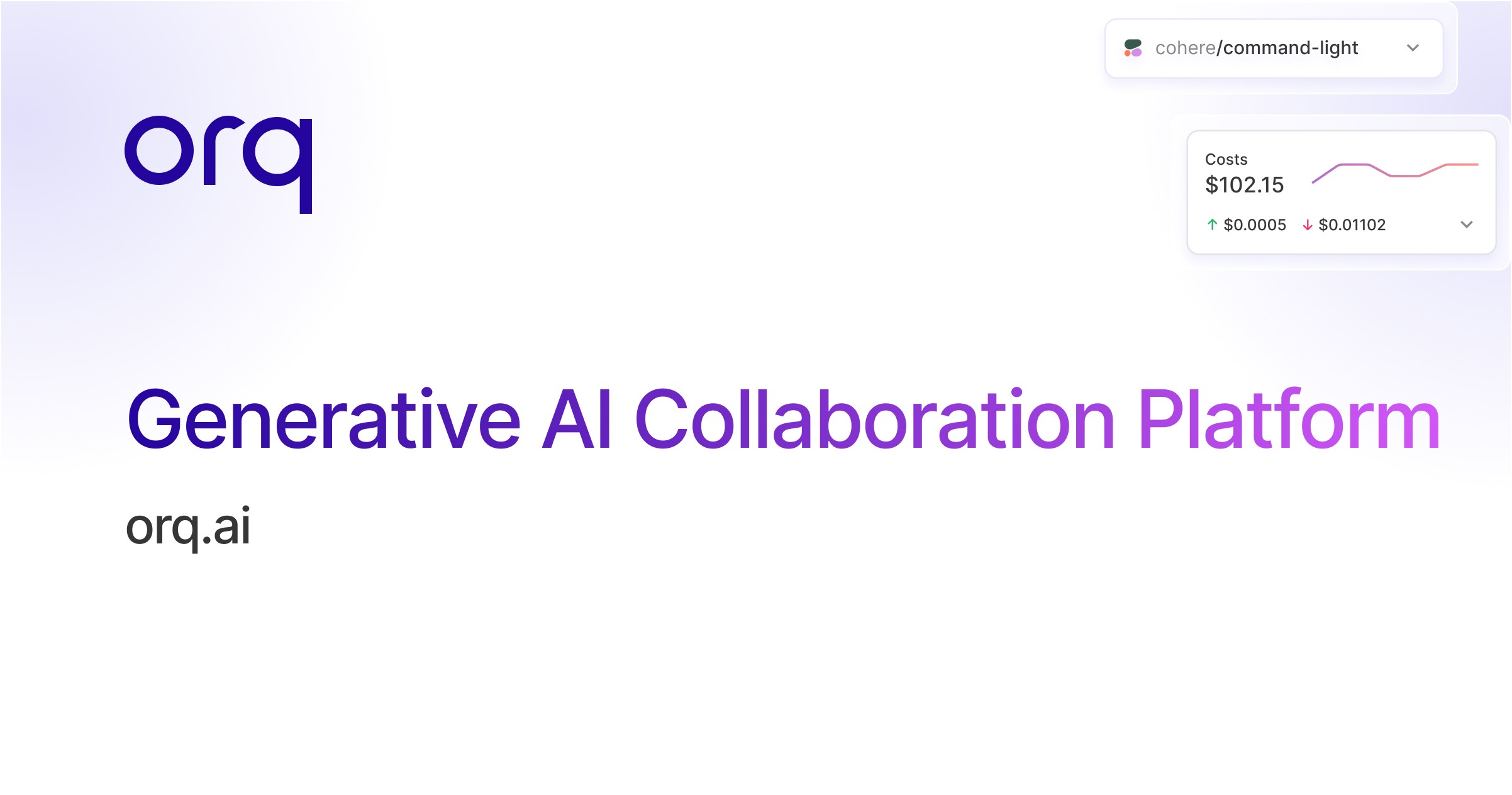
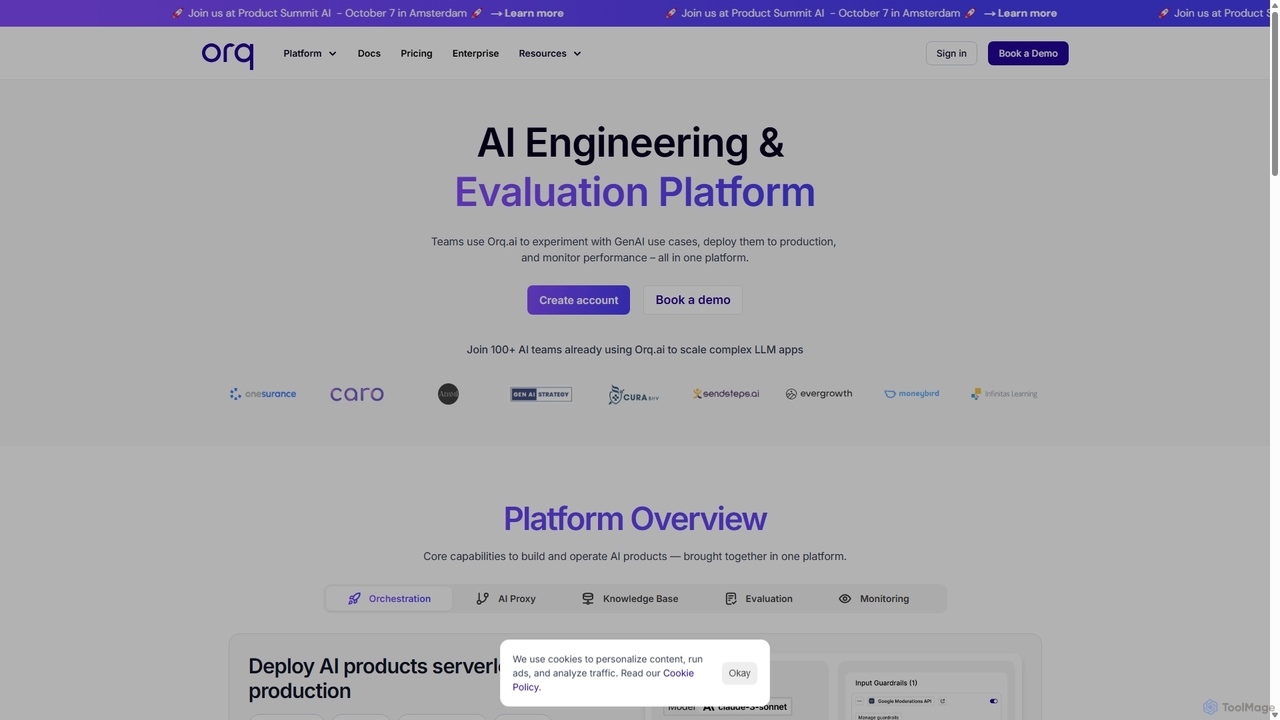
Orq.ai is an end-to-end Generative AI Collaboration Platform for engineering and product teams. It enables users to experiment with GenAI use cases, deploy them to production, and monitor performance, all within a single, unified environment that supports the entire LLM application lifecycle.
OpenRouter
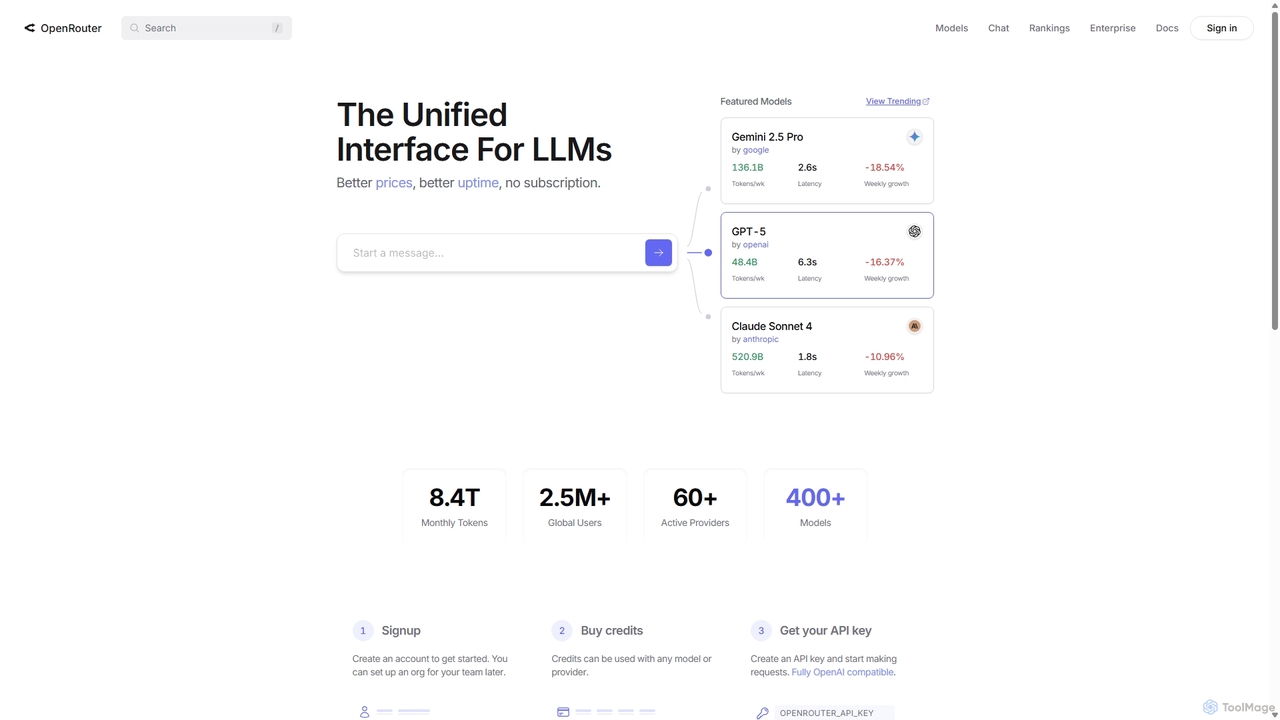
OpenRouter is a unified API gateway for developers, providing access to over 400 AI models from 60+ providers …
OpenRouter is a unified API gateway for developers, providing access to over 400 AI models from 60+ providers like OpenAI, Google, and Anthropic. It simplifies development with a single API, offers competitive pay-as-you-go pricing, automatic failovers for high availability, and intelligent model routing to optimize cost and performance.
Takomo
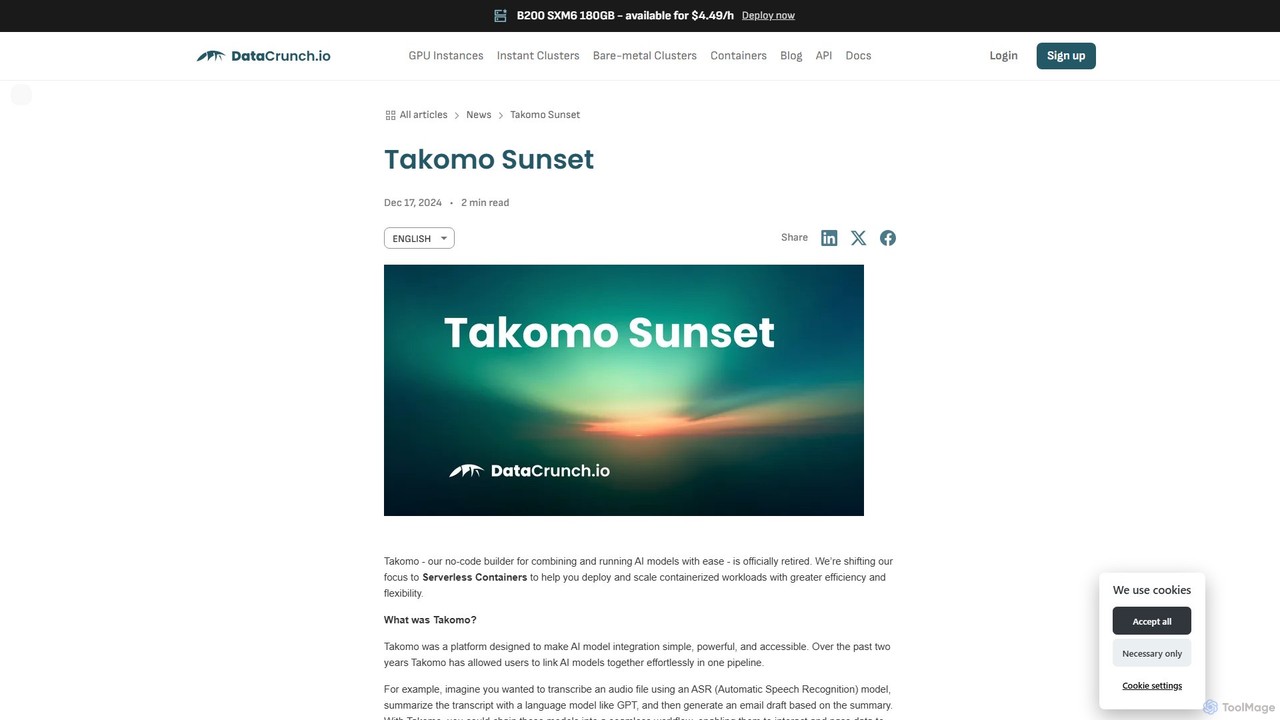
Takomo was a no-code platform by DataCrunch for building and running AI model pipelines. It allowed users to …
Takomo was a no-code platform by DataCrunch for building and running AI model pipelines. It allowed users to visually connect different AI models, such as ASR and GPT, to create complex automated workflows. The service has been officially retired and is no longer available, with the company now focusing on its Serverless Containers service.
Orq.ai
Orq.ai is an end-to-end Generative AI Collaboration Platform designed for software teams to scale LLM applications from prototype …
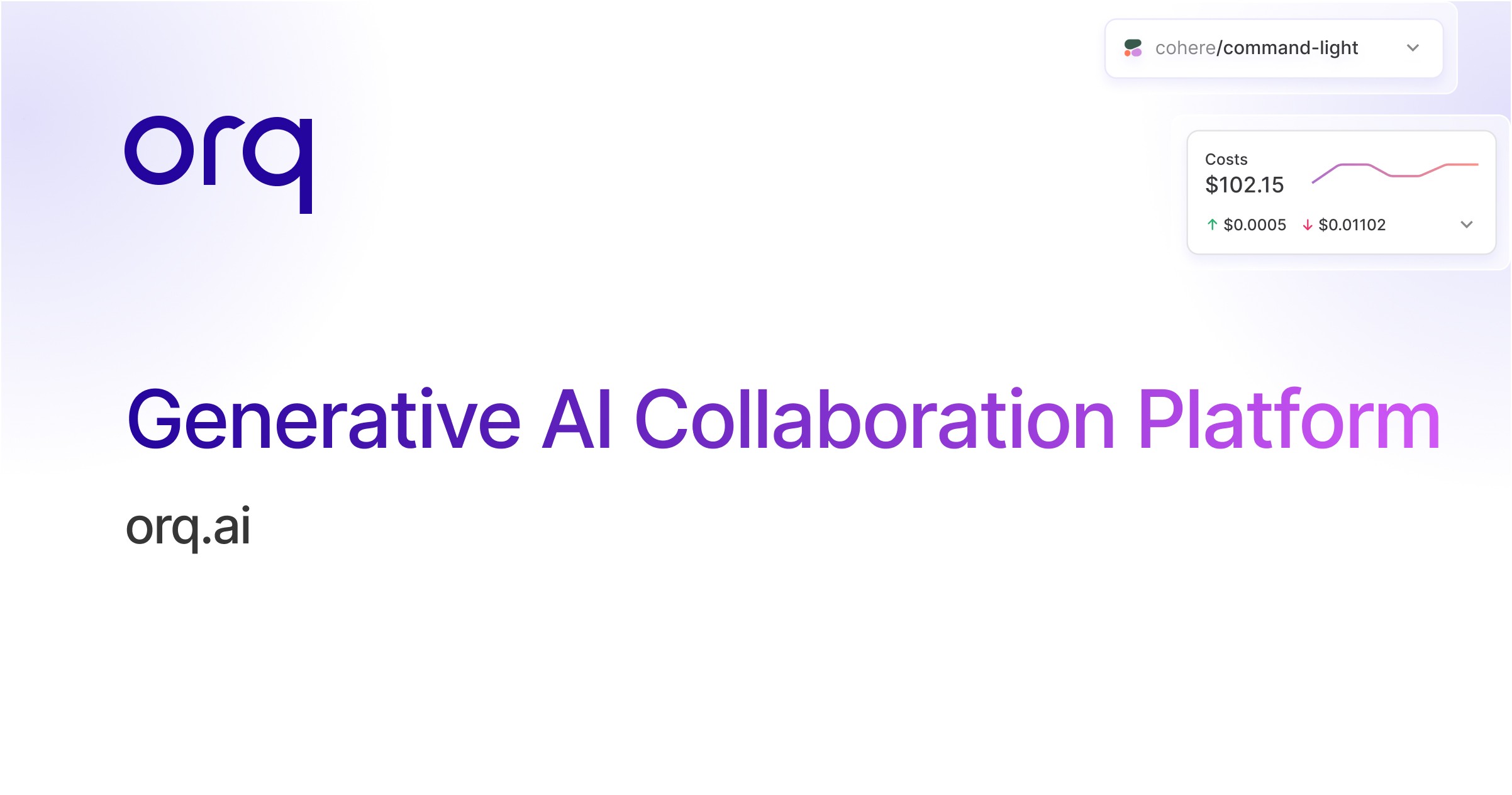
Orq.ai is an end-to-end Generative AI Collaboration Platform designed for software teams to scale LLM applications from prototype to production. It provides tools for experimentation, deployment, and observability, enabling teams to build, monitor, and optimize agentic AI systems with confidence and control.
LM Studio
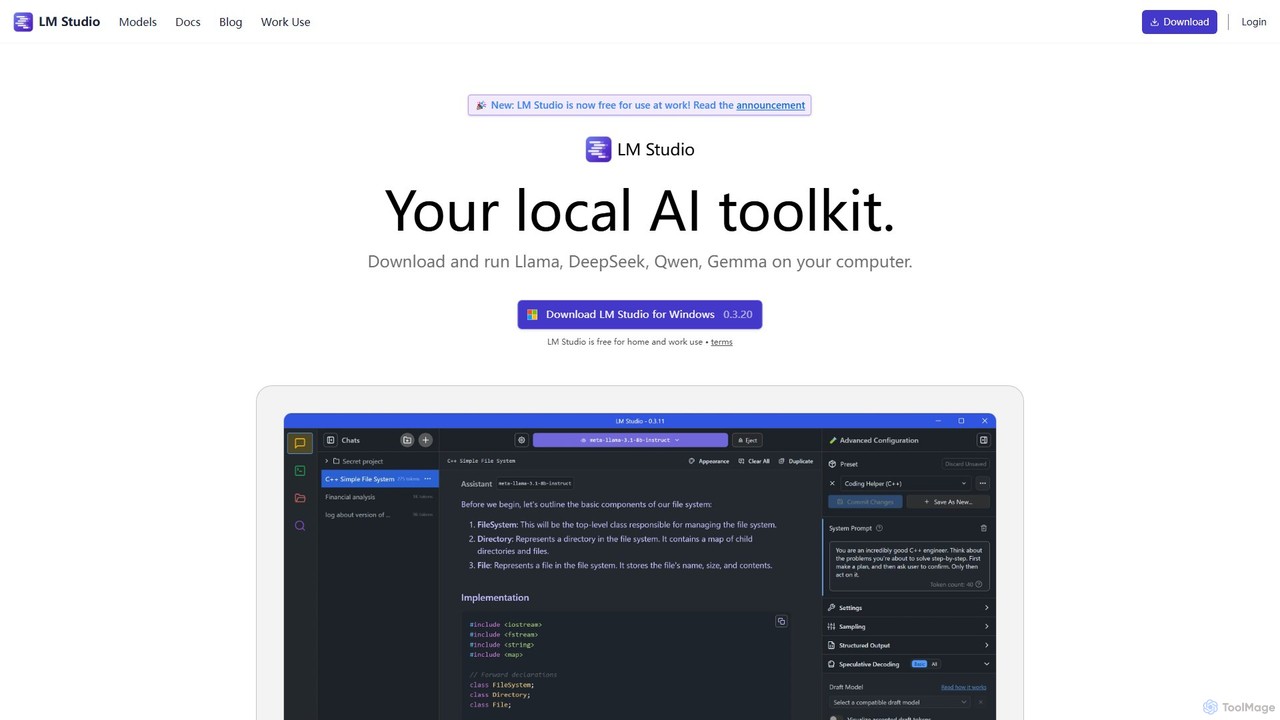
LM Studio is a desktop application for Windows, macOS, and Linux that allows you to discover, download, and …
LM Studio is a desktop application for Windows, macOS, and Linux that allows you to discover, download, and run open-source Large Language Models (LLMs) entirely on your local machine. It offers a user-friendly interface, an OpenAI-compatible local server, and robust privacy features, making it ideal for developers, researchers, and anyone seeking a private AI experience.
Gooey.AI
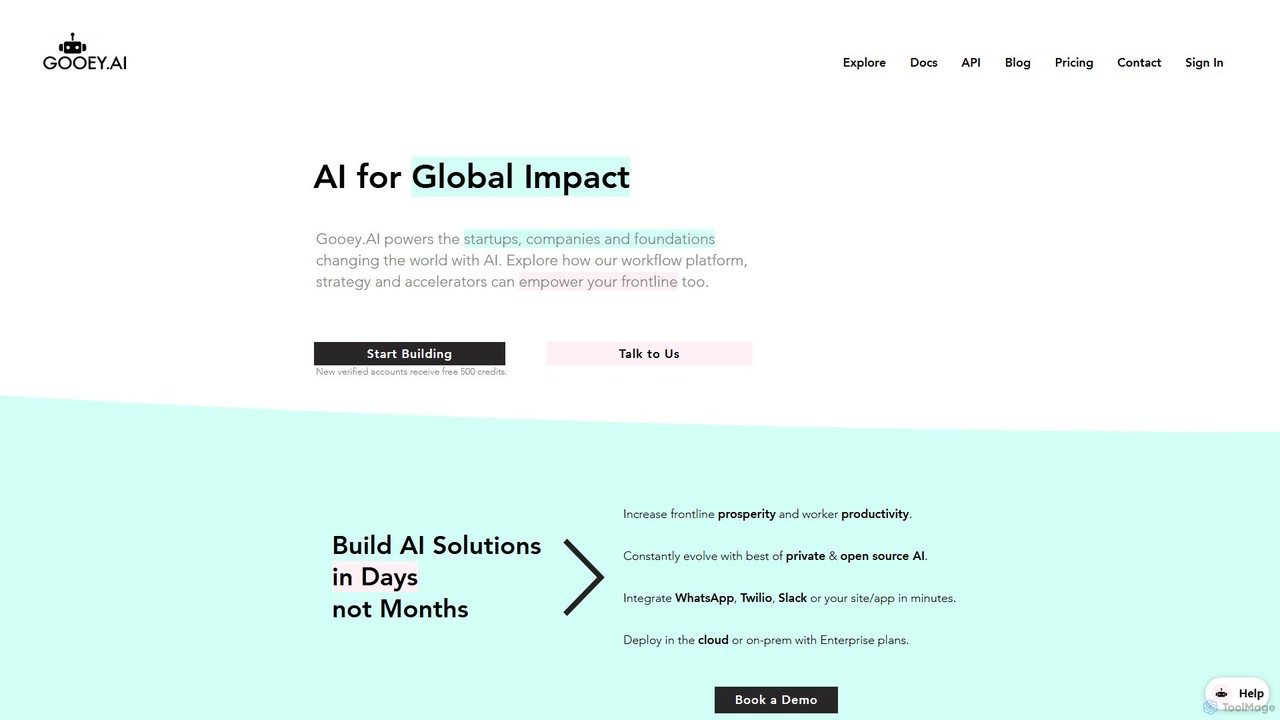
Gooey.AI is a powerful AI workflow platform that enables developers and organizations to build, deploy, and manage complex …
Gooey.AI is a powerful AI workflow platform that enables developers and organizations to build, deploy, and manage complex AI solutions. It provides unified access to the best private and open-source AI models, facilitating the rapid creation of multilingual chatbots, RAG-based copilots, and other generative AI applications with integrations for WhatsApp, Slack, and APIs.
HelixML
HelixML is a private Generative AI platform designed for enterprises. It enables businesses to build, deploy, and manage …
HelixML is a private Generative AI platform designed for enterprises. It enables businesses to build, deploy, and manage secure, custom AI applications using their own data. With flexible deployment options (on-premise, VPC, cloud) and advanced features like RAG and fine-tuning, HelixML empowers industries like finance, healthcare, and energy to automate tasks, enhance decision-making, and drive revenue while ensuring full data privacy and compliance.
Higress.AI
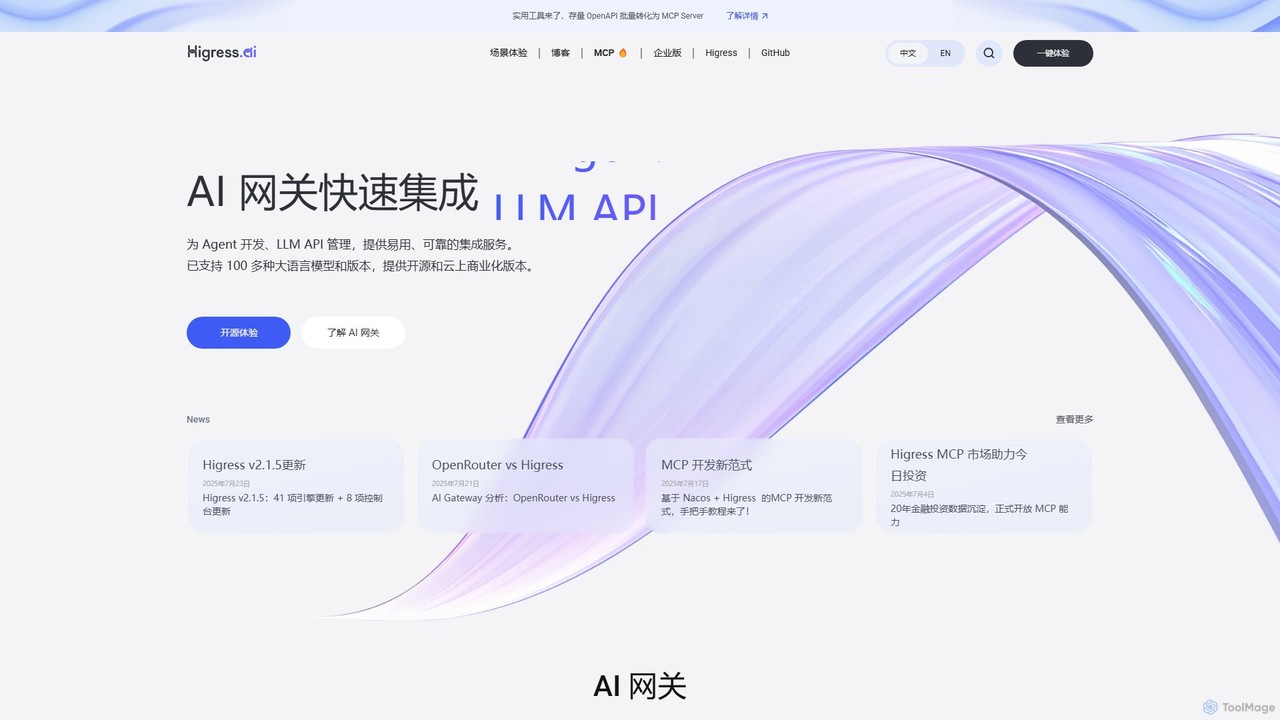
Higress.AI is an advanced, open-source AI Gateway designed for developers and enterprises. It simplifies the integration and management …
Higress.AI is an advanced, open-source AI Gateway designed for developers and enterprises. It simplifies the integration and management of Large Language Models (LLMs) and AI Agents by providing a unified API proxy for over 100 models. Key features include REST to MCP conversion, semantic caching, token-based rate limiting, and a robust plugin system, enabling secure, scalable, and observable AI application infrastructure.
Wisent
Wisent is a pioneering AI platform that utilizes representation engineering to provide unprecedented control over AI models. It …
Wisent is a pioneering AI platform that utilizes representation engineering to provide unprecedented control over AI models. It allows developers to precisely modify and enhance the capabilities of existing LLMs like GPT-4 and Claude, such as creativity or safety, through a simple API. This offers a faster, more efficient alternative to traditional fine-tuning.
Flowise
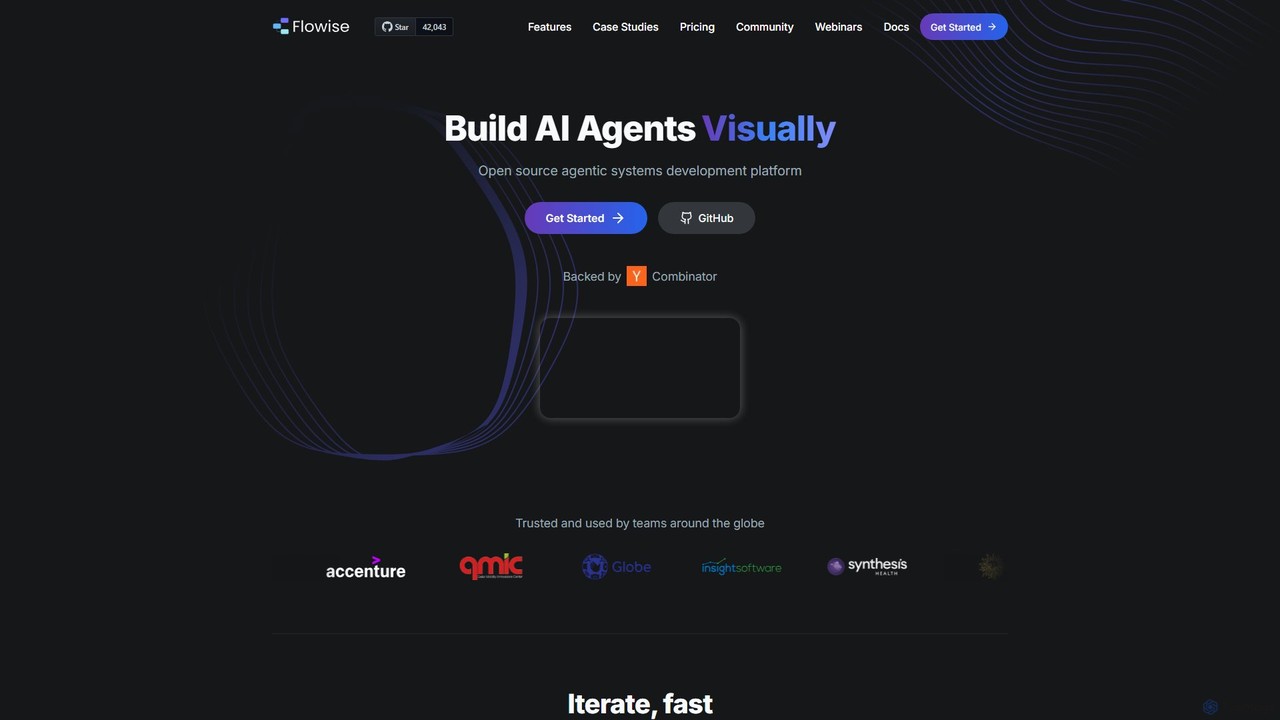
Flowise is an open-source, low-code platform for visually building customized AI agents and applications. Using a drag-and-drop interface, …
Flowise is an open-source, low-code platform for visually building customized AI agents and applications. Using a drag-and-drop interface, developers and teams can rapidly prototype and deploy complex systems, from RAG-powered chatbots to multi-agent workflows. It supports over 100 LLMs, various data sources, and offers enterprise-grade features for scalable deployment.
VModel
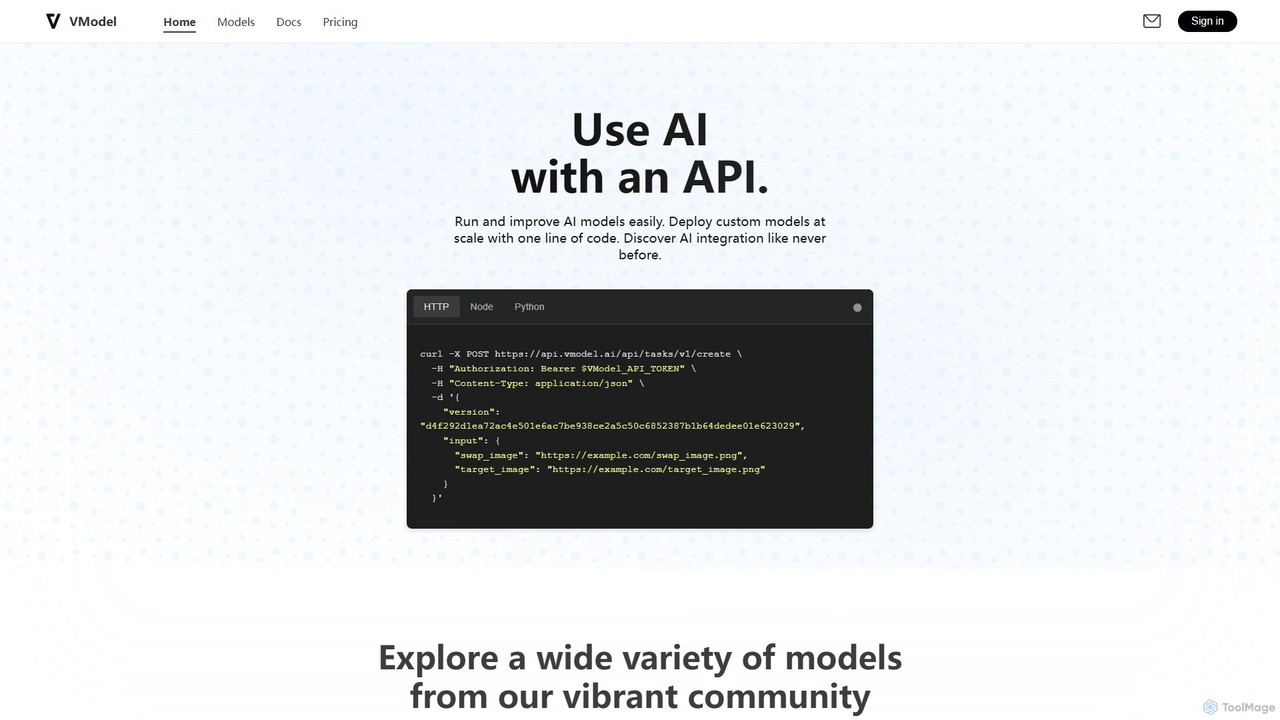
VModel is a developer-focused platform that simplifies the deployment and integration of AI models. It provides a unified …
VModel is a developer-focused platform that simplifies the deployment and integration of AI models. It provides a unified REST API to access a vast library of pre-trained models for tasks like image generation, video processing, and face swapping. With a pay-as-you-go pricing model and scalable infrastructure, VModel enables developers to quickly build and power AI-driven applications without managing complex backend systems, offering enterprise-grade performance for projects of any size.
pinokio
Pinokio is a desktop browser that allows you to install, run, and control AI applications and terminal-based apps …
Pinokio is a desktop browser that allows you to install, run, and control AI applications and terminal-based apps on your computer with a single click. It simplifies the complex setup of open-source AI models by automating environment creation, dependency management, and execution. This empowers users of all skill levels to experiment with powerful AI tools locally, ensuring privacy and full control over their data.
Modal
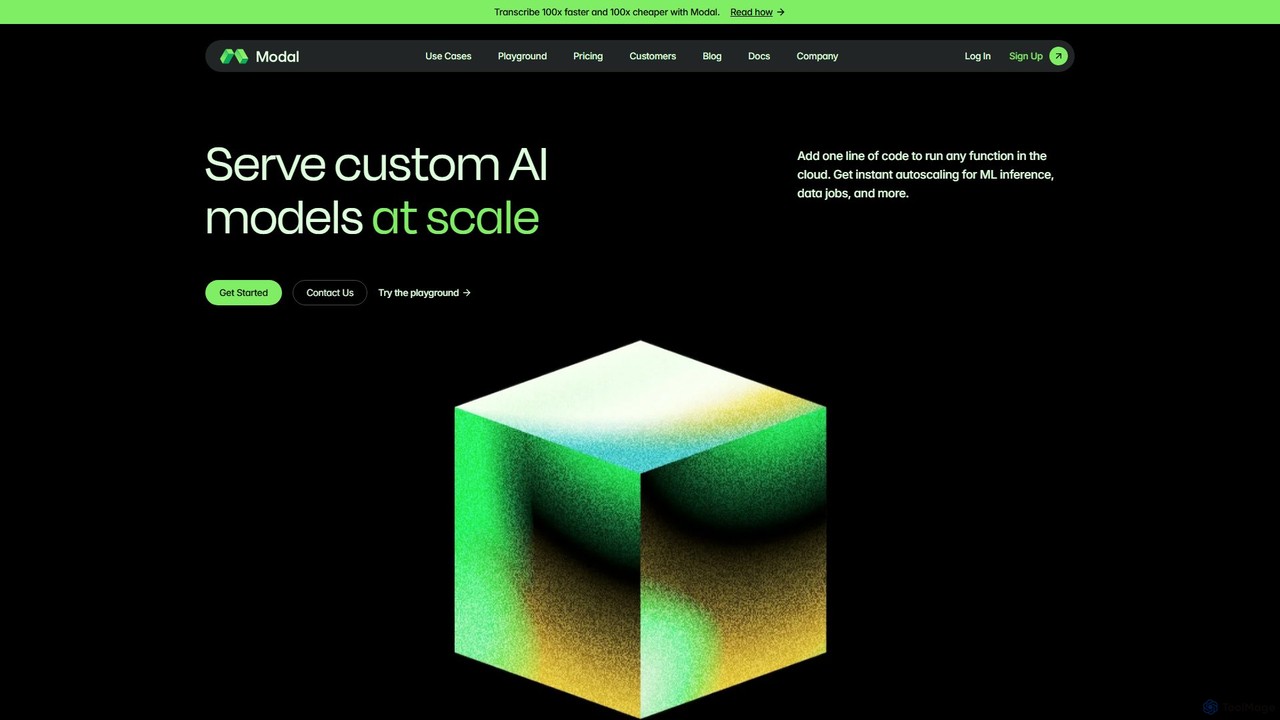
Modal is a high-performance, serverless infrastructure platform for AI and ML developers. It allows you to run Python …
Modal is a high-performance, serverless infrastructure platform for AI and ML developers. It allows you to run Python functions in the cloud with a single line of code, providing instant access to GPUs, automatic scaling from zero to thousands of containers, and pay-per-second pricing. Eliminate infrastructure overhead and focus on building and deploying compute-intensive applications like generative AI, batch processing, and data analysis.
TAHO
TAHO is a high-performance compute framework designed to replace complex orchestrators like Kubernetes. It doubles your compute efficiency …
TAHO is a high-performance compute framework designed to replace complex orchestrators like Kubernetes. It doubles your compute efficiency without increasing hardware costs by eliminating overhead and enabling microsecond cold starts. Ideal for AI/ML, edge computing, and high-throughput workloads, TAHO integrates seamlessly with your existing infrastructure, offering a faster, cheaper, and simpler solution for scaling demanding applications on cloud, on-prem, or hybrid environments.
Next Boilerplate
A comprehensive AI startup boilerplate built on Next.js. It provides pre-built components, AI integrations for code generation and …
A comprehensive AI startup boilerplate built on Next.js. It provides pre-built components, AI integrations for code generation and NLP, model training capabilities, and advanced analytics. Designed to help developers and startups launch AI-powered applications rapidly by handling foundational infrastructure like authentication, payments, and security.
Spice AI
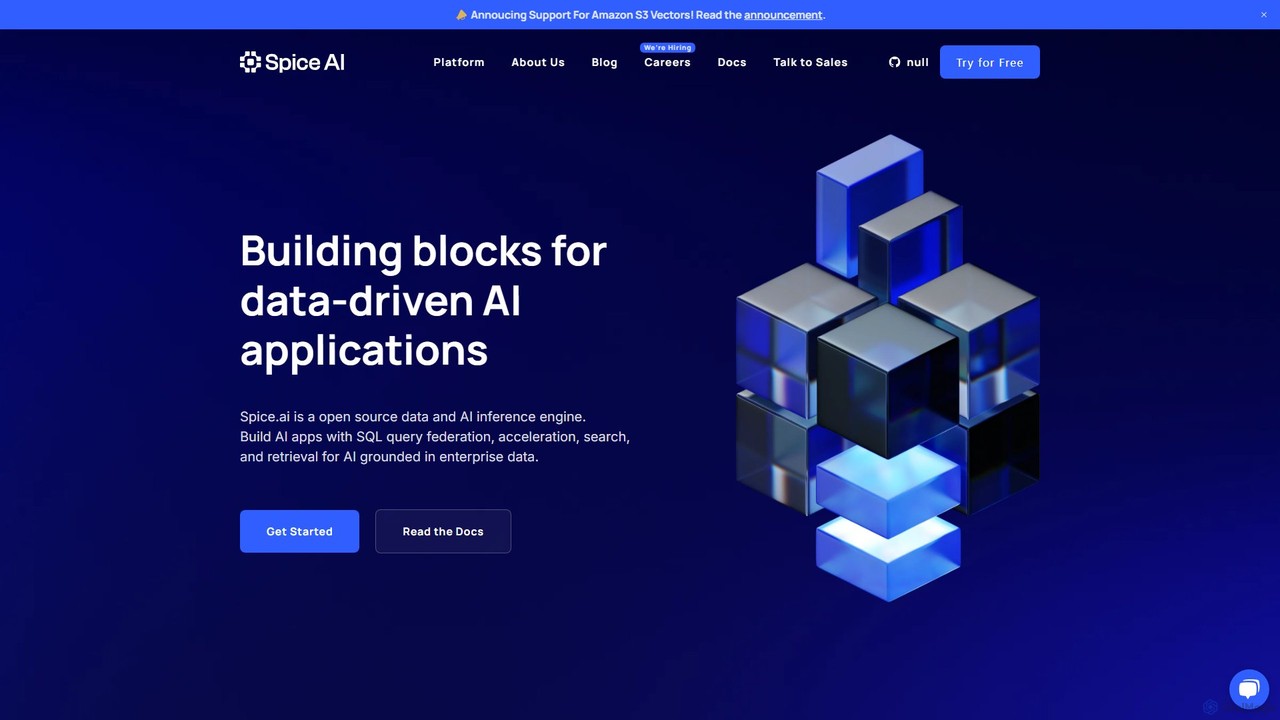
Spice AI is an open-source, portable data and AI compute engine for developers. It unifies data from any …
Spice AI is an open-source, portable data and AI compute engine for developers. It unifies data from any source, accelerates queries with Apache Arrow, and integrates AI model serving and vector search to simplify building high-performance, data-driven applications.
Qualcomm AI Hub
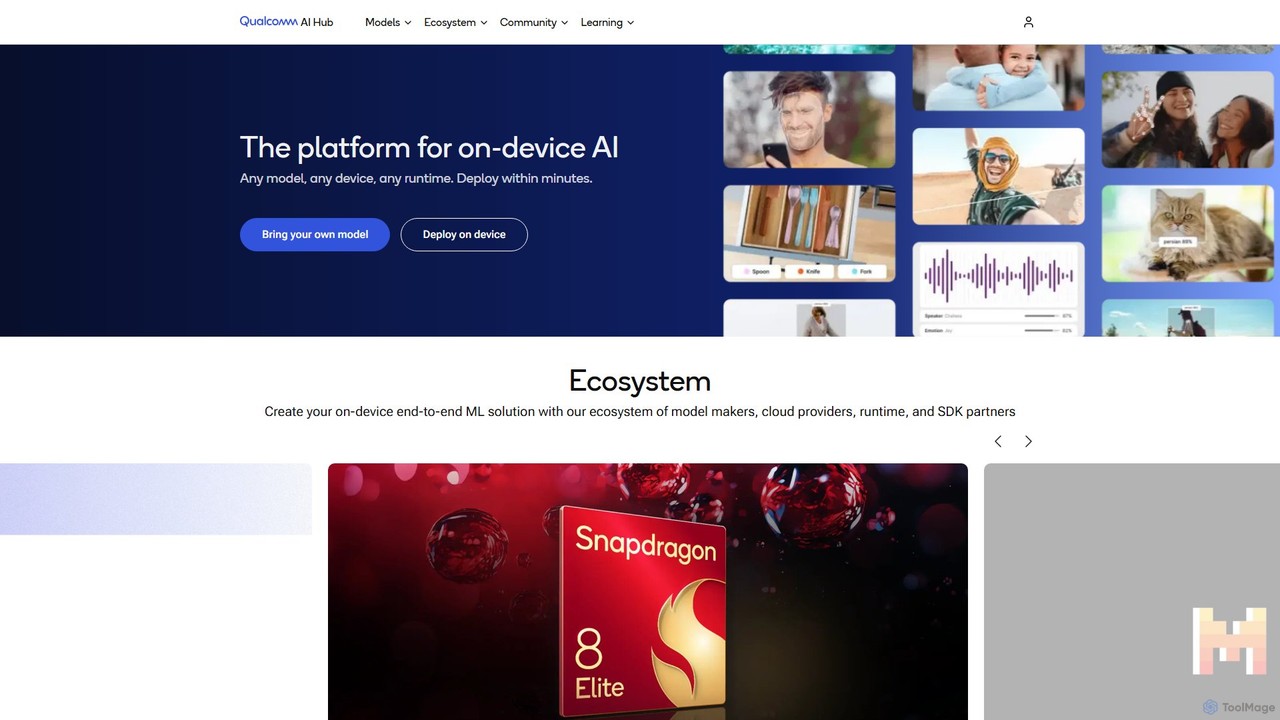
A developer platform for optimizing and deploying AI models on-device. Qualcomm AI Hub provides a library of 100+ …
A developer platform for optimizing and deploying AI models on-device. Qualcomm AI Hub provides a library of 100+ pre-optimized models and tools to compile, profile, and run your own models on real Snapdragon-powered hardware, streamlining the path to production for edge AI applications.
LocalAI
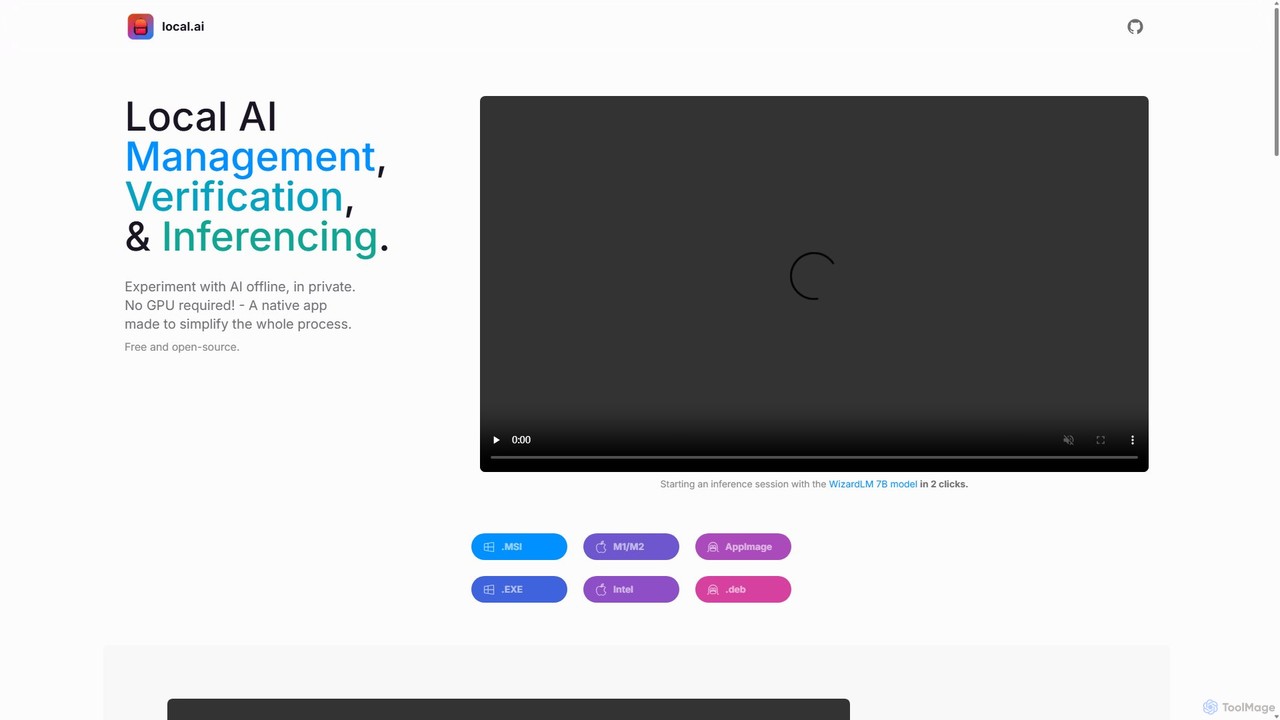
LocalAI is a free, open-source desktop application that allows you to run AI models privately and offline on …
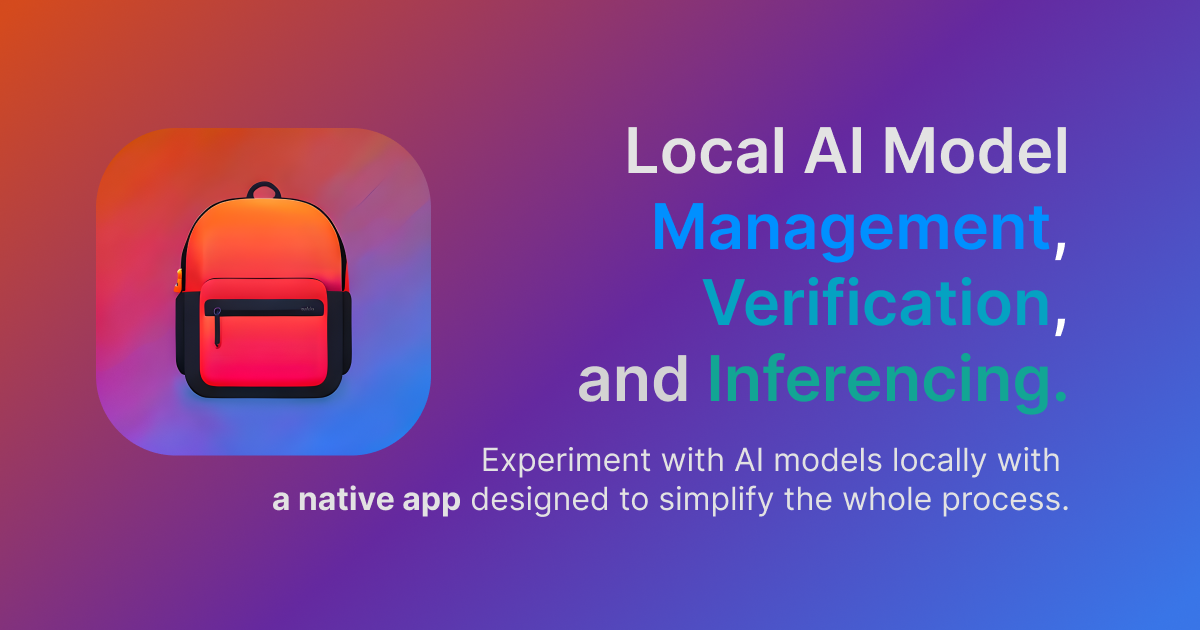
LocalAI is a free, open-source desktop application that allows you to run AI models privately and offline on your computer. It simplifies AI experimentation without needing a GPU, offering features like model management, integrity verification, and a local inference server.
About Model Deployment
Model Deployment refers to the critical process of integrating trained machine learning models into production environments, making their predictive capabilities accessible to end-users and applications. These tools ensure that AI models, once developed, can operate efficiently, reliably, and at scale in real-world scenarios. By bridging the gap between development and practical application, Model Deployment enables organizations to leverage AI for real-time inference, batch processing, and continuous model improvement across various intelligent systems.
Core Features
- Model Packaging: Encapsulating models and their dependencies into portable, consistent units like containers for seamless transfer.
- API Endpoints: Exposing models via secure, scalable RESTful APIs or gRPC services for easy integration with other applications.
- Scalability & Load Balancing: Automatically adjusting resources to handle varying inference loads and distributing requests efficiently.
- Monitoring & Logging: Continuously tracking model performance, data drift, resource utilization, and logging predictions for analysis and debugging.
- Version Control & Rollbacks: Managing different iterations of models, allowing for easy updates, A/B testing, and quick rollbacks to previous versions if issues arise.
Use Cases
Model Deployment tools are essential for organizations looking to operationalize their AI investments. They are utilized by data scientists, MLOps engineers, and developers to bring AI-powered features to market. Typical scenarios include deploying models for real-time recommendations, automating fraud detection, powering intelligent chatbots, and enabling predictive analytics in various industries.
How to Choose
When selecting Model Deployment tools, consider the following: the required scalability and latency for your applications, compatibility with your existing ML frameworks and infrastructure, the robustness of monitoring and logging capabilities, ease of integration via APIs, and the cost-effectiveness of the platform. Evaluate support for model versioning, A/B testing, and security features to ensure reliable and compliant operations.
Model DeploymentUse Cases
Real-time Product Recommendations
An e-commerce platform deploys a recommendation model to provide personalized product suggestions to users as they browse. The model is exposed via a low-latency API, allowing the website to fetch and display relevant items instantly, enhancing user experience and driving sales. MLOps engineers ensure the model scales dynamically to handle peak traffic and is continuously monitored for performance and data drift.
Automated Financial Fraud Detection
A financial institution deploys a machine learning model to detect fraudulent transactions in real-time. The model processes incoming transaction data, flags suspicious activities, and integrates with existing security systems for immediate alerts or blocking. Model deployment ensures high availability, minimal latency, and robust logging for audit trails, protecting customers and assets.
Predictive Maintenance for Industrial Equipment
A manufacturing company deploys a predictive maintenance model that analyzes sensor data from machinery to forecast potential failures. The deployed model continuously processes data streams, alerting maintenance teams to impending issues before they occur. This proactive approach minimizes downtime, reduces repair costs, and extends equipment lifespan, optimizing operational efficiency.
Intelligent Customer Service Chatbots
A customer service department deploys an NLP model to power an intelligent chatbot that can understand and respond to complex customer queries. The model is deployed as a service, integrating with the company's messaging platforms. It provides instant, accurate answers, deflects common issues, and escalates complex cases to human agents, improving customer satisfaction and reducing support load.
Personalized Content Delivery for Media
A media streaming service deploys a content recommendation model to personalize user homepages and suggest movies or shows. The model analyzes viewing history and preferences, then serves tailored content lists through a highly scalable API. This deployment ensures a unique and engaging experience for each user, increasing engagement and retention on the platform.
Medical Image Diagnosis Assistance
A healthcare provider deploys a computer vision model trained to assist in diagnosing medical conditions from imaging data (e.g., X-rays, MRIs). The model is deployed securely, allowing clinicians to upload images and receive AI-generated insights or anomaly detections. This accelerates diagnostic processes, supports clinical decision-making, and can improve patient outcomes by identifying subtle patterns.