

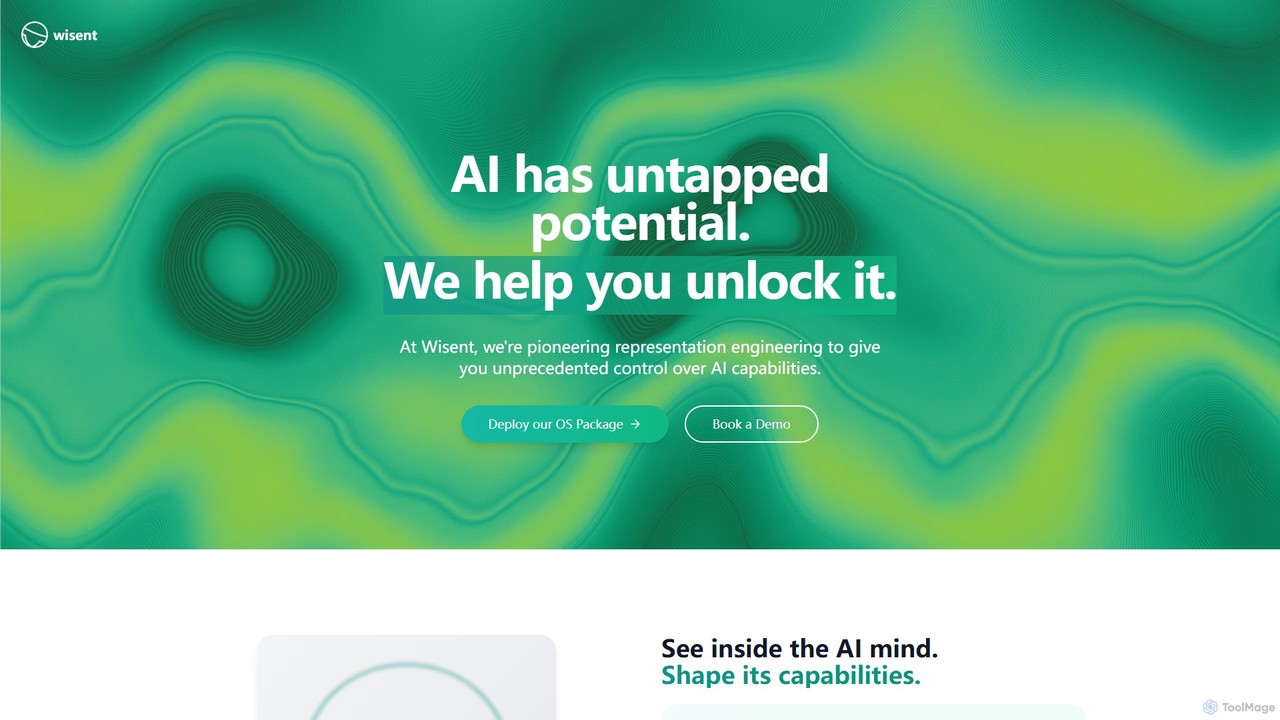
Wisent Overview
Wisent is an advanced AI tool designed to unlock the full potential of large language models (LLMs). It addresses the common challenge of AI models acting as 'black boxes,' where their internal decision-making processes are opaque and difficult to control. Wisent pioneers the use of representation engineering, a neuroscience-inspired method that provides deep visibility into the internal workings of AI. By understanding and precisely editing the neural activation patterns within a model, users can shape its behavior, enhance specific capabilities, and align the AI with their unique needs.
This technology transforms AI from a rigid, one-size-fits-all tool into a flexible, adaptable system that can evolve. Instead of spending months on resource-intensive fine-tuning, developers can use Wisent to achieve desired behavioral changes in minutes. The platform is designed for seamless integration into existing workflows, allowing businesses to enhance popular models like GPT-4, Claude, and Llama-3 without overhauling their current infrastructure.
How to use Wisent
Wisent offers a straightforward, multi-step process for enhancing and deploying AI models, accessible via a simple API and comprehensive SDKs for languages like Python and JavaScript.
- Analyze & Identify Patterns: The process begins with Wisent's technology mapping the internal representations within an AI model. It identifies the key neural activation patterns that correspond to specific behaviors, such as creativity, technical accuracy, or safety protocols.
- Precise Modification: Once these patterns are identified, Wisent allows for their surgical editing. This isn't a broad retraining; it's a precise modification to enhance a desired capability or suppress an unwanted one, like hallucinations.
- Validate: After modification, the model is rigorously tested to ensure the intended behavioral changes have taken effect while preserving the model's overall performance and stability.
- Deploy & Integrate: The enhanced model is then ready for deployment. Using the Wisent API, developers can connect their applications to the newly customized model with just a few lines of code, using the same familiar interface as their existing LLM provider.
Core Features of Wisent
- Representation Engineering: The core technology that allows for precise control and modification of AI model behavior by editing internal neural activations.
- Capability Enhancement: Users can specifically boost certain traits in their models, such as enhancing creativity for marketing copy, increasing technical precision for reports, or strengthening safety guardrails.
- Hallucination Reduction: By identifying and modifying the patterns that lead to factual inaccuracies, Wisent can significantly reduce the frequency of AI hallucinations.
- Adaptive LLMs: Create models that can adapt their behavior, tone, and knowledge for different contexts or users without needing separate fine-tuned versions.
- Simple API & SDK Integration: Offers a clean, intuitive interface with SDKs for Python and JavaScript, enabling easy integration with existing applications and LLM providers.
- Broad Model Compatibility: Works with popular open-source and proprietary models, including GPT-4, Claude, and Llama-3, allowing users to enhance their current AI stack.
- Flexible Deployment: Provides options for using a cloud-based API for ease of use or deploying on-premises for applications requiring maximum security and data privacy.
Use Cases for Wisent
Wisent's adaptability makes it valuable across various industries:
- Customer Service: Develop AI agents that adapt their communication style, tone, and problem-solving approach based on the customer's profile, sentiment, or the complexity of the issue.
- Content Creation: Build AI assistants that can seamlessly switch between different writing styles—from highly creative and engaging marketing content to formal, technical documentation—based on a simple command.
- Healthcare: Customize models to adjust their level of medical specialization for different domains (e.g., cardiology vs. neurology) or to communicate complex information appropriately to either a doctor or a patient.
- Education: Create personalized learning assistants that adapt their teaching methods and content complexity based on a student's learning style, progress, and knowledge level.
Advantages of Wisent
Wisent provides a significant competitive edge over traditional AI customization methods:
- Precision and Control: Moves beyond the unpredictability of prompt engineering and the broad strokes of fine-tuning to offer surgical control over specific AI behaviors.
- Speed and Efficiency: Achieves in minutes what typically takes weeks or months of fine-tuning, dramatically accelerating development cycles.
- Resource Savings: Avoids the high computational and data costs associated with training or fine-tuning large models from scratch.
- Scalable Personalization: Enables the creation of tailored AI experiences for diverse user segments from a single core model, maintaining efficiency at scale.
- Ethical Alignment: Allows for the tuning of AI models to adhere to specific ethical, cultural, or regulatory guidelines, ensuring responsible AI deployment.
Pricing and Plans
Wisent's pricing information is not publicly listed on the website. The platform appears to be targeted at enterprise clients and developers with specific needs. Interested users are encouraged to 'Book a Demo' or contact the sales team directly to discuss their requirements and receive a custom quote. This approach suggests a tiered or custom pricing model based on usage, deployment type (cloud vs. on-premises), and the level of support required.
Wisent Alternatives
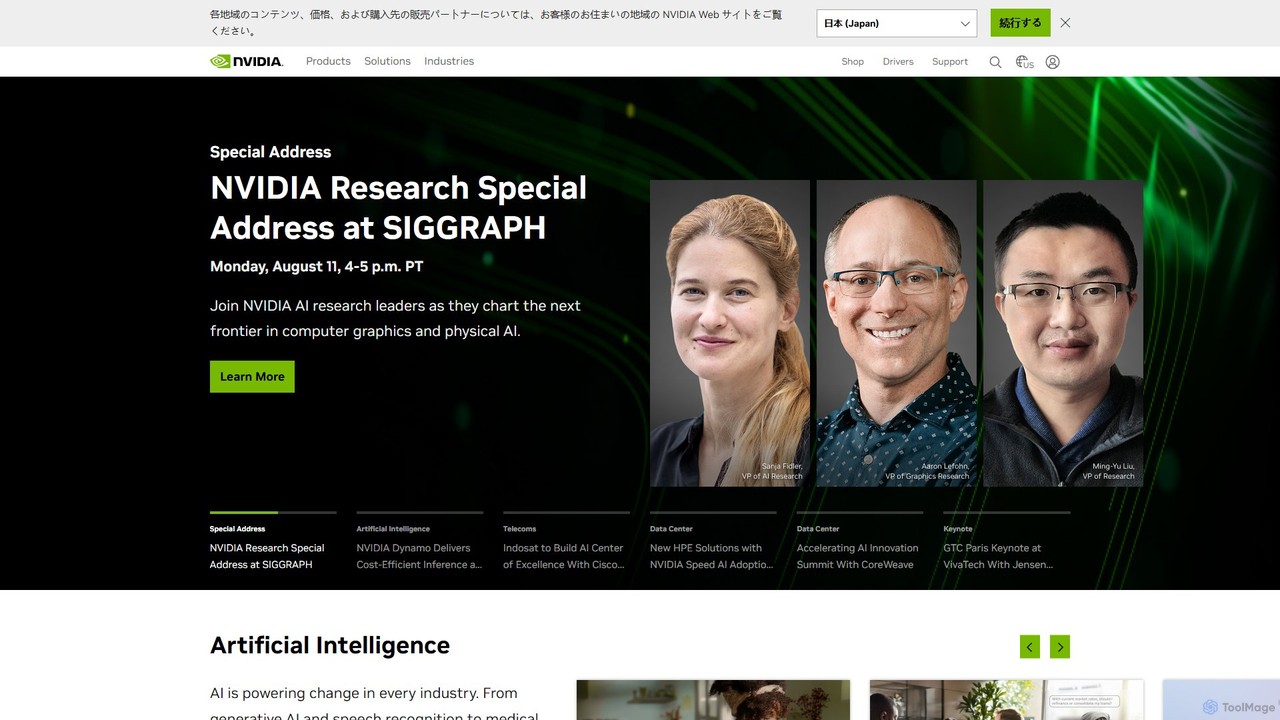
OctoAI
OctoAI is a high-performance compute platform for developers to run, tune, and scale generative AI models efficiently. It offers optimized, production-ready API endpoints for popular open-source models like Llama, Mixtral, and Stable Diffusion. By focusing on deep system optimizations, OctoAI provides faster inference speeds and lower costs, enabling businesses to build and deploy scalable AI applications without managing complex infrastructure.
Api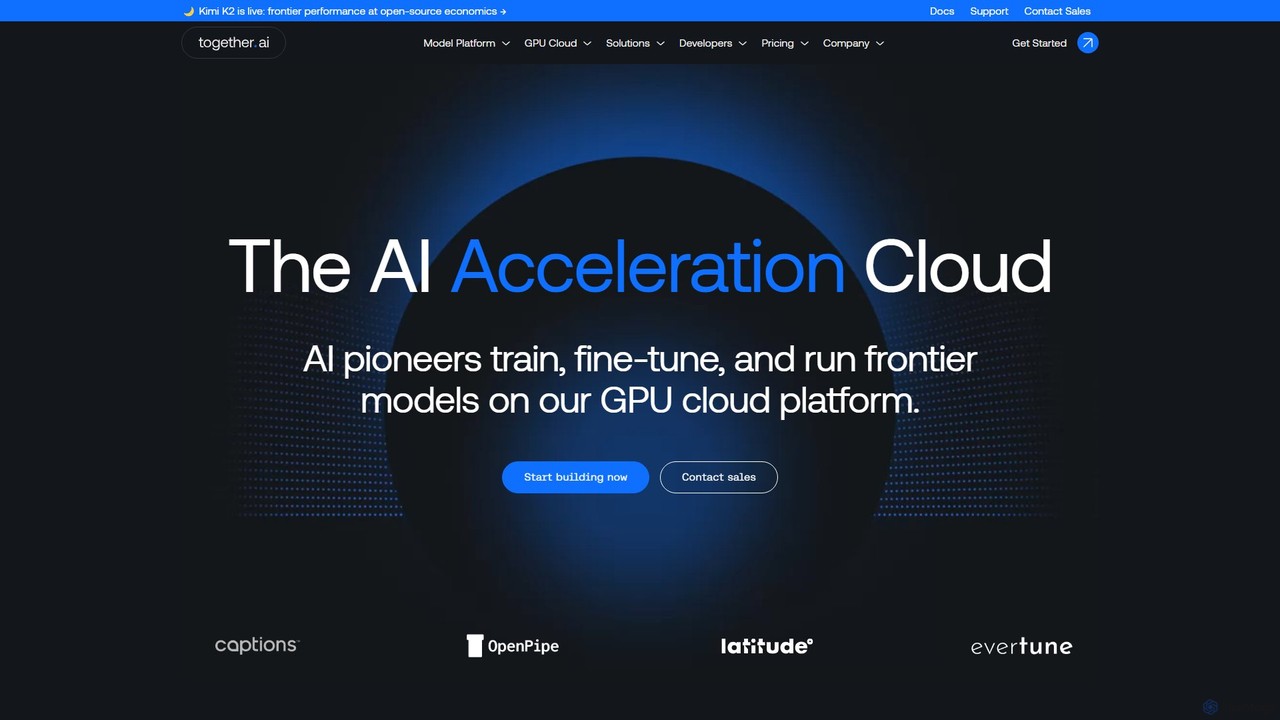
Together AI
Together AI is a leading cloud platform for developers, providing fast, cost-effective infrastructure to run, fine-tune, and train open-source generative AI models. It offers an extensive library of over 200 models, serverless inference APIs, customizable fine-tuning, and dedicated GPU clusters, creating an end-to-end solution for building and scaling AI applications.
Gpu Infrastructure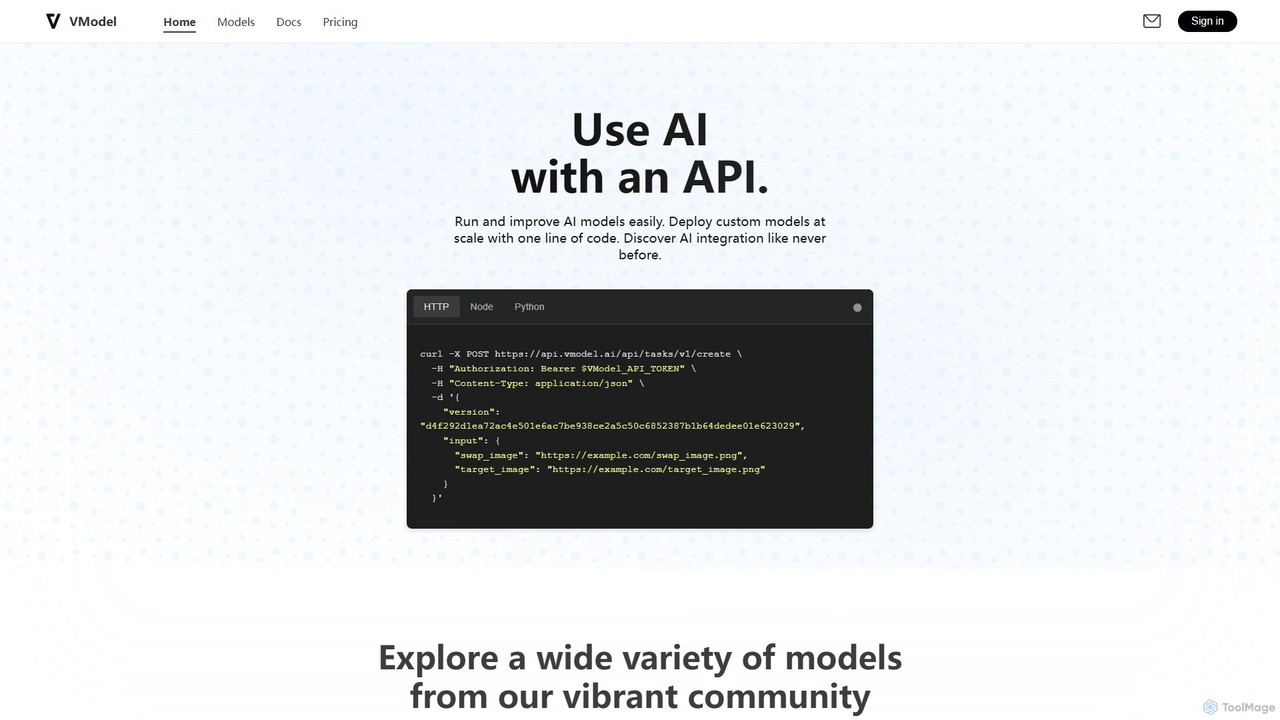
VModel
VModel is a developer-focused platform that simplifies the deployment and integration of AI models. It provides a unified REST API to access a vast library of pre-trained models for tasks like image generation, video processing, and face swapping. With a pay-as-you-go pricing model and scalable infrastructure, VModel enables developers to quickly build and power AI-driven applications without managing complex backend systems, offering enterprise-grade performance for projects of any size.
Model Deployment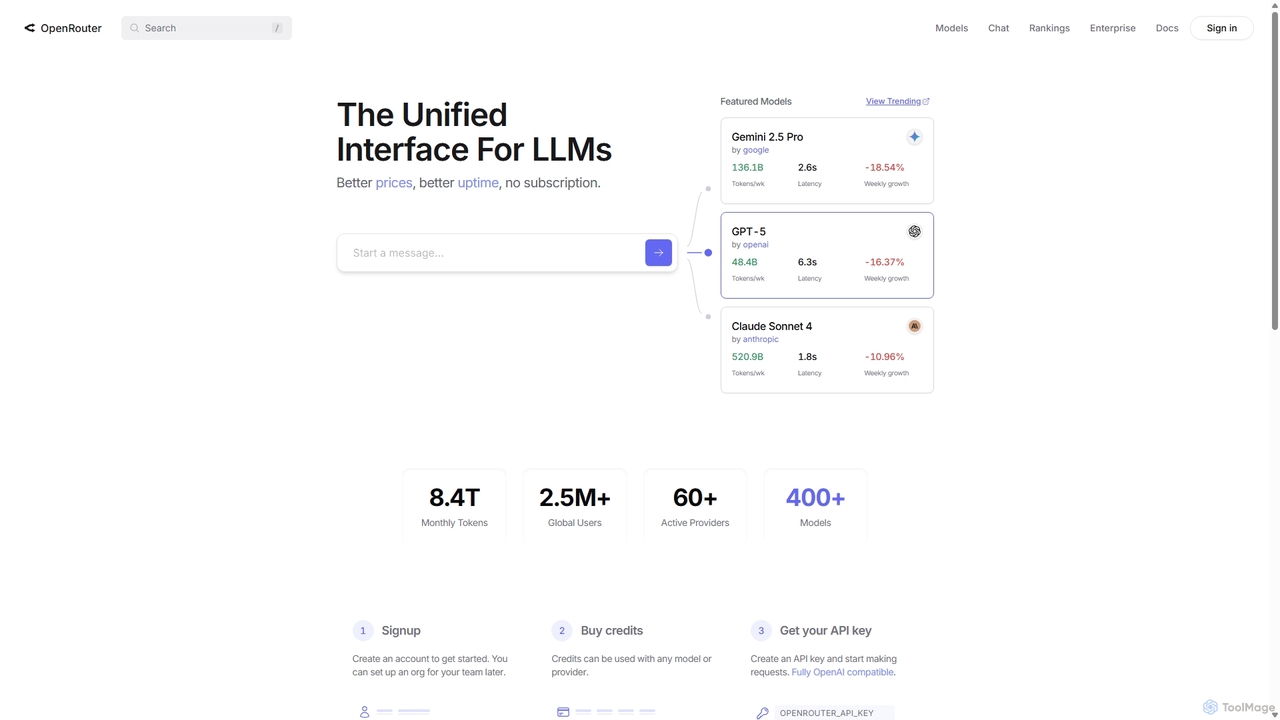
OpenRouter
OpenRouter is a unified API gateway for developers, providing access to over 400 AI models from 60+ providers like OpenAI, Google, and Anthropic. It simplifies development with a single API, offers competitive pay-as-you-go pricing, automatic failovers for high availability, and intelligent model routing to optimize cost and performance.
Model Deployment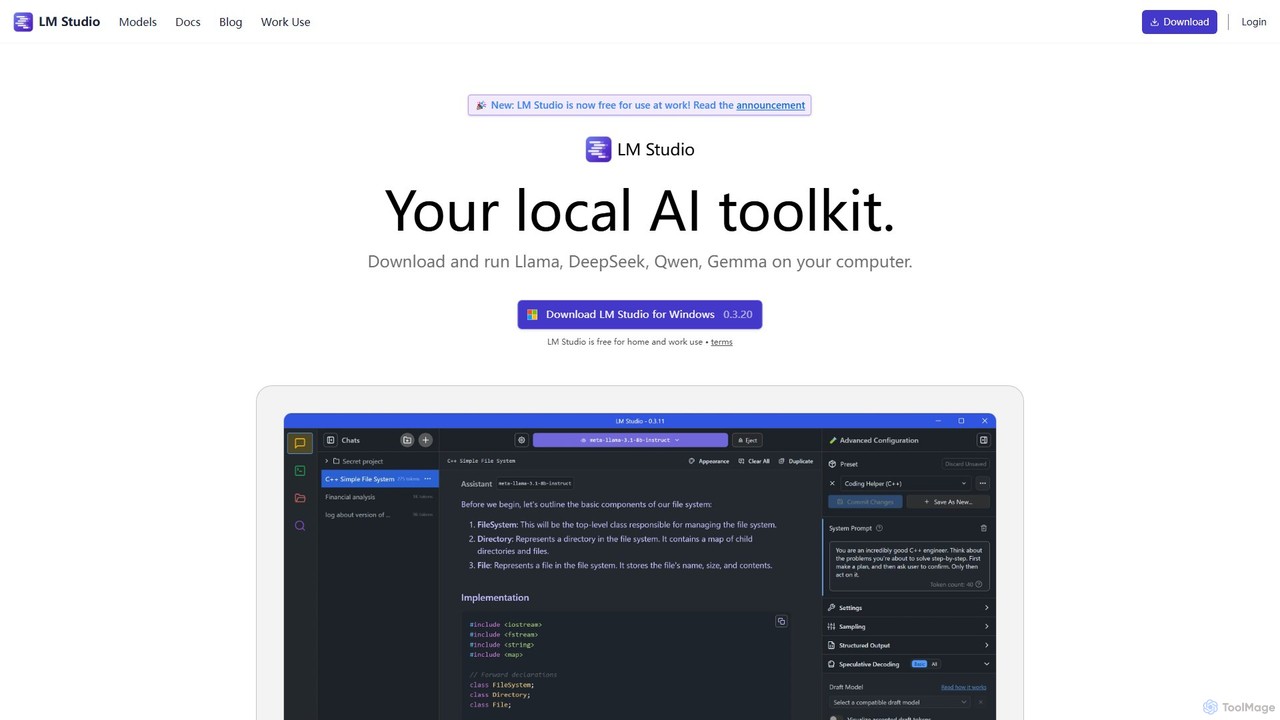
LM Studio
LM Studio is a desktop application for Windows, macOS, and Linux that allows you to discover, download, and run open-source Large Language Models (LLMs) entirely on your local machine. It offers a user-friendly interface, an OpenAI-compatible local server, and robust privacy features, making it ideal for developers, researchers, and anyone seeking a private AI experience.
Model DeploymentWisent Categories
Wisent Embed Widget
Copy this embed code to place the badge on your blog, article, or product site and send readers directly to this ToolMage detail page.

Related AI tools

Anthropic
Anthropic is an AI safety and research company that builds reliable, interpretable, and steerable AI systems. Its flagship product is Claude, a family of large language models, including the powerful Claude 4 series (Opus and Sonnet). These models are designed for a wide range of tasks, from sophisticated dialogue and content creation to complex reasoning and state-of-the-art coding, all with a foundational commitment to safety.
Large Language ModelOctoAI
OctoAI is a high-performance compute platform for developers to run, tune, and scale generative AI models efficiently. It offers optimized, production-ready API endpoints for popular open-source models like Llama, Mixtral, and Stable Diffusion. By focusing on deep system optimizations, OctoAI provides faster inference speeds and lower costs, enabling businesses to build and deploy scalable AI applications without managing complex infrastructure.
ApiTogether AI
Together AI is a leading cloud platform for developers, providing fast, cost-effective infrastructure to run, fine-tune, and train open-source generative AI models. It offers an extensive library of over 200 models, serverless inference APIs, customizable fine-tuning, and dedicated GPU clusters, creating an end-to-end solution for building and scaling AI applications.
Gpu InfrastructureVModel
VModel is a developer-focused platform that simplifies the deployment and integration of AI models. It provides a unified REST API to access a vast library of pre-trained models for tasks like image generation, video processing, and face swapping. With a pay-as-you-go pricing model and scalable infrastructure, VModel enables developers to quickly build and power AI-driven applications without managing complex backend systems, offering enterprise-grade performance for projects of any size.
Model Deployment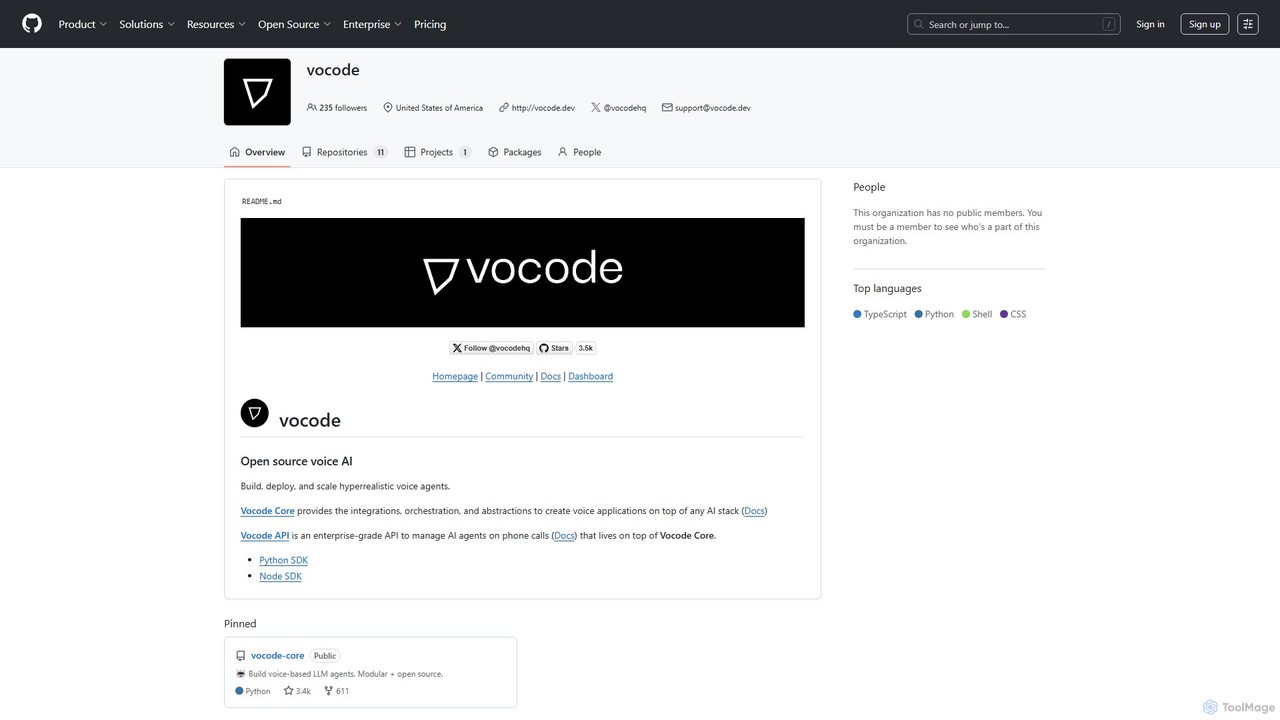
vocode
Vocode is an open-source platform for building, deploying, and scaling hyperrealistic voice AI agents. It provides developers with a core framework and an enterprise-grade API to create sophisticated voice-based LLM applications for tasks like automated customer service, sales calls, and interactive voice response (IVR) systems.
Voicebot
OpenAI
OpenAI is a leading AI research and deployment company dedicated to ensuring that artificial general intelligence (AGI) benefits all of humanity. It develops state-of-the-art models like GPT-5, ChatGPT for conversational AI, Sora for text-to-video, and DALL-E for image generation. Through its robust API platform, OpenAI empowers developers and businesses to integrate powerful AI capabilities into their applications, driving innovation across various industries.
Image Generation
Comet
Comet is a family of high-performance, open-source large language models (LLMs) developed by Perplexity AI. Designed for exceptional speed and accuracy, Comet powers fast conversational AI applications and is available for developers via API and direct download.
Natural Language Processing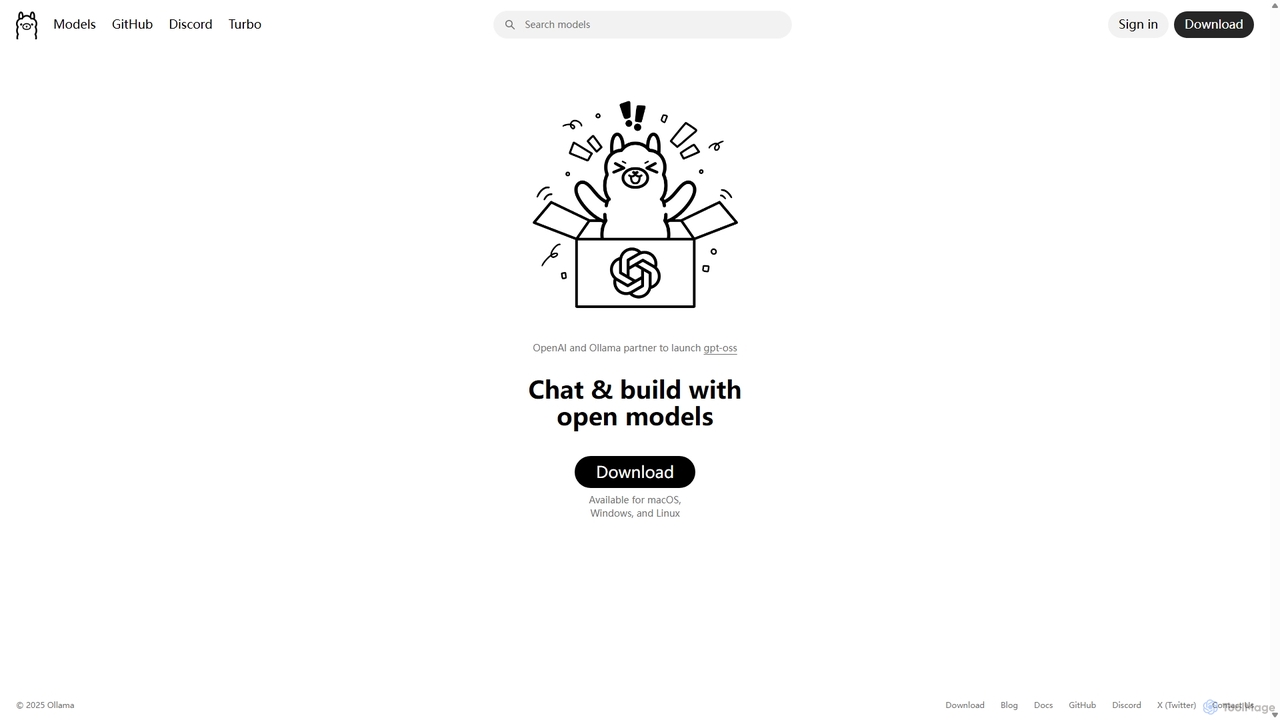
Ollama
Ollama is a powerful open-source framework for running large language models (LLMs) like Llama 3, Mistral, and Gemma locally on your own hardware. Available for macOS, Windows, and Linux, it simplifies the setup and management of open-source models, enabling private, offline, and cost-effective AI development and usage.
Machine Learning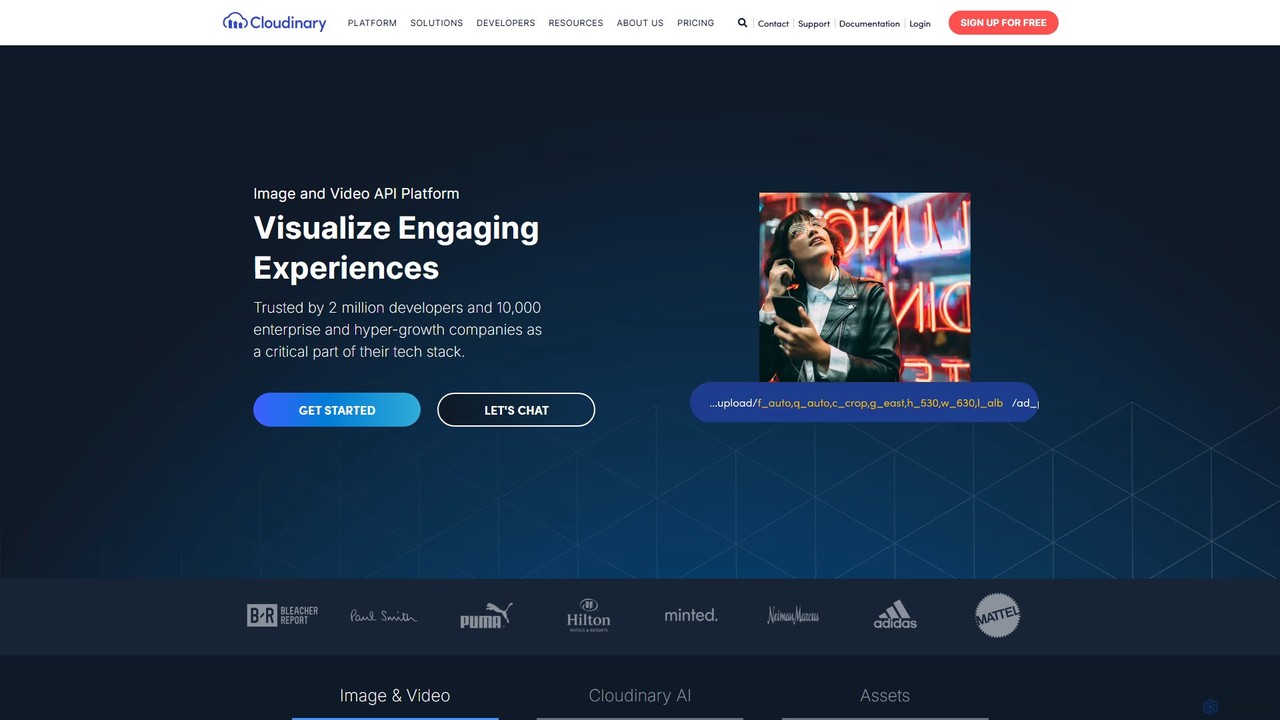
Cloudinary
Cloudinary is an end-to-end media experience platform that uses AI to help developers and marketers manage, optimize, and deliver images and videos at scale. It provides a comprehensive solution for storage, real-time transformation, optimization, and delivery via a fast CDN.
Media Management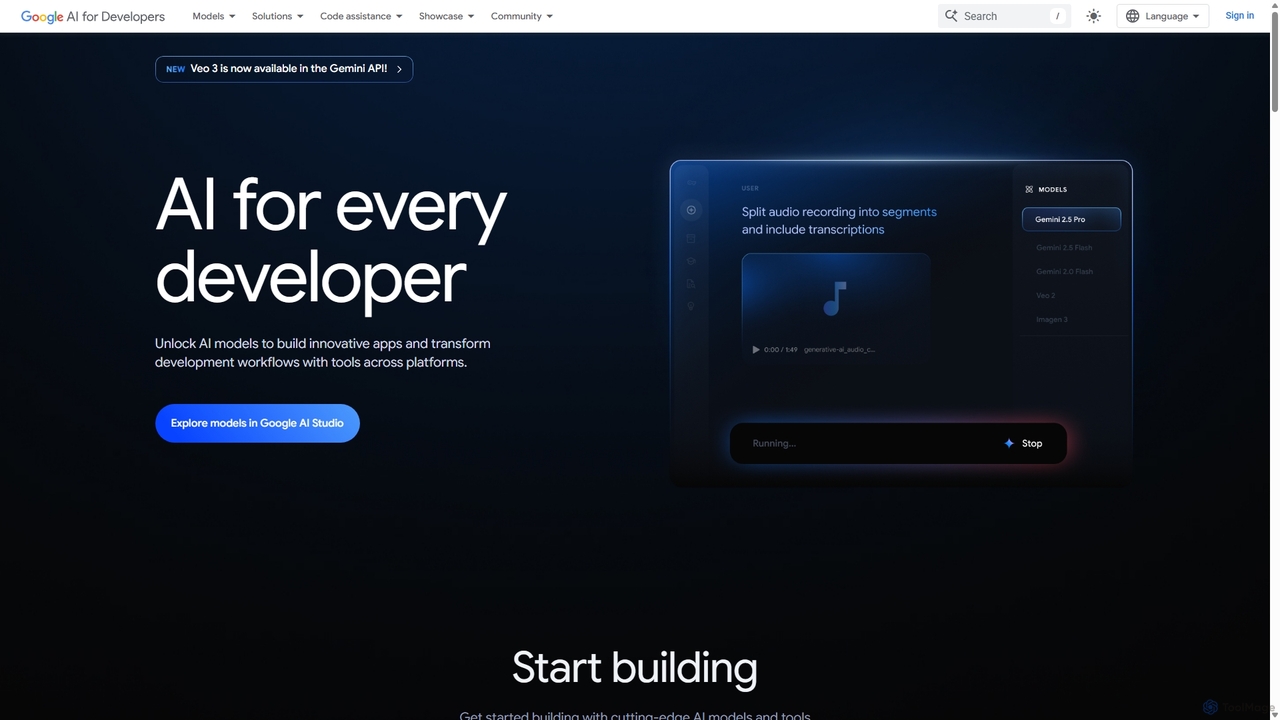
Google AI for Developers
A comprehensive platform by Google providing developers with access to cutting-edge AI models like Gemini, Imagen, and Veo via API, alongside the open-source Gemma models. It includes tools like Google AI Studio for prototyping, AI Edge for on-device deployment, and integrated code assistance to build innovative applications and streamline development workflows responsibly.
Large Language Models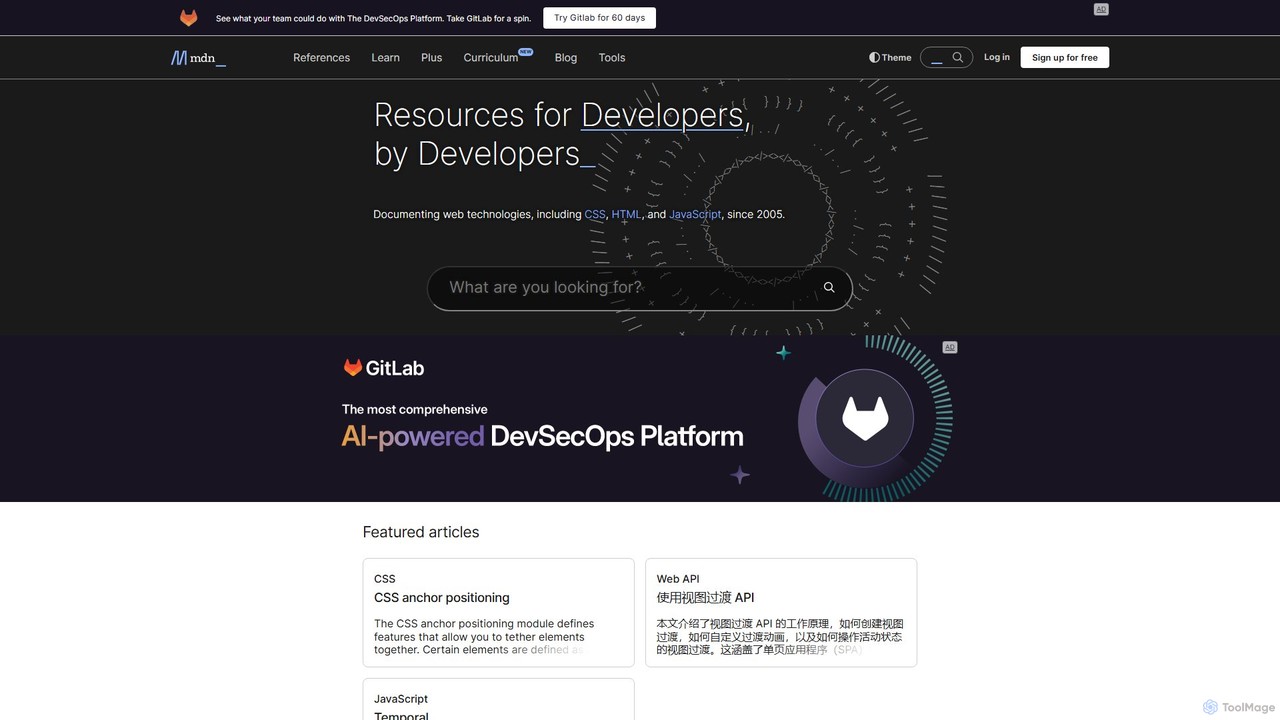
MDN Web Docs
MDN Web Docs, maintained by Mozilla and contributors, is the definitive, free resource for web developers. It provides comprehensive documentation for open web standards, including HTML, CSS, and JavaScript, along with extensive tutorials and reference materials for developers of all skill levels.
Documentation
Twilio
Twilio is a leading customer engagement platform that provides developers with powerful APIs for SMS, voice, email, and WhatsApp. It integrates AI and a customer data platform to enable businesses to build personalized, scalable, and reliable communication experiences across any channel.
Api
OpenAI API Playground
An interactive web-based interface for developers and researchers to experiment with OpenAI's powerful AI models like GPT-4 and DALL-E. Test prompts, adjust parameters, and generate code snippets for API integration without writing any initial code.
Personal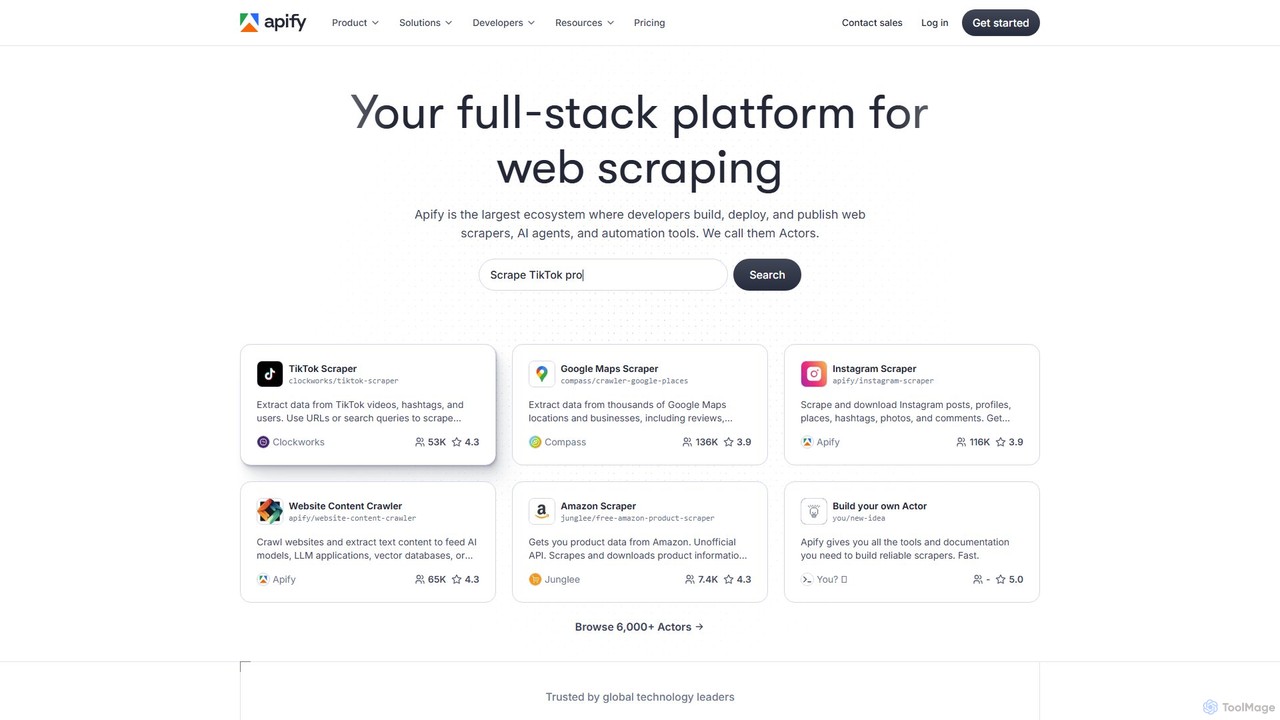
Apify
Apify is a full-stack web scraping and automation platform that enables developers to build, deploy, and publish data extraction tools, known as 'Actors'. It offers a vast marketplace of pre-built scrapers for popular websites like Google Maps, Instagram, and TikTok, alongside a robust cloud infrastructure for creating custom solutions. With support for Python and JavaScript, open-source libraries, and seamless integrations, Apify simplifies collecting web data at any scale.
Data Collection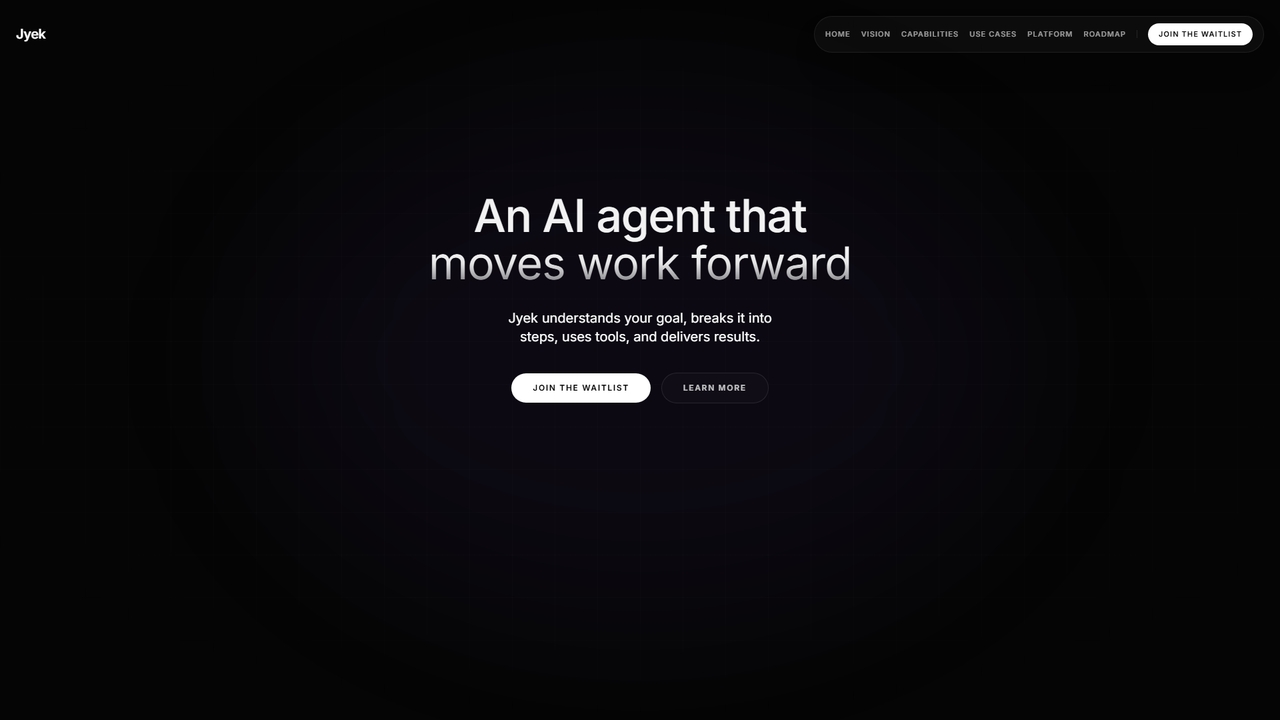
Jyek
Jyek is an AI agent platform that understands objectives, creates execution plans, uses tools, and delivers verifiable results for complex, multi-step tasks.
Automation
Wisent Comments (0)
Sign in to comment.
Sign inNo comments yet.