EnergeticAI
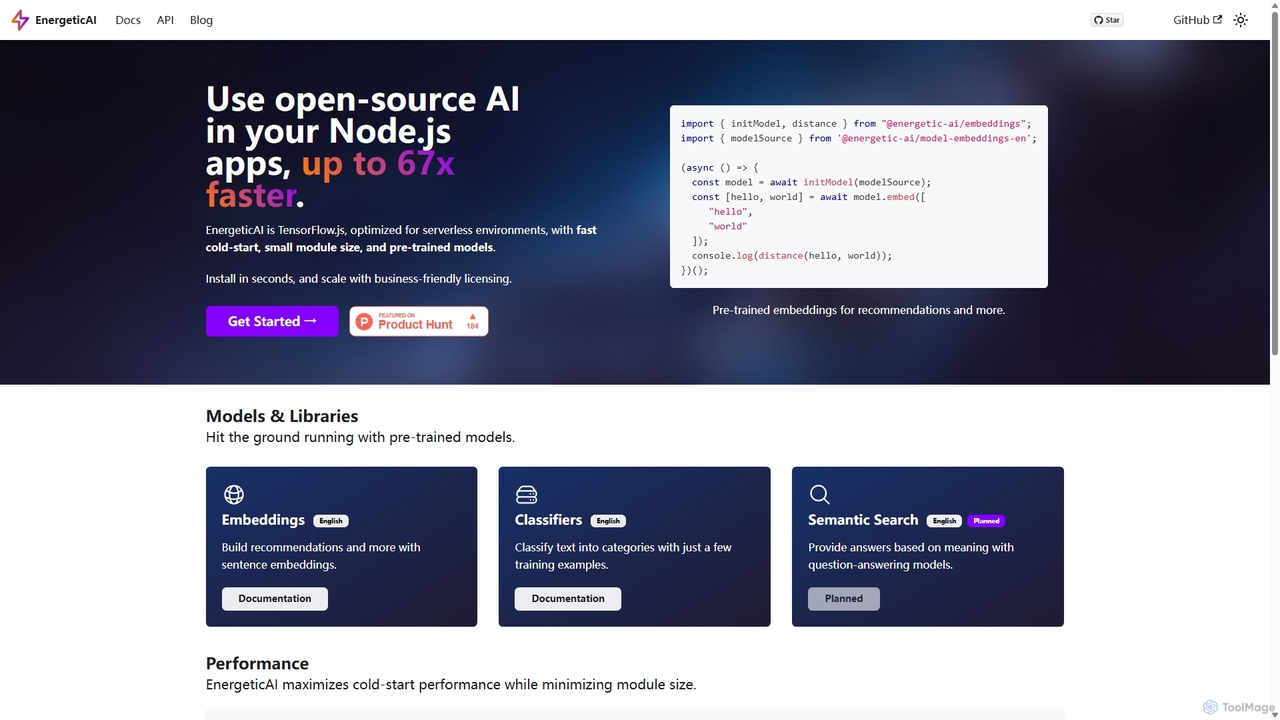
EnergeticAI is an open-source Node.js library for integrating AI models into applications, specifically optimized for serverless environments. It …
EnergeticAI is an open-source Node.js library for integrating AI models into applications, specifically optimized for serverless environments. It provides a high-performance, low-latency alternative to standard TensorFlow.js, featuring a minimal module size and rapid cold-start times. With pre-trained models for embeddings and few-shot text classification, developers can easily build features like semantic search, recommendations, and content categorization without relying on third-party APIs, ensuring data privacy and cost control.
dmodel.ai
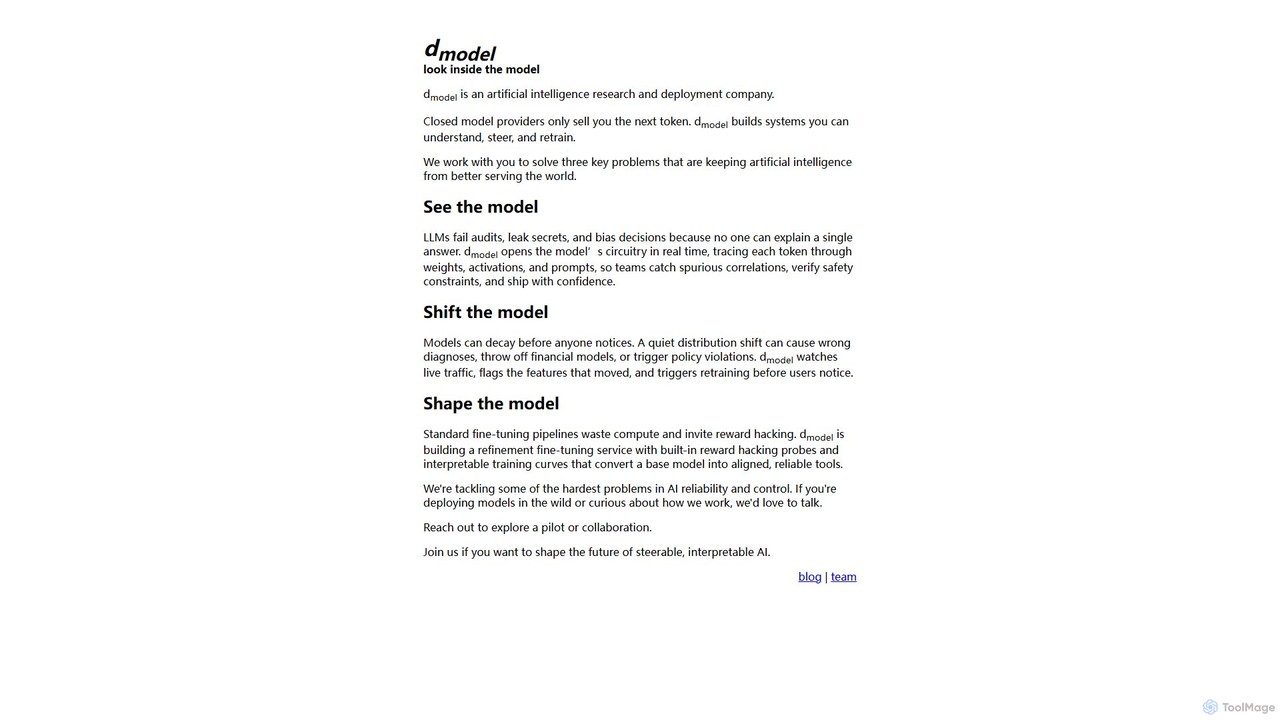
dmodel.ai is an AI research and deployment company offering tools for model interpretability, monitoring, and control. It helps …
dmodel.ai is an AI research and deployment company offering tools for model interpretability, monitoring, and control. It helps businesses understand, steer, and retrain their AI models, ensuring reliability, safety, and alignment for enterprise-grade deployments.
OctoAI
OctoAI is a high-performance compute platform for developers to run, tune, and scale generative AI models efficiently. It …
OctoAI is a high-performance compute platform for developers to run, tune, and scale generative AI models efficiently. It offers optimized, production-ready API endpoints for popular open-source models like Llama, Mixtral, and Stable Diffusion. By focusing on deep system optimizations, OctoAI provides faster inference speeds and lower costs, enabling businesses to build and deploy scalable AI applications without managing complex infrastructure.
happyml
HappyML is a no-code/low-code machine learning platform that empowers users to build, train, and deploy ML models without …
HappyML is a no-code/low-code machine learning platform that empowers users to build, train, and deploy ML models without writing a single line of code. It simplifies the entire ML lifecycle, from data integration to model monitoring, making advanced AI accessible to business analysts, marketers, and developers alike.
Wisent
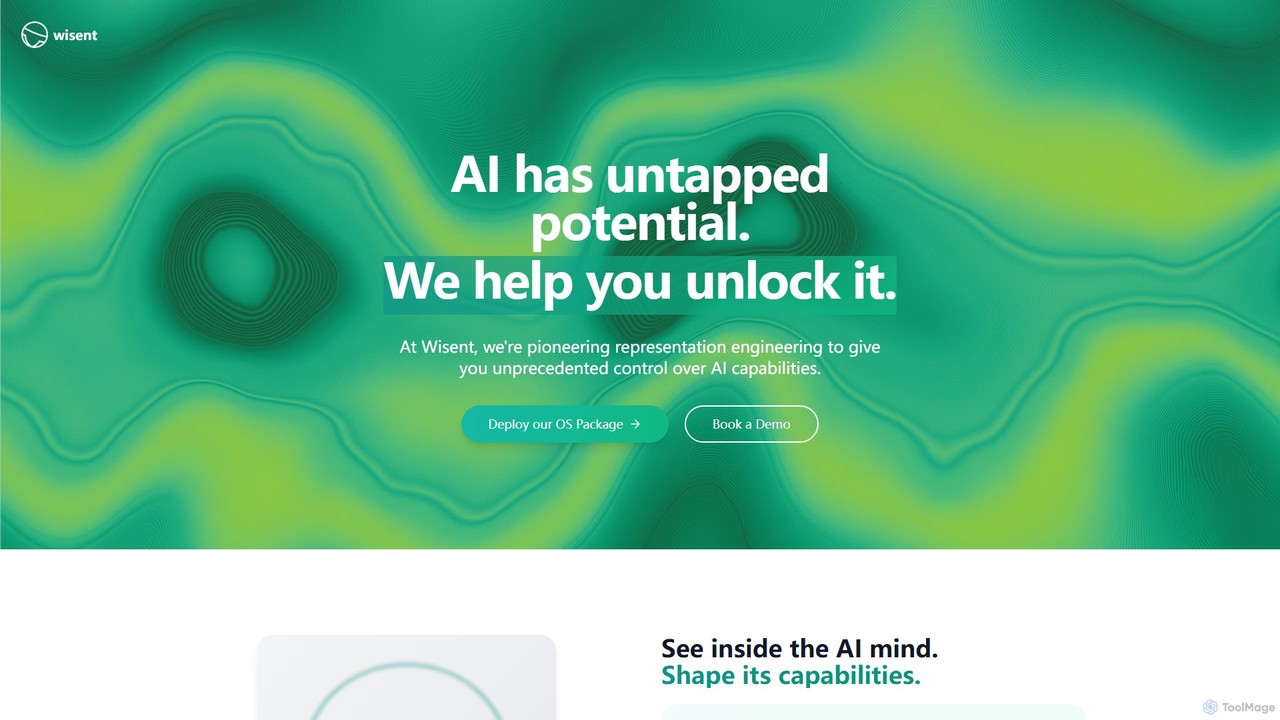
Wisent is a pioneering AI platform that utilizes representation engineering to provide unprecedented control over AI models. It …
Wisent is a pioneering AI platform that utilizes representation engineering to provide unprecedented control over AI models. It allows developers to precisely modify and enhance the capabilities of existing LLMs like GPT-4 and Claude, such as creativity or safety, through a simple API. This offers a faster, more efficient alternative to traditional fine-tuning.
Roboflow
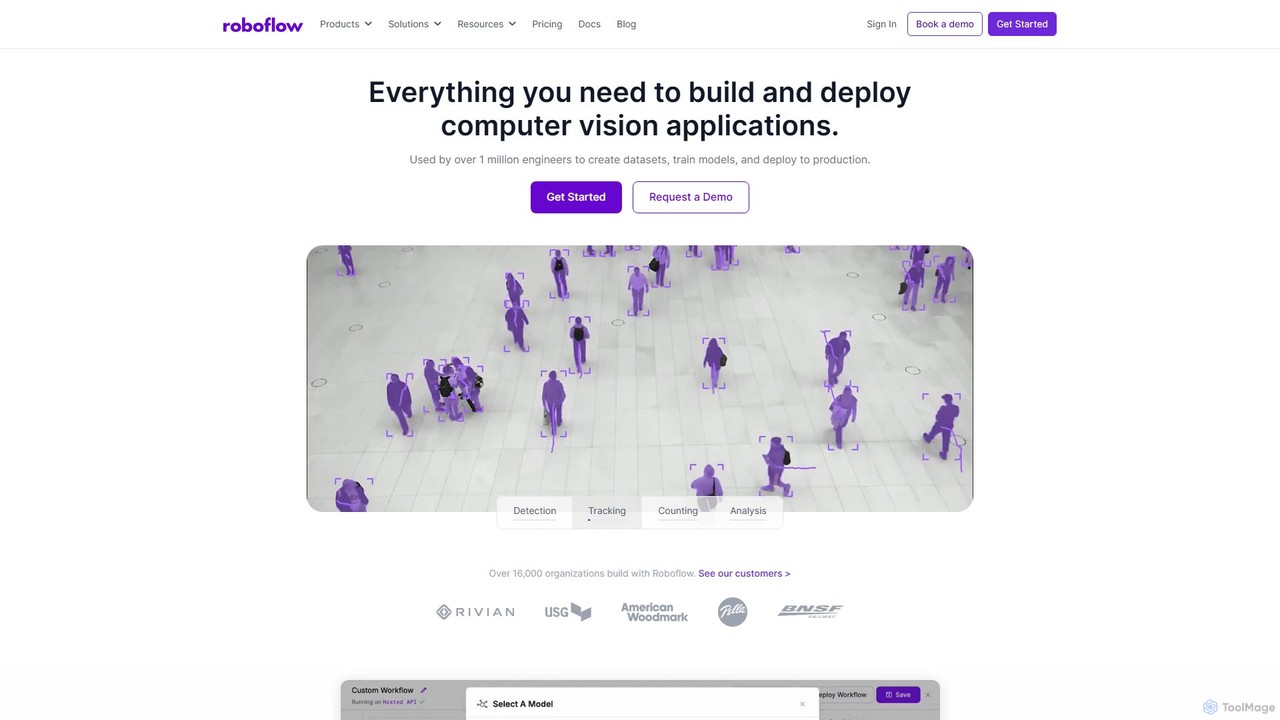
Roboflow is an end-to-end computer vision platform for developers and enterprises. It provides a comprehensive suite of tools …
Roboflow is an end-to-end computer vision platform for developers and enterprises. It provides a comprehensive suite of tools to build, train, and deploy computer vision models at scale. From dataset creation and collaborative labeling to one-click model training and deployment to cloud or edge devices, Roboflow streamlines the entire MLOps lifecycle for vision AI, empowering over a million engineers to give their software the sense of sight.
RagaAI
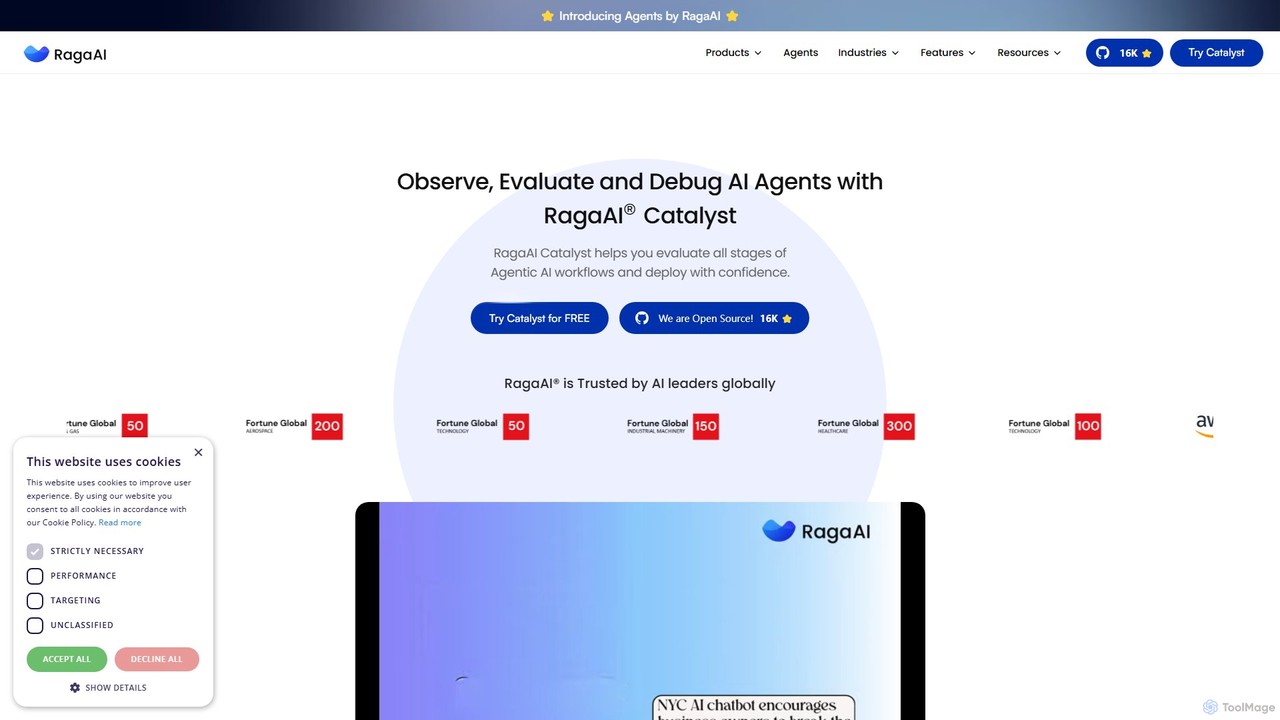
RagaAI is a comprehensive AI testing and observability platform designed to help developers and enterprises build reliable AI …
RagaAI is a comprehensive AI testing and observability platform designed to help developers and enterprises build reliable AI applications. It offers a suite of tools for observing, evaluating, and debugging AI agents, LLMs, and RAG systems. Key features include agentic testing, real-time guardrails, synthetic data generation, and fine-tuning capabilities. RagaAI supports multimodal data (LLMs, computer vision, tabular) and aims to automate the entire AI quality assurance lifecycle, from issue detection to resolution, ensuring robust and trustworthy AI deployments.
Together AI
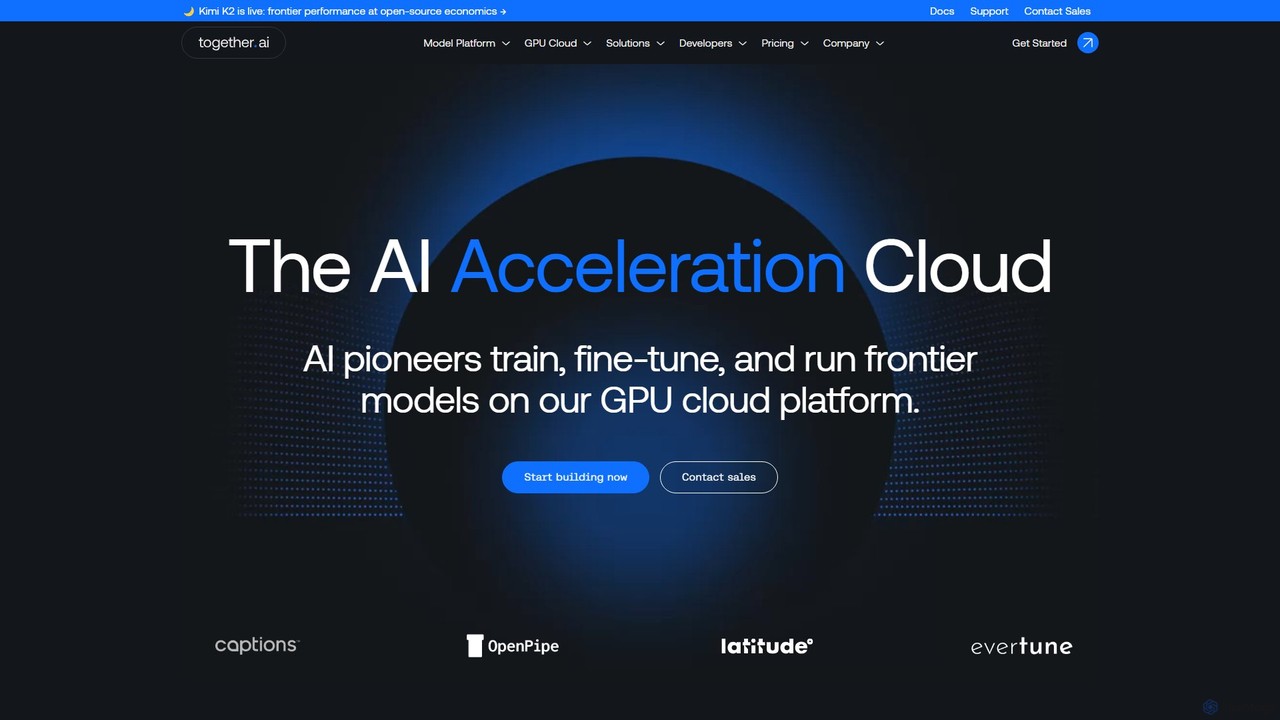
Together AI is a leading cloud platform for developers, providing fast, cost-effective infrastructure to run, fine-tune, and train …
Together AI is a leading cloud platform for developers, providing fast, cost-effective infrastructure to run, fine-tune, and train open-source generative AI models. It offers an extensive library of over 200 models, serverless inference APIs, customizable fine-tuning, and dedicated GPU clusters, creating an end-to-end solution for building and scaling AI applications.
Float16.cloud
Float16.cloud is a serverless GPU platform designed to accelerate AI development. It provides instant access to high-performance H100 …
Float16.cloud is a serverless GPU platform designed to accelerate AI development. It provides instant access to high-performance H100 GPUs with per-second billing, zero setup, and no cold starts. Developers can deploy open-source LLMs, train models, and run AI workloads directly from Python scripts without managing infrastructure.
About Machine Learning
Machine Learning tools are platforms that enable users to build, train, and deploy predictive models from data, often with minimal coding. These tools leverage algorithms to identify patterns, make predictions, and automate complex decision-making processes. By simplifying access to advanced analytics, they empower businesses to forecast trends, personalize user experiences, and optimize operations. This accessibility transforms raw data into actionable intelligence, directly enhancing productivity by automating predictive tasks.
Core Features
- Automated Model Training (AutoML): Automatically selects the best algorithms and tunes parameters to build high-performing models.
- Data Preprocessing: Provides functionalities for cleaning, transforming, and preparing datasets for model training.
- Model Deployment & MLOps: Offers APIs and infrastructure to integrate models into applications and monitor their performance over time.
- Visual Workflow Builders: Allows users to construct complex machine learning pipelines using a drag-and-drop interface.
Use Cases
Machine Learning tools are widely used across various industries. In e-commerce, they power recommendation engines and predict customer churn. Financial services use them for fraud detection and credit scoring. In manufacturing, these tools enable predictive maintenance by analyzing sensor data to forecast equipment failures, reducing downtime and operational costs.
How to Choose
When selecting a Machine Learning tool, consider your team's technical expertise; choose between no-code/low-code platforms for business users and code-centric frameworks for data scientists. Evaluate the tool's scalability to handle your data volume and its integration capabilities with your existing data sources and applications. Also, review the range of supported algorithms to ensure it aligns with your specific business problems, such as classification, regression, or clustering.
Machine LearningUse Cases
Predict Customer Churn for SaaS Companies
A marketing analyst at a SaaS company needs to proactively reduce customer churn. Using a no-code machine learning platform, they upload historical user activity data, such as login frequency, feature usage, and support ticket history. The platform's AutoML feature automatically builds and evaluates several classification models. The analyst selects the best-performing model, which identifies customers with a high probability of churning in the next 30 days. This allows the marketing team to launch targeted retention campaigns, offering discounts or personalized support to at-risk users, ultimately reducing revenue loss.
Optimize Inventory with Sales Forecasting
A retail manager for an e-commerce store wants to avoid stockouts of popular items and reduce overstocking of slow-moving products. They use a machine learning tool to build a time-series forecasting model. By inputting historical sales data, promotional calendars, and seasonality information, the tool predicts product demand for the upcoming quarter. The manager uses these forecasts to adjust purchase orders and optimize inventory levels across warehouses. This data-driven approach improves capital efficiency, increases sales by ensuring product availability, and reduces waste from excess inventory.
Automate Fraud Detection in Real-Time
A fintech company needs to protect its users from fraudulent transactions. A data scientist on their team uses a machine learning platform to train a classification model on a labeled dataset of historical transactions. The model learns to identify patterns indicative of fraud, such as unusual transaction amounts or locations. Once trained, the model is deployed via an API and integrated into the company's payment processing system. It now analyzes new transactions in real-time, flagging or blocking suspicious ones instantly. This automated system significantly reduces financial losses and enhances customer trust without requiring manual review for every transaction.
Personalize Product Recommendations for E-commerce
An e-commerce developer is tasked with improving user engagement and sales. They integrate a machine learning recommendation API into their online store. This service analyzes a user's browsing history, past purchases, and items in their cart, as well as the behavior of similar users. Based on this data, the API generates personalized product recommendations displayed on the homepage and product pages. This moves beyond simple 'most popular' lists to show truly relevant items, increasing the likelihood of a purchase, improving the average order value, and creating a more engaging shopping experience for customers.
Enable Predictive Maintenance in Manufacturing
An operations engineer at a manufacturing plant wants to minimize costly, unplanned equipment downtime. They use a machine learning tool to analyze real-time sensor data from factory machinery, including temperature, vibration, and pressure. The tool is trained on historical data that includes past equipment failures. The resulting model continuously monitors the machinery and predicts the probability of a component failing in the near future. This allows the maintenance team to schedule repairs proactively during planned downtime, extending equipment life, reducing repair costs, and ensuring production continuity.
Segment Customers for Targeted Marketing Campaigns
A marketing manager wants to improve the ROI of their campaigns by sending more relevant messages to different customer groups. They use a machine learning tool with clustering algorithms to analyze their customer database, which includes demographic data and purchase history. The tool automatically groups customers into distinct segments based on shared characteristics, such as 'high-value loyalists', 'budget-conscious shoppers', and 'new prospects'. Instead of sending one generic email blast, the manager can now create tailored campaigns for each segment, resulting in higher engagement rates, increased conversions, and a more personalized customer experience.