Developer Tools Best in category 2 results Platform As A Service (Paas) AI Tool

Popular AI tools in the Platform As A Service (Paas) field of Developer Tools include Float16.cloud、Prediction Guard, etc., helping you quickly improve efficiency.

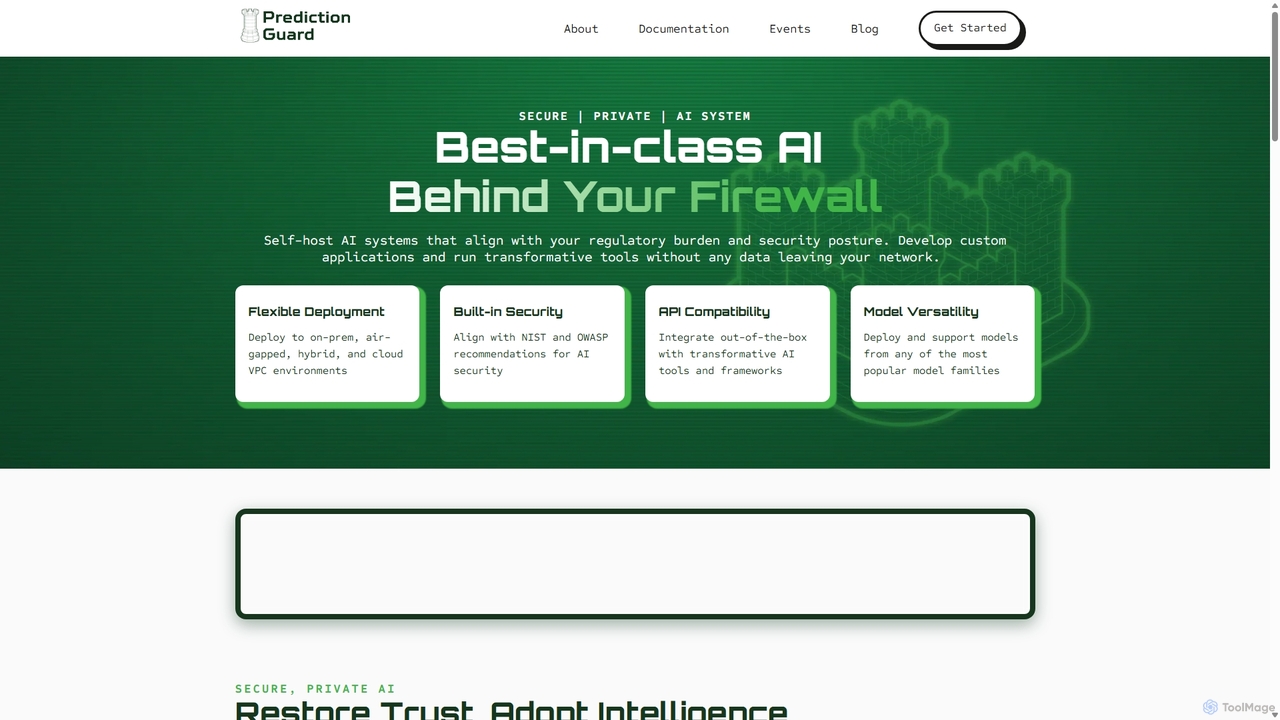
Prediction Guard

Prediction Guard

Prediction Guard is an enterprise-grade AI platform that allows organizations to deploy, manage, and scale large language models …

8.5K
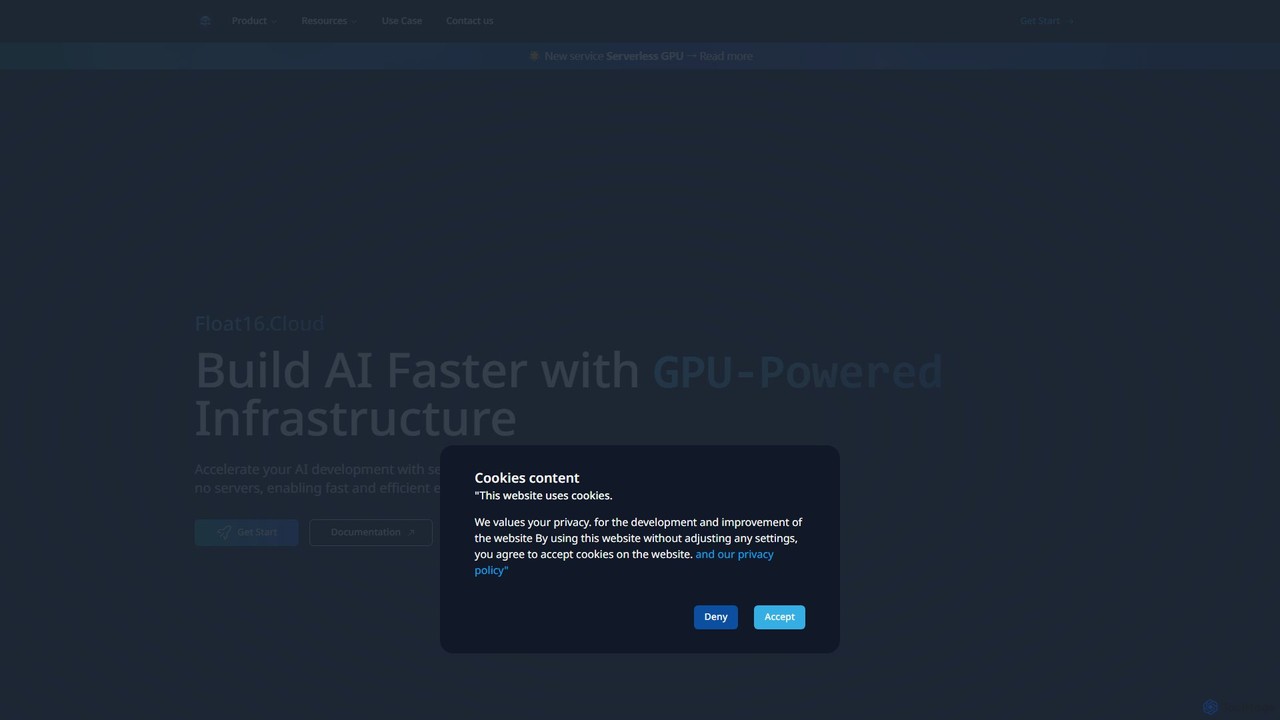
Float16.cloud

Float16.cloud

Float16.cloud is a serverless GPU platform designed to accelerate AI development. It provides instant access to high-performance H100 …

13.3K

About Platform As A Service (Paas)

Platform as a Service (PaaS) is a cloud computing model that provides a complete environment for developing, testing, deploying, and managing applications. These platforms abstract away the underlying infrastructure, such as servers, storage, and networking, allowing developers to focus solely on writing code and building features. PaaS solutions offer a ready-to-use framework that includes operating systems, middleware, databases, and development tools, significantly accelerating the application lifecycle. This approach streamlines development workflows and enhances productivity by automating infrastructure management.

Core Features

  • Managed Infrastructure: The provider manages servers, virtualization, storage, and networking, freeing developers from infrastructure concerns.
  • Application Runtimes: Pre-configured environments for various programming languages and frameworks like Java, Python, Node.js, and .NET.
  • Integrated Development Tools: A suite of tools for source code control, building, testing, and deployment (CI/CD).
  • Scalability and High Availability: Built-in mechanisms for automatic scaling of resources and failover to ensure application performance and uptime.
  • Middleware Services: Access to managed services like databases, message queues, caching, and identity management.

Use Cases

PaaS is widely used by software development teams in startups and large enterprises for building web and mobile applications, developing APIs, and modernizing legacy systems. It is particularly valuable for organizations adopting Agile and DevOps methodologies, as it facilitates rapid iteration and continuous delivery. Data science teams also leverage PaaS to build and deploy machine learning models with integrated data processing and analytics services.

How to Choose

When selecting a PaaS solution, consider the supported programming languages and frameworks to ensure compatibility with your tech stack. Evaluate the platform's scalability options and performance guarantees to meet your application's demands. Assess the ecosystem of available add-ons and managed services, such as databases and AI tools. Finally, analyze the pricing model (e.g., pay-as-you-go, subscription) and understand the potential for vendor lock-in.

Platform As A Service (Paas)Use Cases

1

Accelerate Web Application Development

A startup team needs to launch a Minimum Viable Product (MVP) quickly to test a market idea. By using a PaaS, they bypass weeks of server configuration and environment setup. Developers can immediately push code from their Git repository, and the PaaS automatically builds, deploys, and runs the application. This allows the team to focus entirely on feature development and user feedback, reducing the time-to-market from months to weeks.

2

Build Scalable APIs and Microservices

A mobile development company is building a backend for their new application, expecting fluctuating user loads. They use a PaaS to deploy their backend as a set of microservices. The platform's auto-scaling feature automatically adjusts resources based on real-time traffic, ensuring smooth performance during peak hours without over-provisioning costs during quiet periods. Integrated services like managed databases and authentication simplify the backend architecture, allowing developers to build robust APIs faster.

3

Implement a CI/CD Pipeline for DevOps

A DevOps team aims to automate their software delivery process. They leverage a PaaS that integrates directly with their source code repository. Every time a developer commits new code, the PaaS automatically triggers a pipeline that builds the code, runs automated tests, and deploys it to a staging environment. This continuous integration and continuous delivery (CI/CD) setup streamlines the release cycle, improves code quality through automated testing, and allows for more frequent and reliable deployments.

4

Modernize a Legacy Enterprise Application

An enterprise wants to move a monolithic, on-premise application to the cloud to improve scalability and reduce maintenance costs. They use a PaaS to re-platform the application. Developers break down the monolith into smaller, containerized services and deploy them on the PaaS. The platform manages the container orchestration, networking, and security, while the company benefits from a pay-as-you-go pricing model and eliminates the need to manage physical servers, leading to significant operational savings.

5

Host a Backend for an IoT Solution

An IoT company needs a reliable and scalable backend to ingest and process data from thousands of connected devices. Building this infrastructure from scratch would be complex and time-consuming. Instead, they use a PaaS which provides managed message queues for data ingestion and scalable compute instances for data processing. This allows the engineering team to focus on the application logic for device management and data analytics, rather than on the underlying infrastructure required to handle high-volume data streams.

6

Create a Data Processing and Analytics Environment

A data science team needs an environment to build and run complex data analysis models. They choose a PaaS that offers integrated big data services and machine learning frameworks. This allows them to easily provision data processing clusters, connect to various data sources, and deploy machine learning models as APIs. The PaaS handles the complexity of managing distributed systems, enabling the team to analyze large datasets and derive insights more efficiently without needing dedicated infrastructure engineers.

Platform As A Service (Paas)Frequently Asked Questions