Developer Tools Best in category 1 results Agent Platforms AI Tool

Popular AI tools in the Agent Platforms field of Developer Tools include Leeroo, etc., helping you quickly improve efficiency.

Leeroo

Leeroo

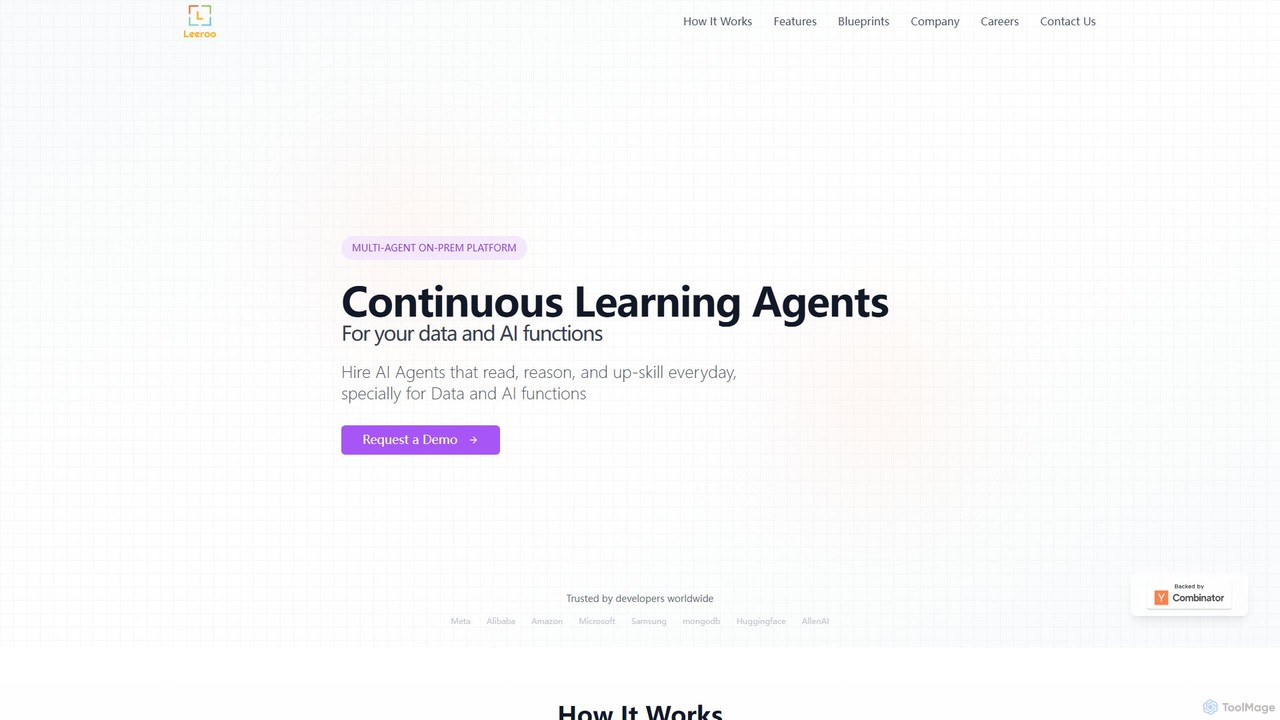
Leeroo is an advanced multi-agent AI platform offering trainable deep agents that learn continuously. Designed for enterprise use, …

2.5K

About Agent Platforms

Agent Platforms are AI-powered tools designed to build, deploy, and manage autonomous AI agents. These platforms provide the necessary frameworks, infrastructure, and APIs for agents to perceive their environment, reason, plan, and execute actions independently to achieve complex, multi-step goals. They enable the creation of intelligent systems capable of automating intricate workflows and interacting with various digital tools and services.

Core Features

  • Agent Orchestration: Manages the lifecycle, execution, and coordination of multiple AI agents working collaboratively on a task.
  • Memory Management: Provides agents with short-term context and long-term knowledge retention capabilities for consistent and informed decision-making.
  • Tool Integration: Allows agents to connect with and utilize external APIs, databases, and software tools to perform actions in the real world.
  • Goal-Oriented Planning: Enables agents to break down high-level objectives into actionable sub-tasks and dynamically adapt plans based on real-time feedback.
  • Human-in-the-Loop: Facilitates seamless handoffs and oversight, allowing human users to review, approve, or intervene in agent operations.

Applicable Scenarios

Agent Platforms are invaluable for developers, researchers, and enterprises looking to build sophisticated AI applications. They are used in scenarios requiring dynamic task automation, intelligent decision-making, and complex system interactions, extending beyond simple scripting or rule-based automation.

How to Choose

When selecting an Agent Platform, consider its scalability for future growth, the breadth of its tool integration capabilities, the flexibility of its agent customization options, and the robustness of its security features. Evaluate the platform's support for different AI models and its ease of deployment within your existing infrastructure.

Agent PlatformsUse Cases

1

Automating Multi-Step Customer Support Workflows

A customer service manager can use an Agent Platform to deploy an AI agent that handles initial customer inquiries, retrieves relevant information from a CRM, drafts personalized responses, and escalates complex cases to human agents. This reduces response times and frees up human staff for more critical issues, improving overall service efficiency by up to 60%.

2

Intelligent Data Analysis and Reporting

A data scientist can leverage an Agent Platform to create an autonomous agent that collects data from various sources, performs complex statistical analysis, identifies trends, and generates comprehensive reports or dashboards. The agent can proactively alert users to anomalies or significant changes, streamlining the entire data pipeline and providing actionable insights faster.

3

Personalized Content Generation and Distribution

A marketing team can deploy an AI agent to research trending topics, generate personalized marketing copy for different audience segments, and schedule its distribution across various social media platforms and email campaigns. The agent learns from engagement metrics to optimize future content strategies, significantly increasing content output and relevance.

4

Automated Software Development and Testing

A software development team can utilize an Agent Platform to create agents that assist with code generation, bug detection, automated testing, and even deployment. These agents can monitor code repositories, identify potential issues, suggest fixes, and run comprehensive test suites, accelerating the development cycle and improving code quality.

5

Proactive IT Operations and System Monitoring

IT operations teams can deploy agents to continuously monitor system health, network traffic, and application performance across complex infrastructures. These agents can detect anomalies, diagnose root causes, and even initiate self-healing actions or alert human operators with detailed context, significantly reducing downtime and manual intervention.

6

Research and Information Gathering Automation

Researchers or business analysts can deploy AI agents to autonomously scour the internet, academic databases, and proprietary data sources to gather specific information, summarize findings, and identify key insights on a given topic. This significantly accelerates the research process, allowing human experts to focus on analysis and strategic decision-making rather than manual data collection.

Agent PlatformsFrequently Asked Questions