Business Best in category 2 results Large Language Model AI Tool

Popular AI tools in the Large Language Model field of Business include Anthropic、Kimi K2, etc., helping you quickly improve efficiency.

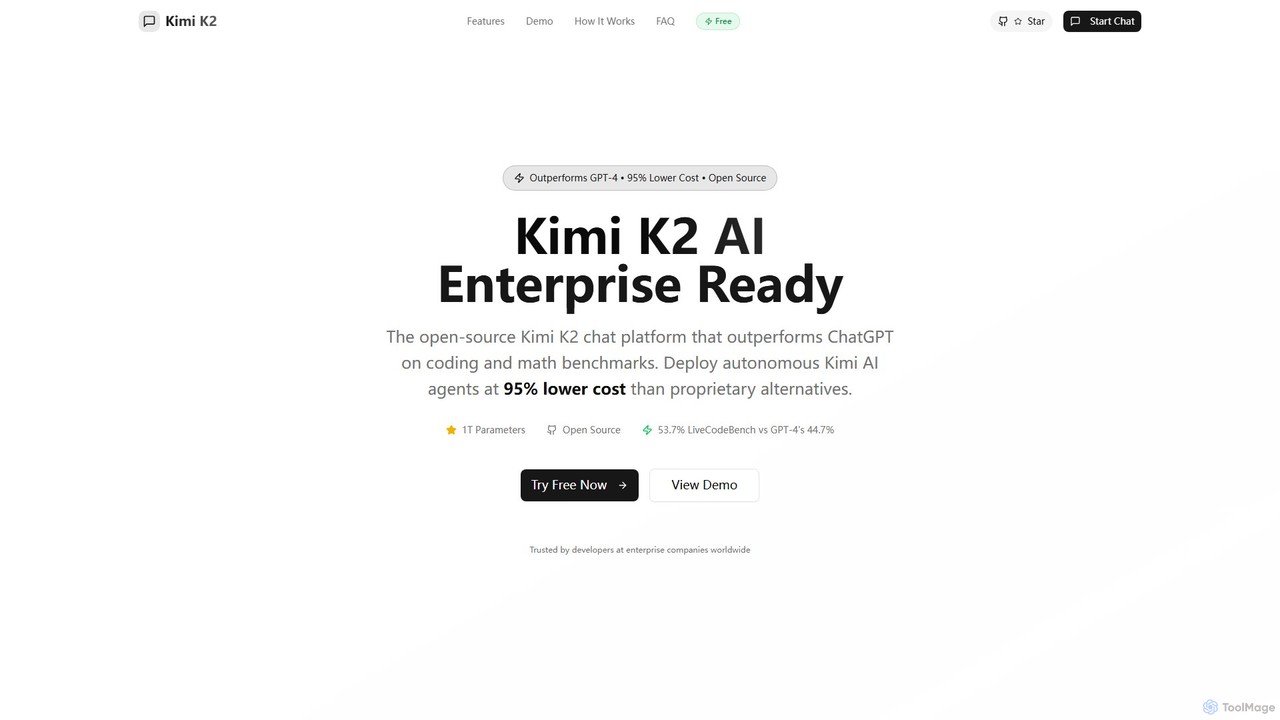
Kimi K2

Kimi K2

Kimi K2 is an open-source, enterprise-ready AI platform designed as a high-performance, low-cost alternative to ChatGPT. It excels …

2.9K
Anthropic

Anthropic

Anthropic is an AI safety and research company that builds reliable, interpretable, and steerable AI systems. Its flagship …

25.9M

About Large Language Model

Large Language Models (LLMs) are advanced AI-powered tools designed to understand, generate, and process human-like text. Built upon deep learning architectures, particularly transformer networks, LLMs excel at recognizing complex patterns in vast datasets of text, enabling them to perform a wide array of natural language tasks. These models are revolutionizing how businesses interact with information and automate communication, serving as a cornerstone for innovation across various industries.

Core Features

  • Natural Language Understanding (NLU): Interprets user queries, intent, and context from natural language input.
  • Natural Language Generation (NLG): Creates coherent, contextually relevant, and human-like text for various purposes.
  • Contextual Learning: Maintains conversational flow and coherence over extended interactions, remembering previous turns.
  • Multilingual Processing: Understands and generates text in multiple languages, facilitating global communication.
  • Code Generation & Analysis: Assists developers by generating code snippets, debugging, and explaining complex code structures.

Use Cases

LLMs are widely adopted in business for automating customer support, generating marketing content, and enhancing data analysis. They power intelligent chatbots that provide instant, personalized responses, and assist content creators in drafting articles, social media posts, and ad copy. Furthermore, LLMs can summarize extensive reports and extract key insights from unstructured data, significantly boosting operational efficiency.

How to Choose

When selecting an LLM, consider its scale and performance, as larger models often offer superior capabilities but demand more resources. Evaluate the model's fine-tuning potential to adapt it to specific domain knowledge or brand voice. Assess API accessibility and ease of integration with existing systems, along with the overall cost structure and scalability options. Finally, prioritize models with robust data privacy and security measures to protect sensitive information.

Large Language ModelUse Cases

1

Powering Intelligent Customer Service Agents

Businesses deploy LLMs to create advanced chatbots that handle a wide range of customer inquiries, from routine FAQs to complex problem-solving. These AI agents can provide personalized responses, access knowledge bases, and even escalate issues to human agents when necessary, significantly reducing response times and improving customer satisfaction without human intervention for common issues.

2

Generating Diverse Marketing & Content Assets

Marketing teams utilize LLMs to rapidly generate high-quality content such as blog posts, social media updates, email newsletters, and ad copy. By inputting prompts and desired tones, marketers can produce multiple content variations, conduct A/B testing, and maintain a consistent brand voice across all platforms, accelerating content production cycles and enhancing campaign effectiveness.

3

Assisting Developers with Code Generation & Debugging

Developers integrate LLMs into their workflows as intelligent coding assistants. These models can generate code snippets, suggest auto-completions, identify and fix bugs, and even translate code between different programming languages. This significantly speeds up development cycles, reduces manual coding errors, and allows developers to focus on more complex architectural challenges.

4

Extracting Insights from Unstructured Business Data

Business analysts leverage LLMs to process and summarize vast amounts of unstructured data, including customer reviews, market reports, news articles, and internal documents. The models can identify key themes, sentiment, and emerging trends, providing actionable insights that inform strategic decision-making, product development, and competitive analysis more efficiently than manual review.

5

Delivering Adaptive Learning & Tutoring Experiences

Educational platforms and corporate training departments use LLMs to create personalized learning experiences. These models can generate customized course materials, answer student questions in real-time, provide detailed explanations, and adapt content difficulty based on individual progress. This fosters more engaging and effective learning environments for students and employees alike.

6

Facilitating Global Business Communication

Global enterprises employ LLMs to overcome language barriers in international operations. The models provide accurate, context-aware translation of documents, emails, and real-time conversations, ensuring clear communication across diverse linguistic teams and customer bases. This capability streamlines cross-border collaborations and expands market reach without extensive human translation costs.

Large Language ModelFrequently Asked Questions