Oosto
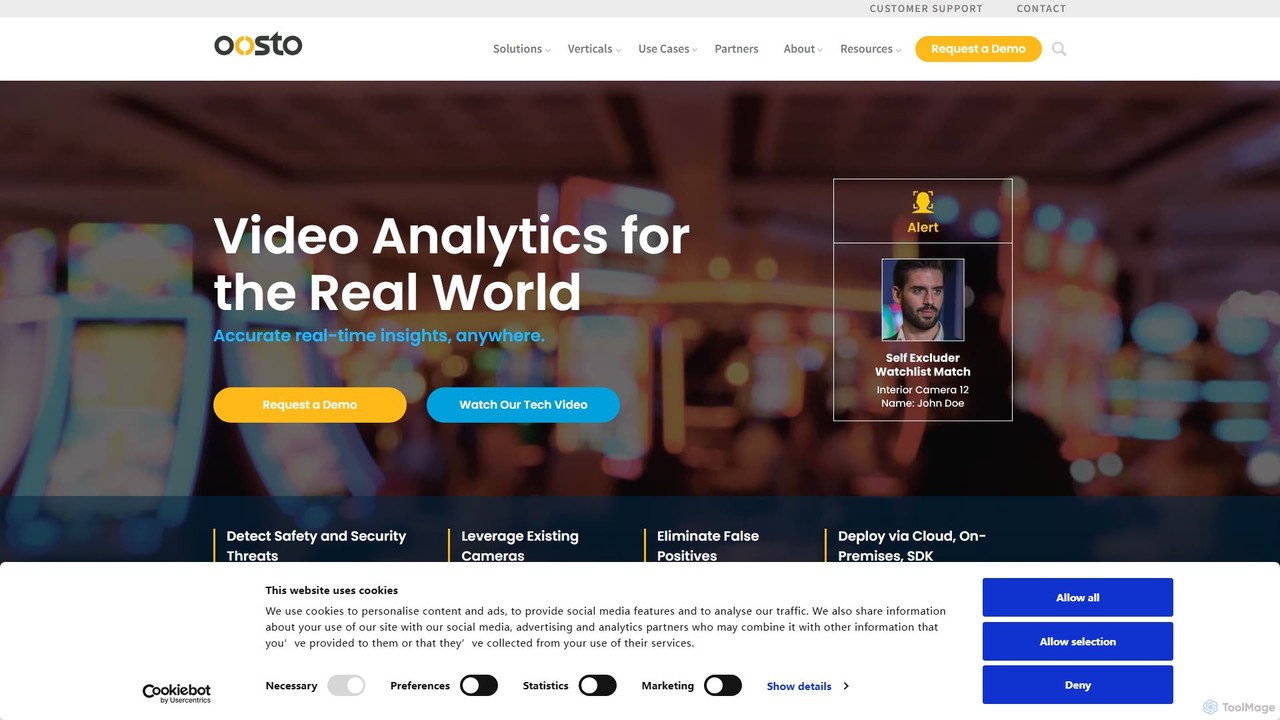
Oosto (formerly AnyVision) is a leading Vision AI platform specializing in real-time facial recognition and video analytics for …
Oosto (formerly AnyVision) is a leading Vision AI platform specializing in real-time facial recognition and video analytics for enterprise security. It enhances physical security by identifying persons of interest, automating access control, and providing actionable operational intelligence from existing video streams.
About Access Control
Access Control AI tools leverage artificial intelligence to intelligently manage and secure user access to digital resources, systems, and data. These advanced solutions utilize machine learning and behavioral analytics to automate identity verification, enforce granular permissions, and detect anomalous access patterns. They enhance organizational security posture, streamline compliance, and improve operational efficiency by ensuring the right users have the right access at the right time.
Core Features
- Intelligent Authentication: AI-driven multi-factor authentication, behavioral biometrics, and continuous verification for enhanced security.
- Dynamic Authorization: Real-time adjustment of user permissions based on context, risk, and policy, ensuring adaptive access.
- Anomaly Detection: Machine learning algorithms identify unusual access attempts or insider threats by analyzing user behavior.
- Automated Provisioning: AI-powered automation for granting and revoking access based on roles and lifecycle events, reducing manual overhead.
- Compliance Monitoring: Continuous auditing and reporting capabilities to meet stringent regulatory requirements and simplify audits.
Applicable Scenarios
Organizations utilize Access Control AI for securing sensitive data in cloud environments, ensuring only authorized personnel can view or modify critical information. They also apply these tools to manage employee access to internal systems, automatically adjusting permissions as roles change or projects conclude, thereby reducing manual overhead and potential security gaps. This is crucial for maintaining data integrity and preventing unauthorized access across diverse IT infrastructures.
How to Choose
When selecting an Access Control AI tool, consider its integration capabilities with existing identity management systems and cloud platforms. Evaluate the granularity of its authorization policies, the sophistication of its anomaly detection algorithms, and its compliance reporting features. Scalability for future growth, the ease of policy management, and the vendor's commitment to security best practices are also crucial factors for a robust solution.

Access ControlUse Cases
Enhancing Cloud Security with Adaptive Access
For enterprises migrating to multi-cloud environments, Access Control AI tools provide adaptive security. They continuously monitor user behavior and resource access across various cloud platforms, automatically adjusting permissions based on real-time risk assessments. This prevents unauthorized data exfiltration and ensures compliance with cloud security best practices, significantly reducing the attack surface and protecting sensitive assets.
Automating Employee Onboarding and Offboarding
HR and IT departments can leverage Access Control AI to streamline employee lifecycle management. Upon onboarding, the AI automatically provisions access to necessary systems and applications based on the employee's role and department. During offboarding, it instantly revokes all associated access across all platforms, minimizing the risk of former employees retaining unauthorized system access and ensuring a secure and efficient transition process.
Securing Sensitive Data Access for Remote Teams
With the rise of remote work, securing access to sensitive corporate data is paramount. Access Control AI tools implement dynamic authorization policies that consider factors like user location, device posture, and time of access. This ensures that remote employees can securely access critical information only when meeting predefined security criteria, protecting against data breaches from compromised remote endpoints and maintaining data confidentiality.
Preventing Insider Threats through Behavioral Analytics
Security teams use Access Control AI to proactively detect and mitigate insider threats. By analyzing user behavior patterns, the AI can identify deviations from normal activity, such as unusual data downloads, access to restricted files, or login attempts outside working hours. This early detection allows security personnel to investigate and intervene before potential malicious actions escalate into a full-blown security incident, protecting intellectual property and critical systems.
Streamlining Compliance Audits and Reporting
For organizations in regulated industries, maintaining continuous compliance is a major challenge. Access Control AI tools automate the collection of access logs and generate comprehensive reports detailing who accessed what, when, and why. This significantly simplifies audit processes, provides irrefutable evidence of adherence to regulations like GDPR or HIPAA, and reduces the manual effort required for compliance reporting, ensuring regulatory mandates are met efficiently.
Implementing Zero Trust Access Policies
Security architects deploy Access Control AI to enforce Zero Trust principles, where no user or device is inherently trusted, regardless of their location. The AI continuously verifies every access request, authenticating identities and authorizing access based on the least privilege principle and real-time context. This micro-segmentation of access minimizes lateral movement for attackers and enhances overall network resilience, providing a robust defense against evolving cyber threats.