Business Best in category 1 results Accounts Payable & Receivable AI Tool

Popular AI tools in the Accounts Payable & Receivable field of Business include Peakflo, etc., helping you quickly improve efficiency.

Peakflo

Peakflo

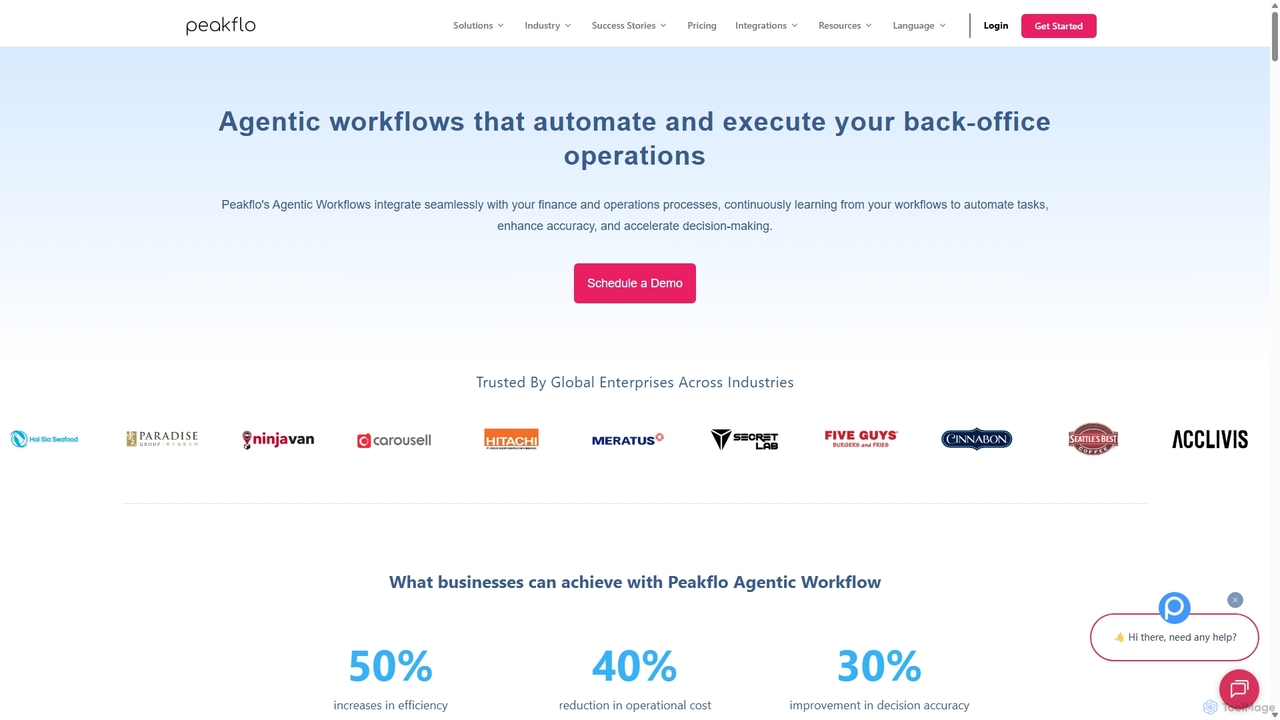
Peakflo is an AI-powered platform that automates back-office operations using agentic workflows. It specializes in streamlining finance processes …

30.6K

About Accounts Payable & Receivable

AI Accounts Payable & Receivable tools are a class of software that automates and optimizes the management of a company's financial obligations. Leveraging technologies like Optical Character Recognition (OCR) and machine learning, these tools intelligently capture data from invoices, match payments, and manage collections. Their primary value is in reducing manual data entry, minimizing human error, accelerating payment cycles, and providing real-time visibility into cash flow. This automation frees up finance teams to focus on strategic analysis rather than repetitive processing tasks.

Core Features

  • Automated Invoice Processing: Utilizes OCR to automatically extract and validate data from supplier invoices, reducing manual entry.
  • Intelligent Payment Matching: Automatically matches incoming payments to outstanding customer invoices, even with partial payments or discrepancies.
  • Automated Reconciliation: Compares transaction records between internal books and bank statements to quickly identify and flag exceptions.
  • Predictive Cash Flow Analysis: Uses historical data and payment patterns to forecast future cash inflows and outflows.
  • Automated Dunning & Reminders: Schedules and sends customized reminders to clients for upcoming or overdue payments.

Use Cases

These tools are essential for finance departments in businesses of all sizes, from startups to large enterprises. In retail and manufacturing, they manage high volumes of supplier invoices. For professional services and SaaS companies, they streamline client billing and subscription payment collections. Accountants and bookkeepers use them to efficiently manage multiple clients' financial workflows.

How to Choose

When selecting an AI AP/AR tool, first consider its integration capabilities with your existing ERP or accounting software (e.g., QuickBooks, SAP, NetSuite). Evaluate its scalability to handle your current and future transaction volume. Determine if you need a solution for just AP, just AR, or a combined platform. Finally, verify its security protocols and compliance with financial data protection standards.

Accounts Payable & ReceivableUse Cases

1

Automate Supplier Invoice Processing

A finance clerk at a mid-sized manufacturing company is tasked with processing over 500 supplier invoices per month. Instead of manually entering data from each PDF invoice into their ERP system, they use an AI AP tool. The tool automatically ingests invoices from an email inbox, uses OCR to extract key information like vendor name, invoice number, amount, and line items, and then routes them through a pre-defined digital approval workflow. This reduces the invoice processing time per item from 10 minutes to under a minute, minimizing late payment fees and allowing the clerk to focus on resolving exceptions.

2

Accelerate Customer Payment Collections

A SaaS company wants to reduce its Days Sales Outstanding (DSO). They implement an AI Accounts Receivable tool to automate their collections process. The system automatically sends out friendly payment reminders before the due date, formal notices on the due date, and a sequence of dunning emails for overdue invoices. The AI can even analyze a customer's payment history to predict late payments and suggest a customized communication strategy. This proactive approach improves on-time payment rates by 30% and significantly reduces the manual effort required from the AR team.

3

Streamline Three-Way Matching for Retail

An accounts payable specialist at a large retail chain deals with thousands of invoices that must be matched against purchase orders (POs) and goods receipt notes (GRNs). Using an AI-powered AP system, this three-way matching process is automated. The system digitally compares the invoice details with the corresponding PO and GRN, checking for discrepancies in item quantities, prices, and terms. It automatically approves matches and flags only the exceptions for manual review. This prevents overpayments, detects potential fraud, and ensures compliance with procurement policies, while saving hundreds of hours of manual work.

4

Gain Real-time Cash Flow Visibility

A CFO of a growing tech startup needs a clear, up-to-the-minute view of the company's cash position. By integrating their AI AP/AR tool with their bank accounts and accounting system, they get a real-time dashboard. This dashboard visualizes current cash on hand, upcoming payables, and expected receivables. The AI also provides a 30-60-90 day cash flow forecast based on historical payment behaviors and scheduled transactions. This allows the CFO to make more informed decisions about investments, hiring, and managing working capital, moving from reactive financial management to a proactive, strategic approach.

5

Simplify Bank Reconciliation for Accountants

An accounting firm manages the books for dozens of small business clients. The monthly bank reconciliation process is time-consuming and prone to errors. By deploying an AI AP/AR platform, they can connect each client's bank feeds directly to the system. The AI automatically matches transactions from the bank statement to entries in the general ledger, reconciling hundreds of lines in minutes. It intelligently suggests matches for complex transactions and flags any true discrepancies for the accountant's review, reducing reconciliation time by over 80% and ensuring higher accuracy in financial reporting.

6

Manage Global Payments and Currencies

A multinational e-commerce company works with suppliers and customers across different countries. Their finance team uses an AI AP/AR platform to manage transactions in multiple currencies. When a supplier invoice arrives in EUR, the system automatically converts it to the company's base currency (USD) using real-time exchange rates for accurate accounting. For customer payments, it facilitates collections through various international payment gateways. This centralizes global financial operations, reduces the complexity of currency management, and ensures compliance with different regional tax regulations, all within a single platform.

Accounts Payable & ReceivableFrequently Asked Questions