ToolMage
Sign in

Best 1 Ai Services AI tools for Cloud Computing

Popular Ai Services AI tools in Cloud Computing include Groq, helping you work more efficiently.

Groq
Freemium

Groq

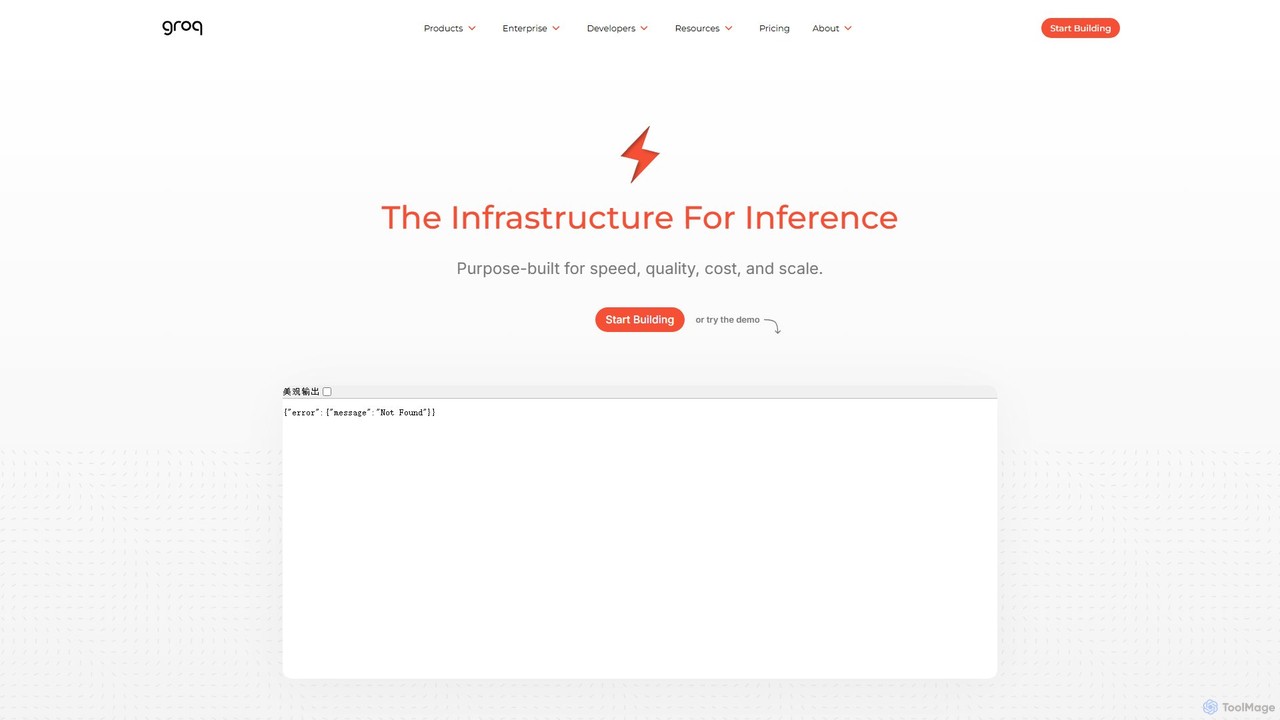
Groq is a revolutionary AI inference platform providing developers with unparalleled speed and cost-efficiency. Powered by its custom-built Language Processing Unit (LPU), Groq delivers real-time performance for large language models (LLMs), speech recognition, and text-to-speech applications. It offers a developer-friendly API, enabling seamless integration for building next-generation, low-latency AI solutions at scale.

Ai Services
Visits 3.6MFavorites 146Likes 165

About Ai Services

Ai Services are cloud-based artificial intelligence capabilities offered as ready-to-use APIs or SDKs, enabling developers and businesses to integrate advanced AI functionalities without extensive machine learning expertise. These services leverage powerful cloud infrastructure to provide scalable and accessible solutions for tasks like natural language processing, computer vision, and speech recognition. They democratize AI, allowing rapid development and deployment of intelligent applications across various industries, making AI accessible as a core component of cloud computing.

Core Features

  • Pre-trained Models: Access to pre-built, optimized AI models for common tasks, reducing development time.
  • API/SDK Integration: Easy integration into existing applications and workflows via standard programming interfaces.
  • Scalability & Elasticity: Automatically scales resources to handle varying workloads and user demands efficiently.
  • Managed Infrastructure: Cloud providers manage underlying hardware and software, minimizing operational overhead for users.
  • Cost-Effectiveness: Typically offered on a pay-as-you-go model, eliminating large upfront investments in AI infrastructure.

Applicable Scenarios

Businesses across sectors utilize Ai Services to enhance their digital products and operations. For instance, e-commerce platforms integrate AI for personalized recommendations, while customer service centers deploy AI-powered chatbots for instant support. Healthcare providers might use AI for medical image analysis, and marketing teams leverage natural language processing for sentiment analysis of customer feedback.

How to Choose

When selecting Ai Services, consider the specific AI capability needed (e.g., NLP, computer vision), the ease of integration with your existing tech stack, and the provider's data privacy and security policies. Evaluate pricing models based on usage, the availability of pre-trained models versus custom training options, and the overall ecosystem support for your development needs.

Ai Services use cases

1

Automated Customer Support with AI Chatbots

Customer service departments can deploy AI services to power intelligent chatbots and virtual assistants. These tools handle routine customer inquiries, provide instant answers to FAQs, and guide users through troubleshooting steps, significantly reducing human agent workload and improving response times. Complex issues are seamlessly escalated, ensuring efficient and continuous support.

2

Content Moderation and Analysis for Platforms

Online platforms and social media companies can utilize AI services for automated content moderation. By integrating computer vision and natural language processing APIs, they can automatically detect and filter inappropriate, harmful, or spam content (images, text, video) uploaded by users, ensuring a safer and more compliant online environment while reducing the need for extensive manual review.

3

Personalized Recommendation Engines

E-commerce sites, streaming services, and content platforms can integrate AI services to build sophisticated recommendation engines. These services analyze user behavior, preferences, and historical data to deliver highly personalized product suggestions, movie recommendations, or news articles, significantly enhancing user engagement, satisfaction, and ultimately, sales or consumption rates.

4

Speech-to-Text Transcription for Accessibility

Businesses and content creators can leverage AI speech services for accurate speech-to-text transcription. This is invaluable for converting audio recordings of meetings, interviews, or podcasts into searchable text, improving accessibility for hearing-impaired individuals, and enabling efficient content analysis and archiving. It streamlines the creation of captions and subtitles for video content.

5

Sentiment Analysis of Customer Feedback

Marketing and product teams can employ natural language processing (NLP) AI services to perform sentiment analysis on vast amounts of customer feedback, including reviews, social media comments, and survey responses. This helps identify prevailing customer emotions, pinpoint common pain points, and uncover emerging trends, providing actionable insights for product improvements and targeted marketing campaigns.

6

Medical Image Analysis for Diagnostics

Healthcare providers and researchers can leverage AI computer vision services to assist in the analysis of medical images such as X-rays, MRIs, and CT scans. These services can help detect subtle anomalies, identify potential diseases earlier, and quantify changes over time, thereby improving diagnostic accuracy, speeding up the analysis process, and supporting clinical decision-making.

Ai Services FAQ

What are Ai Services?

Ai Services are cloud-based platforms offering pre-built artificial intelligence functionalities as APIs or SDKs. They provide ready-to-use AI models for tasks like natural language processing, computer vision, and speech recognition, allowing developers to integrate advanced AI into applications without deep machine learning expertise. These services are a key component of modern cloud computing, democratizing access to AI.

How do Ai Services differ from building AI models from scratch?

Ai Services provide pre-trained, managed AI models and infrastructure, significantly reducing development time, cost, and the need for specialized AI talent. Users integrate these services via APIs. Building AI models from scratch, conversely, requires extensive data collection, model training, infrastructure setup, and ongoing maintenance, offering greater customization but demanding more resources and expertise.

What are the main types of Ai Services available?

The main types of Ai Services include Natural Language Processing (NLP) for text analysis, generation, and translation; Computer Vision for image and video analysis, object detection, and facial recognition; Speech Services for voice recognition and synthesis; and Machine Learning services for predictive analytics, recommendation engines, and anomaly detection. Many providers offer a combination of these capabilities.

Who can benefit from using Ai Services?

A wide range of users can benefit from Ai Services. Developers can rapidly prototype and deploy AI-powered features into their applications without needing deep AI expertise. Startups can access advanced AI capabilities without large upfront investments in infrastructure or specialized talent. Enterprises can scale their AI initiatives, automate processes, gain deeper insights from data, and enhance customer experiences more efficiently.

What factors should I consider when choosing an Ai Service provider?

When choosing an Ai Service provider, consider the specific AI capabilities and the accuracy of their pre-trained models for your use case. Evaluate the ease of integration (APIs/SDKs), data privacy and security compliance, and the scalability of their offerings. Also, assess their pricing structure (e.g., pay-as-you-go, tiered), the quality of documentation and support, and the overall reliability and reputation of the provider in the cloud computing ecosystem.