
ToolMage
Sign in

Best 1 Custom Model Development AI tools for Ai Infrastructure

Popular Custom Model Development AI tools in Ai Infrastructure include apptension, helping you work more efficiently.

apptension
Paid

apptension

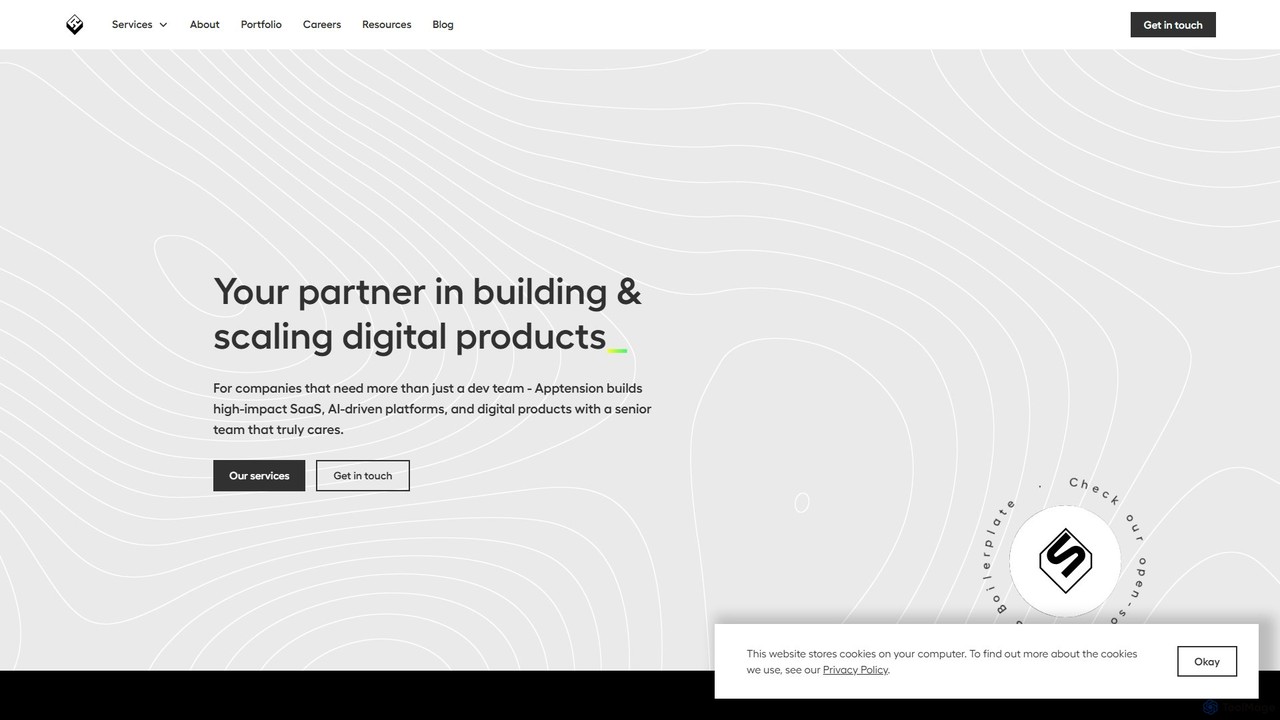
Apptension is a custom software development agency specializing in end-to-end digital solutions. With a senior team of experts, they build scalable products, including generative AI applications, SaaS platforms, and complex web/mobile apps, to help businesses innovate and grow.

Custom Model Development
Visits 16.1KFavorites 102Likes 111

About Custom Model Development

Custom Model Development refers to the process of building, training, and deploying AI models specifically tailored to address unique business challenges or leverage proprietary datasets. Unlike off-the-shelf AI solutions, these models are meticulously crafted from the ground up or fine-tuned extensively to meet highly specific performance requirements and domain-specific nuances. This approach allows organizations to unlock precise insights, automate specialized tasks, and gain a competitive edge by transforming their unique data into actionable intelligence. It forms a critical component within the broader AI Infrastructure, providing the specialized intelligence layer.

Core Features

  • Data Preparation & Annotation: Collecting, cleaning, and labeling domain-specific datasets for optimal model training.
  • Algorithm Selection & Customization: Choosing and adapting machine learning algorithms best suited for the unique problem and data characteristics.
  • Model Training & Optimization: Iteratively training, validating, and fine-tuning models to achieve desired accuracy and performance metrics.
  • Deployment & Integration: Seamlessly integrating custom models into existing systems and applications for real-world use.
  • Performance Monitoring & Iteration: Continuously tracking model performance and retraining with new data to maintain relevance and accuracy.

Applicable Scenarios

Organizations facing highly specialized problems where generic AI solutions fall short often turn to Custom Model Development. This includes industries with unique data patterns like advanced medical diagnostics, niche financial fraud detection, or quality control for bespoke manufacturing processes. It's also ideal for companies seeking to build proprietary AI capabilities that differentiate their products or services.

How to Choose

When considering Custom Model Development, evaluate the provider's expertise in your specific domain, their data security and privacy protocols, and the scalability of their solutions. Assess their ability to integrate with your existing infrastructure and their approach to ongoing model maintenance and iteration. Understanding the total cost of ownership and project timeline is also crucial for a successful implementation.

Featured tool rankings

Custom Model Development use cases

1

Advanced Medical Image Diagnosis

Medical researchers and clinicians utilize custom models to identify subtle anomalies in specialized imaging data (e.g., specific types of MRI scans for rare neurological conditions) that generic AI models might miss. This involves training on proprietary, annotated datasets from a specific patient population, leading to higher diagnostic accuracy and earlier detection for niche diseases.

2

Niche Financial Fraud Detection

Financial institutions develop custom AI models to detect highly sophisticated and evolving fraud schemes unique to their specific product lines, such as micro-loan fraud or complex derivatives trading anomalies. These models are trained on the institution's historical transaction data, customer behavior patterns, and specific regulatory compliance requirements, significantly reducing false positives and improving detection rates.

3

Industrial Quality Control for Unique Products

Manufacturers of specialized components (e.g., aerospace parts, custom semiconductors) deploy custom vision AI models to inspect for defects that are unique to their product design and manufacturing process. By training on images of their specific products, including various defect types and acceptable tolerances, these models achieve superior accuracy in automated quality assurance compared to general-purpose inspection systems.

4

Personalized Customer Service Bots for Complex Products

Technology companies with highly technical and customizable products create custom NLP models for their customer service chatbots. These models are trained on extensive product manuals, technical specifications, and past customer support interactions, enabling the bot to understand complex queries, provide accurate troubleshooting steps, and offer personalized solutions for intricate product configurations.

5

Predictive Maintenance for Proprietary Machinery

Energy companies or heavy industries with unique, custom-built machinery develop AI models to predict equipment failures. These models analyze real-time sensor data, operational logs, and maintenance records specific to each machine's design and usage history, allowing for proactive maintenance scheduling, minimizing downtime, and extending equipment lifespan.

6

Automated Content Moderation for Specialized Platforms

Online platforms catering to niche communities (e.g., scientific research forums, specialized gaming communities) implement custom content moderation AI. These models are trained on platform-specific guidelines and historical content violations, enabling them to accurately identify nuanced forms of inappropriate content, spam, or misinformation that general content filters might overlook, maintaining community integrity.

Custom Model Development FAQ

What is Custom Model Development?

Custom Model Development is the process of creating artificial intelligence models specifically designed and trained to solve a unique problem or leverage a particular dataset for an organization. Unlike using pre-built, general-purpose AI, custom models are tailored to exact specifications, offering higher accuracy and relevance for specialized tasks. It's a key part of leveraging AI Infrastructure to build proprietary intelligent systems.

When should I choose Custom Model Development over pre-trained models?

You should opt for Custom Model Development when off-the-shelf or pre-trained models cannot achieve the required accuracy or performance for your specific use case. This is typically true for tasks involving highly specialized data, unique business logic, or niche industry applications where generic models lack domain-specific understanding. It's also beneficial when you need a proprietary AI solution for a competitive advantage.

What are the key steps involved in Custom Model Development?

The process typically involves several key steps: Data Collection and Preparation (gathering, cleaning, and annotating relevant data), Model Selection and Training (choosing appropriate algorithms and iteratively training the model), Evaluation and Optimization (testing performance and fine-tuning), and finally, Deployment and Monitoring (integrating the model into production and continuously tracking its performance for further improvements).

What are the benefits of investing in Custom Model Development?

Investing in Custom Model Development offers several significant benefits. It leads to higher accuracy and better performance for specific tasks, as the model is perfectly aligned with your data and objectives. It provides a unique competitive advantage, as the AI solution is proprietary. Furthermore, it allows for greater control over data privacy and security, and the models can be continuously refined to adapt to evolving business needs and data patterns.

What kind of data is needed for Custom Model Development?

Custom Model Development primarily requires high-quality, relevant, and often domain-specific data. This includes structured data (databases, spreadsheets) and unstructured data (text, images, audio, video). The data needs to be sufficiently large, diverse, and accurately labeled or annotated to effectively train the model. The quantity and quality of data directly impact the model's performance and generalization capabilities.