
Modal Overview
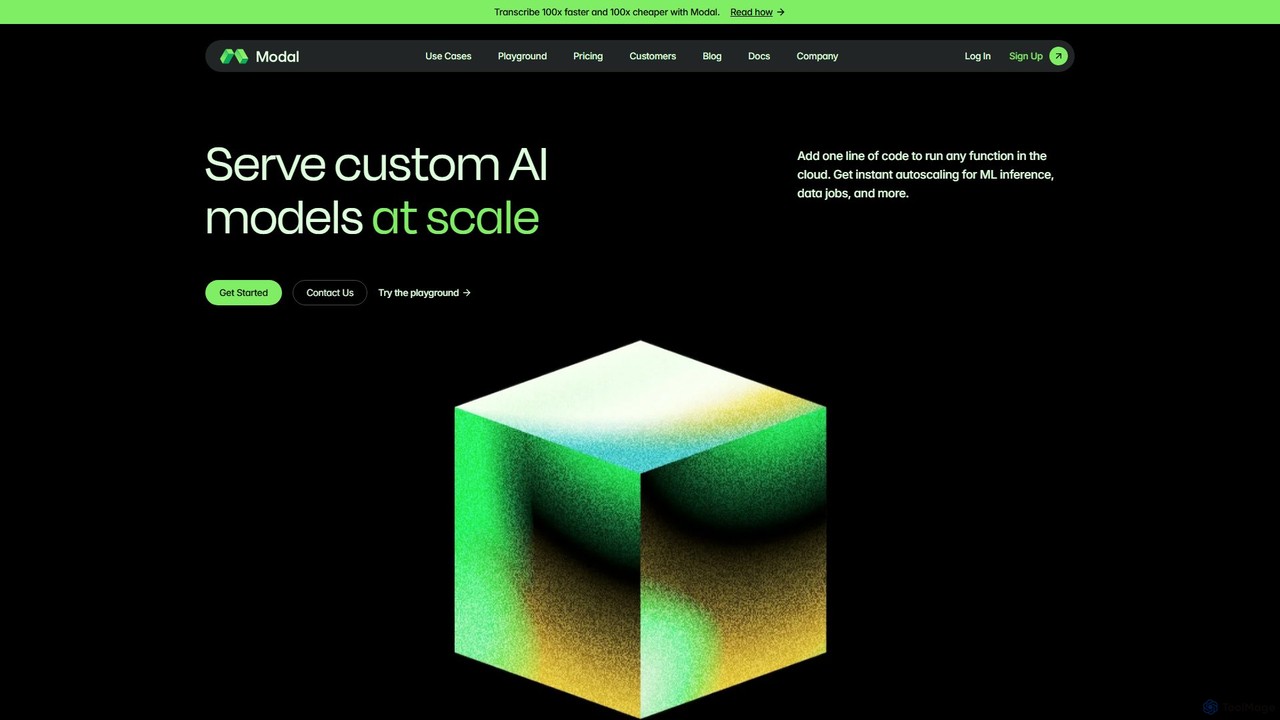
Modal is a serverless cloud function platform designed to radically simplify the process of running compute-intensive code, particularly for AI, machine learning, and data processing workloads. It provides developers with an elegant way to execute Python functions in the cloud, abstracting away all the complexities of infrastructure management. With Modal, you can go from local development to massive-scale cloud execution with minimal code changes, allowing you to focus on your application logic instead of wrestling with Kubernetes, Docker, or cloud provider configurations.
The platform is built on a custom, high-performance stack, including a Rust-based container system, which enables sub-second container start times. This means you can iterate as quickly in the cloud as you do on your local machine. Modal's core philosophy is 'infrastructure as code,' where all resource requirements, such as specific GPU types, memory, or secrets, are defined directly within your Python script, eliminating the need for separate configuration files like YAML.
How to use Modal
Getting started with Modal is designed to be incredibly straightforward, requiring just a few simple steps:
- Installation: Install the Modal Python client library using pip:
pip install modal. - Authentication: Link your machine to your Modal account by running a single command in your terminal:
modal setup. This will open a browser window for you to log in and create an API token. - Write Your Code: Define your cloud function by simply decorating a standard Python function with
@app.function(). Within this decorator, you can specify all your resource needs. For example, to run a function on an NVIDIA A100 GPU, you would use@app.function(gpu="A100"). You can also define custom container environments, specifying Python packages or system dependencies in the code. - Run Remotely: To execute your function in the cloud, simply call it with the
.remote()method. For example:my_function.remote(arg1, arg2). Modal handles the rest: packaging your code, provisioning the specified resources, executing the function, and streaming back the results.
Core Features of Modal
- Serverless GPU & CPU Compute: Instantly access a wide range of GPUs (including H100, A100, L40S, T4) and high-core-count CPUs without any manual setup.
- Instantaneous Autoscaling: Automatically scales from zero to thousands of containers in seconds to handle bursty workloads, and scales back down to zero, so you never pay for idle resources.
- Zero-Configuration Environments: Define your container image, dependencies, and hardware requirements directly in Python. No Dockerfiles or YAML needed.
- Persistent Storage: Utilize stateful components like `modal.Volume` for persistent, high-throughput file storage, `modal.Dict` for key-value stores, and `modal.Queue` for distributed task queues.
- Job Scheduling & Web Endpoints: Easily deploy functions as cron jobs for scheduled tasks or as secure HTTPS web endpoints to serve models and applications, with support for streaming and WebSockets.
- Secure Sandboxing: Execute untrusted code securely in isolated environments, a critical feature for building AI agents or code interpreters.
- Seamless Integrations: Natively integrates with tools like Datadog and OpenTelemetry for observability, and allows easy mounting of cloud storage like S3 and R2.
- Built-in Debugging: Troubleshoot issues effectively with an interactive TTY shell (
modal shell) inside your running containers.
Use Cases for Modal
Modal is versatile and powerful, suitable for a wide array of applications:
- Generative AI: Deploy and scale LLM inference with frameworks like vLLM and TensorRT-LLM, fine-tune models on custom data, and run large-scale training jobs.
- Batch Processing: Perform massive parallel processing for tasks like audio transcription with Whisper, document OCR, or data analysis on large datasets (e.g., Parquet files on S3).
- Image, Video & 3D Generation: Serve diffusion models like Stable Diffusion and Flux, or run rendering farms for tools like Blender.
- Computational Biology: Run complex simulations for protein folding and molecular structure prediction.
- Retrieval-Augmented Generation (RAG): Build and host scalable RAG pipelines that can query documents and cite sources.
- AI-Powered Agents: Create and run AI agents that can execute code in a secure, sandboxed environment.
Advantages of Modal
Modal offers a significant competitive edge by focusing on developer experience (DX) and performance. Compared to traditional cloud services like AWS Lambda or Cloud Run, Modal provides a much simpler, Python-native workflow. Its key advantages are speed (sub-second cold starts and rapid scaling), cost-effectiveness (pay-per-second pricing and scale-to-zero), and the complete abstraction of infrastructure, which dramatically accelerates development cycles and reduces operational overhead.
Pricing and Plans
Modal operates on a freemium and pay-as-you-go model, making it accessible for everyone from individual developers to large enterprises.
- Starter Plan: This free plan is ideal for individuals and small teams. It includes a generous $30 of free compute credits every month.
- Pay-as-you-go: Beyond the free credits, you only pay for the resources you consume, billed by the second. This includes GPUs, CPUs, and memory. Example GPU prices per second are: T4 at ~$0.000164, A10G at ~$0.000306, and H100 at ~$0.001097.
- Team Plan: Designed for startups and growing organizations, offering collaboration features and higher concurrency limits.
- Enterprise Plan: For large organizations requiring enhanced security (SOC 2, HIPAA), dedicated support, and features like SSO.
Traffic
Latest traffic
Status
Monthly traffic trend
- 2025-9: 667.2K
- 2026-1: 774.0K
- 2026-2: 803.7K
- 2026-3: 856.4K
- 2026-4: 1.2M
- 2026-5: 987.8K
Geography
Top 5 countries / regions
- 🇺🇸United States66.6%
- 🇮🇳India13.7%
- 🇨🇳China7.9%
- 🇻🇳Vietnam6.0%
- 🇬🇧United Kingdom5.8%
Traffic sources
| Source type | Percentage |
|---|---|
Direct | 95.2% |
Referral | 3.7% |
Email | 1.1% |
Top keywords
| Keyword | Cost per click |
|---|---|
| modal | $0.81 |
| modal ai | $0.98 |
| modal docs | $4.19 |
| modal labs | $5.97 |
| modal pricing | $6.46 |
Modal Videos on YouTube


freeCodeCamp.org


Zubair Trabzada | AI Workshop

Case Done by AI

WorldofAI
Modal Alternatives
novita.ai
Novita AI is a developer-centric cloud platform offering affordable, scalable access to over 200 AI models via simple APIs. It provides serverless GPUs, dedicated GPU instances, and custom model deployment, enabling developers to build and scale AI applications without managing infrastructure.
Gpu
Anyscale
Anyscale is a fully-managed compute platform for scaling AI and Python workloads. Built on the open-source Ray framework by its original creators, it empowers developers to build, run, and scale distributed applications, from LLM training to data processing, with optimized performance and cost-efficiency on any cloud.
Mlops
TAHO
TAHO is a high-performance compute framework designed to replace complex orchestrators like Kubernetes. It doubles your compute efficiency without increasing hardware costs by eliminating overhead and enabling microsecond cold starts. Ideal for AI/ML, edge computing, and high-throughput workloads, TAHO integrates seamlessly with your existing infrastructure, offering a faster, cheaper, and simpler solution for scaling demanding applications on cloud, on-prem, or hybrid environments.
Model Deployment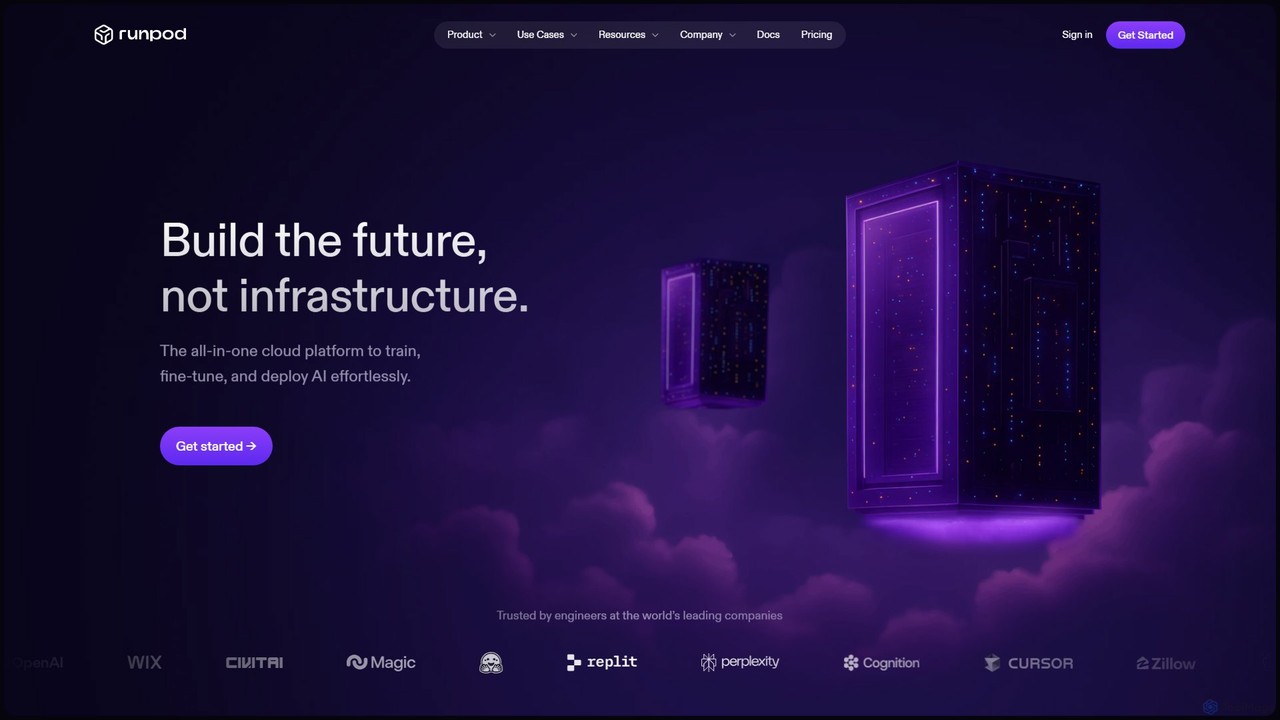
Runpod
Runpod is a cloud platform designed for AI and machine learning, offering scalable GPU compute for deploying, training, and running AI models. It provides serverless GPUs, pre-built templates, and cost-effective pricing to simplify the entire AI development workflow, from idea to production.
Machine Learning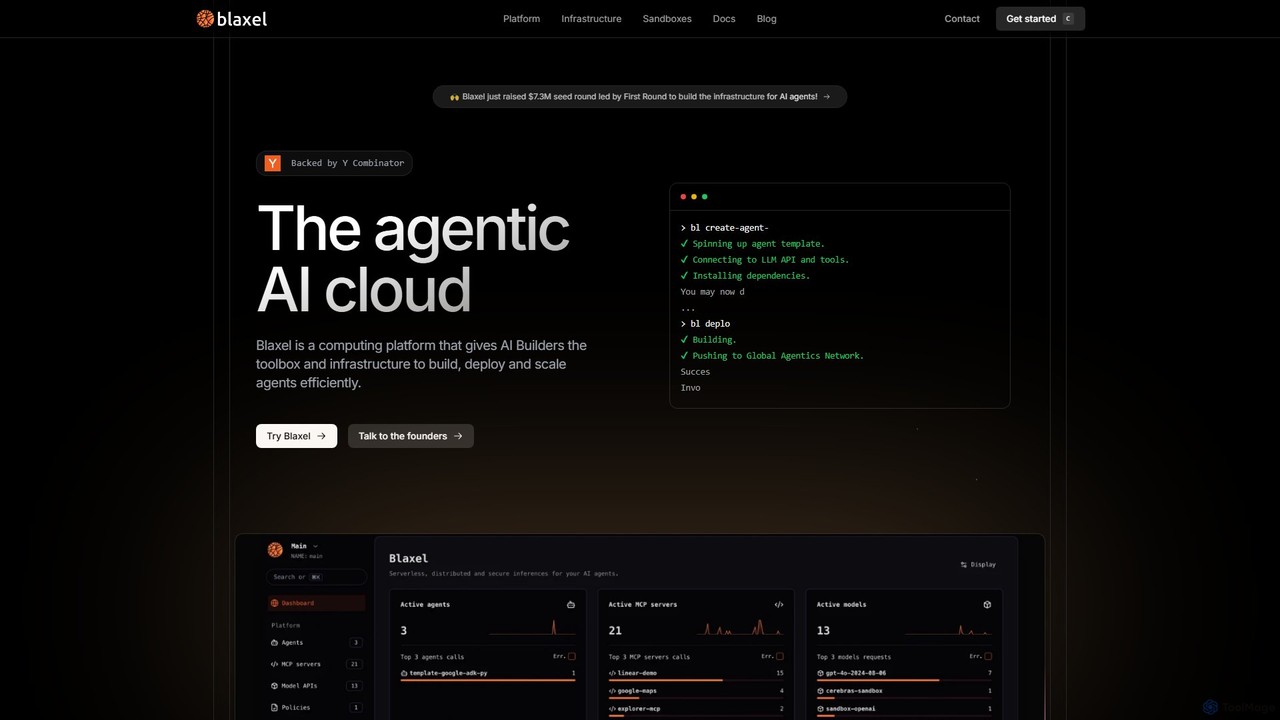
Blaxel
Blaxel is a serverless computing platform designed for AI developers, providing the infrastructure and tools to build, deploy, and scale agentic AI applications efficiently. It offers sandboxed VMs, a unified LLM gateway, and deep observability.
Cloud ComputingModal Categories
Modal Embed Widget
Copy this embed code to place the badge on your blog, article, or product site and send readers directly to this ToolMage detail page.

Related AI tools
Runpod
Runpod is a cloud platform designed for AI and machine learning, offering scalable GPU compute for deploying, training, and running AI models. It provides serverless GPUs, pre-built templates, and cost-effective pricing to simplify the entire AI development workflow, from idea to production.
Machine Learning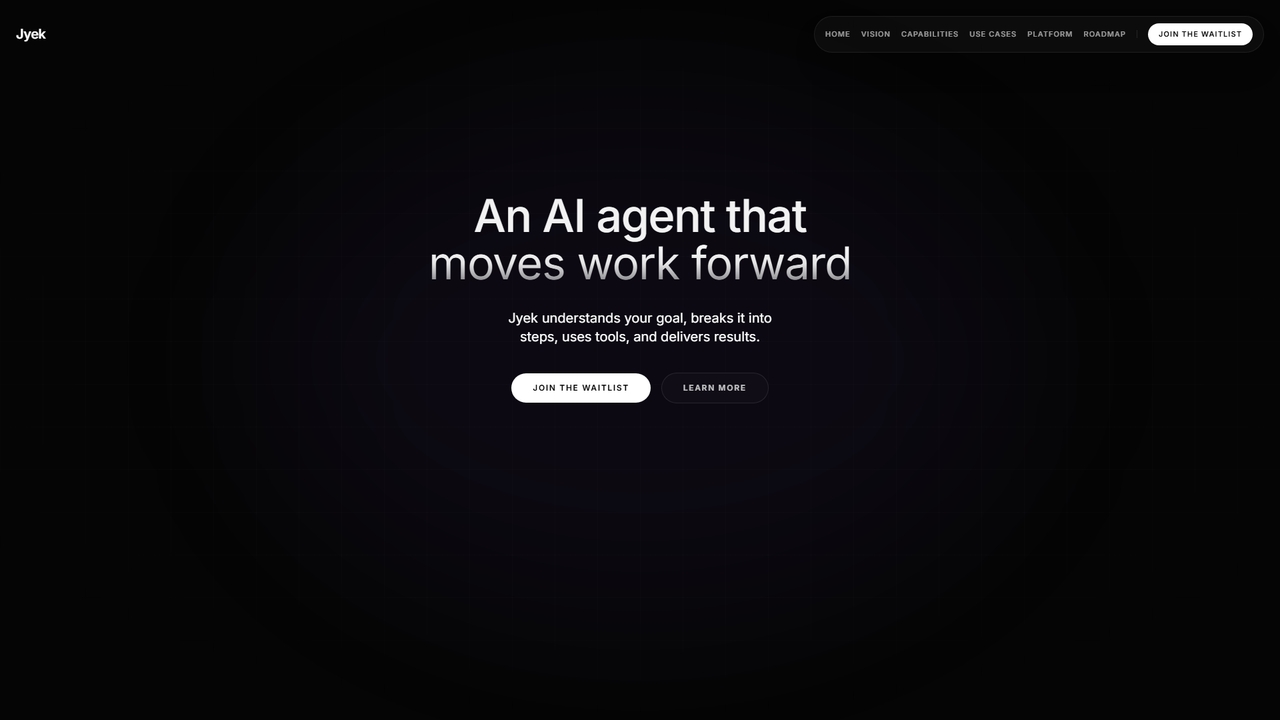
Jyek
Jyek is an AI agent platform that understands objectives, creates execution plans, uses tools, and delivers verifiable results for complex, multi-step tasks.
Automation
Beam
Beam is a serverless cloud platform designed for developers to run, scale, and deploy AI/ML models and applications on GPUs with ease. It offers instant autoscaling, pay-per-second billing, and a streamlined workflow, allowing you to go from code to a scalable API in minutes without managing complex infrastructure.
Machine Learning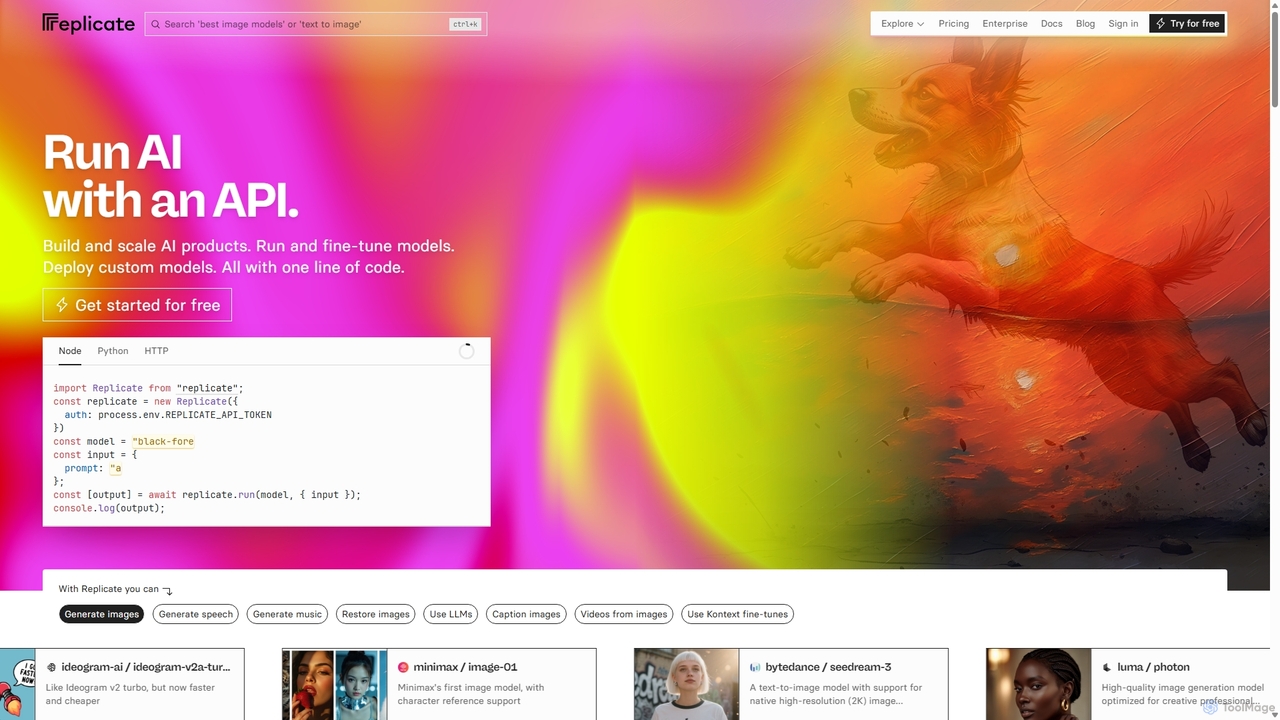
Replicate
Replicate is a cloud platform for developers to run, fine-tune, and deploy AI models via a simple API. It eliminates the need for managing complex infrastructure, offering access to thousands of models with pay-per-use pricing and automatic scaling.
Machine Learning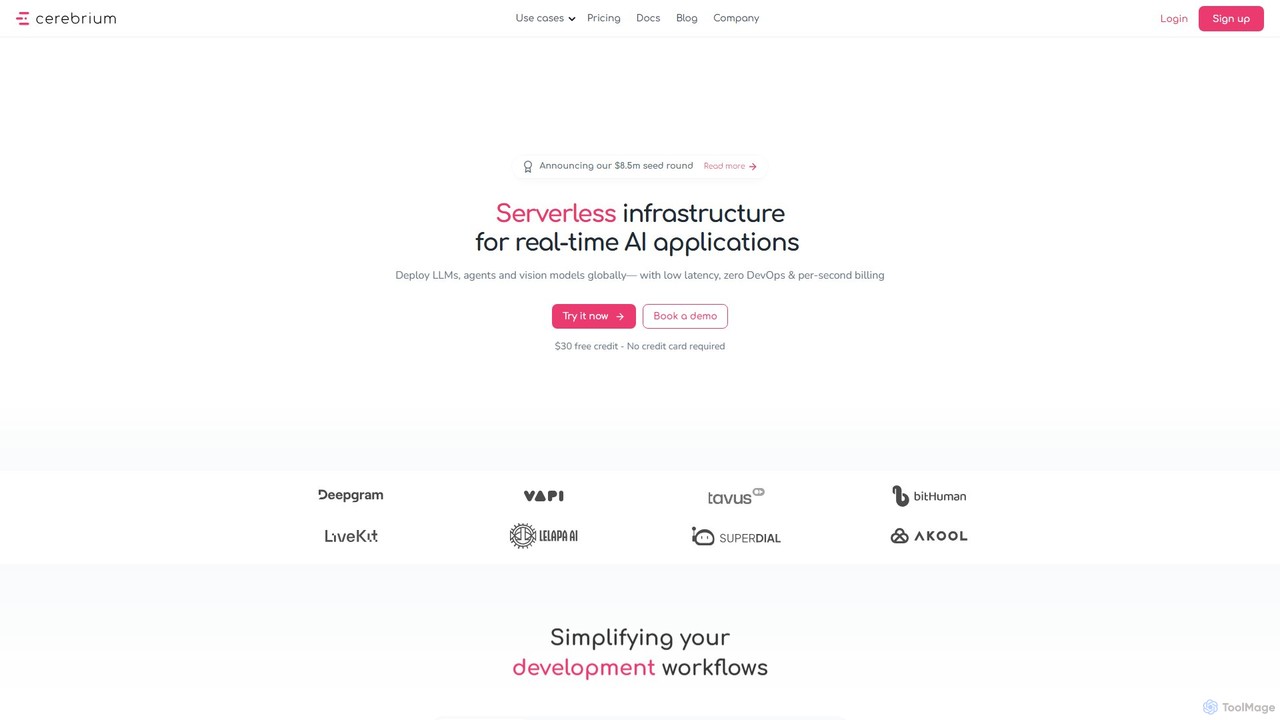
Cerebrium
Cerebrium is a serverless AI infrastructure platform designed for developers to deploy, manage, and scale machine learning models with ease. It abstracts away complex infrastructure, offering features like auto-scaling, fast cold starts, and pay-per-use GPU access, enabling teams to build high-performance AI applications without managing servers.
Serverless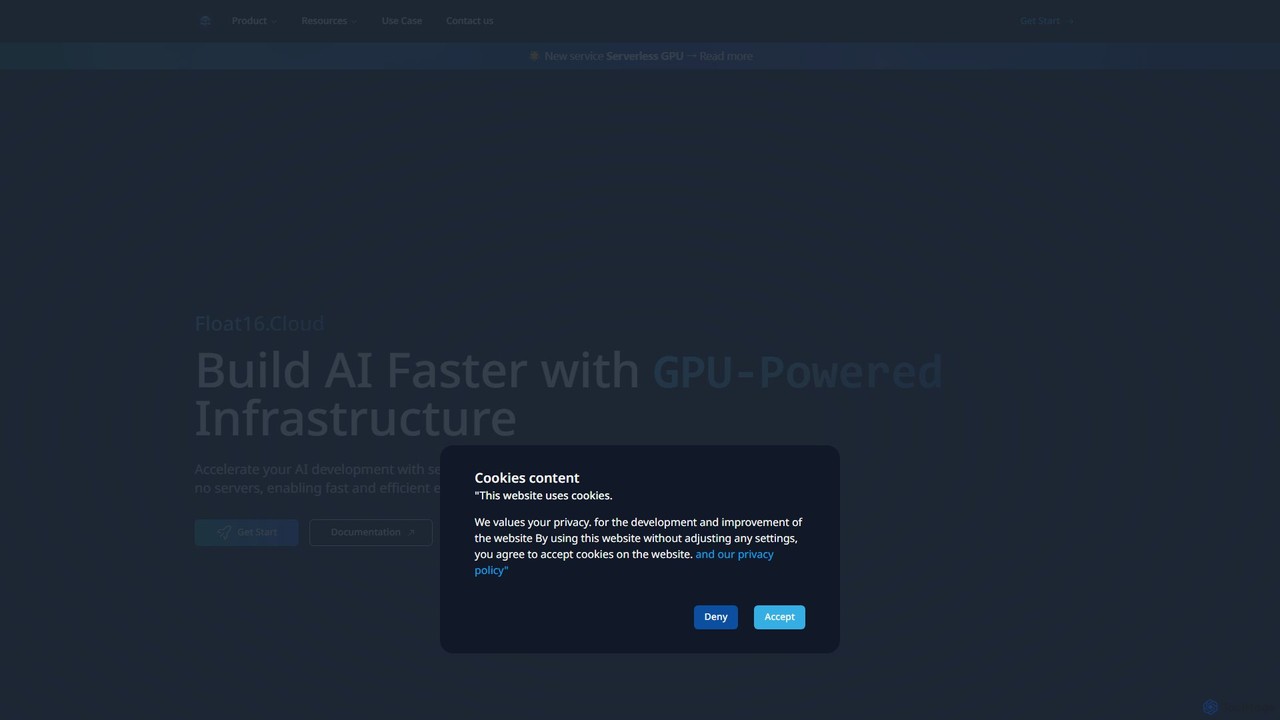
Float16.cloud
Float16.cloud is a serverless GPU platform designed to accelerate AI development. It provides instant access to high-performance H100 GPUs with per-second billing, zero setup, and no cold starts. Developers can deploy open-source LLMs, train models, and run AI workloads directly from Python scripts without managing infrastructure.
Platform As A Service (Paas)
Inferless
Inferless is a serverless GPU platform designed for developers to deploy machine learning models in minutes. It eliminates infrastructure management, offering automatic scaling from zero to handle spiky workloads. The platform is optimized for lightning-fast cold starts and cost-efficiency, allowing users to save up to 90% on GPU bills by paying only for what they use.
Machine Learning Deploymentnovita.ai
Novita AI is a developer-centric cloud platform offering affordable, scalable access to over 200 AI models via simple APIs. It provides serverless GPUs, dedicated GPU instances, and custom model deployment, enabling developers to build and scale AI applications without managing infrastructure.
GpuAnyscale
Anyscale is a fully-managed compute platform for scaling AI and Python workloads. Built on the open-source Ray framework by its original creators, it empowers developers to build, run, and scale distributed applications, from LLM training to data processing, with optimized performance and cost-efficiency on any cloud.
Mlops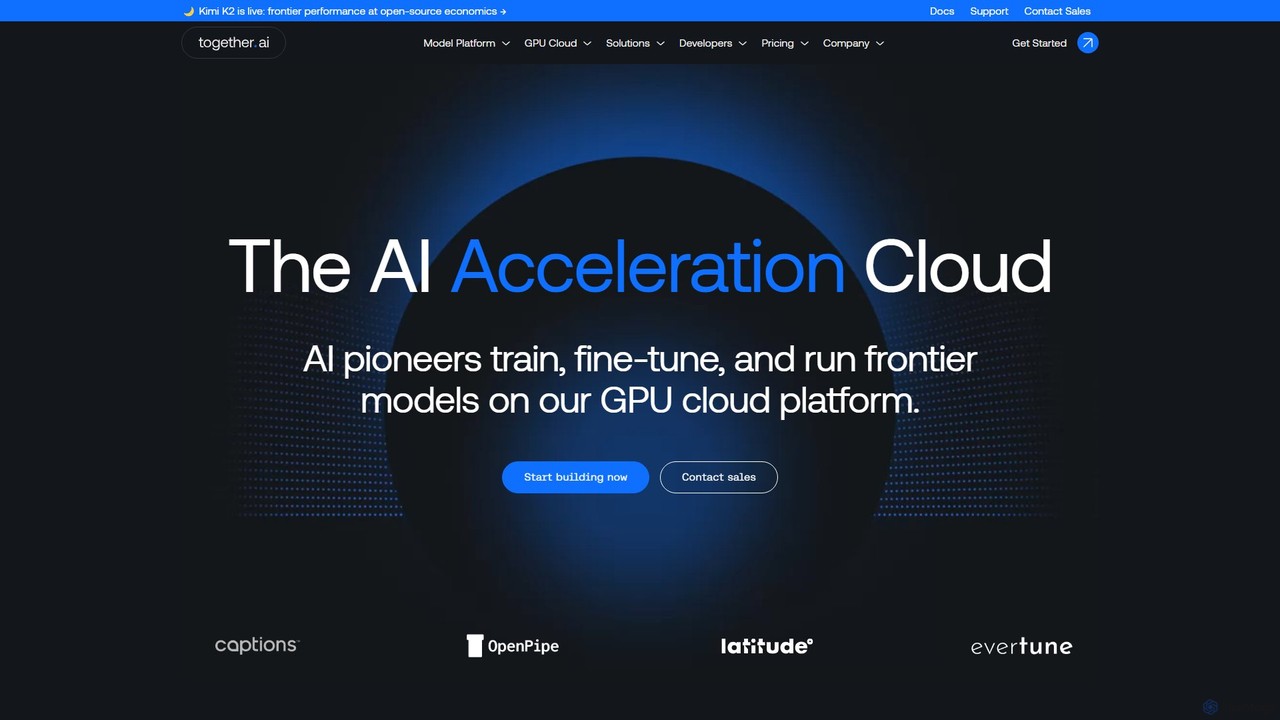
Together AI
Together AI is a leading cloud platform for developers, providing fast, cost-effective infrastructure to run, fine-tune, and train open-source generative AI models. It offers an extensive library of over 200 models, serverless inference APIs, customizable fine-tuning, and dedicated GPU clusters, creating an end-to-end solution for building and scaling AI applications.
Gpu Infrastructure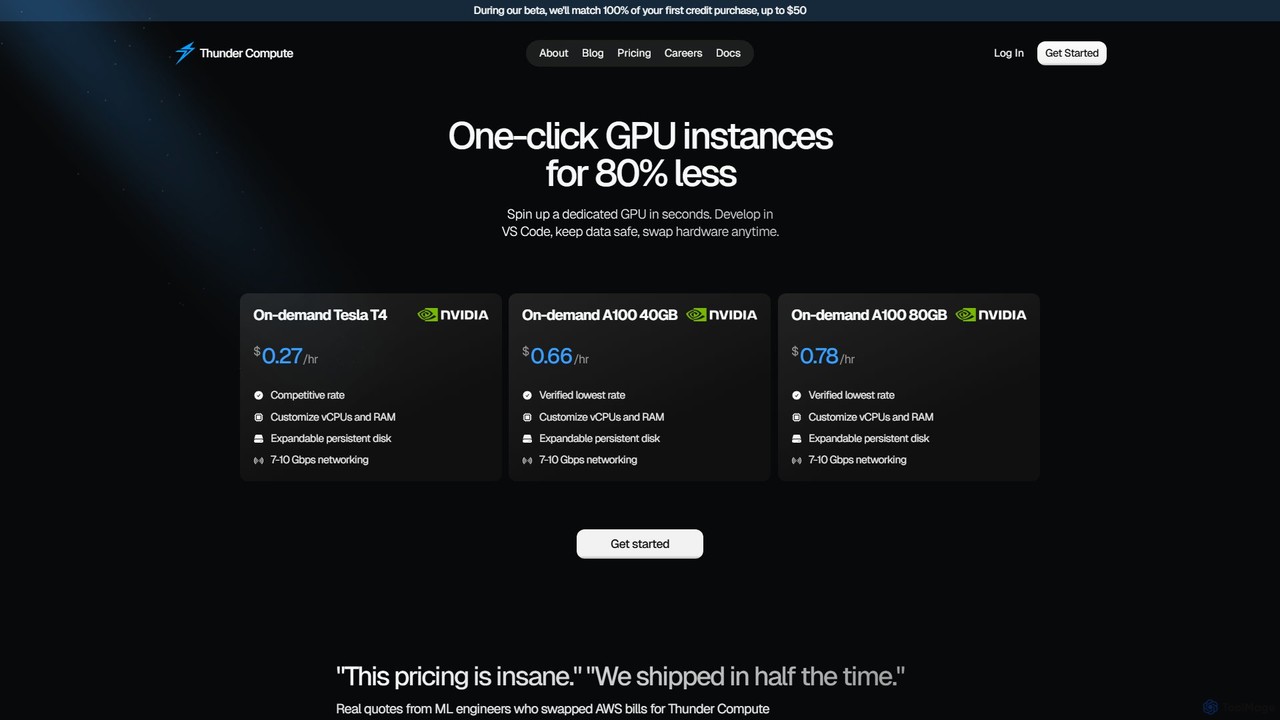
thundercompute
Thunder Compute offers an ultra-low-cost GPU cloud platform designed for AI and machine learning developers. It provides on-demand GPU instances like the NVIDIA A100 and T4 at prices up to 80% lower than major cloud providers. With features like one-click setup, VS Code integration, and seamless scalability, it dramatically simplifies the development workflow, from prototyping to production, allowing developers to focus on building models rather than managing infrastructure.
Machine Learning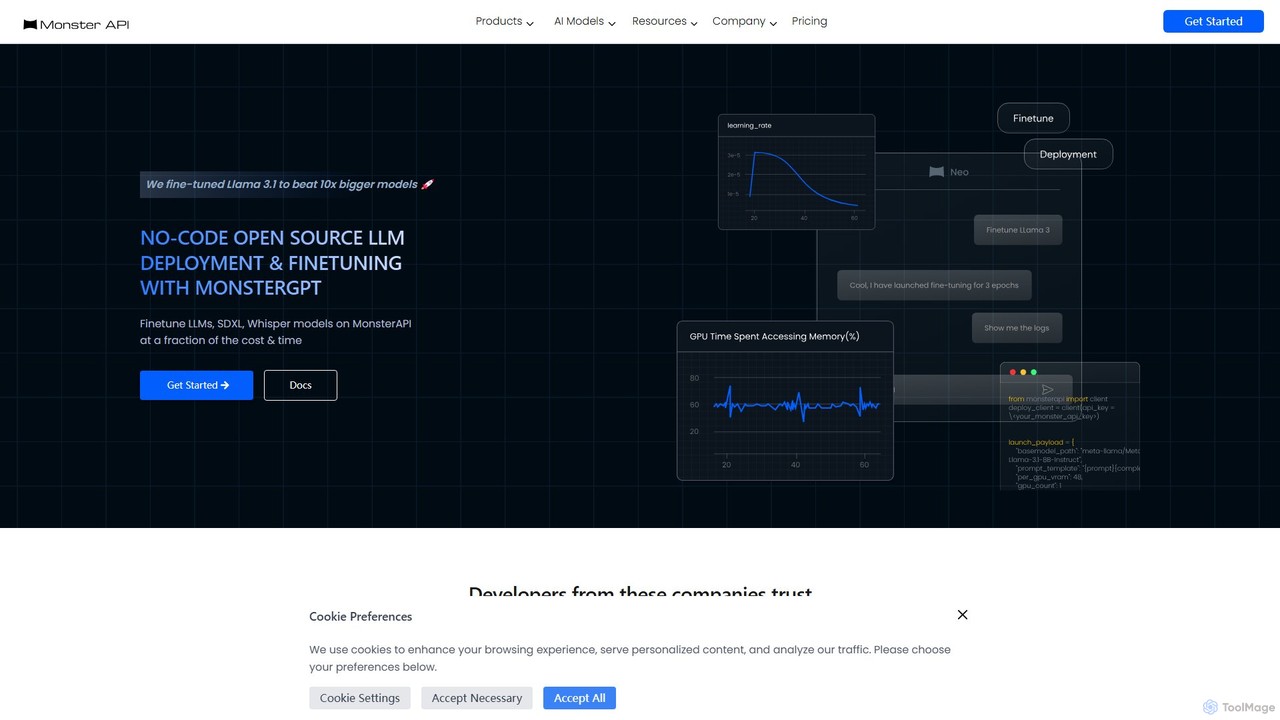
MonsterAPI
MonsterAPI is a developer-centric platform that simplifies the fine-tuning and deployment of open-source generative AI models. It offers a no-code chat interface, MonsterGPT, to manage complex tasks, supporting models like Llama, SDXL, and Whisper. The platform provides scalable API endpoints and enterprise-grade GPU infrastructure at a fraction of the typical cost and time, making advanced AI accessible to all developers.
Platform As A Service (Paas)Blaxel
Blaxel is a serverless computing platform designed for AI developers, providing the infrastructure and tools to build, deploy, and scale agentic AI applications efficiently. It offers sandboxed VMs, a unified LLM gateway, and deep observability.
Cloud Computing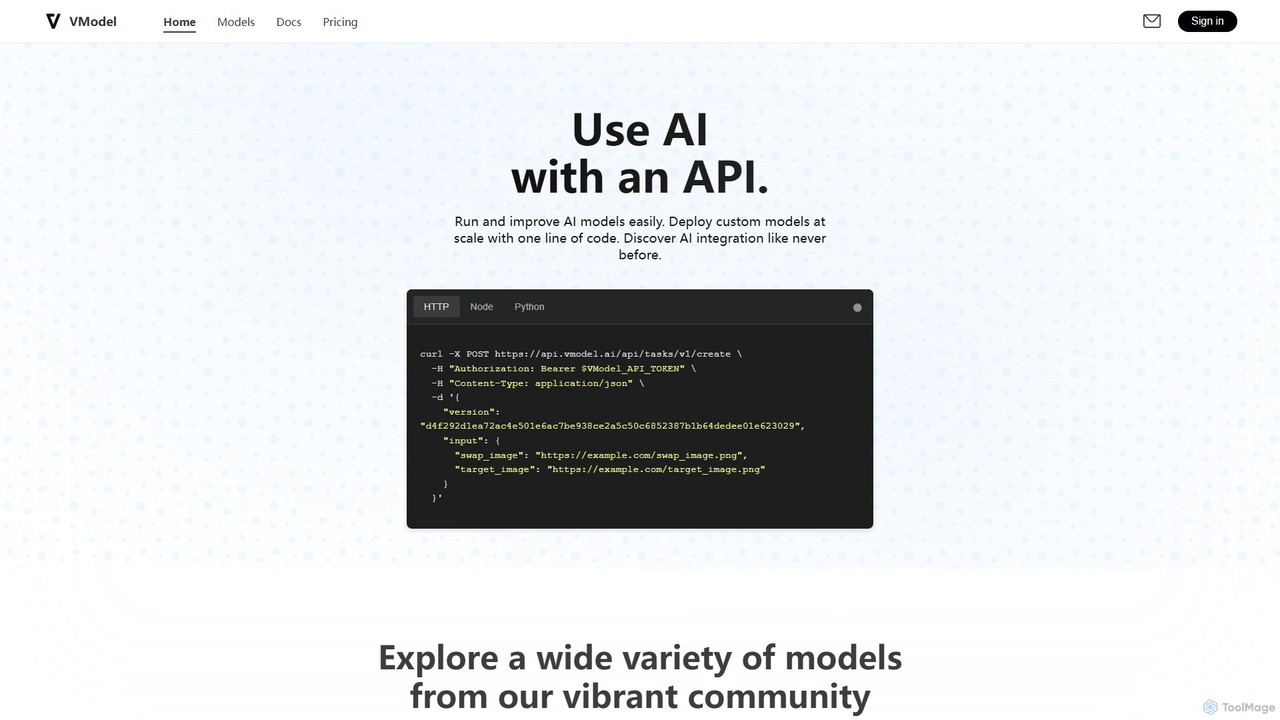
VModel
VModel is a developer-focused platform that simplifies the deployment and integration of AI models. It provides a unified REST API to access a vast library of pre-trained models for tasks like image generation, video processing, and face swapping. With a pay-as-you-go pricing model and scalable infrastructure, VModel enables developers to quickly build and power AI-driven applications without managing complex backend systems, offering enterprise-grade performance for projects of any size.
Model Deployment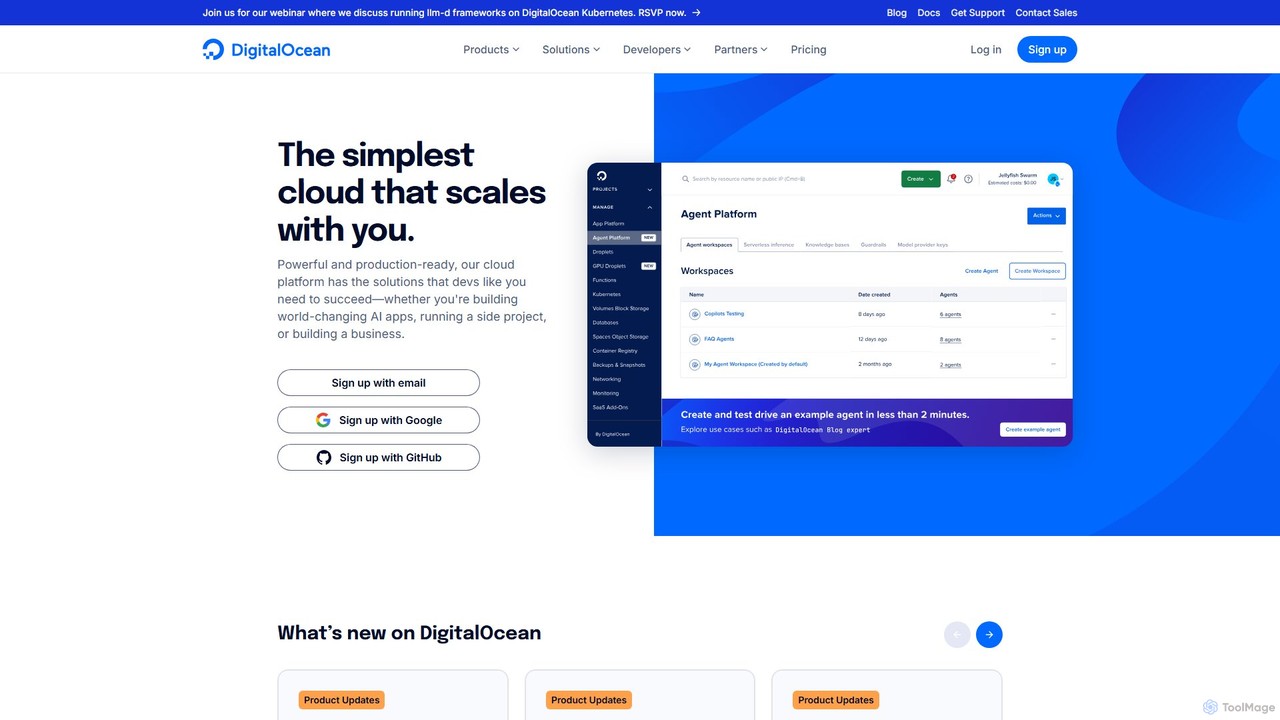
DigitalOcean
DigitalOcean is a developer-focused cloud infrastructure platform that simplifies building, deploying, and scaling applications. It offers a comprehensive suite of products, including virtual machines (Droplets), managed Kubernetes, and the GradientAI platform, providing powerful GPU resources and tools for creating and hosting world-changing AI applications, from side projects to large-scale businesses.
Hosting
Modal Comments (0)
Sign in to comment.
Sign inNo comments yet.