Cloud Computing Best in category 4 results Platform As A Service (Paas) AI Tool

Popular AI tools in the Platform As A Service (Paas) field of Cloud Computing include Lightning AI、UbiOps、Release.ai、MonsterAPI, etc., helping you quickly improve efficiency.

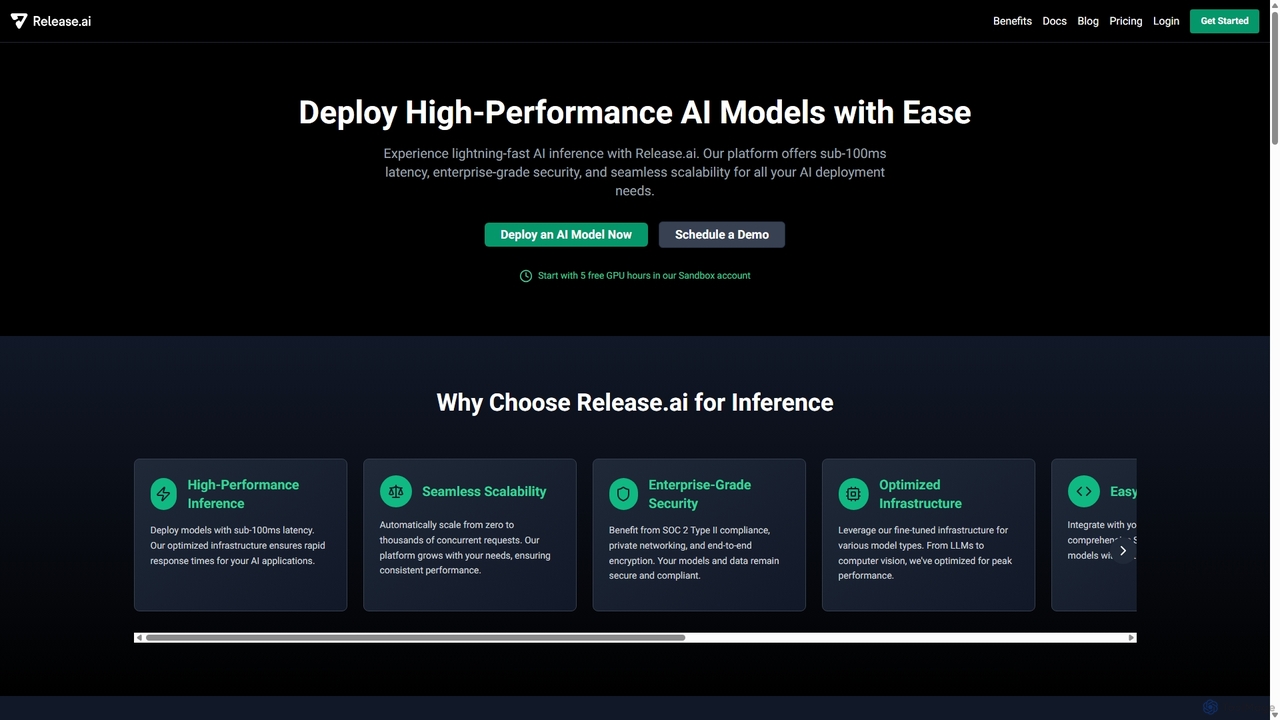
Release.ai

Release.ai

Release.ai is an enterprise-grade platform for developers to easily deploy, manage, and scale high-performance AI models. It offers …

5.3K
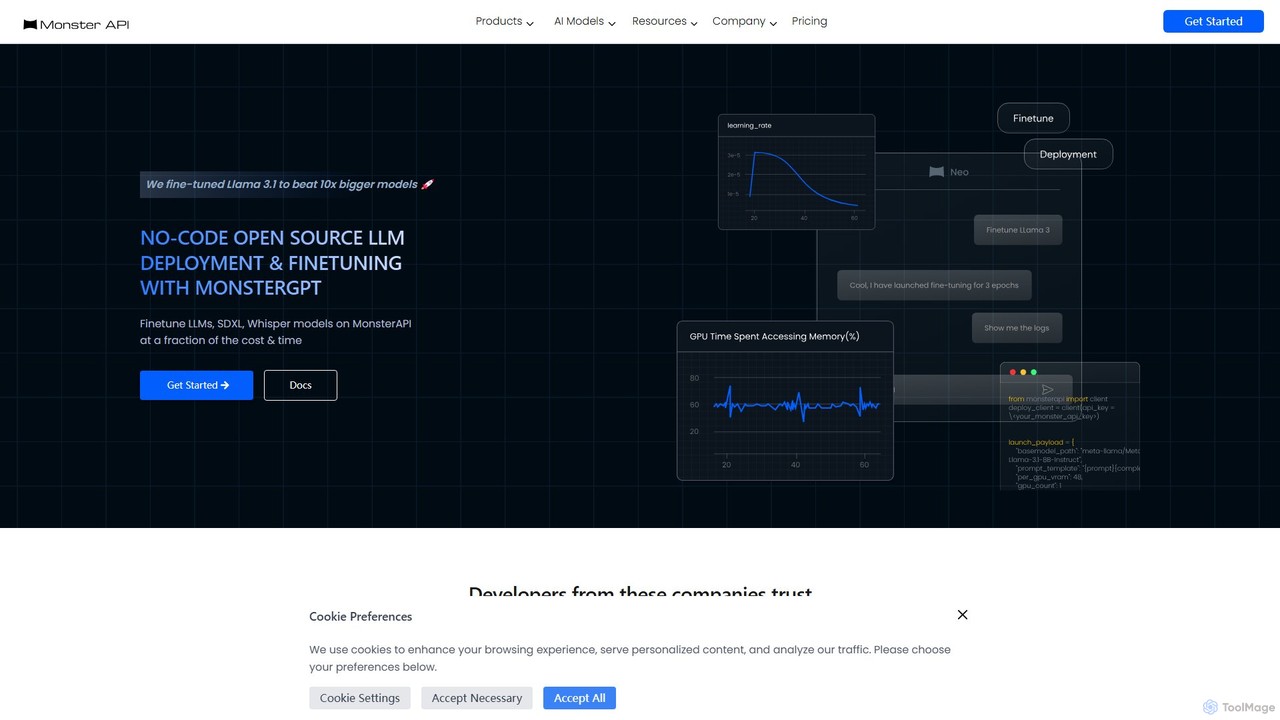
MonsterAPI

MonsterAPI

MonsterAPI is a developer-centric platform that simplifies the fine-tuning and deployment of open-source generative AI models. It offers …

2.8K
Lightning AI

Lightning AI

Lightning AI is a cloud platform designed to build, train, and deploy AI models at scale. It combines …

457.8K
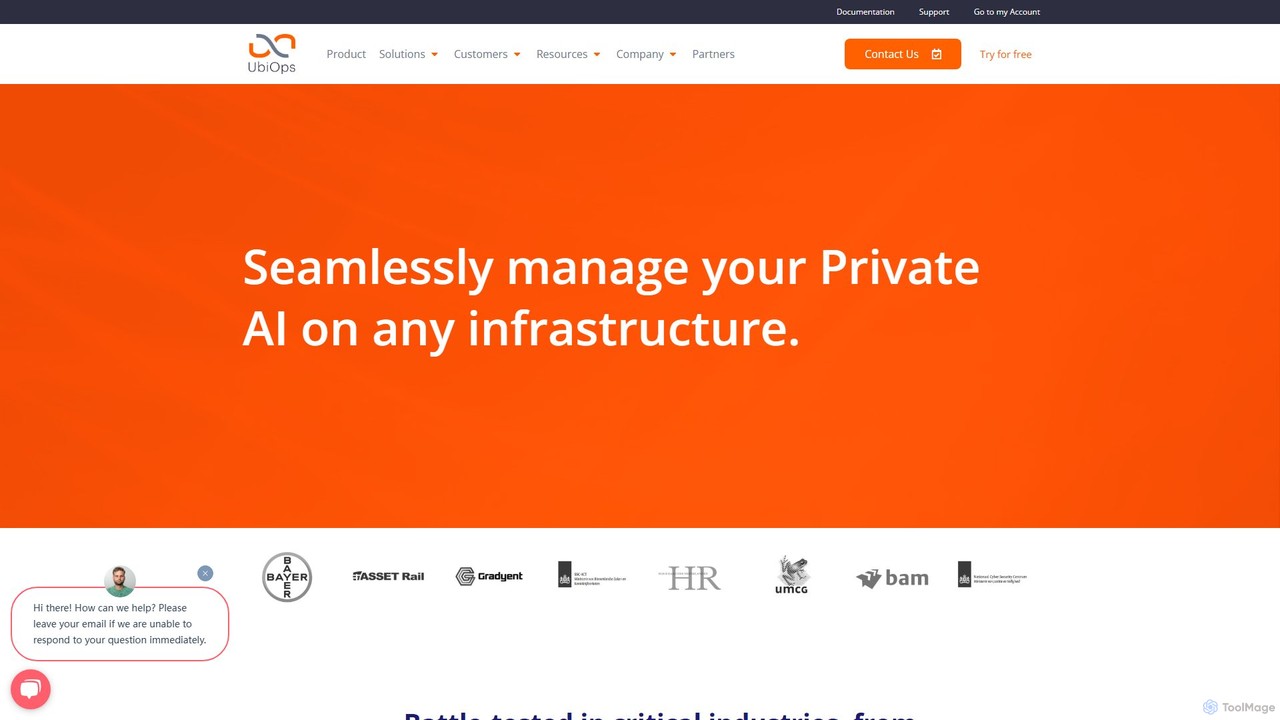
UbiOps

UbiOps

UbiOps is a powerful MLOps platform for AI model serving, orchestration, and training. It enables data scientists and …

24.1K

About Platform As A Service (Paas)

Platform as a Service (PaaS) is a cloud computing model that provides a complete, ready-to-use environment for developing, running, and managing applications. It abstracts away the complexities of infrastructure management, offering everything from operating systems and programming language execution environments to databases and web servers. PaaS empowers developers to focus solely on coding and deploying their applications, significantly accelerating development cycles and reducing operational overhead. This service model is a crucial component within the broader cloud computing ecosystem, streamlining the entire application lifecycle.

Core Features

  • Integrated Development Environment: Provides a suite of tools for coding, testing, and debugging applications directly within the platform.
  • Application Deployment & Hosting: Simplifies the process of deploying applications and handles the underlying server management and scaling.
  • Database & Middleware Services: Offers managed database solutions, message queues, and other middleware components ready for use.
  • Scalability & Load Balancing: Automatically scales application resources up or down based on demand, ensuring high availability and performance.
  • Version Control & Collaboration: Integrates with popular version control systems and supports team-based development workflows.

Use Cases

PaaS is ideal for software development teams, startups, and enterprises looking to rapidly build and deploy web applications, mobile backends, and APIs. It supports agile development methodologies by providing a consistent and scalable environment for continuous integration and delivery. Businesses can leverage PaaS to quickly iterate on new features, experiment with different technologies, and bring products to market faster without investing in or managing complex IT infrastructure.

How to Choose

When selecting a PaaS provider, consider the supported programming languages and frameworks, the range of integrated services (databases, message queues), scalability options, and pricing models. Evaluate the ease of integration with existing tools and workflows, vendor lock-in risks, and the availability of robust monitoring and management features. Technical support quality and community resources are also important factors for long-term success.

Platform As A Service (Paas)Use Cases

1

Rapid Web Application Development

Software development teams can leverage PaaS to quickly provision environments, deploy code, and scale web applications without the burden of managing underlying servers, operating systems, or databases. This accelerates the entire development lifecycle, allowing for faster iteration and deployment of new features to users.

2

API Development and Hosting

Developers can use PaaS platforms to efficiently build, deploy, and manage RESTful APIs or GraphQL services. The platform handles the underlying infrastructure, allowing teams to focus on API logic, security, and performance, leveraging built-in scaling and monitoring capabilities for robust service delivery.

3

Mobile Backend as a Service (MBaaS)

PaaS can function as a Mobile Backend as a Service (MBaaS), providing ready-to-use backend services such as user authentication, data storage, push notifications, and analytics for mobile applications. This allows mobile developers to focus on the front-end user experience without building and maintaining complex server-side infrastructure.

4

Microservices Architecture Deployment

PaaS platforms are well-suited for deploying and managing applications built with a microservices architecture. They provide the necessary tools for container orchestration, service discovery, and load balancing, enabling developers to deploy independent services that can scale and be managed separately, enhancing application resilience and agility.

5

Continuous Integration/Continuous Deployment (CI/CD)

PaaS platforms often integrate seamlessly with CI/CD pipelines, automating the processes of code building, testing, and deployment. This enables development teams to implement agile practices, deliver updates frequently, and maintain a high velocity of software releases with minimal manual intervention, improving overall development efficiency.

6

Rapid Prototyping and Experimentation

For developers and innovators, PaaS offers an agile environment to quickly set up, test, and iterate on new ideas, proof-of-concepts, and experimental projects. The minimal setup overhead and instant access to a full development stack allow for rapid prototyping, enabling faster validation of concepts and quicker pivots if needed.

Platform As A Service (Paas)Frequently Asked Questions